Vicarage Road, Watford. Saturday 29 August 2026. 3:00 PM. Light to Heavy Showers: 19C
Pre-match Thoughts
As ever the big question when West Ham play Watford is “are Watford a London club?” The evidence is conflicting. I’m sure they appeared in a bold typeface in the old Evening News/ Standard Saturday night classifieds; and were occasionally featured on London Weekend Television’s Big Match the following day. The town is served by the London Underground, sits inside the M25 and is no further from Central London than Romford is. On the other hand, it officially remained part of Hertfordshire rather than being annexed (as Romford and indeed West Ham were) during the expansion of Greater London in 1965. So, there you have it. The answer is “possibly”.
The other big question is what lessons, if any, will have been learned from last Saturday’s woeful effort against Charlton and the noticeable midweek improvement at Southampton? We’ll know fairly soon.
This will be the penultimate game before the transfer window closes as West Ham will again be playing on the actual night. Although the Boardroom has lost some its reputation for having more leaks than soup in a basket, the window has largely played out much as it always has. Better prices have been received for departures admittedly, but progress on signings has been as hesitant, haphazard and protracted as usual.
Alongside the transfer window, the pre-emption round for the purchase of the Gold family shares also slams shut over the coming week. The widespread belief is that Daniel Kretinski will emerge as the main buyer, but we can’t know that for certain. Maybe he has seen enough over the last few weeks to have a change of heart and pass the poison chalice onto the Staveley consortium.
The Teams Are Announced
Nuno’s team selection shows three changes from the side that started against Charlton. Out go Mavropanos (injured), Scarles and Piroe. In come Veltman, Golambeckis and Mukasa. On paper it looks like a 4-2-3-1 with Mukasa deployed as the creative attacking midfielder. Walker-Peters is switched to left back ahead of Mayers and Scarles.
A surprise after the midweek performances is that it is Kante who gets the nod over Orford. This may be due to Nuno’s preference for height in centre of midfield – the same rationale for Soucek’s frequent starts last season. The absence of a quick, mobile and tactically aware deep lying midfielder to protect the defence continues to stick out.
Match Report
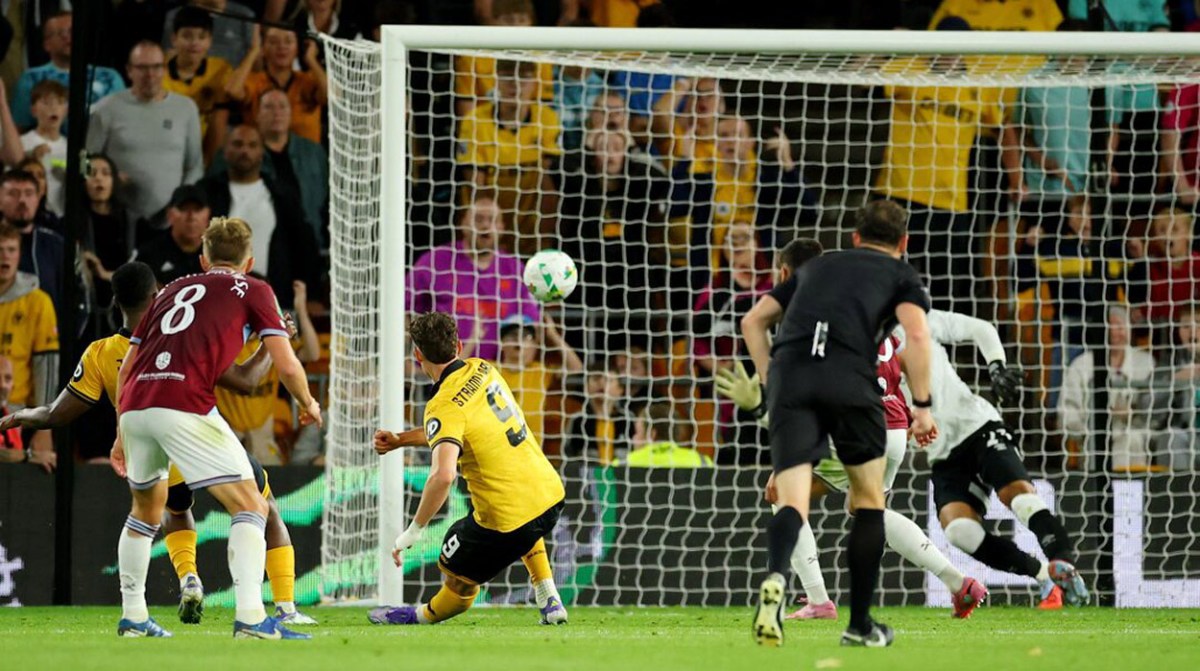
Watford 1 (Nabizada 19) West Ham 1 (Pollock (OG) 27)
There was too little action this week to divide the match report into its separate halves.
West Ham had a brightish opening ten minutes but with only another blocked shot from Bowen to show for their efforts. The early momentum then switched as the home side began to grow in confidence and into the game. The Hornets took the lead on 19 minutes with a neat lobbed finish that a proper goalkeeper with normal sized arms should easily have saved. For a while, Watford’s ascendency suggested they might well double their lead to add to visitor’s woes. However, the Hammers survived and largely control possession for the remainder of the game. Apart, that is, from a short spell of Watford dominance just after the break as the Hammers recovered from Nuno’s inspiring half-time team talk.
The game had returned to all square by the break thanks to an unnecessary attempt to play out from the back by Keben in the home defence. Full marks to Taty for not giving up the chase but the goal came gift-wrapped rather than as a reward for any incisive claret and blue play.
The second half was almost entirely without incident. The Hammers created little from their near 70% possession or from the succession of corners which floated carelessly into the night. Watford’s occasional forays up field, while executed with purpose, rarely caused meaningful danger.
It was textbook low intensity football from West Ham. The apparent formation change made little material difference and played out as a hybrid of the anticipated 4-2-3-1 and the 4-4-1-1 that has plagued our approach since its unexpected short-term success at the start of the year.
Transition was again painfully slow; defined by a pointless back and forth in the defensive third. The theoretically most dangerous outlets (Bowen and Solomon) typically received the ball in deep, static positions with a full defensive line reformed in front of them – given ample time get back into its shape.
For the most part, our wingers do most of their work well away from the danger areas. Cutting inside before running out of space and being forced to play sideways or backwards. It is a rarity to have a ball played into space for a wide man to run onto. And if (and when) a ball is eventually delivered into the box, there are never enough bodies arriving to attack it.
Everything we see is a consequence of the low-risk mindset at the heart of Nuno’s footballing philosophy. It might occasionally work when the opposition is attack minded (as it did at Southampton) but is hopeless when confronted with a low block or intense pressing. The sad fact is that this will be case in the majority of Championship games this season.
Of equal significance is the lack of movement this risk averse attitude engenders. Where are the runners, who is creating the space for others to exploit? Mukasa struggled to make any impact – as other attacking midfielders have before him – due to an obvious lack of passing options and movement in front of him. It is a team playing on their heels rather than their toes. This has been a long running West Ham problem relieved only temporarily during the Lingard/ Rice purple patch of 2021.
Supporters are right to want and expect more signings before the window closes. But those signings should be to convert a squad already good enough for top four into certainties for promotion. The fact is we currently sit in 19th place having dropped seven points from the nine available. The only reasonable conclusion is that the underlying problem lies in the dugout. A mindset that was complicit in last season’s relegation and refuses to budge or adapt.
Will bringing in different players make the necessary improvements if nothing else changes. Marginally perhaps but not to the level required to achieve automatic promotion. It would the equivalent of signing up more A-list actors for a movie where the Director is clueless and the script and screenplay are an abomination.
The writing must surely be on the wall for Nuno. There are five more league games and an EFL third round encounter before the international break. It will need a massive turnaround for the manager to survive the chop at that point. We can officially launch the six games to save his job countdown, starting with Tuesday night’s clash with Wolves.
One bright spot from the game was the assured performance of Golambeckis in the centre of defence. He has the look of a very intelligent centre-back with good pace and great awareness. It will be interesting to see how he fares against the more agricultural of Championship strikers. COYI!