With Everton visiting the London Stadium this weekend, here is West Ham’s Five Game Survival Path

The Under the Hammers Supercomputer, Deep Block has nailed another one. We escaped Selhurst Park with a point. Views differ as to whether or not this was a good point, or whether it was a chance missed to open the gap over Tottenham to four points. Spurs also stalled. Their ridiculous celebrations when they went 2-1 ahead contributed to an additional eight minutes and hence Brighton’s equaliser in time added on. Their own fault you could say.  Forest and Leeds took maximum points. That combination matters because with only five to play, the maths are starting to bite. Leeds and Forest have daylight, while West Ham and Tottenham may now be arguing over one chair to finish seventeenth. Or are there more twists to come?

TeamPositionPointsCushion vs 18th
Leeds15th39+8
Nottingham Forest16th36+5
West Ham17th33+2
Tottenham18th310

Fixtures remaining (5)

West Ham: Everton (H), Brentford (A), Arsenal (H), Newcastle (A), Leeds (H)
Tottenham: Wolves (A), Aston Villa (A), Leeds (H), Chelsea (A), Everton
Nottingham Forest: Sunderland (A), Chelsea (A), Newcastle (H), Man United (A), Bournemouth (H)
Leeds: Bournemouth (A), Burnley (H), Tottenham (A), Brighton (H), West Ham (A)

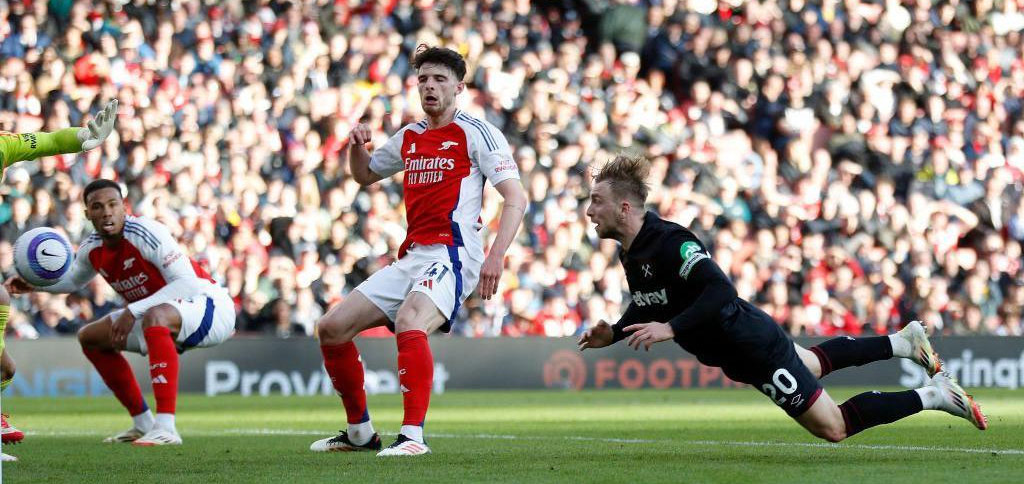
So who has the hardest run-in? One way to look at this is who still has fixtures where they can realistically pick up an important three points. West Ham’s run is high-variance: Arsenal at home would seem to be the obvious near-zero / free hit but how are Arsenal going to react to their lead at the top disappearing? Brentford and Newcastle away are perhaps “one point is fine, three points is a steal” trips. Brentford, for example have now drawn their last five games whereas Newcastle have lost their last three. The saving grace could be Everton (this weekend) and Leeds at home. Two games where the stadium can drag us over the line, but only if we turn up. We are the only one of the four teams in question who have three of our final five games at home. Could this be an advantage? We certainly really need to win this weekend, and not losing is imperative. If it goes down to the wire as many predict then the final day could be a party or a very nervous affair. It depends what points are in the bank before then.

Spurs have the opposite problem with fewer obvious bankers and loads of “pressure fixtures” stacked together. Wolves away is the gateway; lose or draw that and Spurs are chasing away wins against Villa and Chelsea. And just like West Ham they face Leeds and Everton at home. If they are to survive they probably need to turn ‘not losing’ into winning.

Forest’s difficulty is top-heavy, and Deep Block believes they may have the toughest run-in of the four. Sunderland, Chelsea (if they can recover from their disastrous run) and United away are not the easiest of fixtures, and home wins against Newcastle and Bournemouth may be what they need to ensure safety. Their five point cushion may seem good at this point but if West Ham and Tottenham can win at the weekend and they lose then it may become nervous for them too.

Leeds have the biggest cushion and the game against Burnley at home could virtually clinch safety. They still have a big say with visits to Spurs and /West Ham so it’s not quite a done deal yet but very close to it.

So what is the current verdict? Leeds and Forest look the most survivable profiles because they have points already earned and perhaps at least one fixture you can pencil in as “gettable” without squinting too hard. The battle line is West Ham versus Tottenham for 17th. West Ham’s path is clearer if they can win home ground fixtures against Everton and Leeds and treat Brentford and Newcastle as bonus territory. Spurs’ path is narrower. If they don’t beat Wolves away, they’re basically asking to hit an improbable points target and hope that everyone else plays along. If they beat Wolves though and West Ham don’t win then it changes again.

Looking at their last five games and projecting forward to the final five then it would seem very simple. Forest have collected 9 points, Leeds 8 points, West Ham 8 points and Tottenham 2 points. On that basis, Tottenham remain by far the likeliest to finish 18th unless they finally turn a draw and loss streak into a run of wins starting immediately. But we all know it doesn’t work like that. Football is an unpredictable game. End of season games are perhaps even more unpredictable. Anything can still happen. COYI!

From Fragile to Manageable – West Ham’s Six Game Survival Path

The Under the Hammers Supercomputer projects the future.

West Ham’s survival maths has tightened again, but crucially, it’s tightened in our favour. The Under The Hammers Supercomputer, Deep Block, correctly called the Villa defeat and the Wolves win, and after that, and results elsewhere, the run-in now looks less like chaos and more like a plan. It’s in our own hands. We were right again, Villa away went as expected, Wolves at home had to be won, and was. Now at West Ham we have six games to save ourselves. And the pathway to survival is clearer than it’s been all season.

With six games now remaining, Deep Block has been rebooted once more. West Ham are still not safe, still not comfortable, but the survival picture is shifting from fragile to manageable. Since the last computer run, two fixtures have moved from projection into reality. West Ham lost 2–0 at Aston Villa and then thrashed Wolves 4–0 at the London Stadium. Both outcomes were in line with what the model expected, and that matters, because the difference between surviving and going down is often less about one surprising result, and more about reliably banking the points you must bank.

Villa Park was always low-probability for points, and so it proved. The 2–0 defeat was a blow at the time, but not a surprise, and not a result that rewrites the model. This was never the fixture West Ham’s season hinged on. You don’t build a survival plan around winning at a top-four side. You build it around what comes next.

That’s why Wolves mattered. And West Ham didn’t just win, we flattened them (at least in the second half we did!). In the original equation, Wolves at home sat in the “decisive” category, exactly the kind of game we couldn’t let slip. Those three points reduces uncertainty and reduces the number of “must-do” outcomes ahead.

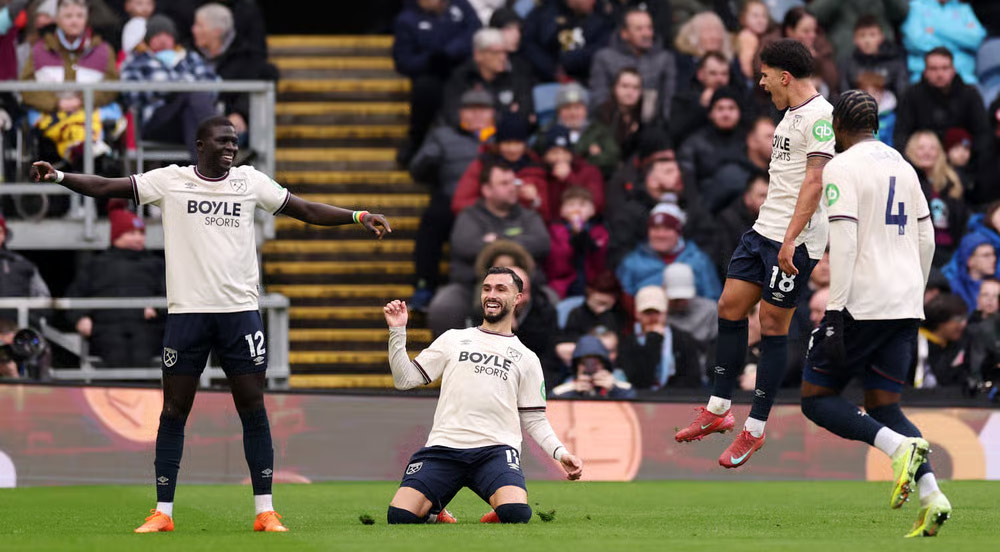
The original model ran with twelve games to go. It predicted a draw at home to Bournemouth which was correct, a win at home to Wolves also correct, defeats at Liverpool, Manchester City and Villa, two correct and an unexpected free hit produced a point against City, and a draw at Fulham which turned out to be a win. We predicted that it was one of the away games where we could hope to turn a draw into a win which we duly did. So now we sit on 32 points, three points ahead of the original predictions, and two points above the bottom three with the run-in underway. We are last to play this weekend. Will we still be out of the bottom three when our game comes round on Monday?

Deep Block’s broad conclusion remains consistent with the previous run. The likely safety line sits around 38–40, which means West Ham are no longer chasing something outrageous. We are chasing a target that can be met with competent, repeatable outcomes rather than miracles. Weighting the final run-in correctly, home games like Everton and Leeds remain the true win fixtures, while Palace and Brentford away still profile as the likeliest draw opportunities, and perhaps even Newcastle too with their recent poor run. Newcastle’s recent form in the past 10 or 12 matches doesn’t match Leeds, Forest or West Ham. Statistical opportunities exist for wins in those three away games too. Deep Block’s value isn’t “perfect prediction”. It’s correctly identifying which matches are the ones that define our season, which are opportunities, and which are free hits.

1. Crystal Palace (A): Mon 20 April: Projection: Draw
Why: One of the away fixtures that still profiles as a realistic one point but with a potential to replicate what happened at Fulham. Palace have been on a run of winning every other game and drawing or losing the one in between. They won their last game, so a draw or defeat is likely if the pattern continues. They are stronger away from home, fifth in the away games league table, but just four home wins in sixteen games leaves them fifteenth in the home games table. Seven of their home games have ended in draws.

2. Everton (H): Sat 25 April: Projection: Win
Why: Previously identified as a decisive home match in the survival pathway. This will not be easy given Everton’s form with 10 points from their last six games. However, with just three home games to go, and one of those against the league leaders this game somehow has added significance for us, although Everton are one of several teams jostling for European qualification. They are strong away from home (fourth in the away games table) so we’ll have to be at our best as this is a game where we could slip up if we are not.

3. Brentford (A): Sat 2 May: Projection: Draw
Why: Still one of the likeliest away draw opportunities in the model’s framing. Despite their lofty seventh place in the league they have drawn their last four games. A realistic one point is achievable with a potential to snatch three, similar to the game at Crystal Palace. But Brentford have only lost three of their sixteen home games so no guarantees of any points here although the draw in the recent cup game gives us hope of another one.  

4. Arsenal (H): Sun 10 May: Projection: Defeat
Why: A higher-difficulty fixture where the model doesn’t need points. The key is not letting it derail the plan. Despite their apparent faltering form they have still collected 13 points from their last six games. But if we have faltered ourselves in the previous 3 games then we might need something from this which will be tough.

5. Newcastle United (A): Sun 17 May: Projection: Draw
Why: Our final away game and despite their current form with four defeats in their last six games, it could still be another tough one. A point is possible and an unlikely win would ease the tension, especially if the previous results have not gone to plan.

6. Leeds United (H): Sun 24 May: Projection: Win
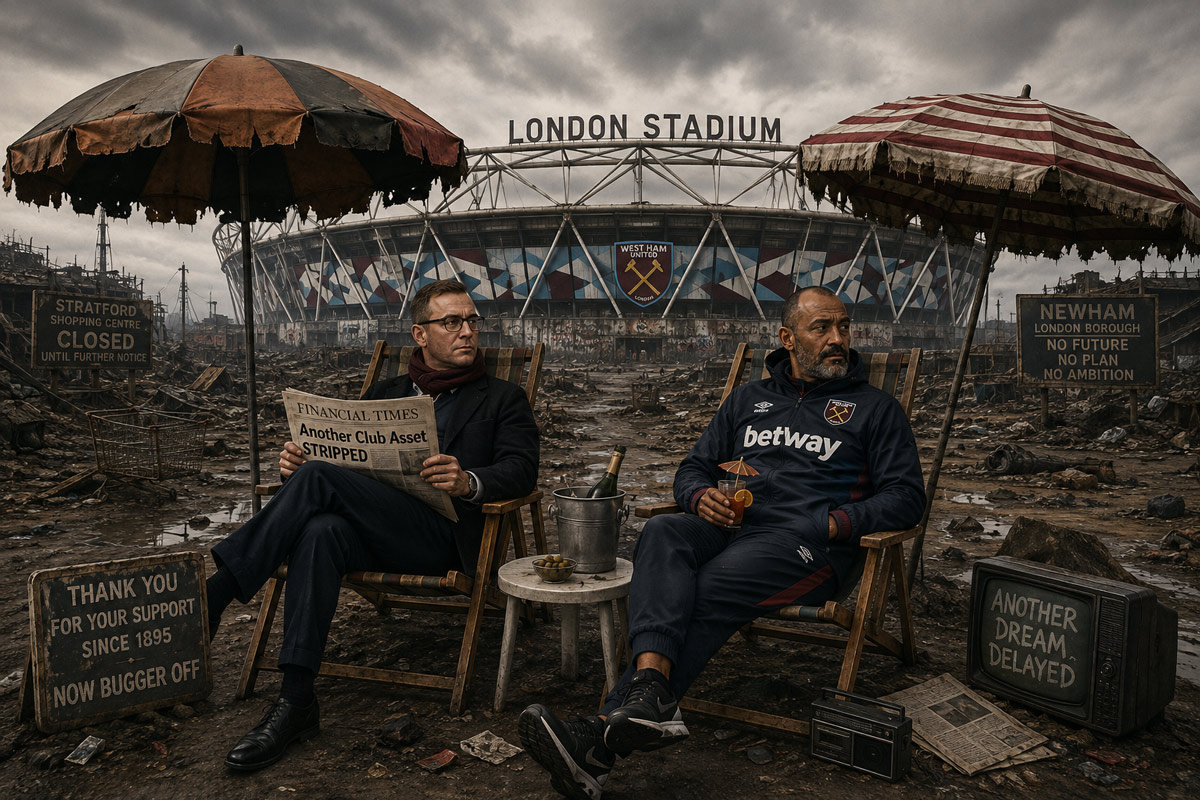
Why: Alongside Everton at home, Leeds was already identified as one of the defining fixtures. Who knows whether they will be safe at this point and ‘on the beach’ or still fighting for survival? It’s too far ahead but the belief is that home advantage will drive us over the line. Leeds are eighteenth in the away table so relegation form on their travels but this week’s win at Old Trafford has eased the pressure on them and the win in the cup here recently shows an upturn in away form.

Below is a projection consistent with the model’s earlier weighting that there are decisive home fixtures, that away draws provide the most plausible value and the best chance of exceeding expectation, and acceptance that a couple of games are likely free hits:

If all goes to plan the projected finish is 41 points. Two wins, three draws and one defeat: nine points from the final six games. The last six games have yielded eight points. Matching these lands us directly in the previously stated “likely safety” band, and it does it without demanding anything exotic. But it could all go wrong still. The predicted wins might not happen, and the draws could be defeats. But one away win in the last three away games could compensate for that. But a predicted win that becomes a defeat reduces the projection to 38. Will that be enough?  

When we lost at home to Forest (perhaps controversially?) it didn’t look as though there was any way back and relegation seemed inevitable. The massive improvement since then has seen us climb out of the bottom three, keeping pace with Forest, and thanks to Tottenham’s decline moving two points ahead of our North London neighbours. But there are no easy games. We need our recent form to continue.

So let’s recap. The original model which ran with 12 games to go predicted a finishing position of 18th place and likely relegation. The likely safety line at that point was predicted to be 38-42 points and that still stands. Of course, it is not just our own results that will decide our fate but also those achieved by Leeds, Forest and Tottenham.

How far do you like to go back to consider current form? Deep Block has some alternatives for you. Points gained in:

Last 4 games: West Ham 7, Leeds 6, Forest 6, Tottenham 1

Last 6 games: West Ham 8, Leeds 6, Forest 6, Tottenham 1

Last 8 games: West Ham 12, Leeds 10, Forest 7, Tottenham 1

Last 10 games: West Ham 15, Leeds 11, Forest 11, Tottenham 3

Last 12 games: West Ham 18, Leeds 14, Forest 15, Tottenham 3

However far you go back it looks good. BUT! We are not safe or comfortable. Will Tottenham will end their disastrous run of form? We hope not, but can they really continue to be so bad? Will there be a new manager bounce? Have Leeds turned the corner with their win at Manchester United? Are they already safe with a six point cushion? And what about Forest? Their fixtures aren’t straightforward but surely they will pull a further three points clear this weekend at home to Burnley?

The computer projections are based on current form, historical data, fixture difficulty and multiple other factors. But football is an unpredictable game. End of season games are perhaps even more unpredictable. Like Forrest Gump’s box of chocolates analogy, you never know what you are going to get. Football forecasting is not a perfect science. And this is nothing too serious. It‘s a bit of fun really. Anything can still happen. COYI!

FA Cup Quarter Final, West Ham v Leeds. One step from Wembley

West Ham stand one victory from Wembley. Who would have believed that in this miserable season? The FA Cup has always held a special place in the history of this Club, with some of my best memories in the last 68 years tied to the FA Cup runs of 1964, 1975, 1980 and 2006. We won three of them and should have won the fourth too. Sunday afternoon’s quarter‑final presents a powerful opportunity to progress in the competition.

Progressing even further will be difficult to say the least with Liverpool, Manchester City, Arsenal and Chelsea all involved in quarter final matches and three of those are likely to be in the draw alongside the winner of today’s game when it comes to the semi-final. Nevertheless, it provides a trip to Wembley and a chance to build on the confidence gained in the last few weeks from a run that has picked up more points than those of our fellow relegation candidates.

I’m aware of those fans on social media who would be happy to forget the FA Cup this season and concentrate on the fight to remain in the Premier League, but those challenges will return soon enough. For now, our focus should be singular. Ninety minutes, and if required thirty more and perhaps penalties, separate us from a place in the FA Cup semi‑finals. The prize is clear and the stage is set at the London Stadium on Sunday.

This is our first FA Cup quarter‑final appearance in ten years, earned through a determination to progress in the competition, and to continue recent form in the Premier League, (although admittedly the performance at Aston Villa was poor). There are no replays at this stage of the competition. This is knockout football in its purest form. When the final whistle sounds, one club will continue its journey toward the semi-final at Wembley Stadium. Our aim should be simple and that is to ensure that Club is West Ham United. The penalties in the last round showed how much we wanted it.

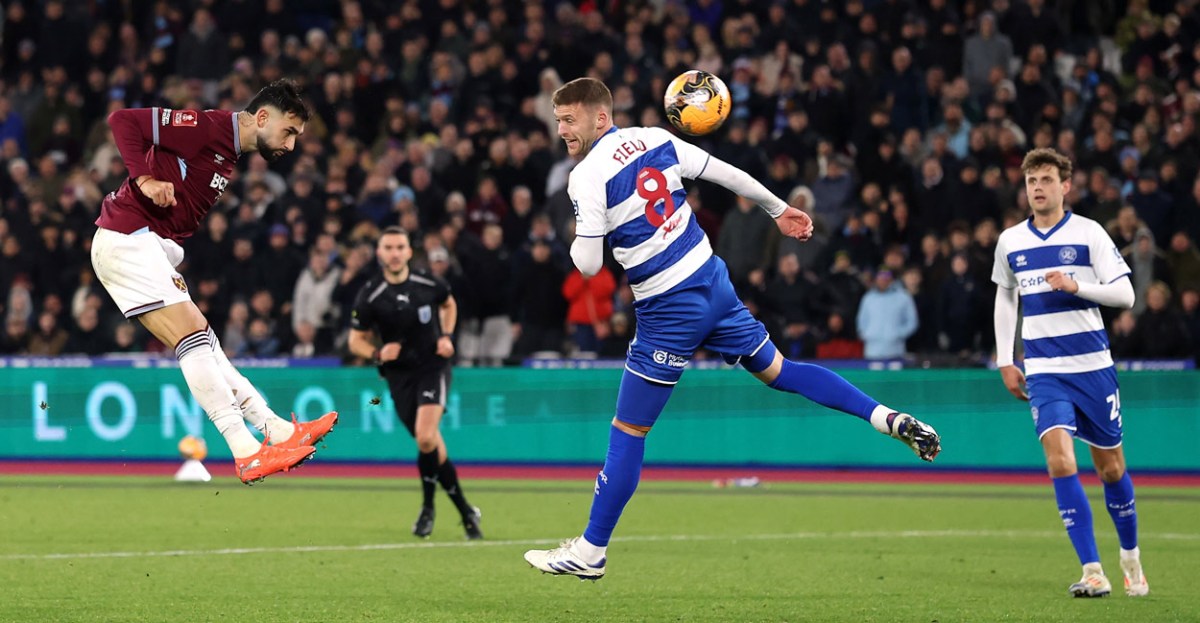
Our progress to this stage has been built on resilience to continue in the competition. Victories over Queens Park Rangers and Burton Albion which both needed extra time were followed by a dramatic fifth‑round tie against Brentford, settled by penalties after a fiercely contested 120 minutes. It was a performance that captured the spirit of the squad, disciplined, committed, and united under pressure. We’ve had to fight for every inch in this FA Cup run.

The London Stadium has been an important source of strength in the second half of this season. We arrive in today’s tie having only lost one game at home in all competitions in 2026, and that was a game that we should never have lost against fellow relegation strugglers Nottingham Forest.

Leeds United arrive in East London seeking to extend their own FA Cup run, having reached the quarter‑final stage for the first time in more than twenty years. They are a committed, energetic side capable of pressing aggressively and challenging opponents physically. They will come here believing they can progress. But their record away from home is poor. They have only won one game in the Premier League away from Elland Road all season (that was at Wolves back in August), so their record on the road is not good.

The draw has been relatively kind to us this season, Win this, and although the odds are likely to be stacked against us in the semi-final, who knows? Come on you irons!

Indiana Santo and The Villa of Doom: Roof Collapses on West Ham Escape Plan

Defeat might have been expected in Sunday’s Villa Park encounter but it was the disappointing nature of the performance which raises serious questions about the Hammer’s survival credentials.

A pivotal moment in the genre of action-adventure movies – the Indiana Jones franchise popular in the 1980s and 90s, for example – is when the protagonists must navigate a series of perilous traps, rotating blades, and concealed pressure plates to avoid an ancient booby trap that would seal an inevitable fate.

The West Ham escape plan seems very much like that. Either by accident or design, Nuno had hit upon a balance of personnel, formation and style of play which, with a good following wind, might just get them out of trouble. The problem is that there is zero margin for error. Take away a single component, attempt anything in the wrong order then an ancient curse is activated and the ground beneath our feet crumbles to dust.

The bad news had already been received a few days previously. Crysencio Summerville, the talisman of West Ham’s current revival, had yet to recover from the injury picked up in the FA Cup tie against Brentford. Will we come to regret this half-time substitution? But there was even worse news to come.

When the teams were announced it was no surprise that Nuno had opted to start with the eleven who had wrestled a precious point from Manchester City a week earlier. The subliminal message was clear. Another point here would do very nicely. Let’s face it, away at Villa Park wasn’t high on anyone’s the list of winnable games. The only grain of optimism being the hosts poor recent run of form in the absence of several influential midfielder players.

Whatever the game plan was going to be, it was thrown into disarray when Jean-Clair Todibo was injured in the warmup. Assuming they had trained all week with a three centre-back formation in mind, the obvious solution would have been a like-for-like swap. But nothing says a lack of trust in your £40 million, £100 per week backup better than deciding to disrupt the entire plan instead. If he can’t be called upon for this type of emergency, why is he on the bench in the first place?

What actually happened was a repeat of one of those genius Nuno moments from earlier in the season. A plan which, in his mind, was imagined as a complex game of four-dimensional snakes and ladders. Aaron Wan-Bissaka man-marking Morgan Rogers, Jarrod Bowen filling in as emergency right back, and Pablo Felipe deployed in wide left midfield. With Pablo and Tomas Soucek about as mobile in midfield as a pair of clowns on stilts, the game was lost before it had begun. No structure, no cohesion and no goal threat. The trap had been triggered. Darts flew, tunnels collapsed, and a giant rolling boulder thundered towards the West Ham goal as Villa awoke from their slumbers awoke to rediscover Champions League bound form.

To think that a few years ago the two clubs occupied a similar position as hopeful pretenders to the rich six throne. Oh, what a sprinkling of boardroom competence and ambition can bring you in the right hands. In contrast, all we have learned (to our cost) from West Ham’s board is that incompetence not only makes them bad at running the club but also prevents them from recognising how bad they are.

West Ham’s resistance lasted barely 15 minutes. Villa had been looking to target Mads Hermansen’s obvious weakness and uncertainty in the air at set pieces. But it was an alternative and well worked passing routine from a corner that drew first blood. The ball ending up with McGinn on the edge of area whose curled shot evaded the desperate dive of the Hammer’s keeper – who should have done better in my opinion.

The closest West Ham came to a leveller was in the immediate aftermath. Taty failing/ not trying hard enough to get firm contact onto a Bowen cross. After that it was one-way traffic with only the heroics of Konstantinos Mavropanos keeping the score respectable. Quite how referee Paul Tierney saw the excellent tackle on Watkins as a penalty is indicative of the ever-declining refereeing standards. For once, VAR did its job – clearly and obviously.

Watkins would get the last laugh, however, scrambling home in the 68th minute to finally kill the game off. It was a textbook catalogue of West Ham errors. Bowen giving the ball away cheaply in the final third. Tomas Soucek so slow in tracking Roger’s run that even VAR had announced check complete before he caught up. And finally, Hermansen spilling Rogers’ tame shot into the delighted Watkins’ path. Game over!

There was just enough time remaining for a masterclass from substitute Adama Traore, showcasing his full repertoire of comical misdirected and overhit crosses.

In truth, it was a game that few expected to win. But nevertheless, it was a worryingly disappointing and passive performance from Nuno’s men. Yet, in the bigger picture; in the realm of take one game at a time management, nothing has been decided. The games that we might hope to win are still to come – home to Wolves, Everton and Leeds, away at Brentford and Palace. There are points still to win.

If something good can come out from the dreaded international break, it is the opportunity to get Summerville fit for the run-in. The future may depend on his recovery rate improving considerably on his previous seven-month absence.

Elsewhere, Nottingham Forest were the big winners from the weekend. Picking up three points from an unexpectedly comfortable romp at the Tottenham Hotspur stadium. It turns out that reports of the north Londoner’s corner turning had been wildly exaggerated. They will no doubt now be looking for yet another replacement caretaker manager. What’s Ryan Mason doing now? Leeds will regard it as two points dropped against Brentford on Friday night.

Time to regroup then Hammers. The most recent battle was lost but the war is not yet over. As one well known presidential politician put it in a late night post:

West Ham United, very underrated team, by the way. People don’t talk about them enough, but I do. I know football, maybe better than anyone, and I’m hearing VERY STRONG things about their survival chances. Very strong.

The so-called “experts” are saying relegation. WRONG! Total losers. They said the same thing about my many great successes and look how that turned out. West Ham has tremendous fans, really incredible people, and a beautiful stadium. London Stadium, fantastic place, I’ve heard.

They just need a little confidence, maybe a few better decisions from management (won’t name names!), and they will STAY UP. I guarantee it. People are coming up to me, big fans, tough guys, saying: “Sir, West Ham has plenty of bubbles left to blow.” And you know what? They’re right.

MAKE THE IRONS GREAT AGAIN!

The Under The Hammers Supercomputer runs again – and the margins tighten further as West Ham travel to Villa on Sunday

With eight games now remaining, Deep Block has been rebooted once more. West Ham’s survival equation continues to shift, and while nothing is settled, the picture is becoming clearer. Survival is still far from comfortable, but it is increasingly realistic.

Since the last run of the Under The Hammers Supercomputer, one more fixture has been converted from theory into fact, and crucially it was one that was previously written off as a free hit.

The latest result that was added to the model is last weekend’s unexpected 1-1 draw at home to Manchester City. That was predicted to be a defeat and a free hit. That point matters a great deal. The original projection assumed zero points from Manchester City. Instead, West Ham added one unexpected but fully deserved point, further improving the underlying survival maths and continuing the recent pattern of outperforming expectation.

Across the four games now completed since the first model was run, West Ham have taken 5 points, compared to an original projection of 2. That three-point swing can make all the difference.

Just as important as West Ham’s own result was what happened elsewhere. And nobody pulled away from us. Last week Leeds drew, Tottenham drew and Nottingham Forest drew. In fact all six teams at the bottom of the table drew. For the second week running, none of West Ham’s direct rivals managed to create separation. That collective stalling is increasingly significant.

The bottom of the table now reads:

• 15th: Leeds – 32 points
• 16th: Tottenham – 30 points
• 17th: Nottingham Forest – 29 points
• 18th: West Ham United – 29 points
• 19th: Burnley – 20 points
• 20th: Wolves – 17 points

West Ham are still just one point below the lower safety line of one point per game. With eight matches left, Deep Block updates the numbers as follows:

• Likely safety threshold: 38–40 points
• Points currently held: 29
• Points required: 9–11 from the final 8 games

That equates to roughly 1.1–1.4 points per match, a rate that now closely matches West Ham’s recent form rather than exceeding it. The current form (last 6 league games) for the teams under consideration with points per game in brackets:

• West Ham 9 (1.5)
• Leeds 6 (1.0)
• Forest 3 (0.5)
• Tottenham 1 (0.2)

Even extending ‘current form’ to eight games the results don’t differ much. Points per game (last 8):

• West Ham 1.5
• Leeds 0.88
• Forest 0.88
• Tottenham 0.38

The margins remain tight, but the task is no longer extreme. Next up we travel to Aston Villa on Sunday, a difficult task but not meaningless. The fixture remains firmly in the low-probability column based on the season as a whole. Villa sit in fourth place in the table but current form is less impressive with just five points from their last six games, four points below our total. But Villa at home are aggressive, intense and well-drilled. It won’t be easy.

The draw against Manchester City has bought us a small amount of breathing room. This is no longer a game that must deliver points to keep hope alive. Instead, it is an opportunity to add further unexpected value. A draw at Villa Park would be an excellent outcome. Even defeat does not materially damage the model, provided West Ham continue to take points in the games that follow. The pressure here is asymmetrical: Villa need to win to justify their position; West Ham can afford to be pragmatic, compact and opportunistic.

Perhaps one of the most important fixtures of the weekend from a West Ham perspective happens elsewhere when Tottenham host Nottingham Forest. This is the definition of a relegation six-pointer between two sides struggling badly for form and confidence. So what are we looking for? A draw is perhaps the best-case scenario for West Ham, freezing both rivals in place. A Forest win drags Tottenham fully into the danger zone. A Spurs win prevents Forest pulling away but keeps Tottenham within touching distance. Either way they both can’t win and that matters. Incidentally Leeds are at home to an inconsistent Brentford side who are seventh in the table and have collected nine points from their last six, losing just once, results comparable to our own.

Leeds are often thought to be strong at home but have only won six of their 15 games. Tottenham have won just twice. Forest, like West Ham have collected more points on their travels than at home.

What has changed since the original supercomputer projection? The pattern is now clear. West Ham are picking up points where none were expected. Rivals are failing to capitalise on opportunities to escape away from us. The psychological pressure has subtly shifted up the table. Deep Block originally projected an 18th-place finish on around 37 points. Based on real results, that projection now sits closer to 40 – and crucially, with a far wider range of viable pathways to get there.

The original conclusions still stand. Wolves, Everton and Leeds at home remain decisive. Palace and Brentford away remain the most likely draw opportunities. If that all happened then we’d reach 40 points. But the margin for error has widened. West Ham no longer need everything to go perfectly. In conclusion the situation is still fragile, but increasingly viable. West Ham are not safe, we are not comfortable, but we are alive, competitive, and very much in the fight. We didn’t really expect that a few weeks ago did we?

With eight games to go, Deep Block believes survival is now genuinely achievable rather than merely hopeful. It may yet go to the final day. It may yet hinge on a single moment. And if it does, well, this is the West Ham Way.

The Under The Hammers Supercomputer has been rebooted to re-run West Ham’s survival equation

With nine games to go the supercomputer has updated the maths behind West Ham’s chances of staying up. Survival that once looked desperate is now doable. We are not safe or comfortable but it’s closer than it looked a few weeks ago.

Since the Under The Hammers Supercomputer, Deep Block, last ran its projections (prior to the Bournemouth game) three of the twelve remaining fixtures have now been completed, replacing twelve hypothetical outcomes with more hard data to assess our survival chances.

Results from those games:

  • West Ham 0-0 Bournemouth (H) – Draw (predicted draw)
  • Liverpool 5-2 West Ham (A) – Loss (predicted loss)
  • Fulham 0-1 West Ham (A) – Win (predicted draw)

These results delivered 4 points from a possible 9, outperforming the original projection of two draws and a loss from these fixtures by two points. In particular, the away win at Fulham is a significant upgrade on the supercomputer’s expectations and materially improves the survival equation.

After 29 matches, West Ham now sit 18th in the Premier League with 28 points, level on points with Nottingham Forest in 17th but behind on goal difference. The teams in the relegation dogfight (the bottom six) currently read:

• 15th: Leeds – 31 points
• 16th: Tottenham – 29 points
• 17th: Nottingham Forest – 28 points
• 18th: West Ham United – 28 points
• 19th: Burnley – 19 points
• 20th: Wolves – 16 points

Crucially, the safety line is currently 29 points based on the season to date (exactly a point a game), meaning West Ham are now just one point behind that current safety level, with momentum firmly shifting in our favour.

With 9 games remaining, the survival target can now be recalibrated:

• Likely safety threshold at current performance levels: 38 points
• Points currently held: 28
• Points required: 10 from the final 9 matches

That equates to 1.11 points per match, which is lower than the rate required in the original model and less than West Ham’s recent form (1.33 per match in last six games).

Of course, results elsewhere can change the safety threshold and 38 might not be enough. But based on current figures Deep Block believes that a spread of 38-40 will be the level needed.

The upcoming schedule still presents major challenges, but the pressure has eased slightly thanks to the win at Fulham:

  • Manchester City (H) – Free hit
  • Aston Villa (A) – Low probability, but a point possible
  • Wolves (H) – Must‑win
  • Crystal Palace (A) – Likely draw but winnable
  • Everton (H) – Crucial and winnable
  • Brentford (A) – Likely draw
  • Arsenal (H) – Low probability
  • Newcastle (A) – Low probability
  • Leeds (H) – Potential season‑definer, perhaps must win?

The original identification of Wolves, Everton and Leeds at home as decisive fixtures to win remains valid. The difference now is that the margin for error has widened slightly.

What has changed since the original projection? The Fulham win is pivotal; it reduces the required points tally and shifts psychological pressure onto our rivals. Forest and Tottenham have failed to pull away allowing West ham to close the gap. Burnley and Wolves are effectively gone, leaving only one realistic relegation place still in play.

Deep Block originally projected a 37‑point finish and 18th place. Based on real results to date, that projection now reads closer to 39 points. Our survival chances have improved materially over the past three games. While relegation remains a genuine risk, the path to safety is now clearer and more achievable than when the original model was run.

If West Ham can beat Wolves, Everton and Leeds, and add two draws elsewhere (the games at Palace and Brentford are the most likely) as per the original forecasts then Deep Block predicts that Premier League survival is more likely than not. But the margins remain tight and depend upon results elsewhere. Failure to achieve the predicted eleven points from these games will likely need points gained elsewhere in the more challenging fixtures.

Assuming that Burnley and Wolves are as good as down (albeit not yet mathematically) the current form (last six games) of the four teams likely facing the final relegation place is as follows:

West Ham: 8 points
Leeds: 5 points
Forest: 3 points
Tottenham: 1 point

If that form continues into the final nine fixtures then we would be home and dry. But the games towards the end of the season tend to be unpredictable. Three games ago Deep Block predicted that we would probably just fall short. It now predicts that we might just be safe. It may yet come down to the final day. And if it does, well this is West Ham. We wouldn’t have it any other way.

The Big Names Advance in the FA Cup As West Ham and Brentford Chase A Place In The Last Eight

As West Ham prepare to face Brentford for a place in the FA Cup Quarter Finals, do the biggest Premier League clubs really lack interest in the FA Cup?

West Ham host Brentford on Monday evening with a place in the FA Cup quarter‑finals at stake, completing the fifth round of the competition. The tie offers an intriguing contrast in styles and priorities, with both clubs viewing the FA Cup as a genuine opportunity for progress, but for us of course the priority has to be ensuring that we are playing Premier League football next season. Nevertheless I would like to think that we really want to progress in the competition, but no doubt some would disagree and want us to forget the cup and concentrate on survival.

I’d like to think that West Ham will see the match as a chance to build momentum and pursue silverware. With (hopefully?) a strong home atmosphere at the London Stadium, I hope that we approach the game aggressively, particularly given the success of several elite clubs already reaching the quarter‑finals. I believe that progress in the competition would add to the progress that we have made in previous weeks.

Brentford, meanwhile, have shown themselves to be well‑organised and difficult opponents. Their tactical discipline and ability to frustrate ‘stronger’ teams make them a dangerous proposition, especially if we fail to control the tempo of the game. Brentford’s willingness to press and counter could prove decisive.

With no replays and everything decided on the night, the match is likely to be tense and finely balanced. The winner will join an increasingly elite group in the quarter‑finals, further underlining the FA Cup’s continued relevance in modern English football.

In recent years, it has become common to argue that the biggest Premier League clubs are no longer truly interested in the FA Cup. This theory is based on factors such as fixture congestion, financial priorities and the growing importance of European qualification. However, the progress of Liverpool, Arsenal, Chelsea and Manchester City into the quarter‑finals of the 2025–26 FA Cup strongly challenges this assumption and suggests that elite clubs still value the competition.

Those who argue that big clubs lack interest point primarily to the modern football calendar. Top Premier League sides regularly compete in domestic league matches, European tournaments and the cup competitions, often playing many extra matches in a season. With payment for league position and European qualification offering far greater financial rewards than the FA Cup, managers are frequently accused of prioritising league position over cup success. Heavy squad rotation in early rounds is often cited as evidence that the FA Cup has been relegated to secondary importance.

There is some validity to this argument. Elite managers are under pressure to manage player workloads and avoid injuries, particularly during decisive stages of the league season. As a result, weakened line‑ups can increase the likelihood of shock exits (Crystal Palace for example) reinforcing the perception that the FA Cup is expendable. However, rotation alone does not necessarily imply disinterest. Instead, it reflects the depth and resources available to top clubs in the modern era. Two in particular, Arsenal and Manchester City possess squads strong enough to rotate without abandoning competitiveness.

I fail to understand why mid-table clubs such as Palace and Fulham (on Sunday) cannot do a better job of squad rotation to ensure progress in the competition. I know that league position brings a bigger financial reward but fans have other priorities. Take Fulham yesterday for example. I’m not their manager but if I was I’d start with my strongest team, try to get a goal or two and then rest some players. But no, Southampton held them and then Silva brought on the big guns late in the game (too late), only for the Saints to progress with a penalty in added time. It serves them right.

I’m not sure if Sunderland did the same but you wouldn’t expect a mid-table Premier League team with nothing else to play for other than league position to be beaten by the side at the foot of League One.

The 2025–26 FA Cup provides strong counter‑evidence to the theory of declining interest. Liverpool, Arsenal, Chelsea and Manchester City were the first four teams to reach the quarter‑finals, and all did so by negotiating challenging fixtures (well perhaps not Arsenal!). These were not symbolic victories or dead‑rubber matches; they involved competitive performances, often away from home, against motivated opposition. The presence of four of the Premier League’s most successful clubs at this stage suggests clear intent rather than indifference.

Furthermore, success in the FA Cup still carries significant prestige. It remains the oldest domestic cup competition in world football and continues to offer silverware, historical significance and a route into European competition. For managers judged on trophies and for clubs seeking to maintain winning cultures, the FA Cup remains an important objective. Once teams reach the latter stages, selection patterns typically reflect this, with stronger line‑ups and increased tactical focus. And there is nothing better for the fans than a day out at Wembley. This now extends to the semi-finals as well as the final. Our victories in 1964, 1975 and 1980 live long in my memory even though they are now many years in the past.

In conclusion, while financial realities and fixture congestion have changed how elite clubs approach the FA Cup, they have not removed its importance. The progress of Liverpool, Arsenal, Chelsea and Manchester City into the quarter‑finals demonstrates that the biggest Premier League clubs are still invested in the competition. Rather than abandoning the FA Cup, they are managing it strategically, ensuring competitiveness without sacrificing broader season objectives. I hope that we can join them in the draw for the quarter finals. Southampton or Port Vale at the London Stadium would be good if we progress. What are the chances of the ‘big four’ avoiding each other? That would get the conspiracy theorists going. COYI!

West Ham – The Fight For Survival – Eleven Games. No More Margin for Error

With 11 games left and 25 points on the board, West Ham United’s season has reached the point where every kick, every decision, every missed chance feels heavier than the last. The maths is simple. The reality is anything but.

Most signs point to 38 points being the absolute minimum number this season. That means we need at least 13 more points between now and May. Not impossible. But there’s no room left for wasted opportunities.

Last weekend’s 0–0 draw with Bournemouth felt like one of those moments we may look back on. It wasn’t a bad result. It wasn’t a disaster. But it felt like two points dropped. When rivals are slipping and the door is ajar, you have to force your way through.

Because doors don’t stay open for long in relegation battles.

A Fixture List That Pulls No Punches

There’s no hiding from it: the run‑in is brutal.

Trips to Liverpool, Aston Villa and Newcastle. Home games against Manchester City and Arsenal. On paper, those are fixtures you circle and hope for a miracle. Anything from them is a bonus.

So where is this season really going to be decided?

At the London Stadium.
Against teams we have to beat.

  • Wolves (H)
  • Everton (H)
  • Leeds (H)

Those matches aren’t just important. They’re season‑defining. Lose any of them and the pressure multiplies instantly.

Away from home, trips to Fulham, Crystal Palace and Brentford carry just as much weight. Get something from those games and suddenly the table looks kinder. Come away empty-handed and the fear creeps in.

A realistic return across the run‑in might look like:

  • 3 wins
  • 3 draws
  • 5 defeats

That gets us to 37 points.

And that’s the terrifying part.

Thirty‑seven might not be enough. Thirty-eight might not be enough either. We might need forty, or perhaps forty-two? From the realistic return above can we turn two of the draws into wins? That gets us to forty-one. I’ve a feeling that would do it.

Which means an extra goal in two games. A late winner perhaps? Holding onto a lead instead of dropping more points from a winning position. A moment or two of courage or quality could be the difference between survival and heartbreak.

Why Hope Still Lives

For all the nerves, this team has given us reason to believe.

Eleven points from the last six games tells its own story. Performances have improved. There’s fight again. There’s structure. There’s belief. This side looks far more like a team that expects to compete than one simply hoping to survive.

Keep that level up, and averaging just over a point a game from here isn’t unrealistic. It still might not be enough. Do we need 37, 38, 40, 42? Who knows? It’s not in our hands now.  

But the warning is clear: the games we have to win must be won. There’s no safety net left. Lose those, and we’re relying on favours that rarely arrive.

The Bigger Picture

At the bottom, things are tightening.

Wolves and Burnley are almost gone. One relegation place remains, and it’s a scrap between several nervous clubs. Forest, Tottenham and Leeds all have reasons to worry. None are safe. Neither are we.

West Ham aren’t doomed. But we’re not comfortable either.

We’re on the tightrope now – every step deliberate, every wobble dangerous.

What This Comes Down To

Forget the spreadsheets. Forget the projections.

This is about:

  • Winning the games that matter
  • Turning home advantage into points
  • Finding something – anything in the toughest moments

It’s about players standing up when it hurts.
About the crowd dragging the team forward when legs feel heavy.
About refusing to let the season slip quietly away.

Eleven games.
Eleven chances to fight.
Eleven chances to prove this club belongs here.

Do enough – and we survive.
Fall short – and we’ll spend the summer replaying the moments where it slipped through our fingers.

The season isn’t over yet.
But from here on, every game is a final.

Cup Dreams or Banana Skins? West Ham visit Burton in Classic FA Cup Fourth Round Contest

As a West Ham fan, the build-up to this Saturday’s FA Cup Fourth Round tie against Burton Albion is a familiar mix of anticipation and nerves. Our league campaign has been a struggle so far, with the team sitting 18th in the Premier League and every point feeling increasingly precious. Yet, there’s a sense that the FA Cup could be the spark we need to turn our season around. I’ve read some that say forget the cup and concentrate on staying in the Premier League. I don’t agree.  

Saying this, our recent form has shown signs of life and we are not down yet. 2026 started badly with a comprehensive 3-0 defeat at bottom of the table Wolves, one of our worst performances in years (and there have been a few!). Following this three days later the home defeat to Forest (unlucky as it was it some respects) suggested that our chances of escaping the drop were disappearing fast. The cup win over QPR, even if it took extra time, seemed to inject some much-needed confidence into the squad, and we began to feel the mood shifting ever so slightly.

The last five games since then have yielded 10 points in the league with away wins at Tottenham and Burnley, a home win over Sunderland, a 3-2 defeat at Chelsea after leading 2-0 at half-time, and Tuesday’s 1-1 draw with Manchester United with their equaliser coming in the sixth minute of time added on. The board indicated seven minutes. Where did that come from? Of course we might have been happy with the prospect of one point before the game but Sesko’s finish was a body blow and it seemed like two points lost rather than one gained. It means we have now regained sole leadership of one particular league table – points dropped from a winning position – we are now at the top with 20. If just some of those leads had been retained how different the league table would look now.

Of course, as any West Ham supporter knows, the FA Cup is never straightforward for us. Our history in the competition in my lifetime is varied, three-time winners (the last one coming in 1980 over 45 years ago), and twice runners-up, but it’s also littered with those infamous “banana skins.” Losses to the likes of AFC Wimbledon, Wigan, and West Brom in recent years have left scars alongside those from years gone by – the list is endless – Huddersfield, Stoke, Plymouth, Blackburn, Swindon, Huddersfield again, Coventry, Middlesbrough, Blackpool, Huddersfield (for a third time!), Hull, Hereford, Newport County, Wrexham, Watford, Sheffield Wednesday, QPR, Norwich, Torquay, Barnsley, Luton, QPR (again), Grimsby, Wrexham (again), Swansea, Tranmere, Sheffield Wednesday (again), Sheffield Wednesday (for a 3rd time), Nottingham Forest, and Sheffield United. Those are just some that I can recall from my many years of following the team and to them can be added a similar number of League Cup exits to lower league opposition. There’s always that nagging worry that we might slip up once again.

Burton Albion, for their part, are having a tough time in League One, sitting 21st and fighting relegation. Their league form has been poor, with no wins in their last five, but the FA Cup has brought out a different side of them. Fourteen goals in three cup games is no fluke, and they’ll be coming into this tie with nothing to lose and everything to gain.

Still, there’s reason for optimism. On paper, our technical quality and finishing should see us through, even if the manager decides to rotate and give some fringe players a chance. The cup is a chance for those on the fringes to stake a claim, and for the team as a whole to build momentum for the league run-in. But we can’t afford to be complacent. Burton’s attacking form in the cup is a warning, and our own history tells us that nothing can be taken for granted. Most pundits are tipping us to win, and I’d like to believe we’ll get the job done, but the magic of the FA Cup means you never quite know. I’m expecting an open game, probably with goals at both ends, and I wouldn’t be surprised if it turns into a real test of character. But how good would it be to be in the draw for the fifth round?

Claret & Blue Survival Showdown – Burnley and West Ham battle for Premier League future

Both West Ham and Burnley are in the relegation zone, making this a true six-pointer. Burnley sit 19th with 15 points, while West Ham are 18th with 20 points. A win for either side could be pivotal (is probably a must) in the fight for Premier League survival. A draw will be of little help to both teams. These are the two teams that have conceded the most goals in the Premier League this season.

Recent Form

Burnley
  • Last 6 League Matches: 0 wins, 3 draws, 3 defeats, 3 points
  • Season: 3 wins, 6 draws, 15 defeats, 15 points
  • Season goals: For 25, Against 47, Difference -22
  • Last Match: Lost 3-0 to Sunderland
  • Home Form: Just two wins in 12 home fixtures, but three draws in their last four at Turf Moor
  • Defensive Issues: Conceded two or more goals in four of their last five home games.
West Ham
  • Last 6 League Matches: 2 wins, 1 draw, 3 defeats, 7 points
  • Season: 5 wins, 5 draws, 14 defeats, 20 points
  • Season Goals: For 29, Against 48, Difference -19
  • Last Match: Lost 3-2 at Chelsea after leading 2-0
  • Away Form: Only one win in our last ten away games; we have conceded in 22 consecutive matches
  • Recent Upswing: Back-to-back wins against Tottenham and Sunderland before the Chelsea defeat.

Other Match Facts

Burnley are winless in their last seven Premier League games against West Ham, drawing three and losing four having won four of their previous five against us.

West Ham have won 10 out of 19 (53%) of their Premier League games against Burnley.

West Ham have already lost at Sunderland and Leeds this season. We’ve not lost against all three promoted clubs in a single campaign since 2009-10, which ironically included a 2-1 defeat away to Burnley.

Burnley are winless in their last 15 Premier League games (D5 L10), their longest winless run for 135 years in top-flight football. (D3 L4), having won four

Summary

This match is crucial for both clubs’ survival hopes. West Ham’s recent attacking form and Burnley’s defensive frailties suggest the Hammers have a slight edge, but both teams are under immense pressure and prone to lapses. Expect a hard-fought, nervy encounter with plenty at stake.

If the teams above us maintain their current points per game levels then the cut off point to avoid relegation is likely to be around 42 points, a higher figure than in most seasons. We currently have 20, so a minimum of 22 points will probably be needed in our last 14 games (it could be less, but it could be even more) to be playing in the Premier League next season. Where can 22 points come from? Make your predictions for the games to come and see how many you think we can get. Imagine how much better off we would be if we hadn’t thrown away 18 points so far this season from winning positions! Our remaining fixtures are:

Burnley (A)
Manchester United (H)
Bournemouth (H)
Liverpool (A)
Fulham (A)
Manchester City (H)
Aston Villa (A)
Wolves (H)
Crystal Palace (A)
Everton (H)
Brentford (A)
Arsenal (H)
Newcastle (A)
Leeds (H)