
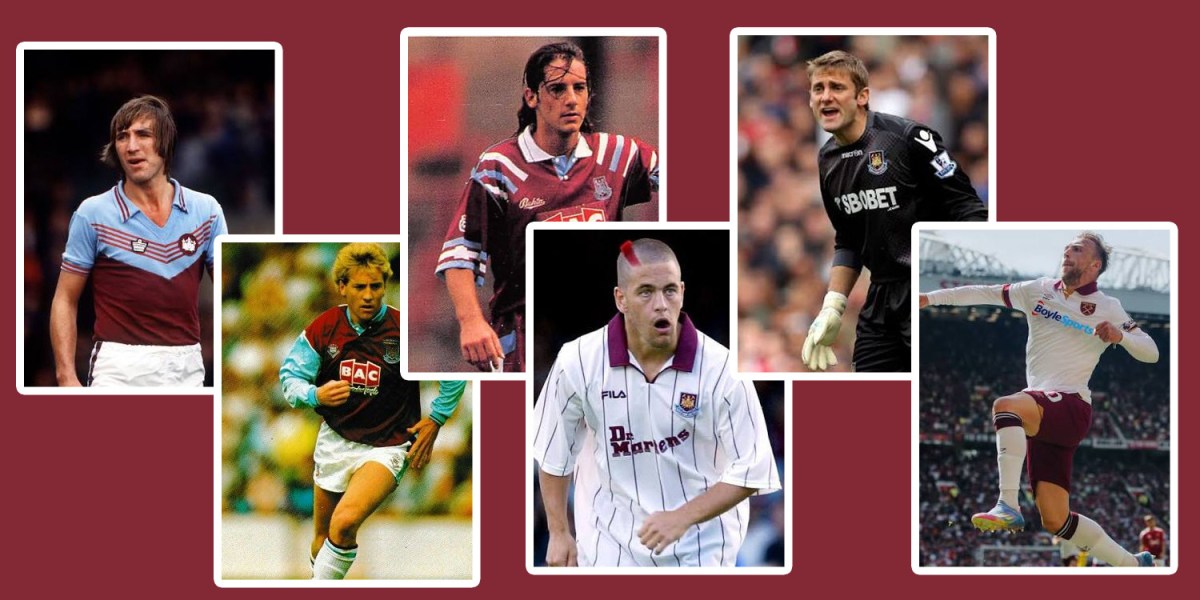
West Ham have a long history of bouncing back from relegation. I have followed the club since 1958 and I have witnessed us drop out of the top flight six times. Since dropping down in 1978, 1989, 1992, 2003, 2011 and now 2026, the club has generally responded well to the challenge of life in the second tier. In fact, with the exception of the period following the 1978 relegation, we have never spent more than two seasons outside the top division before earning promotion again, and in 1978 we only spent three seasons away, and those were three of the most exciting seasons that I remember.
The first major test came after relegation in 1978. The Hammers started life in the Second Division impressively, a whirlwind start opening the season with a 5-2 victory over Notts County and we followed this up with a smart 3-0 away win at Newcastle United to top the league. Joy turned to gloom, however, with two home defeats in four days and we never again topped the league that season. The first two games suggested an immediate return was possible, and we remained in promotion contention in the top five for much of the campaign. However, a poor run towards the end of the season, four wins in the last sixteen and just one win in the final seven games saw us finish fifth and miss out on promotion.
The following season brought one of the most memorable achievements in the club’s history, as we won the FA Cup despite still being outside the top-flight. However, league form was inconsistent and incredibly we only finished seventh. How was this possible with players of the calibre of Parkes, Stewart, Lampard, Martin, Bonds, Brooking, Devonshire, Holland, Neighbour, Cross and Pearson?
After a narrow 1-0 defeat against Liverpool in the Charity Shield at the start of the 1980-81 season we disappointingly lost the opening league game at home to Luton Town. From there we went on an amazing unbeaten run winning fourteen and drawing three games before a defeat in mid-November to Luton Town again! By then we were at the top and never relinquished the top spot finally securing promotion in the record-breaking season which saw us win 28 and draw 10 of our 42 games. 66 points (just 2 points for a win then) would have been 94 points in the modern three points for a win times. It meant that it took the club three seasons to regain top-flight status.
When we were relegated again in 1989, the response was less convincing initially. The club experienced managerial upheaval and were mid-table for much of the season under Lou Macari. We eventually finished only seventh in our first season back in the Second Division. However, under Billy Bonds we produced a much stronger campaign in 1990-91. The team went unbeaten in the opening 21 league matches and built our promotion challenge on a strong defensive record. Early results in the first four games included draws against Middlesbrough and Portsmouth before wins over Watford and Leicester City. That consistency helped us win 24 and draw 15 of our 46 fixtures amassing 87 points to finish second (behind champions Oldham!) and secure promotion back to the top after two seasons away.
The 1992 relegation produced a much faster recovery. We won our opening match at Barnsley but then suffered defeats against Charlton Athletic and Newcastle United. Rather than derailing their campaign, those setbacks appeared to galvanise the side. Billy Bonds’ team quickly found momentum and produced several emphatic victories, including a 5-1 win at Bristol City and a 6-0 home victory over Sunderland. By the end of the season, we had finished runners-up with 26 wins and 10 draws and returned to the top flight which was now the FA Premiership at the first attempt with 88 points in second place behind Newcastle. We needed to beat Cambridge in the final game of the season to ensure automatic promotion and achieved this with second half goals from David Speedie and Clive Allen.
Perhaps the most frustrating recovery attempt came after the club’s relegation in 2003. Despite possessing considerable talent and expectations of an immediate return, West Ham were unable to secure promotion straight away. The season began positively with a victory over Preston North End, but inconsistency soon followed. Manager Glenn Roeder departed early in the campaign and the club eventually reached the play-off final, where we were beaten by Crystal Palace. Promotion finally arrived in 2005 under Alan Pardew, meaning West Ham spent two seasons outside the Premier League.
The 2011 relegation is perhaps the most relevant comparison to the current situation. With Sam Allardyce appointed as manager and a squad that retained significant Premier League quality, West Ham entered the Championship as one of the favourites for promotion. However, the campaign did not begin perfectly. The Hammers lost their opening game 1-0 at home to Cardiff City before responding strongly with victories over Doncaster Rovers, Watford and Nottingham Forest. Although we narrowly missed automatic promotion, we eventually secured a return to the Premier League by winning the play-offs and defeating Blackpool at Wembley.
The 2026-27 Championship campaign presents a fresh challenge. We remain one of the largest clubs in the division with massive support, the biggest stadium, and continue to possess players with top-flight experience. But are we good enough? These are the players who took us down. We’ve lost two talented players but received top dollar for them. We could do without the boardroom turmoil which doesn’t help. We could do with an injection of some talented new players. The evidence of pre-season games doesn’t fill me with great enthusiasm for our prospects for an immediate return. But I accept pre-season games can be deceptive.
The Championship is notoriously unpredictable over a 46-game season. We are clear favourites with the bookmakers to win the league and earn promotion but relegated Premier League clubs often dominate the early betting because of parachute payments and assumed squad strength. However, the league’s competitiveness regularly produces surprises, and I certainly would not risk my money on a swift return.
Looking across the past five completed relegation cycles, a clear pattern emerges. West Ham have usually responded positively to relegation, earning promotion within one or two seasons on four occasions. Only the aftermath of the 1978 relegation resulted in a longer stay outside the top-flight, but that was just three seasons and what seasons they were once we got accustomed to the level. That record provides grounds for optimism that the latest setback will prove temporary, even if history also shows that promotion is rarely as straightforward as we supporters hope that it will be.


Well, squad strength is something we certainly don’t have at the moment Richard. Probably Diouf and a couple more through the exit door, too. Club need to bring in quite a few decent players before season starts or probably mid table finish. I didn’t renew season ticket a while back, but the 52,000 who have renewed did so in good faith that we would enter a new positive era after the Sullivan / Brady shambles that went before. So, whether it’s Kretinsky / Staveley or whoever ends up pulling the strings, they had better act fast or they will experience quite early the hostility of the fan base.
LikeLike
For me ..So far the players that have been sold,were only around for a season.. Keeping Mav .. Soucek.. Bowen..JWP .. Alvarez is the motivation for a good year.
Im one of the 52000 so I’m all in for promotion this season!…COYI.⚒️
LikeLike
Hi jb
Keeping those players is good but we do need some more quality to replace those that have gone.
I’m hopeful for promotion, but not more than that at the moment. Historically we’ve only bounced back the following season twice after being relegated five times. Let’s hope it becomes three out of six. But it won’t be easy.
Richard
LikeLike
Hi Ken
Thanks for your comment.
We certainly don’t have squad strength when being compared to Premier League clubs, but I don’t know enough about the comparison with Championship teams. Yes we certainly need to bring in some quality players or we’ll struggle to return to the top tier soon.
We never do seem to act fast do we?
If only the timing of the transfer window would align with the close season and end when the season begins. Why can’t this happen?
Richard
LikeLike