Seven Points Thrown Away: And So It’s My Assumption, Nuno’s Up The Watford Junction

Except for the names and a few other changes, it is the same West Ham story at Vicarage Way as slow build up, risk aversion, poor movement and a lack of penetration lead to frustration and the loss of more important league points.

Vicarage Road, Watford. Saturday 29 August 2026. 3:00 PM. Light to Heavy Showers: 19C

Pre-match Thoughts

As ever the big question when West Ham play Watford is “are Watford a London club?” The evidence is conflicting. I’m sure they appeared in a bold typeface in the old Evening News/ Standard Saturday night classifieds; and were occasionally featured on London Weekend Television’s Big Match the following day. The town is served by the London Underground, sits inside the M25 and is no further from Central London than Romford is. On the other hand, it officially remained part of Hertfordshire rather than being annexed (as Romford and indeed West Ham were) during the expansion of Greater London in 1965. So, there you have it. The answer is “possibly”.

The other big question is what lessons, if any, will have been learned from last Saturday’s woeful effort against Charlton and the noticeable midweek improvement at Southampton? We’ll know fairly soon.

This will be the penultimate game before the transfer window closes as West Ham will again be playing on the actual night. Although the Boardroom has lost some its reputation for having more leaks than soup in a basket, the window has largely played out much as it always has. Better prices have been received for departures admittedly, but progress on signings has been as hesitant, haphazard and protracted as usual.

Alongside the transfer window, the pre-emption round for the purchase of the Gold family shares also slams shut over the coming week. The widespread belief is that Daniel Kretinski will emerge as the main buyer, but we can’t know that for certain. Maybe he has seen enough over the last few weeks to have a change of heart and pass the poison chalice onto the Staveley consortium.

The Teams Are Announced

Nuno’s team selection shows three changes from the side that started against Charlton. Out go Mavropanos (injured), Scarles and Piroe. In come Veltman, Golambeckis and Mukasa. On paper it looks like a 4-2-3-1 with Mukasa deployed as the creative attacking midfielder. Walker-Peters is switched to left back ahead of Mayers and Scarles.

A surprise after the midweek performances is that it is Kante who gets the nod over Orford. This may be due to Nuno’s preference for height in centre of midfield – the same rationale for Soucek’s frequent starts last season. The absence of a quick, mobile and tactically aware deep lying midfielder to protect the defence continues to stick out.

Match Report

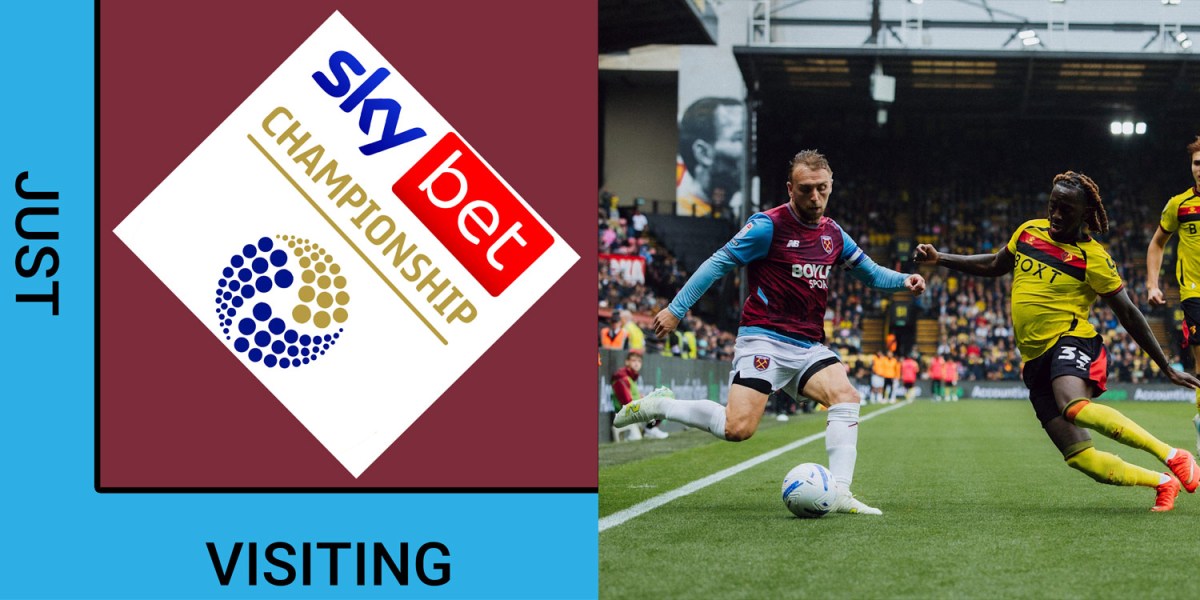
Watford 1 (Nabizada 19) West Ham 1 (Pollock (OG) 27)

There was too little action this week to divide the match report into its separate halves.      

West Ham had a brightish opening ten minutes but with only another blocked shot from Bowen to show for their efforts. The early momentum then switched as the home side began to grow in confidence and into the game. The Hornets took the lead on 19 minutes with a neat lobbed finish that a proper goalkeeper with normal sized arms should easily have saved. For a while, Watford’s ascendency suggested they might well double their lead to add to visitor’s woes. However, the Hammers survived and largely control possession for the remainder of the game. Apart, that is, from a short spell of Watford dominance just after the break as the Hammers recovered from Nuno’s inspiring half-time team talk.

The game had returned to all square by the break thanks to an unnecessary attempt to play out from the back by Keben in the home defence. Full marks to Taty for not giving up the chase but the goal came gift-wrapped rather than as a reward for any incisive claret and blue play.

The second half was almost entirely without incident. The Hammers created little from their near 70% possession or from the succession of corners which floated carelessly into the night. Watford’s occasional forays up field, while executed with purpose, rarely caused meaningful danger.

It was textbook low intensity football from West Ham. The apparent formation change made little material difference and played out as a hybrid of the anticipated 4-2-3-1 and the 4-4-1-1 that has plagued our approach since its unexpected short-term success at the start of the year.

Transition was again painfully slow; defined by a pointless back and forth in the defensive third. The theoretically most dangerous outlets (Bowen and Solomon) typically received the ball in deep, static positions with a full defensive line reformed in front of them – given ample time get back into its shape.

For the most part, our wingers do most of their work well away from the danger areas. Cutting inside before running out of space and being forced to play sideways or backwards. It is a rarity to have a ball played into space for a wide man to run onto. And if (and when) a ball is eventually delivered into the box, there are never enough bodies arriving to attack it.

Everything we see is a consequence of the low-risk mindset at the heart of Nuno’s footballing philosophy. It might occasionally work when the opposition is attack minded (as it did at Southampton) but is hopeless when confronted with a low block or intense pressing. The sad fact is that this will be case in the majority of Championship games this season.

Of equal significance is the lack of movement this risk averse attitude engenders. Where are the runners, who is creating the space for others to exploit? Mukasa struggled to make any impact – as other attacking midfielders have before him – due to an obvious lack of passing options and movement in front of him. It is a team playing on their heels rather than their toes. This has been a long running West Ham problem relieved only temporarily during the Lingard/ Rice purple patch of 2021.

Supporters are right to want and expect more signings before the window closes. But those signings should be to convert a squad already good enough for top four into certainties for promotion. The fact is we currently sit in 19th place having dropped seven points from the nine available. The only reasonable conclusion is that the underlying problem lies in the dugout. A mindset that was complicit in last season’s relegation and refuses to budge or adapt.

Will bringing in different players make the necessary improvements if nothing else changes. Marginally perhaps but not to the level required to achieve automatic promotion. It would the equivalent of signing up more A-list actors for a movie where the Director is clueless and the script and screenplay are an abomination.

The writing must surely be on the wall for Nuno. There are five more league games and an EFL third round encounter before the international break. It will need a massive turnaround for the manager to survive the chop at that point. We can officially launch the six games to save his job countdown, starting with Tuesday night’s clash with Wolves.

One bright spot from the game was the assured performance of Golambeckis in the centre of defence. He has the look of a very intelligent centre-back with good pace and great awareness. It will be interesting to see how he fares against the more agricultural of Championship strikers. COYI!


A Fistful Of Transfer Fees: A Time To Spend, Spend, Spend? Plus Preview of West Ham at Watford

The lows of last Saturday were partly offset by a youth inspired Carabao Cup high at Southampton. What now for West Ham as they return to league action in the last weekend of the transfer window?

It’s been a fairly typical week in the life of a West Ham supporter. From the anger and despair of that submissive performance against Charlton at the weekend to the delight of a youth inspired Carabao cup romp on the south coast a few days later.

People say that following West Ham is roller coaster ride. But it’s the reverse really. On a roller coaster the thrills come on the way down while in football they are felt on the way up. Perhaps ultimately neither truly live up to expectations or last long enough in the memory.

We should really have learned our lesson by now or accepted that our support is no more than an annual subscription to disappointment. Wouldn’t it be refreshing if the club marketed it in this way? Upgrade your Casual Sufferer free trial to enjoy the full benefits of our Frequent Flagellant membership. A special limited time offer which must end when the transfer window closes.

One of the accidental benefits from relegation is the opportunity to survive an extra round or two in the Carabao Cup before the obligatory autumnal elimination comes around, usually away at Liverpool. Even so, an away tie with Southampton looked like no easy task on the evidence of form to date. The Saints boasting an impressive home record at the St Mary’s Stadium.

However, despite the best efforts of master spy, Tonda Eckert – the miniature microphone hidden behind the Piri-Piri sauce bottle in the Rush Green canteen, motion tracking cameras installed on the top of training cones or sending Sammy Saint along with a pair of Meta glasses – he was unable to prepare his side for the youthful exuberance of the West Ham performance.

Once again, the early signs were not encouraging. A lack of awareness and tenacity in the Hammers defence allowing the home side to grab a soft early lead. Gradually, the youngsters grew into the game, drew level just before the break, and blew the hosts away in the second period. Josh Ajala stole many of the headlines with a debut brace but there were also fine contributions from Lewis Orford, Divine Mukasa and Airidas Golambeckis. It was pleasing to see four very well taken goals.

It would be premature to bet the remainder of our season on these young lads but they can surely play an important part and become part of a brighter home-grown future. For me, seeing Mukasa carry the ball forward with confidence was a reminder of how much this has been missed from the Hammers line-up – unfortunately, he is not our player.

I have seen suggestions that Nuno can use the victory as a blueprint for the rest of campaign. If he does let’s hope he doesn’t have it back-to-front or upside down.

With the transfer window still having several days to run, the club is mired in a phoney squad building phase. Not knowing who can be shifted and who can be recruited during the final days as the clock ticks down. The scale of problem has been magnified by circumstances at West Ham this time around. The finances were in a godawful mess even before relegation and will have been giving the bean counters double entry nightmares ever since thanks to a huge drop in revenues, a boardroom stalemate and the need to comply with the 85% squad cost ratio rules. Untangling the gordian knot of inherited chaos, outstanding debt, and ongoing transfers while remaining competitive cannot be underestimated. A bit like attempting to repair a cassette tape that had got mangled up in the tape player with only a pencil for assistance – but harder! Will it ever play properly again?

The good news is that the completed and pipeline transfers out will have saved tidy sums on player wages and amortisation, as well as generating significant player sale profits – which can be added back in to revenues for SCR purposes. Hopefully, it is clear by now what is left in petty cash to strengthen the squad in the final days of the window – assuming there is money left over after meeting outstanding cash flow obligations from previous seasons.

I doubt it’s going to be spend, spend, spend but those gaps in the squad won’t fill themselves. I still want to see reinforcements at centre back and defensive midfield as a minimum – whether that means spending a portion of the transfer windfall or raiding the loan market. As long as no-one is daft enough to sign Reiss Nelson.

Saturday sees West Ham’s first return to Vicarage Road since December 2021, a game the Hammers won 4-1 and featured Nikola Vlasic’s only goal for the Hammers. In fact, the last three visits to Watford have each ended with comfortable away wins at an aggregate of 11 goals for and 3 against.

Can we assume that Nuno has finally seen the light and abandons his 4-4-2 or 4-4-1-1 obsession for good. It was only ever an expediency to cater for the inclusion of winter signings, Taty and Pablo. A 4-2-3-1 formation makes far more sense in ensuring we are not overrun in midfield and vulnerable through the centre. My own pick for a starting eleven would be: Areola • Veltman Mavropanos Kilman Mayers • Engels Orford • Bowen Mukasa Solomon • Taty (or Piroe).

Watford have started the season with a home win against Southampton and an away draw at Wrexham in the league. In midweek, a much-changed team were thrashed 5-1 Peterborough at Vicarage Road. With a recent history of constant upheaval, being a Hornet’s fan must be equally as frustrating as being a Hammer.

A scene from the Comic Strip’s spoof spaghetti western “A Fistful Of Travelers Cheques” predicted perfectly how the club would later be run under their current owners:

Carlos: Which football team do you support?
Miguel: Eh… Watford.
Carlos: [spits] Watford can’t play to save their lives, amigo!
Miguel: I agree.
Carlos: Oh. Oh, well then, I don’t agree! I think they can play. They just need a new manager!

Any many a new manager have they had. Current incumbent, Alessio Dionisi, is the 25th to hold the title since the Pozzo family assumed control in 2012. Do they bother putting a name on the door? Hiden away on the list are some familiar old names including Glenn Roeder, Gianfranco Zola and Slaven Bilic. Of all the managers employed, it is Zola who holds the record for surviving the greatest number of games.

Other West Ham connections are one time director Jack Petchey who owned Watford during the 1980/90s – buying from and then selling back to Elton John – and current CEO, Scott Duxbury, who held the same role at Upton Park prior to the Gold & Sullivan takeover.  

According to the internet, Dionisi’s style revolves around building from the back, attacking overloads, intense pressing and pushing bodies forward. Basically, the same as most sides outside of West Ham. It should allow space at the back for the Hammers to exploit. It will be a good opportunity to see how young players react to an intense pressing opponent.

What we will get on the day is anyone’s guess. Can we maintain a decent level of intensity over 90 minutes, can we not only pass accurately but with purpose, can we manage to defend a lead without dropping deeper and deeper? Come on Nuno, you know it makes sense. COYI!       

West Ham Midweek Briefing: Late Joy in N17, All Kicking Off at Corners and the Customary Transfer Mayhem

Winning at Tottenham with last minute scrambles, Laughing out loud cos the Spuds are a shambles, Buying defenders but not Tyrone Mings, These are a few of my favourite things!

Last Gasp Jubilation at the Tottenham Stadium

Any win against Tottenham carries with it an extra layer of smug satisfaction. Winning away makes it doubly so. Four-goal David Cross in 1981, the 1984 Easter massacre, Dani’s header in 1996, Ravel Morrison’s 2013 solo effort, and that first defeat at their new stadium in 2019. They are all part of West Ham folklore.

Whether Saturday’s game will live as long in the memory will depend more on what happens from here on in than events in the match itself. Will it kickstart another great escape or be just a momentary highlight in an otherwise miserable season. Like Kenny Brown scoring the winner against Manchester United in 1992.

With none of the bottom six teams losing at the weekend, it was a crucial time to get a result. Critical, in fact, to return home with three points rather than just the one. At least some ground was made up even if the size of the challenge remains daunting for a team whose resting state defaults to caution.  

Whether it was inspired or not by the arrival of new coach and fellow countrymen, Paco Jemez, Nuno announced a surprisingly attacking line-up to face Spurs. A retro 4-4-2 formation that featured both Taty Castellanos and Pablo Felipe up front supported by Jarrod Bowen and Crysencio Summerville on the flanks. There was no place for either Freddie Potts or Soungoutou Magassa with Tomas Soucek preferred to partner Mateus Fernandes in central midfield. The adventurous selection adding a sense of ‘Make or Break’ to the afternoon.

As we have come to expect though, it was a game of two halves from the Hammers. Or more accurately, given the amount of added time we get these days, a game of two nine-sixteenths. It’s either, an adventurous first 45 followed by ultra caution should we take the lead. Or a lethargic opener, followed by a burst of second half energy as the result of multiple half-time substitutions.

West Ham were easily the better side before the break with goalscorer Summerville and the impressive Fernandes as standout players. With only one goal to show for their efforts, however, it was always going to be a fragile lead if the intention was to defend it in the second half. Which is exactly the tactic that Nuno employed.

As for Spurs, they were dreadful in the first period but came out with more purpose in the second. Even then, despite bossing possession, their threat came mainly from hopeful long shots. But with the West Ham game plan a senseless combination of low blocking and panicked clearances, the hosts only needed one clearcut chance to draw level. Any pretence by the Hammers of rapid counterattacks or holding the ball up to ease the pressure on the defence had been left on the dressing room whiteboard. Win possession then immediately give the ball back to Spurs was the accepted modus operandi.

The goal when it came was almost a carbon copy of the one conceded to QPR in the previous weekend’s cup game. A cross from the right bypassed the centre backs who had been drawn to the near post, and the scorer stole in front of Aaron Wan-Bissaka’s token challenge to head home.

At that point, if felt that the home side were sure to go on to win the game. So, the sucker punch, when it came was completely out of the blue. Let’s not kid ourselves that introducing Callum Wilson was an inspired tactical masterstroke. The purpose was solely to waste a few more precious seconds of added time. The change should have been made 20 minutes earlier, especially with Taty on a yellow card.

The goal itself was a scrappy affair just after Wilson might have scored anyway with a decent opportunity. The resultant corner kick from Ollie Scarles was a typically benign floaty affair but Vicario flapped, the ball bounced loose and Wilson demonstrated his predatory striking skills. Amazing what a striker with an eye for goal can come up with.

I was convinced that after the wild celebrations had died down, VAR would find a way to disallow it. But this time they couldn’t, and we could all sleep soundly in our beds for a change.

All Kicking Off At The Corners

Set piece goals – and goals from corners in particular – are becoming increasingly significant in Premier League games as the antidote to the tactical stalemate of open play. More attention is paid towards their execution by (most) coaches, and teams take far longer to set up for corner kicks and throw-ins than ever before.

West Ham were once a feared set piece outfit but now, without anyone to fearlessly attack the ball in the opposition box, they have slipped down the rankings. Equally, they have no long throw exponent and have yet to score direct from a free lick this season. A set piece winner was therefore most welcome.

A by-product of the set piece shenanigans are the frequent melees in every penalty area. A confusion of pushing, pulling, holding and shoving that referees mostly ignore but, where every so often, the music stops and a penalty is awarded. Malick Diouf experienced this to his (temporary) cost in the AFCON final. In isolation, it was a stupid piece of holding. But if all similar incidents were given, we’d have six or seven penalties per game. I am sure PGMOL are frantically working on the most implausible response to stamp it out for next season.

Semi Annual Transfer Mayhem

The West Ham transfer window is its usual muddle of too many cooks spoiling the soup in a basket. There’s Max Hahn trawling through his spreadsheets, Nuno rifling through old Panini sticker albums with super-agent Jorge Mendes and the Chairmen undermining all and sundry in cahoots with his traditional transfer connections and unveiling the latest David Sillyloan special.

Sullivan may well have had a valid point about not releasing Callum Wilson but why not keep the difference of opinion in-house rather than broadcasting it to the world. Quite what we’ll end up with by the time the window closes is anyone’s guess.

From reading various West Ham discussion boards, there are plenty of opinions as to where the transfer priorities should be. A reflection of how threadbare and unbalanced the squad has been allowed to come. It is impossible to fix or fill each and every gap in the next two weeks and so any further recruitment needs to be carefully targeted to the cause of survival. To me that means players able to make an immediate impact, not extra bodies brought in as cover. The reality is that we will have to muddle through and hope for the best in some positions.

I still feel the addition of a creative ball carrying attacking midfielder is the most significant gap. Someone to replace the ineffective Paqueta in making things happen – a Morgan Gibbs-White equivalent. Others make a strong case for an additional winger or two on the basis that we mostly attack down the flanks. But my answer to that is we attack down the wings because no-one is capable enough to go through the middle. Our attacking play needs mixing up and must become much less predictable.  

It looks like the 22-year-old Venezuelan, Keiber Lamadrid will be joining on loan in the next day or two. An inexperienced South American winger to replace the one we have just let go. Will we just leave him hanging around the training ground like Luis Guilherme. It was odd that Guilherme wasn’t sent out on loan or get at least some game time with the U21s. Good luck to Keiber. If he ever gets a game, he would be the third Venezuelan after Fernando Amorebieta and Salomon Rondon to play in the Premier League. It should be noted that both experienced relegation during their stays. COYI!

Dear West Ham, True Love: On the Eighth Day of Christmas, Please Send One Striker Striking

The halfway stage of the season is approaching, the transfer window will soon be open, and West Ham are slipping further behind in the relegation stakes. A spirited performance against Aston Villa did little to cheer things up.

Under different circumstances, the gift of eight maids-a-milking might make a reasonable enough gift for the eighth day of Christmas. But when it coincides with the opening of the transfer window – and your team is in danger of becoming stranded in the relegation places – far more pressing offering spring to mind than the oversupply of dairy produce.

In fact, I’d go even further to say I’m equally ambivalent about pipers piping and drummers drummingas well. Although lords-a-leaping could coe in very useful for defending set pieces.

With the transfer window a matter of weeks away, the imperative is not just to act but to act as fast as possible. Ideally, just as Big Ben has completed its chimes and before the strains of Auld Lang Syne have faded away our first new signings would be first footing into the London Stadium armed with whisky, shortbread and the gurantee of a dozen goals.

For me, striker and attacking midfielder are the priorities although further central defensive reinforcements wouldn’t be out of the question. But that wish list doesn’t include the recently linked Josh Sargeant and Adama Traore, neither of who offer an upgrade on what we currently have. The clock is ticking and if ever there was a time to pull a rabbit out of the hat, it is now.

Of course, decisiveness in the transfer market is hardly hard-wired into the club’s DNA. Should past performance be anything to go by, then David Sullivan will spend the entire window haggling, stalling, hindering, penny-pinching and frustrating right until the very last minute. By which time it could all be too late.

It has to be said that West Ham’s performance against Aston Villa was one of the better efforts of their season. It was an entertaining and even game and there could have been few arguments if the Hammers had earned at least a point, if not all three. But that is three games in the last five now where winning positions have been lost or surrendered. Where a potentially table climbing nine precious points was withered away to two.

It’s not hard to detect clear signs of improvement since Nuno’s arrival at the club, but then that is a particularly low bar. Graham Potter’s idea of being competitive was to only lose matches by a single goal while offering next to nothing by way of offensive threat. Nuno’s Hammers play with greater purpose and spirit and have been able compete on the pitch for lengthy periods. The weakness is not having a strong enough bench to press home advantages or see games out as necessary – although I regards part of this shortcoming as self-inflicted by Nuno himself.

This week’s selection wheel of fortune sprang just the one surprise. The decision to relegate Callum Wilson to the bench and start without a recognised striker. As ever, the bench was top heavy with defensive reinforcements and lacked realistic game changing resources.

It couldn’t have been a brighter, more profitable start for West Ham. An uncharacteristic high press, a defensive lapse by Villa and Mateus Fernandes broke free to curl home his first Hammer’s goal with less than 30 seconds on the clock. So, just 89½ minutes plus stoppage time to hold on then.

But rather than a full-scale retreat, the game remained a remarkably open, end-to-end affair. Villa equalised through an unfortunate Dinos Mavropanos own goal after Watkins had failed to get his head to the ball, only for West Ham to regain the lead before half time thanks to Jarrod Bowen’s quick reactions.

However, it was not to be a famous victory over the Premier League’s form team, and two goals from the always impressive Rogers sealed the deal for the visitors. The first stemming from a typical cheap giveaway by Lucas Paqueta and the second when Rogers was allowed far too much space in the centre of the pitch to strike at goal.

While it’s always tempting to pin each goal conceded on an individual player, I believe there are systemic issues with the way that West Ham are set up that leaves them exposed.

The first is the constant switch between a back four and back three/ five which appears to confuse role of the full/ wing backs. In a four, they continue to get forward but, in doing so, tend to neglect the defensive duties that the formation demands. AWB, especially, is slow (almost unwilling) to get back into position when a forward run is thwarted. I’m all for tactical flexibility but is it too much too soon given the early days of the coach/ player relationships. Likewise, the weekly rotation of playing with or without a main striker. In the circumstances, would not finding a plan and sticking to it be more productive? Leave the more subtle and intricate changes for a pre-season.

The second is a structural issue that is common to all low-block fundamentalists when they attempt to dip their toes into more adventurous waters. If you allow or encourage your midfield players to get further forward, then it is madness to stick with such a deep defensive line. It creates way too much space between the lines for opponents to exploit. As Rogers did with ease for the winner.

I do like the look of the Fernandes, Freddie Potts, Soungoutou Magassa midfield partnership and hope Nuno doesn’t think it needs tinkering with. I can only see it getting better with the passage of time. The disappointments for me from yesterday, however, were Paqueta and Crysencio Summerville.

Although Paqueta produced a couple of delightful passes his overall contribution was again very poor. And fewer and fewer referees are now falling for his naïve attempts to buy a foul whenever he finds himself boxed in by the touchline.

Summerville, on the other hand, gives the outward impression of being an exciting crowd-pleasing player. Bbut his final delivery is about as reliable as a hands-free soap dispenser. I’ve never known a player choosing to run so frequently with the ball without ever having it under control. Being such a lightweight player, it does raise concerns as to his effectiveness at the top level.

Nuno was very slow to make any substitutions as legs started to tire. Why leave the introduction of Callum Wilson so long when there was an obvious opportunity to win the game with 20 to 25 minutes remaining? The triple substitution with two minutes to go was simply nonsensical. While throwing Tomas Soucek into the mix could be seen as a belated gamble to grab a late leveller, it was never likley to work without a functioning midfield to move the ball forward.

West Ham’s next outing is the traditional mauling at the hands of Manchester City next Saturday. Following that come four winnable games. At home to Fulham and Brighton (the season’s halfway point), then away at Wolves and home to Forest. We might know by then whether this is going to be an Avram Grant season or an Alan Curbishley great escape one.

Can Sunday’s spirited performance be the springboard for greater things. Just as the 4-3 home defeat by Tottenham did in 2006/7. Is Carlos Tevez still available? COYI!  

West Ham Briefing: Potter’s Wheel of Good Fortune, Summerville Love-In and Last-Minute Window Shopping

It was a vintage unexpected West Ham display at Nottingham Forest where only the overzealous or insane could have predicted a 3-0 demolition masterclass for Graham Potter’s men

I was so convinced that Sunday’s game was going to be another heavy defeat that I considered wearing a black armband just to watch it. How wrong I was. And it was this sudden and unexpected transition from dysphoria to euphoria over the course of ninety minutes (plus added time) that made victory so sweet and uplifting.

Having criticised Graham Potter in the past for his poor record in the West Ham hot seat, it is only fair to give him credit for his part in yesterday’s success. The decision to scrap the three centre back experiment in favour of a back four certainly had my support – and that of many others judging by online reaction. Some might say it was a case of Potter playing catch-up as many had singled out the defensive formation as the side’s greatest issue since the opening day. I have a real dislike of the back 3/5 as the default formation – it is too predictable and stifles creativity – and it is no surprise that so few coaches opt for it – only Manchester United, Wolves and Crystal Palace on a regular basis as far as I know.

Still, Potter made the right call and the relief in his demeanour palpable. In his post-match comments, Potter suggested that defeats to Sunderland and Chelsea were primarily down to individual errors. That it was results rather than performances which had been poor. For now, we must agree to disagree on that point but let’s see how events unfold after the international break. The win was copybook awayday smash and grab, and it will be fascinating to see how the approach translates at home in the London Stadium, where the coach’s record sits at just two wins from ten.

The Hammers made the usual tentative start at the City Ground with worrying early signs that they could be caught out by early through balls. But once settled, a more compact West Ham rearguard were able to limit the host’s threat to a succession of hopeful crosses. With Kyle Walker-Peters and Malick Diouf doing a great job of policing the flanks, the excellent Dinos Mavropanos and skipper Max Kilman were free to dominate the penalty area in a way that is expected of central defenders.

The brightest moment of the first half came when impressive debutant Mateus Fernandes perfectly picked out the run of Lucas Paqueta whose first time effort was tipped over by the Forest keeper.

Despite the Hammers growing confidence, caution continued to get the better of them when in possession. Reluctant to take risks, commit players to attack or move the ball forward with purpose. It took a collection of inspired substitutions to change the complexion of the game completely – Callum Wilson (64th minute), Andy Irving (75) and Crysencio Summerville (82) on for Niclas Fullkrug, James Ward-Prowse and Fernandes respectively.

The introduction of Summerville might well have been a token gesture; to give him a short run-out after such a lengthy lay-off. Yet within six minutes, his pace, energy and direct running had set up Jarrod Bowen for a delightfully instinctive opener and won the penalty (converted by Paqueta) to double the West Ham lead.

The signing of Callum Wilson had divided opinion among West Ham fans. There’s no doubt he is an intelligent and mobile footballer with a level of close control rare in a West Ham striker. His presence and movement caused immediate nuisance to the Forest defence, and he capped off a fine display with a well taken headed goal – West Ham’s third and his 89th in the Premier League.

Special mention also to Irving who, as ever, acquitted himself expertly in the few minutes he was allowed on the pitch. Quite why he has never been given the nod over several of the other underperforming midfielders is an ongoing puzzle.

And no forgetting a first clean sheet of the season. Well-done to Mads Hermansen for bouncing back from an awkward start to his West Ham career. He wasn’t unduly tested by Forest but handled everything thrown at him competently. It was noticeable how comfortable he is with the ball at his feet.

Despite Sommerville grabbing the headlines, my man of the match vote goes to Diouf. Strong in defence, quick to get forward and provider of wonderful crosses. But there were also many other fine performances including Mavropanos. Walker-Peters, Fernandes, Bowen and Paqueta. The mazy Payet-esque run by Bowen would have been a delightful goal had it not been for Wilson’s intervention.

Only time will tell whether Potter has answered his critics with this unlikley win. In many ways, it was a very un-Potter like victory based on fast breakaways/ counterattacks and defending a lead by trying to score more rather than sitting back, bringing on more defenders, and conceding space and territory. Was this by accident or design? Trying to visualise a Potter lineup that simultaneously includes Magassa, Fernandes, Paqueta and Summerville stretches adventure to mind bending proportions. Never mind, at least we now have three surprise points on the board and are only three away from a Champions League spot😉.

VAR – Ruining Football Since 2019

When West Ham scored their opener on Sunday, I was waiting for VAR to rule that the throw-in leading up to it had been awarded to the Hammers incorrectly and that the goal should be chalked off. This came on the heels of one of the most ludicrous VAR interventions ever in the Chelsea – Fulham game on Saturday when a collision in one half of the pitch was deemed to be a careless enough challenge to rule out a Fulham goal in the other. Quite why the VAR guy felt the need to get involved, why the referee went along with it and how it can take four minutes to check a clear and obvious error, highlights everything that is wrong with the implementation. Putting useful technology into the hands of incompetents will always fail. VAR is sucking the life, joy and spontaneity out of the football experience.

It used to be said that two pairs of eyes are better than one. But whoever said that had never met referees. Keep the goal-line technology and semi-automated off-sides but chuck the rest out until someone sensible can be found to operate it.

Pawn Man Swoops In To Save Kyle MacFallguy

The funniest story of the internet content week was the idea that David Sullivan was taking back control of the club’s transfer business due to the failure of Potter and MacFallguy to identify any players the Chairman was prepared to sign. Surely only an idiot believes this spin from the man who has undermined every recruitment specialist hired by the club over the last ten years.

Pawn Man announces two new West Ham signings

As it happens, it may just be possible that the club has made a few excellent signings this window. At least they are in the right age range and can move beyond snail pace. We will need to wait to see how reasonable the transfer fees paid turn out to be.

The club has taken an unusual approach to transfers. Announce at the start of the window that you are skint and must sell before you buy – so that buying clubs can screw you on fees received. Then do little or nothing for over 80 days before desperation sets in and allows selling clubs to similarly screw you on fees paid.

Today is, of course, the final day of the summer window. Most often, it is an anticlimax at the London Stadium especially when considering the typical time needed to complete a medical and seal a deal for each player. Will this year be any different? Was winning on Sunday bad timing, giving the board an excuse to do nothing more now that everything seems ok again?

We can definitely expect a few more outgoings with Nayef Aguerd and Guido Rodriguez ready and waiting with their bags packed . Maybe Andy Irving will also depart in search of regular football – I hope not. Plus, there are still rumours about Tomas Soucek heading for a Moyes reunion tour.

As for incomings, we are still short in cover for central defence and striker. Useful youthful cover in both areas would be more than welcome.

The bright spot is that with the window closing (slamming shut) at 7pm, there’s no need to stay up late this year. COYI!

West Ham Wednesday Bulletin: Graham Plotter And The Window Of Uncertainty

As other clubs fine tune their squads for the upcoming season, the promised squad rebuild at West Ham remains stalled in the planning and plotting stage. It’s all looking disastrously last minute.

Updating Transfer Windows – 13% Complete – Please Do Not Switch Off

What better way to undertake a massive summer squad overhaul than to leave everything until the last minute. While other clubs move with purpose to secure their chosen signings, the good folks at the London Stadium are left paralysed in an endless loop of talk but no action.

At the time of writing, eight players who featured in the first team last season have already checked out. If reports are true, the club are also willing to push a further three or four through the departure gates over the coming weeks. Regardless of the quality of the departed, it’s one hell of a gap to fill with just over four weeks to go before the big kick-off – despite yesterday’s welcome signing of El Hadji Malick Diouf from Slavia Prague.

As fans we are frequently reminded how important it is to get in a full pre-season. It is the go-to excuse manager’s use after every poor start. And yet the cunning West Ham plan is to enter theirs with barely half a team. Past performance caveats notwithstanding, Graham Potter’s inability to create a cohesive unit in five months last season does nothing to dispel fears that there’s a season of struggle ahead – and the further hit of revenues that comes with it.

If anything can be read into the Diouf signing, it is that Potter intends to settle on a formation that involves wing backs providing width in advance of three central defenders. Possibly a 3-4-3 but, more plausibly, the less enterprising 3-5-2 underpinning the coach’s dream of competitively losing most games by a single goal. All that’s needed now then are the missing, keeper, central defenders, midfielders, and forwards to convert the dream into possession-based reality.

The transfer window stays open beyond the start of the season until September 1. There are sure to be more ins and outs – eventually, and almost certainly later than desirable. As always the list of online speculative targets is as lengthy, abstract and mysterious as Jeffrey Epstein’s’.

The Madness of Chairman Dave

It would be unfair to point the finger of indecision exclusively at Potter and Kyle Macaulay for the absence of transfer activity. For all we know, they have been working diligently and with laser sharp focus on a data driven list of potential young and athletic recruits to fit their chosen style of play. Players who would both improve the squad technically and ensure that it is faster, fitter, and younger. The signing of Diouf looks an excellent first step in that direction.

But as we all know, hovering in the background of any transfer negotiation is the malignant interference of Chairman Dave and his Baroness sidekick. Ready to scupper or derail the latest recruitment plans as he had with Husillos, Newman and Steidten in the past.

By chance, I came across an article I had written in 2017 (below) after hearing a Sullivan radio interview where he “accepted that by focusing on proven and experienced ability the club had adopted a short-term view for its player recruitment.” The suggestion being that this short-term thinking was about to change. But here we are eight years later beating the same drum on the club’s failure to adopt any semblance of long-term strategic thinking.

The West Ham friendly media continue to frame the Hammers transfer dealings as a delicate PSR balancing tightrope. Indeed, there may well be trouble ahead if PSR is not abandoned (as many expect) in favour of a simpler squad cost ratio. But this is not a today problem. And if the worse comes to the worse, why not sell the women’s team to yourself as others have already done?

The most recent financial distraction has involved scare stories circulating about the need to repay the club’s overdraft facility with Barclays Bank. This is an arrangement that has been in place some years and its relevance has been significantly exaggerated. In fact, a standout feature of West Ham accounts in 2024 was that the club has next to no financial debt, having paid off any external loans at the time of the last cash injection into the club. This is quite unusual for a Premier League club where financial debts of £300 million or more are not uncommon. It should be noted, however, that financial debts do not include outstanding instalments on player transfers.

Clearly West Ham do have a cash flow problem. It is something the Board must address independently of any PSR considerations. The need to inject capital on a regular basis is now an essential requirement for any Premier Club with ambition. If the current board are not up for that, then it’s time to find someone who is.

It’s Been The Ruin of Many A Poor Buy

I have mixed feelings about the transfer of Mohammed Kudus. Not that he was sold but the size of the fee that he finally went for.

Unless the club is bought by a sovereign wealth fund or similar, the only way West Ham can hope to mount a consistent challenge at the right end of the table is to profit from player sales. When you consider that Manchester City’s kit partnership with Puma earns more in a single deal than the Hammer’s combined Commercial and Matchday revenues then the size of the gulf is clear.

Kudus should have been a perfect model of buy low, sell low. Pick him up from a lesser league, develop him over a couple of seasons and sell on at a handsome profit. Yet despite early promise, it didn’t work out like that.

Some may say it’s good riddance to a player with a bad attitude. Others may see a player who became fatally frustrated with how he was handled by a succession of poor management decisions. Whichever it was, his first season promise evaporated to the point where none of the truly rich clubs were tempted by the lure of his buy-out clause. Throw in Sullivan’s bizarre decision to let the world know how skint West Ham were and it provided the perfect storm for Daniel Levy to nip in and buy Kudus at a knock down price. The transfer fee may represent an accounting profit of £30 million or so – a rare bounty for West Ham – but it should have been far higher.

Tottenham has often (along with West Ham and Manchester United) been one of the Premier League career graveyards for big money signings, but I predict Kudus will be a big hit there if Thomas Frank translates his rapid counterattacking style of football from west to north London.

Young, Gifted and Back (On The Bench)

For a club that styles itself as the ‘Academy of Football’, the record for developing young talent in recent years has been abysmal. In the last ten years, new academy graduates have made a total of 253 Premier League starts for the Hammers. Of those, 190 were Declan Rice with the remainder comprising Ben Johnson (38), Ollie Scarles (7), Grady Diagana (6), Jeremy Ngakia (5), Reece Burke (4), Reece Oxford (3). Without the good fortune of picking up Rice when he was rejected by Chelsea it is very sorry reading.

The idea then that today’s current batch of youngsters might come to the club’s rescue as ‘Potter Gives Youth A Chance’ sits somewhere between wishful thinking and clutching at straws. I am as thrilled as anyone whenever a player emerges from the youth setup to become a West Ham regular. And hopefully, one or more of the current crop can do so. But history advises caution.

I try to keep tabs on the players out on loan from West Ham season but did not get the sense of outstanding successes that some have been reporting. No-one really pulling up the proverbial trees. I would be very happy if there are breakthroughs this season but I wouldn’t want to bet our Premier League future on it.  

West Ham Monday Briefing: Too Quiet On The Transfer Front

With less than seven weeks to go before the big kick-off what is happening to the much needed rebuild at the London Stadium. How skint are we, who will be sold, who will be banned and are we ever going to sign any new players?

It was Kick-Off Day minus 47. The wind howled around the empty, soulless Rush Green portacabins, as dust swirled across the cracked, abandoned car park. A single corner flag flapped rhythmically in the breeze, forgotten when the last training session ended just a few short weeks earlier. Nothing stirred except for an old man and the squeaking wheels of a white line marker in the far distance – otherwise, no life, no sound; only silence and despair.

In one corner, a rusty padlock hung above a door marked ‘Head of Recruitment’. A handwritten paper sign sellotaped to the splintered window read: ‘First Class Players Wanted – All Positions. Please state age, experience and preferred agent.’ Welcome to West Ham in the Transfer Window!

***

 If You Can’t Convince Them, Confuse Them

A few weeks ago, I published an article on the realities of the financial situation at West Ham. Although, it is now accepted that West Ham had never faced an immediate threat of a PSR breach, the rules continue to be waved around as a portent for troubled times ahead – possibly the 2026/27 season but more probably the one after that. Yet in all likeihood, the existing PSR rules won’t survive that long now that Chelsea have destroyed their credibility.

Not surprisingly, it was in the Board’s interest to point the finger at ‘externally’ imposed rules rather than admit their own mismanagement for the club’s current woes. I had often wondered why the remaining Premier League clubs had voted for PSR in the first place given its major impact was to preserve the rich club status quo. But then you realise that for most, the priority is not to compete with the rich but to maintain their own advantage over those who are newly promoted.

The dilemma in understanding what is going on at West Ham in this age of misinformation is whether what we read has genuinely been leaked by the club, has been misunderstood/ misreported by the messengers or simply been made-up in the interest of internet clicks.  

The major talking points in recent weeks have been the suggestion that only 75% of player sales will be made available for purchases, and the hint that a £90 million injection of capital is about to be made by the Board. The former is almost certainly a confusion arising from PSR accounting principles where only the excess of sale price over book value can be shown as player sale profit. I’m guessing that someone has made a back of an envelope calculation that this might equate approximately to 75%.  As for the latter, the Board now find themselves in a position where they are obliged to invest further or face the prospect of PSR losses over the next three years being limited to £15 million, rather than £105 million. What form the investment takes, who puts their hands in their pockets, and how the money is used will provide interesting insights into the mindset and intentions of each of the owners.

Such is the dislike and distrust of David Sullivan by many supporters that is has spawned all manner of wacky conspiracy theories. Allegedly the Chairman has a secret plan to get the club relegated as a deliberate act of revenge, making a moonlight flit out of Stratford and baling out of an airplane over the nearest tax haven hugging his parachute payment. Personally, I believe the woeful management of the club is better expalined by Hanlon’s razor which suggests: “never attribute to malice that which is adequately explained by stupidity.” For stupidity, read collective incompetence driven by a gaggle of overblown egos.

 What A Waste of Money

It should come as no surprise to many that the effectiveness of West Ham’s transfer spending over the years has been atrocious. Take Declan Rice out the equation and the player trading profits are at the bottom of the league. If there was any lingering doubt, then take a look at the estimates of squad value calculated by the Transfermkt website (below). Not just that West Ham is ranked in 14th place – despite their relatively high spending – but how far they are behind clubs such as Brighton, Bournemouth and Forest.

1) Man City – €1.35 BN, 2) Chelsea – €1.21BN, 3) Liverpool – €1.09 BN, 4) Arsenal – €1.01BN, 5) Man United – €818 M, 6) Tottenham – €805 M, 7) Brighton – €732 M, 8) Newcastle – €597 M, 9) Aston Villa – €574 M, 10) Bournemouth – €466 M, 11) Nottingham Forest – €444 M, 12) Brentford – €432 M, 13) Crystal Palace – €426 M, 14) West Ham – €370 M, 15) Fulham – €318 M, 16) Wolves – €276 M, 17) Everton – €257 M, 18) Leeds – €211 M, 19) Burnley – €187 M, 20) Sunderland – €137 M

This is no accident or from run of bad luck but a direct consequence of failing to move with the times. Refusing to adopt a professional approach to scouting, recruiting and longer-term planning. Taking the easy option of relying on agents to identify targets rather than trusting the club’s own resources. Paying lip service to the trends of data analytics and appointing experienced football directors in the belief that a bunch of amateurs can do it better.

Profits on player sales is a significant component of football finances – and will continue to be important if/ when squad cost ratios replace PSR. A smarter club in West Ham’s position would have recognised this long ago and planned for the recruitment and development of younger players who can sustain and raise the club out of its current stagnation. It is a strategy that also calls for the setting aside of sentiment. There is an optimum time to sell any player, no matter who they are.   

All Quiet On The Transfer Front

As usual the early days of a West Ham transfer window has been all noise and no action. Last summer I made of point of making a note of every player linked to the club but gave up after the list broke through the one hundred barrier.

The backdrop to this summer’s business have been the baffling public announcements of “we’re skint and must sell before we buy.” Quite why anyone would show all their cards before entering into any negotiations is beyond bizarre. Was the intention solely to manage supporter expectations, an attempt to hide behind PSR regulations or something more sinister. Now we know the club’s problem is cash flow (and not PSR), we also know that it is something the Board can quite easily fix – after all they broke it in the first place. The promised £90 million injection – in whatever form it takes – should serve to partially ease the impasse.  

We know very little about the direction Graham Potter and Kyle Macaulay’s thoughts. The assumed principles of pursuing younger emerging talent sounds eminently sensible. Hopefully they are locked away in a quiet corner somewhere, methodically poring over the rows and columns of a recruitment spreadsheet. Keeping tabs on the players that the data has identified and preparing the bids to be put forward. But will they be allowed to excel themselves in the transfer window or will their preferred targets end up as more names in the list of the ones who got away? Sacrificed to the rubbish bin of low-ball bids, take-it-or-leave-it offers and DFS style payment terms.

Potter and Macaulay have a massive job on their hands to rebuild the Hammer’s sqaud. If they also to lose Kudus and Paqueta as predicted to fund recruitment the challenge becomes even greater – both in finding the players and subsequenting moulding a team from a bunch of strangers. My preference is that they are shopping in the under £25 to £30 million aisle, prioritising pace and excluding anyone aged 27 or over, except in exceptional circumstances. Otherwise, it will be a case of rinse and repeat when we reach the same time next year, requiring a third consecutive summer reconstruction.  

Today, is when the majority of Premier League clubs get to close their accounts (West Ham’s closed at the end of May), so we can expect activity to pick up this week. There may also be last minutes manoeuvrings by any club (e.g. Aston Villa) who find themselves on the cusp of a PSR breach.

In truth, transfer business has been relatively slow across the board, but we have been here before at West Ham. Looking patiently at the clock as the minutes, hours and days tick by. When others start to spend while West Ham sit on their hands, making enquiries, considering targets and preparing talks.

As things stand the Hammers are deep in the ‘conversation’ for relegation. We cannot rely on there being three worse promoted teams again. We have to make ours better. It really is time to act. COYI!   

I’ve Got Those Lost Season and Blank Weekend West Ham Blues

Despite an uplift from the new manager appointment, the low key, lacklustre season will be one that is easily forgotten at West Ham. With little to play for the end of May can’t come soon enough.

So, here we go. Not in the Fabrizio Romano sense of the phrase to announce an imminent incoming transfer; but rather in resigned contemplation of yet another blank weekend of West Ham football. Early cup exits, international breaks and routinely exiled to the graveyard Monday night slot due to the absence of European competition, the Hammers will feature on a maximum of 29 of the season’s 41 weekends. They will play just twice in the whole of March, with those two games – at home to Newcastle and away at Everton – coming just four days apart.

It’s been a good many years now that TV has called all the shots on scheduling with little concern for the inconvenience to the matchday supporters who create the atmosphere for their product. More and more of Saturday afternoons are now 100% football free for the typical Premier club. Free from a lunchtime pint or two in the Central or Boleyn, a burger in a bun (no onions for me, mate) from the sizzling food stand, Percy Dalton’s peanuts (tanner a bag), golden goals ticket, the brass band playing on the half-way line, and half-time scores hung on the alphabetical grid behind the goals (that’s enough misty-eyed nostalgia for now – Ed!)  

During the course of this season, West Ham will play a total of just 41 revenue generating games, compared to 53 last term and 57 in 2022/23. Where Aston Villa have already earned an estimated €71m from their Champion’s League group games – and fellow strugglers Manchester United and Tottenham have pocketed €20m+ from the Europa League equivalent – the Hammers are poised to fall ever further behind in the rich league stakes.

And with little left to play for, apart from avoiding the highly remote possibility of being dragged into the relegation dogfight, it promises to be an underwhelming four months until the end of May. Less of a problem when football was an affordable, Saturday afternoon ritual with fellow supporters, friends and family; but less appealing now that we are customers with membership schemes and high ticket prices. As the old Queen might have said as she tucked into a portion of pre-match pie and mash, it has been a ‘seasannus horribilis’ at the London Stadium.

Last Monday’s match at Chelsea reached its inevitable conclusion when the hosts came from behind to claim their customary victory. If you read Richard’s preview you would have been aware how rare West Ham wins have been at Stamford Bridge in the recent past.

The West Ham versus Chelsea rivalry perfectly encapsulates the influence of money in football today. In the Football League, the Hammers statistically held the upper hand. Even in the early days of the Premier League – before the arrival of dirty Russian money in 2003 and the new low bar for football club ownership – the Hammers led the Blues with nine victories to eight. Since then, Chelsea have won 24 of the 38 league encounters. Of West Ham’s seven wins, one was at Stamford Bridge, two at Upton Park, and four at the London Stadium.

The game itself saw another patched up Hammer’s side put in a committed but ultimately fruitless performance. It was reminiscent of the Aston Villa cup game with West Ham’s holding a slender but comfortable lead, but losing the faith once the scores were levelled. Graham Potter gave an honest assessment after the game highlighting the effort, shape and application of his players but accepting they had not done enough with the ball themselves.

There was a welcome return for Jarrod Bowen but injuries to Lucas Paqueta and Edson Alvarez required adjustments to the starting eleven – the underused and undervalued Andy Irving putting in a mature performance for his first league start. While Bowen had made a text-book recovery from his fractured foot, Crysencio Summerville has joined Jean-Clair Todibo in the Rush Green treatment triangle where precautionary substitutions have mysteriously developed week by week into extended long-term injury absences.

Potter’s honeymoon at West Ham continues to hold good despite results not yet picking up. The massive turnaround in attitude and atmosphere since he replaced Lopetegui is clear to all, and we now see a team not resigned to its fate before a ball has been kicked. There have been extenuating circumstances with injuries but at some point, positivity needs to be converted into points. The six Premier League clubs who have sacked their managers since the start of the season comprise six of the bottom seven clubs in the current standings. The bounce isn’t always obvious and here is how they have performed pre and post the change in terms of points per game.

Monday evening also saw the slamming shut of the January transfer window. As usual, very little happened despite the daily speculation peddled on the made-up rumour sites – which have already turned their goldfish like attention to potential summer signings.  

I’m in two minds about the straight loan signing of Evan Ferguson. A potentially excellent striker if he can rediscover his fitness and the form of two seasons ago; but without any option to buy, the deal surely favours the player and Brighton more than it does West Ham. If we get him fit and he starts to knock in the goals, then great for time being but bigger clubs with bigger budgets will then be chasing for his signature. If he’s a flop, then it will all have been a waste of time.  

Also making a comeback at the London Stadium is James Ward-Prowse following a mostly unsuccessful loan period at Champion’s League chasing Nottingham Forest. No surprise he didn’t get much of a look-in at a team based on rapid transition and fast counterattacking. He joins a pool of older, slower, unadventurous midfield players – but at least he can take a decent corner. And perhaps he will finally equal that Beckham direct free-kick record. Despite any reservations I may have, I wish both players well whenever they turn out in the claret and blue.

The final expected news of the week was the announcement that Tim Stediten has left his role as Technical Director. It is not clear whether any replacement is anticipated or whether the entirety of the role is viewed as a failure. A clear vindication in the eyes of the Board for reverting to the shambolic system of boardroom meddling, agent influence and short-term thinking that has held the club back for the last 15 years. Lasting improvement is impossible until the club addresses its inability to adopt a long-term strategy and direction.

It is fascinating how widely repeated the narrative has spread that West Ham’s current woes are all down to Steidten’s recruitment. Not just from in-the-knows with cosy relationships at the club but also from the supposedly more thoughtful and balanced reporters at the Athletic and Guardian who have given a free pass to the most significant mistake of all – the disastrous appointment of Lopetegui by David Sullivan. The flaw of modern journalism where if you want access to the inside track, you mustn’t say anything bad about the source.

I’ve no idea if Steidten is difficult to work with or not, but he was set up to fail and was clearly not in full control of recruitment. He might have believed he was driving the transfer bus but in reality, he was the kid in the front seat on the upper deck imagining it to be true – until it hit the low bridge of the club’s ambition. The ironic thing about football transfers is that the number of people claiming responsibility is inversely proportional to how badly they work out.

Enjoy your free weekend. COYI!

Graham Potter and the Labyrinth of Sullivanity

What level of wizardry is required by West Ham’s new coach to negotiate the tightrope of fan expectation, sporting success and boardroom meddling?

Looking back at the opening exchanges of last weekend’s visit to Villa Park and it had all the hallmarks of a Super Sunday evening to forget. Only ten minutes had passed, and I was already watching the game through my fingers. With a patched-up defence, the back three/ five formation that had failed to impress against Crystal Palace, and still not a striker in sight, a severe mauling was on the cards.

Villa were carving through the Hammer’s rearguard at will and when Ramsey breezed past Tomas Soucek’s lack of mobility in midfield to open the scoring on eight minutes, it threatened to be the first of many. But gradually the complexion of the game changed. Did the hosts become complacent, believing this was going to be all too easy, and with one eye on their midweek Champions League fixture with Celtic? Or was it down to the visitors eventually settling into their unfamiliar formation? Either way the remainder of the first half was a more balanced affair, even if it was largely scrappy and lacking in technical quality.  

No-one has conceded more goals in the opening ten minutes of Premier League games than West Ham this season – and they would be a bottom three team in a table based on first half performances alone. True to form though, the second half Hammers were a very different proposition to what had gone before. They were well worth the point earned thanks to Emerson’s fine header from Edson Alvarez’s wonderful cross; and looked the far likelier of the two teams to grab a winner in the closing stages.

The second half was an excellent all-round team performance which may well reflect the result of a solid week’s work on the training ground under Graham Potter. The standout performers may have been Aaron Wan-Bissaka and Lucas Paqueta but all of those involved looked up for the challenge and put in a decent shift. We can ask for no more.

There was also an underlying feistiness to the game thanks largely to the wayward officiating of the consistently inconsistent Peter Bankes. Alongside death and taxes, baffling refereeing decisions are just as inevitable these days it seems. Officials have created their own self-important world where they randomly choose to either exercise discretion or apply the letter of the law depending how the fancy takes them.

For example, a case for common sense could be made in stopping the game when Mings went down with what looked to be a serious injury (even though it wasn’t a head injury) – and also in not booking the same player when he caught the ball having felt a recurrence of the injury. But no such discretion was available when Max Killman was forced to leave the field after receiving treatment, even though it was patently obvious that no pretence was involved. A goalkeeper can stay on but not a central defender despite being equally critical in defending set plays.

Not that West Ham were not also recipients of Bankes’ unpredictable largesse. Notably when he failed to act upon two attempts by Alvarez to secure a second yellow card. It is probable that I am in a minority believing the Mexican to be a fine player who will likley improve under Potter once freed from the obligation of “tackling for two” in the defensive midfield double pivot. But his commitment had for some reason boiled over into recklessness in the lead up to his late sensible substitution.

The other big news of the week was the apparent departure of Tim Steidten from his role as Technical Director. I say apparent because I have yet to see (or have missed) any official confirmation of his dismissal. Potter’s buddy Kyle Macaulay has been appointed Head of Recruitment but that is a different role from the one that Steidten left. Does that mean the Technical Director role has been demised to allow Sullivan free rein in doing deals with his favourite agent mates?

One can rightly question how well the transfer funds were spent in the summer but even a cursory examination reveals too many fingers in the pie with no coherent strategy in place. It was never made clear who was responsible for which signings, while most of what we heard on shortcomings the result of intentional leaks from the Boardroom to useful in-the-know reporters. Some of the criticism of Steidten may well be justified, but was the club’s transfer business any worse than any of the other 14 years under Sullivan’s stewardship? For me, Steidten was setup as the fall-guy to distract attention from the major recruitment blunder of the summer – the appointment of Julen Lopetegui as coach – against the advice of the Technical Director. In a hotly contested competition, it was up there with the most disastrous managerial appointments in West Ham’s recent history.

None of the current debacle should really come as any surprise. It has been Sullivan’s MO since his days at Birmingham City. It’s not that he refuses to invest – far from it – but he has rarely spent wisely or with the future in mind. Deep down he may even mean well, but any benevolence is overshadowed by an overwhelming preference for self-promotion; a desire that manifests itself in the fruitless pursuit and occasional purchase of what he sees as showbiz signings. As one Birmingham City fan summed it up (speaking of Gold and Sullivan): “While I’ve always quite admired Sullivan’s bluntness, I would have to admit that I’m one of those who are sceptical of his and David Gold’s motives. If you want a steady club, with a chairman who likes interviews with helicopters in the background, they’re the men for you. If you want a bit more substance to the words, maybe not.”

The essence of football club ownership has been a contradiction ever since the ne’er-do-wells in N17 created a holding company in the 1980s to circumvent the FA rule that had previously protected the game from undue commercialisation. It has been downhill ever since as business priorities has eaten away at the sporting and community roots of football; and where supporters are now regarded as customers to be milked for replica kits, exhorbitant matchday pint and programme prices, and other assorted paraphenalia. The media hype machine will have us believe the game is better for it, but I am not convinced the overall entertainment and experience has improved.

The corporatisation of football was reinforced by the publication of the annual Deloitte Football Money League which was published this week. On the surface, it is satisfying to see West Ham ranked as the 17th richest in the world by revenues. But look into the detail and it becomes apparent how huge the gulf is between clubs such West Ham, Newcastle, and Aston Villa and the so-called Big 6.

West Ham’s Matchday and Commercial income is tiny compared to those generated Tottenham and Chelsea. Where the Hammers rely on Broadcasting for 60% of their revenues this reduces to 32% and 35% respectively at the Tottenham Stadium and Stamford Bridge. With squad costs becoming increasingly tied to a percentage of revenues there seems little hope of closing the gap.

The London Stadium is a conundrum for West Ham. Seen by some as the “deal of the century” when the tenancy was first agreed, it is apparent that it also imposes severe limitations on the club’s ability to pursue some of the more lucrative retail and sponsorship revenue opportunities.

If West Ham are to punch above their weight on a regular basis, then adopting the smart recruitment strategies practised by clubs like Brighton, Brentford, and Bournemouth has to be the way forward. Identify emerging talent from lower leagues, recruit for the future and succession, improve through coaching, and sell at a profit. It is the very antithesis of the traditional West Ham Transfer Way where players have been regularly sold at a significant loss. It is a strategy that should have been apparent for many years, but hubris, arrogance, incompetence and stubbornness have routinely prevailed.

We are, of course, in mid transfer window at the moment with just six more days before its ceremonial slamming shut. The January window is forever the poor relation to its summer cousin but that doesn’t stop the speculation factories pumping out the usual nonsense. West Ham are one of nine Premier League clubs yet to complete a deal as rumours of strikers, centre backs and box-to-box midfielders abound. Whether to recruit now or wait until the summer when there is more time and choice is the immediate dilemma facing Potter. His greater challenge will be navigating past Boardroom meddling and the Chairman’s propensity to scupper preferred deals because they have the wrong agent.

For the second season running the Hammers have a fixture on the night the window closes which might be considered a constraint or an excuse, depending on your point of view. COYI!   

West Ham Monday Briefing: FA Cup Exit, Striker Crisis and Pottering About in The Transfer Window

A breath of fresh air in the dugout has lifted the mood in the dressing room despite a growing injury problem. Can the new sense of optimism spread to cooperation and sensible decisions in the transfer window

My story is probably similar to many other fans. Becoming a supporter of West Ham was never a conscious decision. Rather, it was an inherited condition passed down by a long line of labourers, rascals and urchins who had lived in the county borough of West Ham as far back as the earliest census records go. Being a Hammer is just one more genetic marker alongside colour of eyes and annoyingly large ear lobes.

Despite the congenital nature of the affliction, a great deal of time was wasted over the years looking for justification, as if the decision had been taken by free will. Whether this was the emotional connection of following the East End’s family club, the attractive brand of football played by “everyone’s second favourite team” in the 1960s, effectively winning the World Cup in 1966, or the club’s admirable loyalty to its managers.

It feels strange mentioning that last point now – having personally willed the last two managers out of a job for the best past of two years – but for the first 87 years of existence, West Ham had employed just five managers, each surviving at least ten years at the helm. I don’t know if it is, but it sounds like it should be some sort of record.

Around 36 years have passed since the last of the famous five (John Lyall) was unceremoniously sacked in the summer of 1989. In that time, a further 15 full-time managers have taken their turn to sit in the dugout with varying degrees of disappointment. The longest was Harry Redknapp (a little short of seven years) while four others lasted less than a year (Avram Grant, the first coming of David Moyes, Lou Macari and now, Julen Lopetegui.) The timeline doesn’t precisely match the creation of the Premier League, but it is close enough to suspect a connection.

Under the circumstances, it is difficult to get too excited when names of managerial targets are mentioned these days. Most appointments ultimately end in failure even where there is a hint of success in between. Naysaying has become the new national pastime when it comes to football matters and there is always someone ready to point out the relative weakness of a win percentage or critique a previous failing regardless of any mitigating circumstances. Even I may be guilty as charged, having previously described Graham Potter’s Brighton side as “all sizzle and no sausage.” However, I don’t see his career being defined by the shambles that was taking place at Chelsea during the period of his tenure.

Potter may not fit the bald, designer stubble, chinos and turtleneck sweater wearing profile of the trendy manager, but I am reasonably happy with his appointment. I thought he acquitted himself well at the press conference following the announcement of his appointment. It can’t have been easy trying to answer essentially the same question from assembled journalists using different words. Everything he said about identity, alignment and collaboration makes perfect sense provided he can follow through on the training ground. My general takeaway was that here was a man with an air of competence – an attribute that has been in short supply at the club in recent years.

Then again Lopetegui wasn’t completely unbelievable in his initial pre-season utterances. It was only when the matches started, and he lost the ability to speak English that it became clear someone had been duped by his Powerpoint presentation. Quite why Potter was suddenly seen as the perfect fit for West Ham in January but was not considered last summer must remain a mystery.

Although it was disappointing to go out of the FA Cup on Friday night, the performance did suggest a lightening of the mood in the West Ham camp. Until the team ran out of steam and players early in the second period there was much to be encouraged about. At last, a coach with ideas on how best to use the resources at his disposal rather than one with a half-baked and poorly communicated philosophy which had his favourite players shoehorned into it. It was only one game (and one training session) but there are signs that Potter is an authentic coach who can improve players, is tactically flexible, a good communicator, and prepared to give youth a chance. It is a relief to have a glimmer of hope that we might see anincremental improvement in performances over the remainder of the season, despite having little other than pride to play for.

The already dire striker situation deteriorated even further in the Aston Villa cup-tie when Niclas Fullkrug pulled up with a hamstring injury which, according to rumours, will rule him out for three months – effectively the rest of the season. Witnessing the rickety, injury-prone German replaced by a rusty, misfiring Danny Ings provided ample evidence as to why you shouldn’t panic buy strikers at the breaker’s yard. Replacement striker, central defensive reinforcements and someone with pace, energy and technique in central midfield are now all transfer window priorities. A tall order for what is traditionally a disappointing January for the Hammers. Whatever moves are taken they should be made with the future in mind, not just quick fixes.

The transfer window is sure to intensify the media noise surrounding the role of Tim Steidten – a role that is routinely misunderstood or misrepresented. As Technical Director he is not employed by the coach although the pair need to be part of the ‘alignment’ that Potter spoke about. The problem is that Steidten appears to be Kretinski’s man in a role that Sullivan never really wanted – as he had always regarded himself as de facto Director of Football. I’m convinced most of the Steidten under pressure stories are intentionally briefed from the Chairman himslef in an attempt to undermine his efforts and deflect from the appalling decision to appoint Lopetegui – against the Technical Director’s advice.

I can imagine Sullivan struggling to cope with a far richer and more astute partner in the Boardroom. All was fine when David Gold was playing Sergeant Wilson to his Captain Mainwaring, but the perspective has now changed, and he is no longer undisputed king of the castle. Whether the club can progress while being held hostage to a fragile ego is open to debate. Sullivan and Co have invested heavily in the squad but he must learn not to interfere and to cut the strings with the interests of his preferred agents.  

At least we can now start to look forward to watching games again. It will be intriguing to see how Potter copes with the striker shortfall in the upcoming games against Fulham and Palace. The change of coach should also be a clean slate for the players who had lost all faith in Lopetegui. If the stories coming out about dressing room bust-ups and Lopetegui’s lack of engagement are true, it must have been a highly toxic environment in which to operate. Forever onwards and upwards. COYI!