West Ham United 1895 – 2025: An Obituary

With relegation this season now looking a virtual certainty, our obituary correspondent considers the cultural passing of this beloved east London old club.

With the quiet inevitability of a retreating Thames tide, West Ham United football club passed peacefully away this weekend following a long and debilitating 15-year battle with greed, negligence and incompetence.

The symbolic death of a club whose myth regularly exceeded its league position has been widely mourned across east London. This is no mere sporting matter. It represents a cultural moment: the disappearance of a footballing identity which, for over 130 years, had been rooted in place, community, and memory. Memories that were occasionally beautiful, more often shambolic, but which invariably expressed personality.

Few clubs were so thoroughly shaped by their geography and working-class roots as the Hammers. From the shipyards of their origin to the terraced streets spreading across east London and Essex. West Ham was never just about football. It reflected community bonds, the collective memory of labourers, dockers, craftsmen, families, and post-war optimism. It stood for ideals that transcended sport: perseverance without arrogance, creativity without conceit, and humour in disappointment’s familiar face. For generations, West Ham offered a reminder that loyalty could be an end in itself.

The great paradox of West Ham was their ability to demand a cultural authority far exceeding their minimal collection of silverware. Where other clubs had trophy counts, West Ham’s legacy was one of intangible spirit. Where the value of a match lay not solely in its outcome but in its experience. The purest explanation of the West Ham way was football as craft and entertainment, not as a commodity.

Such values became increasingly fragile in the face of modern football’s relentless monetisation. In an era shaped by digital analytics – expected goals, passes per defensive action, heatmaps, algorithmic scouting – West Ham remained defiantly analogue for far too long under their current owners. An ownership concerned exclusively with power and outside appearances. Who ignored the club’s underlying health, failed to plan strategically, and payed lip service to its heritage. Always opting for the cheapest and easiest option when appointing coaches, planning player recruitment and upgrading training facilities. A deliberate policy of short-term thinking and managed decline.

While it would be simplistic to blame the 2016 stadium move for all the club’s deep structural ailments, the move represented a watershed moment in accelerating the dilution of local allegiances in favour of commercial interests. The departure from Upton Park was not merely a relocation; it was a dislocation. The Boleyn Ground, compact and emotionally resonant, was a theatre built for intimacy. The London Stadium, by contrast, is a monument to hubris and penny pinching.

The opportunity of a new stadium may have tempted any owner but negotiating a deal which prioritised cost savings and surrendered operational control proved to be disastrous. The stadium was a shelter, and never a home.

To declare West Ham United “dead” is, of course, a rhetorical gesture. The team will play again next Saturday, the Saturday after that, and most probably in the Championship next season. The obituary tone points to something subtler. A recognition that a much loved version of the club, and the culture that produced it, has slipped beyond reach and beyond redemption. The grief expressed by supporters is notable becasue of its volatility but because of its depth of feeling. It is not the outrage of fans denied success; it is the mourning of the club’s cultural passing.

So, farewell West Ham United. The memories will linger on; romantic, nostalgic, impulsive and profoundly human. A tapestry of glorious highs and disappointing character-building lows, faded images of every father and child making their first pilgrimage along Green Street filled with anticipation. The electric atmosphere of the Boleyn under lights, of Moore’s poised authority, of Brooking gliding across the mud, of Bonds’ swashbuckling determination and Di Canio’s impossible volley. The pride, emotion and goosebumps that a rousing rendition of Bubbles never failed to trigger.

In remembering West Ham, we honour the possibility that, one day, football may again be more than a business. That it can be a story, a heritage, and a home. COYI!

From Promises to Peril: West Ham’s Premier League Future Hangs In The Balance

Can we turn our season around or is relegation now inevitable?

Saturday’s clash at the London Stadium is more than just another fixture—it’s a pivotal moment in West Ham’s season. The Hammers are mired in a relegation battle, sitting 18th in the table as we head into our 18th game of the season, and there’s no getting away from it, form and morale are at a worrying low. Forget all the talk about resurgence under Nuno, we are now six points adrift (if you take goal difference into account) and how many games have we won recently? Our last six league games have failed to produce a single win and just three points from three draws. That’s relegation form.

Fulham, meanwhile, arrive in better shape, unbeaten in their last ten London derbies and with a more balanced squad. They’ve won four of their last six league games, but in a tight division, although they are 13th in the table, they are just four points away from sixth place. Recent meetings have favoured Fulham, with West Ham winless in the last three encounters and suffering heavy defeats in previous derbies.

Predictions from analysts and betting sites suggest Fulham are favourites, with West Ham’s defensive frailties and lack of attacking threat making a home win unlikely. The Hammers have conceded in every home game this season and have one of the worst home records in the league.

Our struggles are rooted in a combination of poor recruitment, tactical confusion, and a lack of clear direction from the top. The club has cycled through managers—Julen Lopetegui, Graham Potter, and now Nuno Espirito Santo—without finding stability or a coherent playing style. The squad has been reshuffled, but new signings have failed to make a significant impact, and key departures (such as Declan Rice) have left a leadership void.

On the pitch, the problems are clear, defensive lapses, especially at set pieces and in aerial duels, players out of position leading to a lack of cohesion, poor discipline with a high number of fouls and cards and a worrying inability to convert chances into goals. The atmosphere at the London Stadium has also suffered, with fans feeling disconnected and apathetic, further compounding the team’s lack of confidence.

Who is to blame? While managers have taken much of the criticism, expert analysis and fan sentiment increasingly point to the board, particularly David Sullivan and Karen Brady, as the root cause. Poor decisions in the transfer market, questionable managerial appointments, and a lack of long-term strategy have left the club adrift. The recruitment failures and boardroom mismanagement are more to blame than the managers themselves. The club’s identity has been eroded since the move to the London Stadium and promises of a “world-class team” have not materialised.

There’s also blame to be shared among the players, who have not performed to their potential, and the managers, who have struggled to impose a clear tactical identity. However, the underlying structural issues mean that even talented individuals have been unable to thrive.

The importance of retaining Premier League status and the financial and sporting consequences cannot be underestimated. Relegation would be catastrophic for West Ham. The club stands to lose up to £120 million in revenue from TV rights, ticket sales, and sponsorships if we drop to the Championship. This would not only impact the ability to attract and retain top players but could also lead to further instability and decline.

The Premier League’s financial gap with the Championship is ever-widening, and survival is essential for maintaining the club’s profile, competitiveness, and future prospects. The new financial regulations (Squad Cost Ratio) will also make it harder for clubs to recover from relegation, increasing the stakes for West Ham.

Historically, teams in 18th place at Christmas have survived two-thirds of the time, but the odds are against those in the bottom three. Our situation is precarious, but not yet hopeless; recent seasons have seen dramatic escapes, but only with decisive action and improved performances.

Saturday’s game is beginning to look like a must-win for West Ham. Unless we turn recent results around in the next six games (which are as winnable as it gets in the Premier League) then we can start to prepare for trips to Blackburn, Swansea and Wrexham and, dare I say it, Millwall (that’s if they don’t change places with us!). The team needs to show resilience, tactical discipline, and attacking intent to have any hope of climbing out of the relegation zone. The board must act decisively in the January transfer window, addressing squad weaknesses and supporting the manager. Above all, the club needs unity—between fans, players, and leadership—to avoid repeating the mistakes of the past and secure our Premier League future.

If West Ham fail to turn things around, the consequences will be severe—not just for this season, but for the club’s long-term health and identity.

Merry Christmas everyone!

A Fairytale of West Ham: What Does Secret Santo Have In Store For The Festive Season?

We could have been someone, but GSB took our dreams from us when they first found us. Happy Christmas your @#$% it may well be our last – in the Premier League.

At this most wonderful time of the year as old chestnuts roast on an open fire, our thoughts inevitably turn to the traditional meaning and symbols of Christmastide. Scumbags, maggots, and old sluts on junk. But enough of the West Ham Board’s annual Xmas party where Chairman, David Sullivan will have ignored the advice of wise men and gift wrapped another Sully special striker for this year’s Secret Santo.

Whether it’s the festive season or the football season, looking up at it from the bottom of the table is not to be recommended. And there’s no escaping the fact that West Ham’s position is desperately grim. Just three wins from 17 attempts and five points and an inferior goal difference from safety is about as precarious as things can get.

Escape may not yet be impossible, but so much needs to change to make it happen. Performance levels require massive improvement all over the park. Fast and effective action is needed in the transfer window, reversing the historic trend of dither, haggle and delay. And it requires one of the sides immediately above us to lose their way spectacularly in the second half of the season. In some years, a points tally in the low 30s has been enough to survive. But it doesn’t look like being one of those years.   

The decline at West Ham has not been a sudden collapse. We have been watching a slow-motion car crash of a club for over two years now. Failure to address a slow and ageing squad, appointing a succession of dreadful out-of-work passive managers, and running the club without imagination, ambition or strategic direction have all taken their toll. If there was anything close to a game plan, it was the assumption that we could escape by running faster than the three promoted clubs.

Time has stood still at the London Stadium. And while others recognised that progressive coaching, work ethic and athleticism could level the playing field, West Ham fiddled. The club without a plan is now suffering the inevitable consequences.

Having little faith from West Ham’s visit to Manchester City, I opted to get my fix of football entertainment by watching Newcastle versus Chelsea on TV. For once, it was a genuinely entertaining game which refused to get bogged by down by the usual Premier League scripted choreography. But there was one moment which stood out for me as to how unfit for purpose West Ham have become. Around the 70th minute, Eddie Howe replaced his entire front line. Off went Woltermade, Gordon and Murphy. On came Wissa, Barnes and Elanga. Compare that to the options available on a typical West Ham bench. It’s like Christmas dinner without any of the trimmings!

It wasn’t long ago that the Geordies were in a similar boat to West Ham. And were trailing the Hammers in terms of total revenues earned. A few seasons later they are streets ahead. It is true they now have rich Saudi owners, but they have also been operating within the same financial constraints (i.e. PSR) as we have. Instead, by appointing a modern, progressive manager they have earned success on the pitch and used this to add strength and depth to their squad.

With revenues now the holy grail for player recruitment and football club growth, West Ham’s supposed London Stadium deal of the century is looking more and more like a millstone around the neck. While neither Newcastle or Manchester City own their own grounds, both have negotiated an overall control of operations which provides access to additional income streams from naming rights through to the proceeds from non-football events.

The London Stadium deal might look great to an accountant whose only interest is saving money. But to a business desperate to increase earnings it is a disaster. What other club is prevented from hosting important women’s or youth games at their own ground?

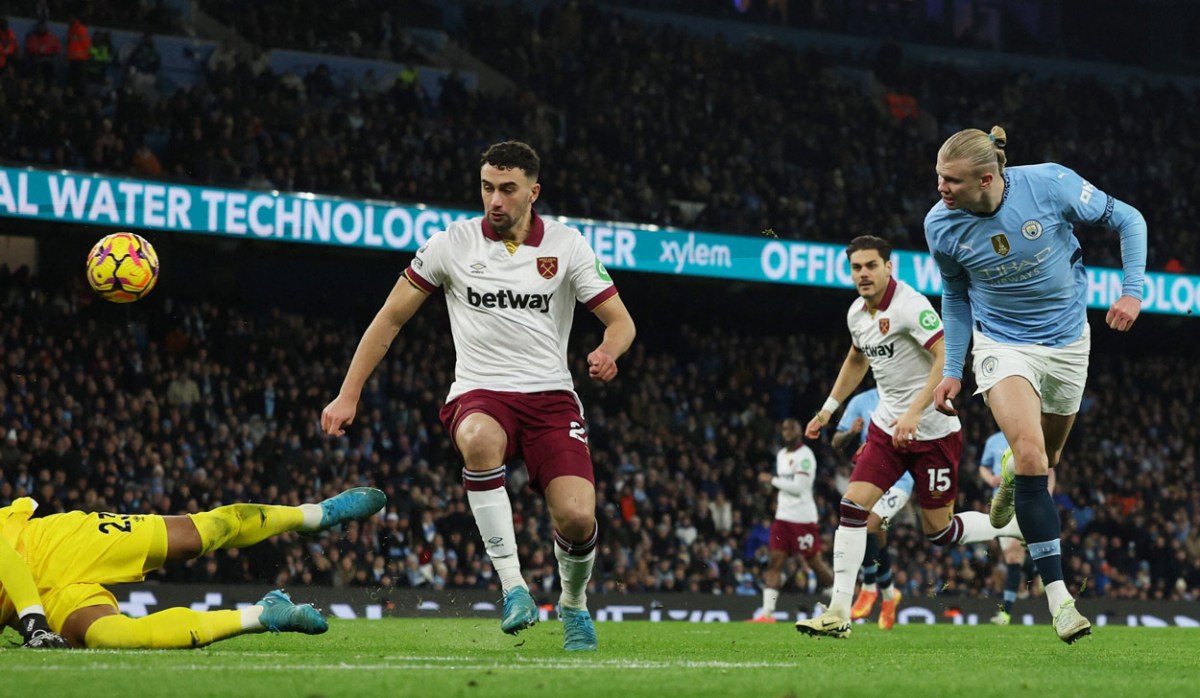
For last Sunday’s game at the Etihad Stadium, Nuno embarked on his now customary selection whack-a-mole. Splitting up the improving Todibo – Mavropanos central defensive partnership in favour of a Kilman recall, playing once again without a recognised target man in attack, and stuffing the bench full of defenders.

Poor old Kilman has never given the impression of being the strongest or most confident defender and putting him up against Haaland must have been a traumatic – as well as hopeless – exercise. Possibly a little harsh to call him “the worst footballer I’ve ever seen” – as one commentator did – but what a shocking waste of money his signing has been.

Managers returning to previous clubs to sign players they have worked with has always been a red flag for me. The equivalent of buying someone a store voucher as a gift rather than giving them money. One can only be used in a single store, the other can be spent anywhere. All indications are that Nuno is planning to repeat Loppy’s mistake by pursuing Adama Traore in the winter window. Can a bit part player who has underachieved at every club he’s been at really be our saviour, even if he comes cheap?

It was a dreadful first from West Ham against Manchester City. The two full backs deputising for the AFCON absentees were understandably rusty, having not kicked a ball in anger for some weeks. And the only attacking intent were long, high balls for Bowen and Summerville to make token challenges for.

Once the hosts had strolled into a comfortable two-goal lead it was pretty much game over. There was a slight improvement from the Hammers after the break but nothing to bother the scorers about.

The next four games will go a long way to defining the remainder of the Hammer’s season. Anything less than six points would be disastrous. Ideally, I would hope for nine. But without squad reinforcements that is a hopeful stretch.

It’s obvious that a striker must be top of the West Ham wish list in January. After that, I think the priority should be someone to do the job that Paqueta is meant to be doing as an attacking midfielder. Even when he is on his game, Paqueta offers only sporadic, individual moments of inspiration. Far more is needed as the conduit between massed defence and attack. Someone to probe, pass, and carry the ball forward as necessary. A player capable of pulling the strings and posing a threat through an entire ninety minutes. I shudder to think what we will end up with.

West Ham are now odds on for relegation. On the balance of probabilities, it’s going to happen and what a disaster that will be. The chances of Sullivan selling up and clearing off will be even lower once the club’s market value is sheared in half.

While he is still around, I can’t see a better time, when all our dreams come true. Merry Christmas. COYI!

Miracles, Memories and Missed Bets: Reliving some of West Ham’s greatest moments against Manchester City

West Ham travel to Manchester this weekend to face City, and while I’d love to believe in an upset, history and current form make that hard to imagine. City are unbeaten in their last 19 Premier League games against us, winning 16, and we’ve lost 15 of our last 16 away games there. The only exception was in the final Boleyn season, when we managed a 2-1 win in September 2015, with Victor Moses and Diafra Sakho scoring before De Bruyne pulled one back just before half time. We held on for a famous victory that day.

City don’t show mercy to teams in the relegation zone; it’s been 46 games since they last lost to a team starting the day in the bottom three, and they’ve won the last 14 of those, scoring 43 and conceding just 7. If you’re hoping current form might give us a chance, City have won five of their last six league games to climb into second place, just two points behind Arsenal, while we’ve only managed one win in our last six, though we have picked up three draws.

Rather than dwell on the chances of an upset, I find myself reminiscing about the times we’ve managed to get the better of City. I sometimes like a small wager on the football, and over the years I’ve had my share of luck and disappointment. One memory stands out from 23rd March 1996, when City were struggling near the bottom of the table. I fancied a bet on the correct score and thought the odds on us winning 4-1 at 80-1 were too good to pass up. We had seats in the old West Stand lower, and I remember Ludo saving an early penalty from Kinkladze. Iain Dowie scored with a header for 1-0 at half time, and in the second half he added another from a corner. City pulled one back after a blunder from Ludo, but then Julian Dicks smashed in a screamer from 30 yards for 3-1. I started to believe my bet might come in, and when Dani tucked away a fourth, I was already counting my winnings. But in the dying seconds Niall Quinn scored for City, and the game ended 4-2. So near and yet so far – a terrific game, and a great result, but just a little personal disappointment at the end.

That wasn’t the only time fate played a hand. In the 2000-01 season, on Remembrance Day, I told colleagues about my unlucky 4-2 betting tale and fancied another go at 4-1. The new stand was under construction, and strong winds delayed kick-off. I forgot to place my bet, and as it turned out, despite being a goal down at half time, we won 4-1 again with a last minute Di Canio penalty. This time, missing the bet meant missing out on £165, as the odds had dropped to 33-1.

Among my earliest football memories is the 1959-60 season, when we beat City 4-1 during a run of eight wins in ten games. In 1962-63, we thrashed City 6-1 twice, home and away, and in 1966, shortly after England’s World Cup win, we beat them 4-1 at Maine Road with goals from Ron Boyce, two from Geoff Hurst, and Martin Peters. In 1968, we beat City 2-1 at Upton Park with two classic near-post headers, and perhaps the most famous game came in March 1970 on a mudbath of a pitch at Maine Road. Jimmy Greaves scored twice on his debut, but the highlight was Ron Boyce’s volley from 50 yards, and we won 5-1. In 1982-83, we beat City 4-1 again early in the season, and once more, City were relegated that year.

I haven’t had a correct score bet on a West Ham v Manchester City game since that day in 1996, almost 30 years ago. The odds for a 4-1 West Ham away win this weekend are 200/1, and just to win by any score is around 12/1. I think I’ll keep my fiver in my pocket this time. As much as I’d love to believe in a miracle, history suggests otherwise – but football is nothing if not unpredictable, and memories of those famous wins remind us that anything (however unlikely!) is possible.

Dear West Ham, True Love: On the Eighth Day of Christmas, Please Send One Striker Striking

The halfway stage of the season is approaching, the transfer window will soon be open, and West Ham are slipping further behind in the relegation stakes. A spirited performance against Aston Villa did little to cheer things up.

Under different circumstances, the gift of eight maids-a-milking might make a reasonable enough gift for the eighth day of Christmas. But when it coincides with the opening of the transfer window – and your team is in danger of becoming stranded in the relegation places – far more pressing offering spring to mind than the oversupply of dairy produce.

In fact, I’d go even further to say I’m equally ambivalent about pipers piping and drummers drummingas well. Although lords-a-leaping could coe in very useful for defending set pieces.

With the transfer window a matter of weeks away, the imperative is not just to act but to act as fast as possible. Ideally, just as Big Ben has completed its chimes and before the strains of Auld Lang Syne have faded away our first new signings would be first footing into the London Stadium armed with whisky, shortbread and the gurantee of a dozen goals.

For me, striker and attacking midfielder are the priorities although further central defensive reinforcements wouldn’t be out of the question. But that wish list doesn’t include the recently linked Josh Sargeant and Adama Traore, neither of who offer an upgrade on what we currently have. The clock is ticking and if ever there was a time to pull a rabbit out of the hat, it is now.

Of course, decisiveness in the transfer market is hardly hard-wired into the club’s DNA. Should past performance be anything to go by, then David Sullivan will spend the entire window haggling, stalling, hindering, penny-pinching and frustrating right until the very last minute. By which time it could all be too late.

It has to be said that West Ham’s performance against Aston Villa was one of the better efforts of their season. It was an entertaining and even game and there could have been few arguments if the Hammers had earned at least a point, if not all three. But that is three games in the last five now where winning positions have been lost or surrendered. Where a potentially table climbing nine precious points was withered away to two.

It’s not hard to detect clear signs of improvement since Nuno’s arrival at the club, but then that is a particularly low bar. Graham Potter’s idea of being competitive was to only lose matches by a single goal while offering next to nothing by way of offensive threat. Nuno’s Hammers play with greater purpose and spirit and have been able compete on the pitch for lengthy periods. The weakness is not having a strong enough bench to press home advantages or see games out as necessary – although I regards part of this shortcoming as self-inflicted by Nuno himself.

This week’s selection wheel of fortune sprang just the one surprise. The decision to relegate Callum Wilson to the bench and start without a recognised striker. As ever, the bench was top heavy with defensive reinforcements and lacked realistic game changing resources.

It couldn’t have been a brighter, more profitable start for West Ham. An uncharacteristic high press, a defensive lapse by Villa and Mateus Fernandes broke free to curl home his first Hammer’s goal with less than 30 seconds on the clock. So, just 89½ minutes plus stoppage time to hold on then.

But rather than a full-scale retreat, the game remained a remarkably open, end-to-end affair. Villa equalised through an unfortunate Dinos Mavropanos own goal after Watkins had failed to get his head to the ball, only for West Ham to regain the lead before half time thanks to Jarrod Bowen’s quick reactions.

However, it was not to be a famous victory over the Premier League’s form team, and two goals from the always impressive Rogers sealed the deal for the visitors. The first stemming from a typical cheap giveaway by Lucas Paqueta and the second when Rogers was allowed far too much space in the centre of the pitch to strike at goal.

While it’s always tempting to pin each goal conceded on an individual player, I believe there are systemic issues with the way that West Ham are set up that leaves them exposed.

The first is the constant switch between a back four and back three/ five which appears to confuse role of the full/ wing backs. In a four, they continue to get forward but, in doing so, tend to neglect the defensive duties that the formation demands. AWB, especially, is slow (almost unwilling) to get back into position when a forward run is thwarted. I’m all for tactical flexibility but is it too much too soon given the early days of the coach/ player relationships. Likewise, the weekly rotation of playing with or without a main striker. In the circumstances, would not finding a plan and sticking to it be more productive? Leave the more subtle and intricate changes for a pre-season.

The second is a structural issue that is common to all low-block fundamentalists when they attempt to dip their toes into more adventurous waters. If you allow or encourage your midfield players to get further forward, then it is madness to stick with such a deep defensive line. It creates way too much space between the lines for opponents to exploit. As Rogers did with ease for the winner.

I do like the look of the Fernandes, Freddie Potts, Soungoutou Magassa midfield partnership and hope Nuno doesn’t think it needs tinkering with. I can only see it getting better with the passage of time. The disappointments for me from yesterday, however, were Paqueta and Crysencio Summerville.

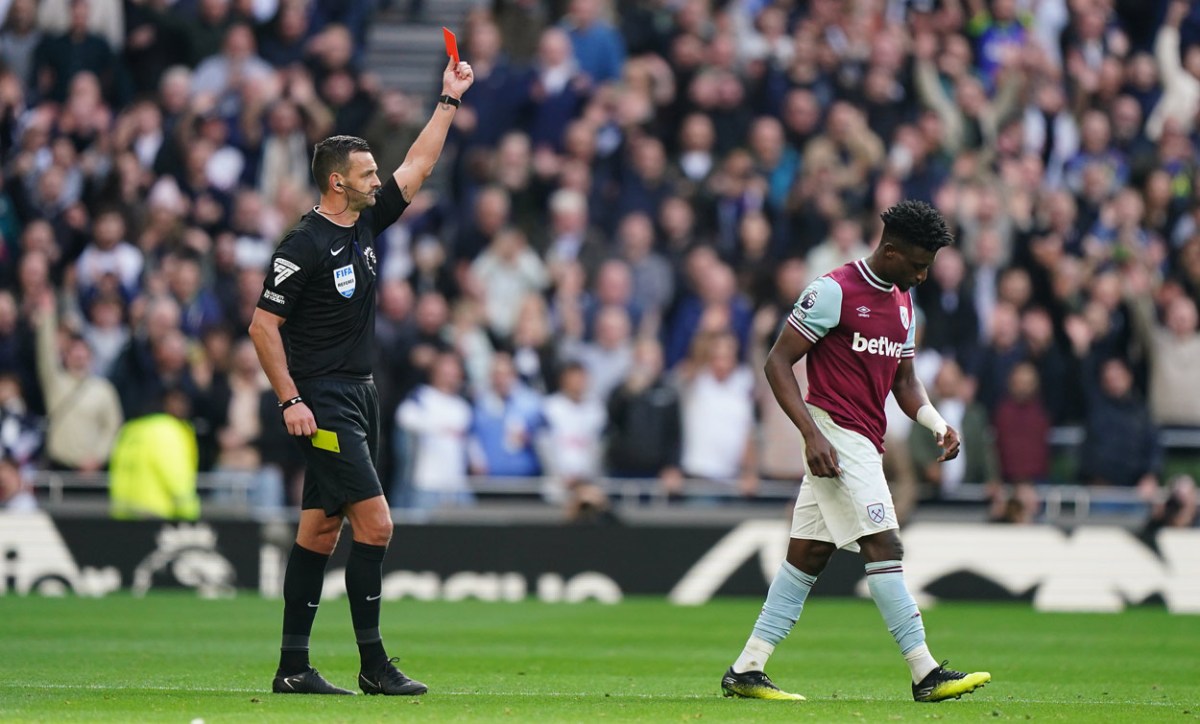
Although Paqueta produced a couple of delightful passes his overall contribution was again very poor. And fewer and fewer referees are now falling for his naïve attempts to buy a foul whenever he finds himself boxed in by the touchline.

Summerville, on the other hand, gives the outward impression of being an exciting crowd-pleasing player. Bbut his final delivery is about as reliable as a hands-free soap dispenser. I’ve never known a player choosing to run so frequently with the ball without ever having it under control. Being such a lightweight player, it does raise concerns as to his effectiveness at the top level.

Nuno was very slow to make any substitutions as legs started to tire. Why leave the introduction of Callum Wilson so long when there was an obvious opportunity to win the game with 20 to 25 minutes remaining? The triple substitution with two minutes to go was simply nonsensical. While throwing Tomas Soucek into the mix could be seen as a belated gamble to grab a late leveller, it was never likley to work without a functioning midfield to move the ball forward.

West Ham’s next outing is the traditional mauling at the hands of Manchester City next Saturday. Following that come four winnable games. At home to Fulham and Brighton (the season’s halfway point), then away at Wolves and home to Forest. We might know by then whether this is going to be an Avram Grant season or an Alan Curbishley great escape one.

Can Sunday’s spirited performance be the springboard for greater things. Just as the 4-3 home defeat by Tottenham did in 2006/7. Is Carlos Tevez still available? COYI!  

From Upton Park Thrashings to Where We Are Now. The changing fortunes of West Ham and Aston Villa (part two)

Ten years ago we were about half way through the final season at the Boleyn Ground. Geoff and I were writers on the West Ham fanzine Over Land And Sea which was sold outside Upton Park. During that season I was writing my book Goodbye Upton Park, Hello Stratford. In the book I wrote a chapter to precede each fixture and another to review the game after it had been played. I thought that as Villa were our opponents this weekend I’d look back at what I wrote then. The game was played on 2nd February 2016.

Ten years is a long time in football. In yesterday’s article I looked back at previous fixtures against Villa that I remembered. At the time we were riding high in the Premier League and they were bottom. Contrast that to the present where we are in the relegation zone and they are third having won their last five games in a row and are now just three points behind league leaders Arsenal.

Today’s article is the follow on chapter which reviewed what actually happened. What especially made me smile was where I wrote about Villa in freefall, a club in decline, in a downward spiral, and made comments about their ownership. West Ham finished seventh that season and qualified for the Europa League. Villa finished at the bottom with just 17 points, 22 points adrift of safety. Oh how times have changed. As I said, ten years is a long time in football!

2 February 2016 – The Villain of the Piece West Ham 2 Aston Villa 0

For a quarter of an hour Aston Villa belied their lowly league position several points adrift at the foot of the table and probably had the better of the early exchanges. They might have even been awarded a penalty when the ball struck the outstretched arm of Antonio when Agbonlahor attempted to cross the ball but referee Moss waved the appeal away in dramatic fashion. You know the way some referees do; they make an exaggerated crossing of their arms in front of them to signify that they are aware of a potentially contentious decision that they are about to make by denying an appeal of the players and crowd. It wasn’t his final theatrical wave of the arms in the evening as there were others to follow, normally when denying that a foul had been committed, usually upon one of the home players.

My friend John sent me a text message that said that Howard Webb (on BT Sport’s coverage on TV) had disagreed with the referee (another unusual occurrence) and felt that the penalty should have been awarded as Antonio’s arms were not in a natural position. I have since looked at the laws of the game and, in respect of hand ball I could find nothing about arms being in unnatural positions. I have written before about the constant debates over hand ball decisions (almost always occurring in the penalty area) and suggest that some clarity must be forthcoming to ensure some form of consistency.

Then for some inexplicable reason Jordan Ayew took exception to being closely marked by Cresswell and deliberately swung an elbow into our left back’s face in full view of many in the crowd. The referee obviously hadn’t seen it but his assistant had (for once) and drew his attention to it. The referee didn’t hesitate to theatrically flourish the red card from his pocket and Ayew had to go. Why do footballers do this for no apparent reason? It shows the complete lack of a brain. Even if the officials hadn’t seen it there are so many cameras around these days that their stupidity is picked up on camera and retrospective punishment is meted out after the game anyway.

Up until that point Villa would have been in with some sort of chance in the game as West Ham had in the early stages continued in the form that they showed a few days earlier at Anfield, that is to say not impressively. I could not understand the delight and cheering of the crowd as Ayew slowly made his way off the pitch. I hate watching eleven versus ten. It doesn’t make for good entertainment and so it was to prove for the remainder of the first half as we struggled to open up any spaces in the Villa defence. They had pulled everybody back deep into their own half, surrendering any form of attacking initiative, and hoping to play out 75 minutes for a 0-0 draw. In their perilous position one point wouldn’t really have been much of a result for them, only slightly better than none at all, although I was surprised by their total lack of ambition.

Payet looked to be the only one who had the necessary creativity to create a chance, but he was below his imperious best. Noble was the main instigator of our attacks but we were constantly thwarted and had to move the ball across the pitch and back again in an attempt to get through. How we could have done with the additional guile of Lanzini in a game like this. Towards the end of the half Valencia headed the ball over when it seemed easier to score but, apart from that the first 45 minutes were massively disappointing.

Our back four must have had more touches of the ball in the opposition half than ever before, but there were no incisive passes, it was just safely moving the ball across amongst themselves, occasionally Noble and Song retreating to join them. Villa continued to waste time, especially at throw-ins and at goal kicks where their keeper decided to slowly walk across to the opposite side of the six yard box, place the ball down as if he was handling a precious object and then hesitate before finally sending the ball back into play.

I’ve raised this point before, but I was interested to see how much time the referee was going to add on at the end of the first half to make allowance for the sending off and time wasting. It should have been at least five minutes but I wasn’t surprised to see the (almost mandatory) number one on the fourth official’s board, indicating that the referee had paid total disregard to proper timekeeping and was just adding one minute at the end of the first half. Shocking. My previous writing about the need for an independent timekeeper in the stand, stopping and starting the clock appropriately came to mind. Why can nobody else, especially the authorities see this?

In so many games this season we have begun the second half in lethargic fashion, but this time we were definitely showing more urgency and moving the ball quicker. The breakthrough eventually came with about half an hour to go when a long through ball from Noble was met by the head of Antonio. Everything seemed to be in slow motion as his header appeared to be going wide and the Villa keeper was almost rooted to the spot, probably also believing that it was missing the target. But it nestled into the bottom of the net to the great relief of the home crowd. Some reports afterwards suggested that he may have been marginally offside, but I refer once again to my previous writing. It would only take seconds for a video replay to confirm or deny this, but we don’t use video to help the officials so their instant decisions are always the ones that stand.

Villa at this point would have nothing to lose and I felt, with half an hour to go, that they would press forward to try for an equaliser. Such was their ineptitude that nothing changed. They seemed to be content with a 1-0 defeat, pulling all players back behind the ball and showing no signs of adventure whatsoever. In fact, I reckon they had forgotten about our goal, as they (especially the keeper) inexplicably continued to waste time. They only really moved players forward with a few minutes to go, and this was their undoing for our second goal. Valencia broke from deep inside our half and was unchallenged as he ran towards the Villa penalty area before releasing a perfect pass to Kouyate who had admirably kept pace with him. Our box to box midfielder finished with aplomb and the game was all over.

Two other really good incidents in the second half shouldn’t go unreported. Firstly, an impudent free kick from a wide position by the relatively quiet Payet struck the outside of the woodwork. Secondly, a long corner kick by Payet to the opposite side of the pitch was inch perfect and met with great technique by Noble on the volley bringing out an excellent save from the Villa keeper. A move right out of the training ground as they say. Villa were poor and will undoubtedly finish the season in bottom place. They are a club in free-fall and I wouldn’t be surprised to see them in League One the season after next unless something drastic is done to halt their steep decline. They certainly won’t be visiting us in Stratford in the foreseeable future. It just goes to show how even famous clubs can go into a deep downward spiral when ownership falls into the hands of disinterested or incompetent foreign owners who don’t really understand the game, and don’t appoint competent executive management.

So, not a particularly entertaining evening, we certainly weren’t at our best and many passes and attempted moves did not come off. But the three points kept us in contention in sixth place, just a point behind Manchester United, and still only six points away from the top four. Of course we aren’t going to trouble the top four teams in the remaining games but it would be good to overtake United and finish fifth. We have opened up a five point gap ahead of the teams below us, but it will be important to pick up points in the next two away league games at Southampton and Norwich to maintain the possibility of qualification for the Europa League.

Leicester continue to march on relentlessly at the top and they beat Liverpool 2-0 with goals from Vardy, the first being a wonderful strike and contender for goal of the season. Manchester City were apparently fortunate to hold on to a one nil win at Sunderland (who are our next visitors in the League at the end of February – looking forward to seeing Big Sam again!). Arsenal blew their chance of keeping up the pressure at the top by drawing 0-0 at home to a Southampton whose returning goalkeeper Forster apparently made a number of world class saves. Wenger had a bust up with both the referee and the Saints manager after the game. This is becoming the norm these days. Every time Arsenal don’t win Wenger seems to lose the plot falling out with all around him, blaming everyone else. Surely he is approaching the end of his time in the Arsenal manager’s chair? Although perhaps not? He seems to be untouchable in the eyes of the Arsenal board, but despite his past achievements in the early years of his management of the club, he seems unable to get a really good team to become Premier League champions again. Perhaps he will prove me wrong in the final games of the season? I really thought that this was their best chance of winning the league for many years, but even Tottenham have now overtaken their North London rivals with an impressive 3-0 win at Norwich to keep up their chances of finishing at the top.

From Upton Park Thrashings to Where We Are Now. The changing fortunes of West Ham and Aston Villa (part one)

Ten years ago we were about half way through the final season at the Boleyn Ground. Geoff and I were writers on the West Ham fanzine Over Land And Sea which was sold outside Upton Park. During that season I was writing my book Goodbye Upton Park, Hello Stratford. In the book I wrote a chapter to precede each fixture and another to review the game after it had been played. I thought that as Villa were our opponents this weekend I’d look back at what I wrote then. The game was played on 2nd February 2016. Ten years is a long time in football as you can see from my article written then when I looked back at previous fixtures against Villa that I remembered. At the time we were riding high in the Premier League and they were bottom. Contrast that to the present where we are in the relegation zone and they are third having won their last five games in a row and are now just three points behind league leaders Arsenal. Tomorrow I will publish the follow on chapter which reviewed what actually happened.

Going Down, Going Down, Going Down West Ham v Aston Villa – Before The Game (as published prior to the game in 2016)

On 9 January I recalled my earliest vague West Ham memories at the start of the 1958-59 season. We had won away at Portsmouth on the opening day, and then we beat the champions Wolves in the first home game under floodlights. The next game was our first Saturday home game of the season against today’s opponents, Aston Villa. We gave them quite a thrashing, 7-2! All of our goals were shots from outside the penalty area apparently and we also hit the woodwork several times. Incidentally Villa were relegated that season. It is rare to get a score like this in the modern game, but at the time in my earliest football recollections it wasn’t that unusual for big scores. In that first season we had league games at Upton Park that finished 6-0, 6-3, 5-1, 5-3, 4-3, 4-2 and I was disappointed when we didn’t win a game scoring lots of goals. As a four year old I thought it was the norm.

Just over a week later after beating Manchester United in another night game we were top of the league six games into the season. My football team headed Division One. Once again I thought it was the norm! I was disappointed that by the end of the season we had dropped to sixth! Never mind, I thought we would probably win the league the next season. 58 years on and I am still waiting! I was desperate to go to see a game live but that wish wasn’t fulfilled until a couple of months later.

A lot is made of the cost of going to football these days, especially the admission prices considering the vast TV money that comes into the game which should, in theory, enable clubs to keep down entrance costs. It is all relative of course but you may be interested to know what it cost to watch West Ham in that first season back in the top flight. Promotion the previous May had enabled the board to increase ticket prices for the 1958-59 season to: North and South Bank 10p, Chicken Run 15p, West Stand Lower (standing) 17.5p, and in the West Stand you would pay between 22.5p up to 37.5p for the best seats. Children had concessionary prices in the North and South Bank at 5p. The cost of the programme rose from under 2p to 2.5p. Some rough equivalent prices at the time were Milk 3p pint, Bread 2p loaf, Beer 4.5p pint, Petrol 2p per litre. You can do the maths to decide whether we get good value now compared to then. I’ve converted the prices to the current currency – at the time we used pounds, shillings and pence. It is frightening to think that in a couple of weeks it will be 45 years since we made the change to the current decimal currency system (it happened on my dad’s 46th birthday). Anybody reading this under the age of 50 will not really remember the old system, with 12 pence to the shilling and 20 shillings to the pound.

Villa returned to Division One a couple of seasons later and they were our visitors in the first game of the season, but this time we could only beat them 5-2! By the time we met them in March 1966 we beat them 4-2, with Geoff Hurst scoring one of our goals to celebrate his international debut just a week before. Martin Peters was still two months away from winning his first international cap. It’s amazing to think that at the end of that season they were so instrumental in England winning the World Cup. Can you imagine a modern scenario of a footballer who hasn’t yet played for England making his debut in the next three months and then scoring all the goals in the final of Euro 2016?   

I can’t recall anything much of note in Villa games from then until our FA Cup quarter final in 1980, when as a second division club over 36,000 crammed into Upton Park to see us win 1-0 with a coolly taken late penalty from Ray Stewart. With my friend Geoff we were season ticket holders in the West Stand B Block that season, which was particularly useful for getting into this game, as well as getting tickets for the subsequent Wembley final. The Villa game was an “all-ticket only” match which was quite unusual in those days when paying at the turnstiles was the norm for most games. 20,000 standing tickets were on sale to fans queueing at Upton Park on the Sunday before the game as postal applications were not allowed. Obviously this was not especially convenient for those supporters who lived some distance from the ground, but 36 years ago this was perhaps less of an issue than it would be today. In an attempt to be helpful the club decided to allow two tickets per applicant so that only one fan had to attend rather than the fan and his friend. This led to ticket touts having a field day on the day of the game. Well done West Ham!

In the record breaking league season of 1985-86 we beat them 4-1 with two goals from McAvennie and two from Cottee. McAvennie scored quite a few goals for us in his two spells at the club, especially in this season when he scored 26 league goals, a figure that hasn’t been bettered in a single season since. He frequently scored a brace of goals (don’t you just love that phrase when used for goal scoring) but didn’t manage a hat-trick until his very last game for us when he came on as a substitute against Nottingham Forest in 1992.

When this fixture was played in October 1985 (just 12 games into the season) Manchester United were unbeaten and running away with the league with 11 wins and a draw giving them 34 points and a ten point lead from Liverpool in the title race. We were 17 points off the pace in eleventh so it is incredible how we got so close to winning the league. Considering we had a 17 point deficit and then finished 8 points ahead of United means that there was a 25 point turnaround with them in the last 30 games of the season! They finished fourth in the end losing ten of their final 30 games, quite a decline after such an outstanding start.  

It is easy to forget in the current climate of capacity crowds at Upton Park that the game was in the doldrums in the mid-1980s in terms of spectator numbers. Just 15,000 were there to see the Villa game in October 1985, and there had been three even lower league attendances than that prior to the game that season. As the season progressed and we were challenging for the title the numbers began to rise into the 20,000s, but it wasn’t until our final home league game on a Wednesday night in April against Ipswich that 30,000 was exceeded for the first time. The attendance didn’t even reach 20,000 for the visit of Liverpool who ended the season as champions.

With just a few days of the twentieth century remaining on a Wednesday evening shortly before Christmas we experienced another of those incidents that was so West Ham. We played Aston Villa in the quarter final of the League Cup. The score was 2-2 with just a few minutes of extra time remaining when Harry Redknapp sent on Manny Omoyinmi as a late substitute. He barely touched the ball and the game was decided on penalties which we won 5-4 to take us into the semi-final. Omoyinmi didn’t take a penalty so he had no influence on the game whatsoever.

However there was one big problem. He had been out on loan earlier in the season and had played in the League Cup for Gillingham and was therefore ineligible to play for us in the competition that season. The Football League ordered the game to be replayed and of course we lost when it was played in January, despite leading late in the game and Di Canio missing a penalty in extra time (the only penalty he ever missed in a West Ham shirt I believe). Rules are rules I guess. The League had the power to throw us out of the competition but at least gave us another chance. Omoyinmi never played for us again and two club administrators resigned as a result of the incident.

Incredibly it wasn’t the first time we had played an ineligible player that season! In the UEFA Cup we played Igor Stimac in a game when he shouldn’t have played because he had a European ban outstanding from his days before joining us. We got away with that one as UEFA admitted fault saying they didn’t tell us he was ineligible. We were lucky that time but not when we played Aston Villa. Does it only happen to us?

In the past ten years or so there is little to recall. Goals have dried up since Marlon Harewood scored a hat-trick in one of the season’s early games in our return to the top flight in 2005. In fact since that day, in our last eight league games at Upton Park against Villa we have managed just seven goals. Last season we met them when we were in the middle of a superb pre-Christmas run which yielded just one defeat in eleven games, but the game finished 0-0.

So what will happen in tonight’s game? In theory we should give them quite a hammering given their abysmal form this season. They are surely on their way down to the Championship. But we only drew with them at Villa Park on Boxing Day. This is West Ham remember. You never know. I’d love to see a return to the fifties or sixties tonight. 4-2? 5-2? Or even 7-2? Perhaps not, but a good entertaining game with a few goals and three more points would do nicely.

Nuno’s Eggs, VAR’s Seaside Madness and Passing Through The Hoops To FA Cup Glory

The idiom of the curate’s egg is used to describe something that is good in parts. And that’s exactly how Nuno Espirito Santo’s time at West Ham can best be summed after ten games in charge. More sunny side up, and less last minute scrambles, please.

Ten points from ten games may be on the cusp of survival form but is not a good enough return to compensate for the terrible start engineered by Graham Potter. Interestingly, Potter’s overall record at the Hammers was also exactly a point per game – 23 from 23. So, plenty of room for improvement.

While Nuno might be perfectly happy to draw his way to safety it is not what is needed. Reaching the promised land of 40 points – which may or may not be enough this season in an unusually compressed Premier League table – demands 27 points from the remaining 23 games. My guess is that at least seven wins are needed somehow. By no means impossible, but better than what has gone before.

There are obvious signs of improvements under Nuno compared to the darkest days of Potter and Lopetegui. And to some extent he has been working in recovery mode from the hopelessness of the previous incumbents. The players now appear to understand what they are supposed to be doing (especially when defending set pieces), team spirit and resilience have returned to acceptable levels, youth is being given a chance, and individual players (Alphonse Areola, Jean-Clair Todibo and Dinos Mavropanos in particular) have demonstrated considerable improvement in both performance and attitude.

On the flip side, there are the weird team selections, dodgy substitutions and a flight towards safety in the closing stages of games which have already sacrificed a handful of winnable and much needed points. There is a supreme paradox that a coach who favours hyper-caution in game management is prepared to make untried and speculative tactical gambles by way of preparation.

It could equally be argued that the club is pretty much back where it left off with the Moyesiah. A predilection for low block, low possession, counter-attacking football and an over-reliance on Jarrod Bowen for goals.

True to form, Nuno sprang a curate’s egg selection surprise when the team sheets were handed in on Sunday. On the plus side, it was a welcome return for injury prone Crysencio Summerville in attack. But against that was another experiment with three central defenders, and the baffling inclusion of Guido Rodriguez in front of them.

Freddie Potts and Soungoutou Magassa were relegated to the bench while George Earthy, Mohamadou Kanté and Callum Marshall – all on the bench at Old Trafford- were excluded from the matchday squad completely.

In fairness, Rodriguez did what was asked of him. But his inclusion was still an odd decision where better, more flexible, options were available. The modern coaching fraternity are obsessed with the need for squad rotation once the games come around “thick and fast’” – whether it is needed or not. A Potts/ Magassa job share would have worked equally well defensively and with the aded bonus of greater energy going forward.

Nuno’s intent to contain and frustrate Brighton worked just as planned for long periods of the match. Hürzeler’s Seagulls tend more towards Potter’s version than the more adventurous, higher risk De Zerbi incarnation. Faced with numbers and a compact Hammer’s defensive shape they were unable to trouble Areola in the West Ham goal until their closing minutes assault.

The best chance of a stodgy first half fell to Summerville but his shot was easily saved. For all the admirable pace and movement, his decision making and end-product need a radical improvement at this level. Difficult to believe from his deer-in-the-headlights attempts at goal that he once racked up 21 goals in a season for Leeds. He would later be denied by an excellent stop from the Brighton keeper.

West Ham took the lead moments after the introduction of Callum Wilson. A hopeful clearance by Kilman, a mistake in the Brighton defence and Wilson feeding Bowen who scored with a fine hooked shot from the tightest of angles. Could they hold on or even score another?

While a low-block isn’t directly equivalent to parking the bus, that is what the Hammer’s strategy became with each successive substitution. With no pace and no-one able to carry the ball forward the last 15 minutes became a game of attack versus defence, just as it had against Bournemouth. The biggest mistake of all was to withdraw Mateus Fernandes. With him went the important protection in front of the back line. Suddenly, it was the hosts winning all the 50-50 challenges.

When the whole defensive line drops so deep and invites constant pressure holding out becomes a lottery. The reason most managers don’t deploy a 9-0-1 formation. All it needs is a lucky bounce or wicked deflection. Or in this case, the incompetence of VAR.

VAR should only have one job. To pick up the infringements that the referee misses in the hurly burly of on-field action. Of course, this isn’t what the jokers at PGMOL have done. Instead, they have rewritten all sorts of rules to suit the technology available. And in doing so, they have either failed to think them through – requiring constant revision and re-interpretation. Or introduced fixes to problems that hadn’t existed previously.

How could anyone (and I’m looking at you VAR-meister, Tony Harrington) look at multiple replays from multiple angles and fail to see the dangerous assault on Dinos’ head and/ or conclude that the handball should not be penalised. Some made-up nonsense about phases of play which meant that had Areola let the original shot in, it would have been disallowed. But when the same player scores three seconds later it was OK.

The ever-changing interpretation of the rules are a farce. Daft decisions being imposed by daft people. All totally subjective. And the reason why you can always find a retired man in black to support whatever opinion you fancy in the media.

In all the excitement, there was still a chance for Dinos to miss a gilt-edged opportunity to bag a winner from the final corner of the match. It is now two years since a central defender scored for West Ham (Dinos at Arsenal) which in the age of set piece specialists is another sad Hammer’s statistic. Like not having a decent corner taker or anyone capable of launching a threatening throw-in into the box.

It was nice to see Ezra Mayers, another academy lad, make his Premier League debut. Too little time to make any impression but we may be seeing more of him once the AFCON players depart.

***

Last night’s FA Cup draw was kinder to West Ham than in previous years when Joe Cole presented them with a 3rd round home tie against QPR. The Hoops were 5th round opponents at Upton Park enroute to the Hammer’s 1975 Final win. However, we have faced them three times in the competition since then and lost on each occasion.

A nice little cup run would be a welcome relief after a dismal two years for West Ham supporters. So, let’s hope that Nuno treats it with the respect it deserves.

At the weekend, West Ham entertain Aston Villa, the Premier League’s current form team. They have a Europa League game in Switzerland on Thursday night, so any flight delays or travel problems will be greatly appreciated. COYI!    

Can West Ham break the Brighton curse? Will the Seagulls soar or the Hammers strike? The Sunday showdown at the Amex.

West Ham United visit Brighton & Hove Albion at the Amex Stadium this Sunday, with both sides seeking to improve their fortunes as the season approaches its midpoint at the end of the month. Historically, Brighton have dominated this fixture, losing only once in 16 Premier League encounters with West Ham (seven wins, eight draws), with our sole win coming in August 2023. West Ham’s win rate against Brighton stands at just 6%, our lowest against any opponent faced more than twice in the competition. Brighton have also scored more Premier League goals against West Ham (31) than against any other side, and only Manchester United (8 times) have been beaten more often by the Seagulls than the Hammers (7 times).

Brighton enter the match in solid form, having won three of their last six league games. Their recent results include victories over Leeds (3-0), Brentford (2-1), and Nottingham Forest (2-0), a draw with Crystal Palace (0-0), and a 4-3 defeat to Aston Villa and a 4-2 loss to Manchester United. The Seagulls have shown attacking prowess but also some defensive frailties, scoring 12 goals and conceding 9 in this period. For the season to date they have won 6, drawn 4 and lost 4, 24 goals scored and 20 conceded, and sit in seventh place with 22 points prior to this round of matches. But the table is so congested they are just two points below Chelsea in fourth and three points above Bournemouth in fourteenth.

West Ham, meanwhile, have struggled for consistency throughout the season. In our last six matches, we have shown an upturn and recorded two wins (3-1 vs Newcastle, 3-2 vs Burnley), two draws (2-2 vs Bournemouth, 1-1 vs Manchester United), and two defeats (2-1 vs Leeds, 2-0 vs Liverpool). The Hammers have scored 10 goals and conceded 10, highlighting defensive vulnerabilities that have plagued our campaign. For the season as a whole we have won 3, drawn 3 and lost 8 giving us 12 points with 16 goals scored and 28 conceded. Only Wolves (29) have conceded more. As a result we sit in the relegation zone in 18th place, two points adrift of 17th placed Leeds.

Brighton’s squad is stretched by injuries, with Tzimas, Milner, March, and Webster ruled out. Mitoma, Ayari, Watson, and Rutter are doubtful. Danny Welbeck, who has scored six Premier League goals against West Ham, is expected to lead the line, supported by the creative talents of Minteh, Gruda, and De Cuyper.

According to Nuno West Ham welcome back Lucas Paquetá after suspension (but not welcome back for me!), which he believes should bolster our midfield creativity. However, we remain without Igor Julio, Oliver Scarles, and possibly Crysencio Summerville. Callum Wilson, with eight goal contributions against Brighton, will be a key attacking threat, while Jarrod Bowen continues to be our most potent source of goals and assists, although his form appears to have dipped of late. So many of his shots are either missing the target or are getting blocked.

Our last game in midweek was a deserved 1-1 draw at Old Trafford. Personally I was impressed by the efforts of the team as a whole, particularly the performances of Magassa, Wan Bissaka, Potts, Fernandes and Todibo. At last we are getting greater pace and mobility in midfield but I didn’t understand the selection of Soucek and the position he was asked to play; I would have liked to see Earthy given his opportunity to add further mobility to the middle of the pitch. And I couldn’t understand why there was such a delay in making substitutions when we were a goal down either.

Some of the points from Nuno’s conference on Friday: he confirmed Lucas Paqueta is “going to play” from the start after serving his one-match suspension for his red card against Liverpool. Asked if he had any concerns over Paqueta’s dissent, Nuno added: “I already spoke about that. It is in the past. I am positive it will not happen again because he personally admitted his mistake. We spoke about it in the dressing room. I am positive it is over and it will not be repeated.” We shall see!

On Crysencio Summerville’s fitness: “Hopefully returns soon. We miss him. We know what he gives to the team. Let’s see. We need all the players. I hope he can be back. I hope Oliver Scarles can join the team. We are going to need him because we lose our full-backs to Afcon.”

Nuno believes the midfield unit is “slowly progressing in knowledge and complicity”, adding: “Energy. They are all very young. They are growing together. They are slowly understanding the specifics. This is what makes a good midfield. You can’t be an individual. You can’t put two players together and expect them to click immediately.”

Being in the bottom three: “We cannot avoid it. It is a reality. We have to face it. We are fighting for survival. We cannot hide it. The results of other teams we cannot control. It is up to us.” Nuno says he is “slowly trying to fix” our poor record of defending set-pieces and we are now “trying to take advantage of offensive corners” like the one we scored from against Manchester United on Thursday. He added: “We know how important set-pieces are in the game. They are basic and fundamental for any kind of team. Working, working, working. Repeating, repeating. Trying to find the consistency of delivery, trying to mark the strong opponents we will find. The blocks are important. Alphonse got a big help with that also.”

Only Aston Villa have won more points from losing positions this season. But not too many teams fall behind as often as we do! “Everybody in the club is realising we have to give the best of everything. We have to give the best of us to get out of this situation. That is the reality. A club like us, as big as we are, we have to face the situation so we can go out. It is hard to build with urgency but the boys are committed and we think we can do it.”

Brighton have been particularly effective at home, scoring at least twice in each of their last six Premier League matches at the Amex. Their attacking rhythm and possession-based style have yielded results, though defensive lapses remain a concern for them. Under Nuno Espirito Santo we have shown some resilience but lack stability, especially at the back, having failed to keep a clean sheet in our last 11 league games.

Given Brighton’s historical dominance in this fixture, their strong home form, and West Ham’s defensive frailties, the Seagulls are favourites. We can expect an open contest with chances for both sides, but Brighton’s attacking cohesion and home advantage could prove decisive. A high-scoring affair is likely, with Brighton tipped by the bookmakers and most pundits to edge the match. I’d love to think we can surprise them but hope that we can at least add to our recent tally of drawn games and get a 2-2 draw. What are the chances?

West Ham Travel To Manchester United For The Battle Of The Transfer Chumps

West Ham United’s Premier League farewell tour rolls into Manchester this evening in the hope of finding an ideal spot to park the bus.

A recent analysis by the International Centre for Sports Studies placed both today’s combatants at the very foot of football’s transfer hall of shame. West Ham and Manchester United floundering in the bottom six of clubs who have derived the worst possible value for money in transfer dealings since 2021.

In the survey, which includes all clubs whose transfer spending exceeded €10 million, the two Premier League clubs are joined in the roll of dishonour by four Saudi clubs. And let’s face it, those Saudis are well used to losing an arm and a leg.

The reliability of the study was subsequently endorsed in a Daily Mail report which confirmed it had been undertaken by boffins. Who could possibly argue with that? It’s a sign of the times that we don’t hear nearly often enough from boffins these days. It has to be one of my favourite (peculiarly British) words, alongside scarpered.

Waste of Transfer Money in Euros

Delve a little deeper and a case can easily be made that the Hammers record is significantly worse – and has had far greater impact – than the Red Devils. Relative to revenues – which are ultimately the driver of transfer spend in the world of PSR and SCR – the most recent accounts show Manchester United outearning West Ham by some distance: £666 million to £271 million. While both records are appalling, the Mancs are far better placed to absorb and recover from losses of that scale.

It is possibly the saddest indictment of West Ham’s mismanagement and poor stewardship that having had 14 seasons feeding from the Premier League money bonanza trough, they have been left with a squad whose value and quality is no better than any of the newly promoted clubs.

Last night’s results saw the Hammers slip back once again into the relegation places. Wins for Leeds and Nottingham Forest hinting that the race for the drop might shift from a five-horse race to a three horse certainty. Dyche will no doubt continue to grind out results at the City Ground while Leeds have demonstrated a fighting spirit in their last two games that is sorely lacking from the West Ham squad.

In times of desperation, it is tempting to clutch at the straw that you never know what you’re going to get with West Ham. But that is fast becoming a fireside myth. The days of pulling off shock wins have been few and far between in recent seasons. When they have happened it has been the result of opposition off days rather than Hammer’s excellence.

With six games to go until the end of the year – and the season’s halfway point – it is challenging to see where more more than a handful of points might come from. By then, we may be even further adrift of safety. Leaving survival reliant on a storming transformational transfer window – something which all prior evidence (see above) suggests is improbable.

Tonight’s opponents have been experiencing a mini revival of late, but without pulling up any trees. I watched their game at Crystal Palace as part of a low-quality Super Sunday double bill, and they remain well short of top six quality. Palace should really have been out of sight by half time but had forgotten to bring along their shooting boots. Not for the first time, it was Bruno Fernandes who inspired the visitors comeback. He will be the main threat again tonight.

With the enforced absence of Lucas Paqueta, Nuno will have been busily spinning the selection wheel of fortune over the past couple of days. Quite what random changes he’ll come up with can only be guessed at. Red flags for me would be a return to the three/ five at the back formation and a starting berth for Tomas Soucek. You might as well switch off your set, log off your stream or retire to the bar if you at Old Trafford.

Neither George Earthy, Callum Marshall nor Mohamadou Kanté turned out for the Under 21s last night – so, one or all may have been on the bus up to Manchester. My preference would be a start for Earthy with a more advanced role for Mateus Fernandes in front of Freddie Potts and Soungoutou Magassa. However, if Nuno once again insists on parking the bus and refuses to commit players forward, the chosen formation will be academic anyway. At some point, whether from a free kick or corner, the defences will be breached.

A lot of supporters and media have already written off Luis Guilherme, especially where the narrative is to highlight Tim Steidten’s (rather than the Board’s) role in the Hammer’s current plight. Personally, I think there’s a decent player in there if used correctly. Someone able to carry the ball forward as an attacking midfielder – if there were such a thing in Nuno’s plan. I don’t though see him as a natural stand-in for Crysencio Summerville on the left wing. He will not shine there!

If anyone is feeling positive about tonight’s game, then please let me know what you’ve been drinking (or smoking). I only see one possible outcome and it’s not a good one for the claret and blue. Anyway, I need to scarper pretty quickly. COYI!