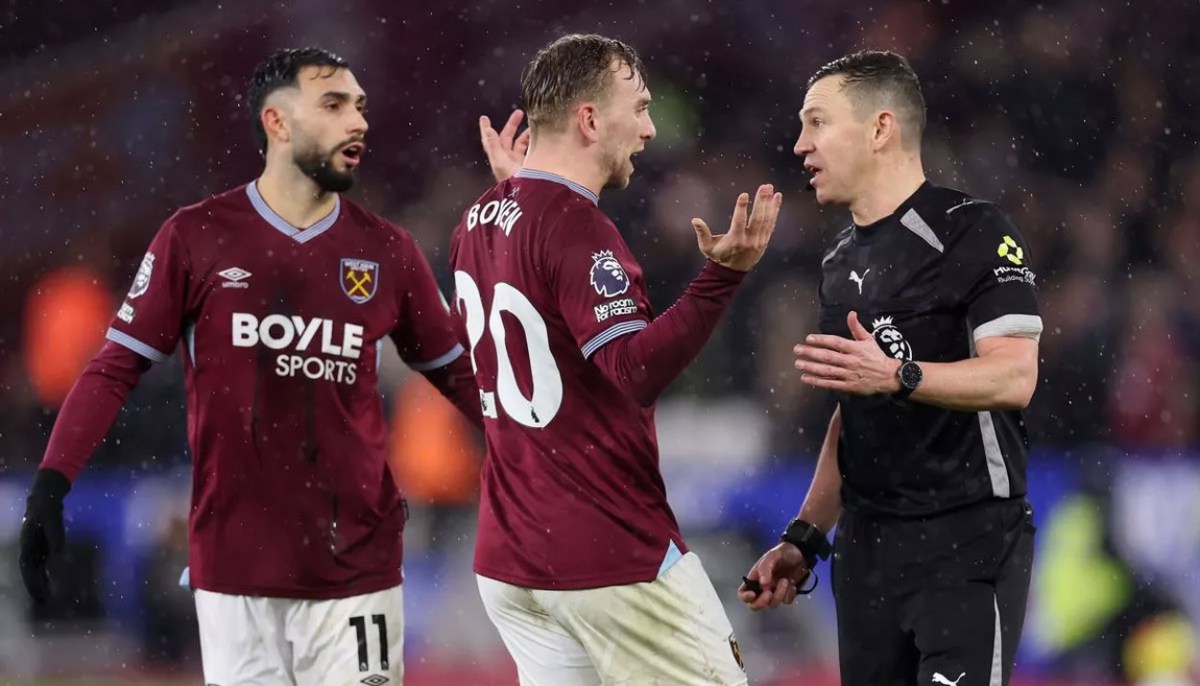
Friday Night Takeaways: Lights, Cameras But Precious Little West Ham Action

A three week break, a send-off for Ludo, a London derby, and a full-house under the east end lights were not enough to shake Nuno’s Hammers out of their trademark cautious and slow start to a game

Busy Saying Nothing

I wouldn’t normally watch a pre-match press conference except that the international break wilderness left me desperately needing a fix of West Ham related content. No surprise though that it was again a waste of everyone’s time. The whole process is a charade. If a manger has something smart or insightful to say about an upcoming game, he’s not going to tell the whole world about it in advance. And it must be the shortest of short straws for a reporter having to travel across London knowing that any probing question will be stonewalled by a low block of pointless platitudes: “working hard”, “trained well this week”, “no easy games in this league”, “we’re not where we need to be yet”.   

A handout of current injury and fitness updates would quite easily do the job.

Nuno’s major revelation was that the players had been exhausted from playing 11 games in the opening 42 days of the season. A cynic might question whether that should be 11 halves of games as his team are rarely competitive over a full 90 minutes. But nobody asked that question. Still, he assured us ‘the group’ had made good use of the time and had been focusing on all the things that hadn’t been working well – but not slow starts apparently.

The Academy of Slow Starts

I’ve never been a fan of Friday night games. The build-up, anticipation and then following West Ham games has forever been the weekend anchor that the rest of life revolves around. Playing your game before it has really started renders everything else lopsided. Like having dessert before your starter or opening your presents on Christmas Eve.  

On the other hand, evening games under the lights will often generate the kind of magic that even had Nuno’s eyes light up in the presser. Obvious then that returning from a three-week break, faced with a London derby, in a packed floodlit stadium, the Hammers would start the game with all guns blazing. How wrong could we be?

The mother of all shameful statistics from Friday was that West Ham managed a meagre two shots in the opening 70 minutes – both well off target. And not a single shot between the 28th and 70th minutes. How can that be in a passage of play when you are already a goal down – no matter how terrible that penalty decision was?

Weirdly, this is not a new phenomenon. Its roots can be traced back through all the ages of the dinosaurs. From the late Moyesozoic era, through the lesser Lopeteguian and Potterian epochs and into the current Nunolithic age. Periods of great upheaval, tectonic friction, shifting tactical plates and complex mutations. But precious little progress in terms of forward movement or attacking lifeforms. A succession of cautious coaches inhibited by an evolutionary refusal to take risks.

The result is a team which is rarely on the front foot. Wracked with caution. Waiting to react to the mistakes of others rather than making their own things happen. Fearing mistakes and wanting to gauge opponents before daring to act. To the outsider or newcomers, this is the game we now play. It has been baked into the clubs DNA like a hereditary disease – the new West Ham way. And just as it was impossible to draw our way to survival last season, it will be a lost cause this time around for automatic promotion. How Nuno managed it at Wolves is increasingly puzzling.

Split Personality

Three weeks of planning and preparation and the best the manager could come up with was the return of Tomas Soucek. No-one can dislike big Tom. His commitment and effort are second to none. But he cannot be part of any midfield hoping to dominate games. The Championship may lack the technical execution of the Premier League and the first touches maybe far heavier. But teams are packed with athletic, fast and strong players. Soucek is too one paced to prosper in that environment. Without doubt he can be useful in both boxes but is unfortunately a passenger in between. Very useful to have on the bench, not as a starter.   

By no means was Friday’s poor showing all down to Tom.  Or any other individual player come to that. When a team only performs in one half of a game and where you ae regularly forced into making half-time substitutions it has to be down to preparation.

Nuno has one of the best – if not the best – squad in the league yet he seems not to know how to use it or what the team’s identity is meant to be. The playing style lacks consistency or cohesion, communication and leadership are in short supply and mental resilience is flimsy.

Whether these repeated failings are primarily down to the manager or to the players is a reasonable debate to have. After all, we only get to see the results played out on the pitch. For me, in the micro-managed world of modern football, it’s the gaffer who must carry the can. We’ve already seen this season how less talented opponents have used motivation and energy to outplay our more illustrious stars. This forms part of a team’s culture and always starts from the top. Successful teams have players who buy into the manager’s plan and understand their individual parts in executing it. It’s not currently happening under Nuno’s watch.  

The Season Pointathon Update

A second successive draw made it a total of 11 points dropped in the league so far. The haul of 16 points from nine matches averages out at 1.78 points per game (ppg). Assuming the end of season automatic promotion target is 92 points (or 2 points per game) this leaves West Ham off the pace requiring a revised ppg until season end of is 2.05. Eminently achievable in theory but not with Nuno’s current game plan.

From what we have seen, the challenge of the Championship is intensity, not quality. This is where we are lacking and what needs to address urgently.

Ironically, if the players had been practising their last-minute penalties properly, we might still be unbeaten and three points better off by now. Not really deserved but fine margins, I suppose.

Outlook Changeable

Well done to Nuno for winning the September Manager of the Month award. As long as he understands it was for results rather than the nature of the performances that sat behind them. Success in football invariably drowns out all other noises but only the rosiest of claret and blue filters could disguise the reality of how much room for improvement exists.

Apart from the questionable tactics, Nuno’s management style – which feels churlish to me but is usually perceived as uncommunicative – is a huge worry.

His job is to do the best for West Ham using all the resources available to him. If there is conflict or he has difficult players to deal with, then it is his responsibility to resolve matters and extract the required levels of performances, even if he doesn’t get along with certain individuals. Ignoring players or freezing them out for the sake of his personal comfort or hurt feelings is not acceptable.    

This behaviour is not unique to his time at West Ham and has followed him from club to club. His current refusal to use Alvarez or Magassa when the team is crying out for a specialist defensive midfield player should by itself be a sackable offence. Let’s see what happens on Wednesday as the circus moves on to Sincil Bank – or the ProAmpac Stadium to give it its full title – Google Rating 4.4ì “Beer prices are fair, with some quality ones”.

The last time West Ham played Lincoln City in the league was during the Hammers 1957/58 Division Two promotion season. The game in December 1957 ending: Lincoln 1 West Ham 6. A repeat would be most welcome.

The Imps have yet to win a home game this season (drawn two, lost two) but have won three times on their travels to sit mid-table with 11 points from nine games.

COYI!
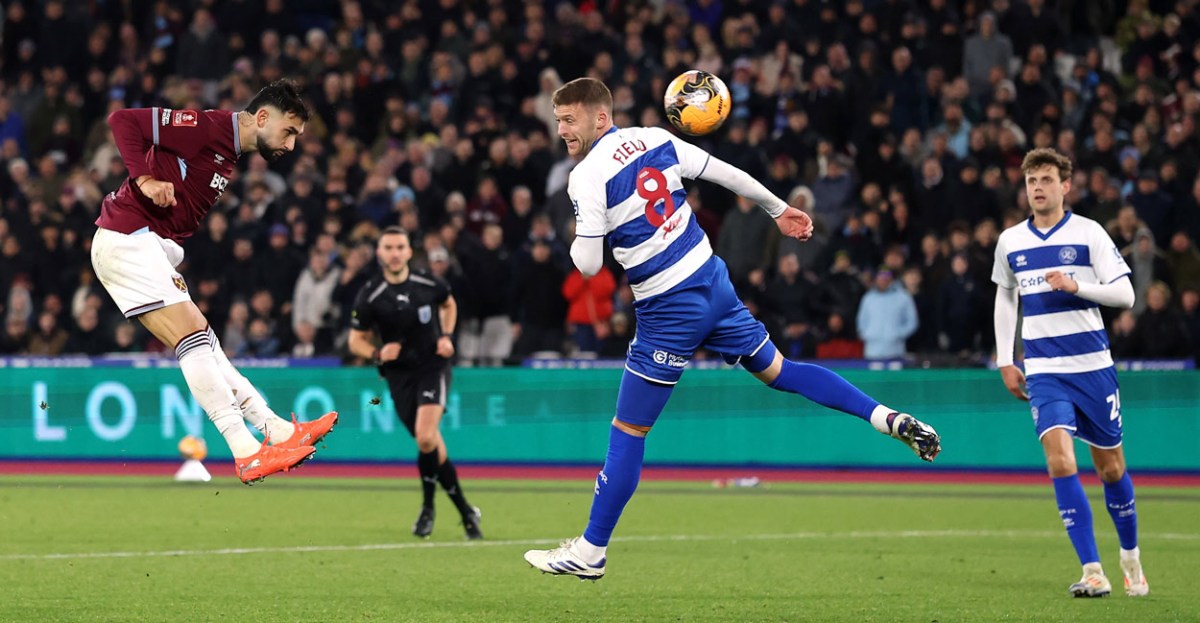
West Ham v QPR Preview: Finally, Football’s Back

Is it just me, or has this international break felt about three months long? After what seems like an eternity, the Hammers are finally back in action, with QPR making the short trip across London for an 8pm Championship clash. Frankly, I can’t wait. As much as I enjoy following local senior and junior non-league football, I still miss my West Ham fix.

Friday night football under the lights always feels a bit special, and there’s an added edge whenever another London club rolls into town. QPR might not be our fiercest rivals, but there is still plenty of local pride at stake, and with points on the line in the Championship, this is far more important than your average derby day bragging rights.

The biggest question for me heading into the game is what effect the international break will have had on West Ham. Ask ten football fans about international breaks and you’ll probably get ten different answers. Some see them as a welcome pause, others see them as a cruel interruption designed solely to ruin their weekend plans. Personally, I’d like to be somewhere in the middle, but in reality I’m not. While it’s nice to see players representing their countries, two weekends without West Ham is not good.

From a West Ham perspective, there are positives to the break. It has given Nuno and the coaching staff extra time on the training pitch, allowed tired legs to recover (yes after just eight games players are tired already!), allowed Jarrod to watch his wife in Strictly, and hopefully helped a few knocks and niggles heal. The Championship is a relentless division and opportunities to take a breath don’t come around very often. There’s also the chance to reset.

Whether results before the break were good, bad or somewhere in between, three weeks away can help players clear their heads and come back refreshed for the next block of fixtures before we get hit with the next international break (thankfully just a shorter one) in mid-November. We have seven fixtures before then including this one. All games are important but this next run of games includes QPR (6th), Swansea (top), West Brom (5th) and also Southampton.  

With the season beginning to gather momentum, the timing might or might not work in West Ham’s favour. We were in good form approaching the break before a dreadful first half against Millwall had me despairing. But the second half comeback would have left the players on a high and it would have been good to move onto the next game straight away.

Footballers are creatures of habit and rhythm. When a team starts building momentum, the last thing as supporters we want is for everything to stop. Sometimes teams return looking sharp and energised. Other times they resemble a group of strangers who have met for the first time in the tunnel five minutes before kick-off. Let’s hope this game falls into the first category.

QPR will certainly arrive looking to make life difficult. They have made an excellent start to the season and currently sit in sixth on 13 points, just two below us. And like us they have only been beaten once in the league so far this season. Championship matches rarely come easy regardless of league position, reputation or budget. Every side is capable of beating anyone on their day, which is exactly what makes this division both brilliant and entertaining (As well as the lack of VAR of course!)

For West Ham, the key will be setting the tempo early. A fast start would settle any concerns about rustiness and get the crowd involved from the opening whistle. The London Stadium has a habit of generating a cracking atmosphere for an evening game when the team gives supporters something to get behind. Wrexham is the prime example. And let’s be honest, after three weeks without club football, it probably won’t take much.

As we enter another crucial stretch of the season, this feels like an important opportunity. Three points would not only strengthen our position in the table, putting us back on top for a day at least, but also provide the perfect platform heading into the next run of fixtures. The international break is over and it’s time for proper football to return. From a personal viewpoint I’m happy.

COYI!

Margins, magic and misery; lines, laws and lost causes; offside, out of luck and out of time? West Ham’s fight for survival and the FA Cup’s fading romance

I’ll start by looking back at the Forest game in the week. West Ham thought they had doubled their lead early in the second half when Crysencio Summerville scored, but VAR intervened and ruled the goal out for offside. The controversy centred on Taty Castellanos, who was deemed offside in the build-up. The confusion for fans and pundits was heightened because the ball reached Castellanos after a block tackle by Forest defender Nikola Milenkovic. According to current offside law, a defender’s block or tackle does not reset the offside phase unless it’s a “deliberate play” (i.e., a controlled pass or clearance). In this case, Milenkovic’s intervention was not considered deliberate, so Castellanos remained offside, and the goal was disallowed. I would disagree. I believe that the intervention was deliberate (if it wasn’t deliberate then why was he trying to win the ball?) and that the goal should have stood.

Former referees and experts have criticised this interpretation, arguing that the law is too technical and fails to reflect the spirit of the game. The exact moment the ball is played is also notoriously difficult to judge, especially with frame-by-frame video, and the difference of a split second can mean a player is onside or offside by millimetres. The interpretation of deliberate or uncontrolled intervention is also impossible to judge. Surely it is deliberate if the defender is trying to win the ball?

The offside law was originally introduced in the 19th century to prevent “goal hanging”—players loitering near the opposition’s goal waiting for a pass. Over the years, the law has been revised several times (notably in 1925 and 1990) to encourage attacking play and make the game more exciting. However, the law now hinges on technical definitions of “deliberate play” and “active involvement,” which can be difficult to interpret even with video technology. Many (including me) have argued that it should be amended even further to the attacking team’s advantage. This could easily be done by introducing the clear daylight rule in that there has to be a gap between the attacker and defender before offside decisions are given. Let’s do away with this nonsense about parts of the body that can legitimately play the ball.

Many argue that the law is out of date and does not reflect the modern game, where split-second decisions and marginal offsides are decided by technology rather than the naked eye. The spirit of the law, to prevent unfair advantage, has been lost in a sea of technicalities.

Late in the match, Nottingham Forest were awarded a penalty after Alphonse Areola caught Morgan Gibbs-White in the face while attempting to punch clear a set-piece. VAR advised the referee to review the incident, and the penalty was given. West Ham midfielder Tomas Soucek labelled the decision “a joke,” arguing that such incidents happen frequently and that goalkeepers should be given more leeway when challenging for the ball. Former referee Mark Clattenburg, however, said the decision was correct because Areola failed to make contact with the ball and caught the player instead. I have always argued that penalties should only be awarded when an obvious goal scoring opportunity is denied which is not the case when so many penalties are awarded in football games.

Is VAR ruining football? VAR was introduced to eliminate clear and obvious errors, but its use has become far more pervasive. Instead of correcting blatant mistakes, VAR now scrutinises marginal offsides and subjective fouls, often leading to long delays and confusion. Fans and players complain that the flow of the game is disrupted, celebrations are muted, and the joy of football is diminished.

Should VAR only be used for clear and obvious errors? According to IFAB, the game’s law-makers, VAR should only intervene for “clear and obvious errors” or “serious missed incidents” in four match-changing situations: goals, penalties, direct red cards, and mistaken identity. However, in practice, VAR is often used for marginal decisions that require multiple replays. Many (including me) argue that if a decision needs to be viewed more than once, it cannot be “clear and obvious,” and the original on-field decision should stand. We shouldn’t have to wait so long for a decision to be made. These delays ruin the spontaneity of the game.

If the decisions had not gone against us the gap to Forest might now be just one point or perhaps four points. But our defeat to Forest leaves us seven points adrift of safety, with relegation odds now as short as 8/11 or even 1/5 with some bookmakers. The team is winless in ten matches, and the pressure on manager Nuno Espirito Santo is mounting. While mathematically possible, survival looks increasingly unlikely unless there is a dramatic turnaround in form, which is hard to see at the moment.

There have probably been games this season when controversial decisions have gone in our favour although I cannot recall any important ones. But these are not the reasons behind why we are very likely to be relegated. So often we put ourselves in situations where marginal calls become decisive, but a whole book could be written to describe why we are in the position we are where Championship football next season is probable. We’ve written about them all through this miserable season and I won’t return to them now!

West Ham host QPR in the FA Cup third round at the London Stadium on Sunday. I can remember when I was young there was magic and romance attached to the FA Cup competition right from the early rounds when local non-league clubs took part in the qualifying rounds, then when West Ham entered in Round 3 and all 32 games kicked off at 3 o’clock on an early January Saturday, and right up to Cup Final day itself in May. But has the magic and romance disappeared from the FA Cup?

The Premier League and UEFA Champions League now overshadow the FA Cup in terms of prestige, financial reward, and global attention. Top clubs often prioritise these competitions, fielding weakened teams in the FA Cup’s early rounds, which can diminish its importance and allure. The crowded football calendar means the FA Cup sometimes feels like an afterthought. Kick-off times are often dictated by TV schedules rather than tradition, making it harder for match-going fans to attend and reducing the sense of occasion.

The financial gap between Premier League and lower-league clubs has widened. The FA Cup’s prize money is modest compared to league placements or European qualification, reducing its incentive for bigger clubs. Having said that the big clubs are almost always the winners in the end.

Changes such as the abolition of replays and the moving of the final from its traditional Saturday 3pm slot have eroded some of the competition’s unique traditions, making it feel less special to some supporters.

Does the magic and romance still endure in any way? The FA Cup remains famous for “giant-killings”, when smaller clubs defeat Premier League giants, it still makes news. Recent years have still produced memorable upsets, such as Stevenage beating Aston Villa, Crawley Town thrashing Leeds, Plymouth Argyle’s shock win over Liverpool, and even yesterday when statistically we had the biggest upset of all time with sixth tier Macclesfield deservedly knocking out the holders Crystal Palace. These moments capture the essence of the competition and keep the romance alive. As West Ham fans we’ve been on the receiving end of so many of these giant killings in my lifetime!

As the world’s oldest national football competition, the FA Cup still carries a unique historical and cultural significance. For most fans and clubs, winning the FA Cup is still a dream and a source of immense pride. How we’d love to repeat 1964, 1975 and 1980!

For lower-league and non-league teams, the FA Cup offers a rare chance to play on a big stage, secure financial windfalls, and create lifelong memories for their fans. These stories, like non-league teams reaching the later rounds, are the heart of the FA Cup’s enduring appeal. The competition still inspires passion, especially in local derbies or when underdog teams are involved. For many, the “magic” is now more selective, shining brightest in these moments rather than universally.

Some fans and commentators argue that the FA Cup’s “magic” is now a cliché, used to paper over the reality that the competition has lost some of its former glory. Others point out that the romance is still there, but it’s harder to find amid the dominance of elite clubs and commercial pressures. There is nostalgia for the days when the FA Cup final was the highlight of the football calendar, but also recognition that the competition still produces drama, upsets, and moments of pure football joy.

The FA Cup may not hold the universal magic and romance it once did, especially for top clubs and younger fans raised on the Premier League and Champions League. However, for smaller clubs, traditionalists, and those who cherish football’s unpredictability, the FA Cup still provides unforgettable moments and upsets that keep its spirit alive. The “magic” hasn’t disappeared, it’s just harder to find, and perhaps more precious when it appears.

There was a time when I was young when I would have been really excited by this third round game against Queens Park Rangers and hoping that we would still be in the draw for the fourth round that I would listen to on the radio on the following Monday lunchtime, another tradition that has disappeared. But this season has been such a miserable one that my interest is much diminished. In times gone by there was always a hope that we could win a few games and reach Wembley. This time around I would love us to do this but I reckon there is less chance of us going to Wembley than escaping relegation. But it is so long since we won a game that it would be good to beat QPR (even a weakened QPR with several players out injured and chasing a play-off position in the Championship) and perhaps give some of our fringe players a run out to show what they can do (or not!). I remain hopeful!