
 It was cup fever all the way in the week 6 – 12 March in Hammer’s history as the FA Cup heads towards its exciting climax.
Having been held to a draw in a 1985 5th round tie at Plough Lane on Saturday by second division Wimbledon replay was scheduled for just two days later at Upton Park. The Hammers made no mistake on the second time of asking rattling in 5 goals (to a single Wimbledon replay) courtesy of a Tony Cottee hat-trick and goals from Alan Dickens and Paul Allen. The reward was a 6th round tie on the following Saturday away at Old Trafford where three goals from Norman Whiteside steered Manchester United to a 4-2 victory; the West Ham goals coming when a Manchester defender deflected a Paul Allen cross into his own goal before Allen himself notched West Ham’s second.
There was revenge just one a year later though when the teams met again in a 5th round tie. West Ham had only been able to play one league game since mid-January due to frozen pitches but were strangely able to fulfil cup fixtures which included seeing off Ipswich in a three match 4th round marathon and then drawing at home to Manchester United in the initial 5th round tie. The replay at Old Trafford on 9 March saw a superb Hammer’s performance end in a 2-0 victory thanks to a spectacular 18 yard headed Geoff Pike goal and a Ray Stewart penalty bravely awarded for a foul on Alvin Martin.
Other 6th round matches to mention before getting on to the main event were a 2-1 home victory over Everton (in what I remember as the Stuart Slater match) with goals from Slater and Colin Foster; a creditable 1998 draw at Highbury (Ian Pearce) when I really had a feeling that we were on our way to Wembley; and a frustrating 3-2 defeat at home by Tottenham in 2001 where two fine goals from Sergei Rebrov (later to become another in a long line of West Ham flops) gave the visitors the advantage; the Hammers goals coming from a Stuart Pearce bullet and a neat Svetoslav Todorov finish.
In the victorious 1975 campaign West Ham were drawn away in the 6th round to a struggling Arsenal side which gave some hope as we made the short trip across to north London. Of all the matches in the 1975 cup run this is the most memorable for me (including the Final) with the game was played on a sodden Highbury pitch where the ball frequently got stuck in the mud. The unlikely hero was Alan Taylor who had only previously played in a handful of league games since his transfer from Rochdale at the end of 1974. Taylor had been injured when Rochdale played their early round FA cup games and so was not cup tied and was surprisingly given a start in the quarter final tie. A goal in each half were Taylor’s first for West Ham with the pitch having a hand in both goals, the first after a Graham Paddon cross and the second following a smart interchange with Trevor Brooking. A contentious decision that unusually went West Ham’s way occurred when goalkeeper Mervyn Day raced out to clatter John Radford to the ground, probably a red card offence by today’s standard but the referee waved play on.
Day, McDowell, Lampard, Bonds, Taylor, Lock, Jennings, Paddon, Taylor, Brooking, K Robson.
On the same day five years later, second division West Ham were at home in the quarter final to Aston Villa, at the time riding high in the first division. Despite the difference in league status the match was dominated by the Hammers but they struggled to get past a resolute Villa defence and when they did keeper Jimmy Rimmer was in fine form. With the game looking to be headed for a replay at Villa Park the game changed with just two minutes remaining when Ken McNaught inexplicably knocked a cross away with his hand. Up stepped Ray Stewart and despite the pressure (and a few of his team-mates refusing to watch) placed the perfect penalty low to Rimmer’s right. West Ham did make it to Villa Park but for a semi-final appointment with Everton.
Parkes, Lampard, Brush, Stewart, Martin, Devonshire, Allen, Pearson, Cross, Brooking, Pike.
Finally, this week in 1966 witnessed our first ever League Cup final appearance in the first match of a two legged affair against West Bromwich Albion. Looking to make it a hat-trick of cup victories in successive years, goals from Bobby Moore and Johnny Byrne gave West Ham a 2-1 advantage to take into the second leg.
 There Are No Easy Games?
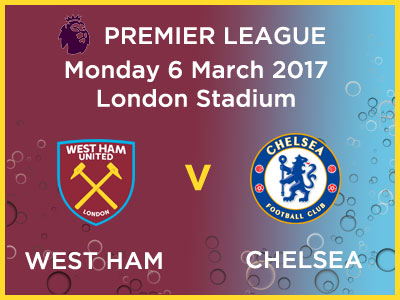 When compiling reasons to dislike the top teams it doesn’t take long to come up with a long list for tonight’s visitors. They have few redeeming features and represent much of what is wrong with the uneven playing field that the modern game has become. An average mid-table team that were transformed to greatness by winning the Russian lottery. It does make you wonder though what might have happened had Roman Abramovic landed his helicopter at Upton Park rather than Stamford Bridge all those years ago. Would we now be pining for the days of academy players, dodgy loan deals and a bare-bones squad or would we be happy to bask smugly in the reflection of a roomful of domestic and European silverware of more recent vintage than 1980. Perhaps one day West Ham will themselves win the Arab-millions raising the dilemma of whether success trumps working class east-end traditions after all.
 We face a Chelsea side on Monday, who, with 20 wins and 3 draws in their 26 Premier League games to date this season, have a ten point cushion at the top of the league, and are odds on with the bookmakers to repeat their title success of the season before last. Of course, last season they had a very disappointing time by their own recent standards, finishing tenth and therefore missing out on playing in Europe for the first time in the last twenty years. Perhaps their lack of European games is a contributing factor to their record this season?
 I was convinced that we would see off Watford last week but it wasn’t to be. Our balance after our 15 points stake last week has now gone down to 100 points, exactly where we started! We’ve come very close to some big wins, but we have just missed out, a bit like the team.
 We have now predicted the results of 258 matches. In Week 26, Rich scored 6 points, Geoff 6 points, and Lawro 9 points. Lawro has extended his lead at the top of the leaderboard, but, as we approach the business end of the season there is all to play for. Although Rich has predicted more correct results than Lawro, the ex-Liverpool pundit has had better fortune with his correct prediction of actual scores. This could be an important week in our challenge as the results forecast by Rich and Lawro differ in half of the games, and in only one match the same score has been predicted. Can Lawro increase his lead still further, making it difficult for him to be caught, or can Rich keep the contest alive? It seems unlikely that Geoff can make up the ground to challenge, but no doubt he will continue to play for pride and hope for a comeback of Lazarus proportions.


