The Gaffers: Number 1 – John Lyall

We start an occasional series on West Ham managers with a look back at the great John Lyall on what would have been his 77th birthday.

John Lyall

In the history of English football, West Ham have allowed their managers to remain in charge of the team for longer than any other club on average. Since 1902, when Syd King was manager, through our election into the Football League in 1919, right up until the present day, we have had just 15 permanent managers. A few others, most notably Trevor Brooking, acted as caretaker managers. I have been watching West Ham since 1958 and the boss at the time was Ted Fenton, who was just our third manager in over half a century. John Lyall took over from Ron Greenwood in August 1974, and remained in charge until he was sacked in May 1989, after an association of 34 years with the club.

Lyall began his career at West Ham aged 15 as a groundstaff boy and office clerk, and was a promising full back, playing 34 times for the first team before a serious knee injury ended his career. He won international youth honours playing one game for England Youth, and was a member of the West Ham youth side that reached the final of the FA Youth Cup in 1957. He then concentrated on coaching and became assistant manager to Greenwood in 1971, becoming team manager three years later when his mentor moved upstairs.

It was a topsy-turvy 15 years in charge with a lot of success (in West Ham terms) with FA Cup wins in 1975 and 1980, the latter being the last time a club from outside the top flight has won the trophy. European Cup Winners Cup losing finalists in 1976 and League Cup finalists in 1981, losing after a replay, were also notable achievements, as was an outstanding promotion season in 1980-81 where the second division title was won by a large margin with 28 wins and only four defeats. His managerial highlight was in 1985-86 where we came so close to winning the league title, eventually finishing third, which was (and still is) our highest ever placing. This was arguably our best ever season, and we certainly played some terrific entertaining football which I enjoyed enormously.

I maintain to this day that the postponed games and subsequent fixture pile up were key factors in us not winning the title that season. In John Lyall’s autobiography Just Like My Dreams he even wrote “West Ham’s last five games spanned just ten days – a demanding schedule and hardly the fairest way to settle a nine month long Championship race.” Perhaps if the club had considered installing undersoil heating like a number of clubs had done by that time, we might look back upon 1985-86 as the season we finished as champions?

The low points were two relegation seasons in 1977-78 and 1988-89, the latter resulting in Lyall’s dismissal which many felt was not handled well by the club considering his 34 years of service and his success in charge. The programme had just a few short sentences as acknowledgement of his long period of time at the club.

He deserves credit, in addition to the trophies and finals for keeping together and attracting high class players, in particular following the first relegation. Has there ever been a better second tier side in English football in history than the one that contained Phil Parkes, Ray Stewart, Frank Lampard, Billy Bonds, Alvin Martin, Alan Devonshire, Trevor Brooking, Paul Goddard and David Cross in 1980-81?

A year after being sacked he resumed his football management career at Ipswich, and in just his second season in charge led them into the newly-formed Premier League as Second Division champions. After a couple of years at the helm, he moved upstairs, and resigned soon afterwards.

John Lyall died suddenly of a heart attack in April 2006. He would have been 77 on 24th February this year. Less than a week after his death West Ham won through to the FA Cup final, our first since 1980, when he was our manager. The one minute silence at the semi-final just a few days after he died was followed by the continuous chant of “Johnny Lyall’s claret and blue army,” showing the genuine affection of our fans, and the high regard in which he was held. The main gates at Upton Park were renamed the “John Lyall Gates” in 2009, and have been moved to the London Stadium.

John Lyall managed West Ham for 779 games in 15 years. In pure statistical terms he had a win percentage of 40%, the fifth best record, after Bonds 44%, Pardew, Paynter and Fenton (all 41%). But if the club had invested in the team after our best ever season in 1985-86, who knows how much success we might have had?

How can we judge the success of football managers? Win percentages? Lose percentages? Goals scored and conceded? Trophies won? Stronger position financially? Attracting bigger crowds? A higher league position than when he came? A combination of these factors? Also do we need to consider the resources available and division we play in? You cannot really compare different eras but if I had to pick a 1-2-3 on a mixture of the above criteria, then in my opinion Greenwood, Lyall and Bonds would have to be considered the most successful. I’ll let the reader choose the order, or indeed make their own choice of who has been our best manager.

But whoever you pick, John Lyall gave great service to our club, and was considered to be a true gentleman by everyone who met him. He will always be remembered as an innovative coach who continued the tradition of his predecessor, Ron Greenwood, of playing football the “West Ham Way”.

My Favourite Games: Number 6 – West Ham 5:0 Burnley, August 26 1968

A series of occasional articles recalling my favourite West Ham games, and songs that topped the charts when these games were played. Today early season swagger against Burnley.

There have been so many great games in the last 58 years and I’ve covered many of them throughout my book, Goodbye Upton Park, Hello Stratford. Many are remembered because of the importance of the game, the goals scored, and the spine-tingling atmosphere generated by our fans. Hopefully my memories of these great games will evoke fond memories of fans, (especially older ones like me!), and the music in the charts at the time.

Favourite Games 6

In August 1968 I was fourteen and a half. It was, of course, the school summer holidays, and I was soon to move into the fourth form at school. I think that is year 10 in modern terminology. I was on a caravan holiday in Weeley when news broke of the Russian (strictly speaking Warsaw Pact) invasion of Czechoslovakia on 21 August. Younger readers will only know of two countries now, the Czech Republic and Slovakia, which were formed when the original country split (peacefully) in 1993. It was a major event in world history, and one that was discussed in current affairs lessons upon our return to school a couple of weeks later.

Another significant happening in history happened around the same time. England were playing Australia in the fifth test of the summer at the Oval. England were one down and needed to win the test to square the series. A famous test match ensued with England (or rather Derek Underwood) bowling out Australia on the final afternoon to win the match after a heavy rain storm had almost forced the abandonment of the game during the lunch interval. The large Oval crowd assisted in the mopping up process on this final day (Tuesday August 27).

Basil D’Oliveira, a mixed-race South African, had been playing cricket for England for a couple of years, and scored a magnificent 158 in the game and was one of the key reasons why England won the match. Despite this he was controversially omitted from the touring team to go to South Africa that winter, although later recalled to the party following an injury to Tom Graveney, and a public outcry. With the apartheid in South Africa at the time, the inclusion of a non-white South African was unacceptable to the hosts, and this led to the cancellation of the tour, and hastened South Africa’s isolation from world cricket soon afterwards. They didn’t return until 1991 after apartheid began to be dismantled. A further topic had been added to current affairs lessons on our return to school.

Meanwhile on the Monday evening of 26 August, West Ham had a home game against Burnley. It was a memorable game on a hot summer evening and we raced into a four goal lead by half time. We were playing some great stuff, and that first half was one of the best that I remember from that era. Martin Peters scored the opener, then Geoff Hurst added a couple before a teenage Trevor Brooking added a fourth. Shortly before Brooking’s goal, the referee had to go off the pitch injured. In those days we didn’t have a fourth official at games, so one of the linesmen took over the whistle, and a member of public (who was a qualified local referee) ran the line, dressed in his suit trousers, shirt and tie, as there was no spare kit for officials either! It wouldn’t happen today. To many observers Brooking’s goal was yards offside, but the deputy linesman dressed in his office attire, didn’t raise his flag, and maintained that the ball was last played by a Burnley player, with which the referee concurred, and the goal stood.

The Burnley players complained for ages, but I couldn’t see the point. They were already dead and buried in the game. Their chairman made quite a fuss the following day, and the whole thing was described, quite unnecessarily in my opinion, as a raging controversy. The referee had recovered by the start of the second half and resumed in charge. The deputy linesman had his ten minutes of fame, and made headlines being slated in the national newspapers the following day. Incidentally it wasn’t his first call up. He had been called upon in exactly the same circumstances just nine days earlier in our home game against Forest.

Brooking added our fifth goal with half an hour still to play, but we took our foot of the gas a little, and the game ended aa a convincing 5-0 win. It took us to the top of the Division One table (we eventually finished eighth), and was followed up with a 4-0 win over West Brom the following Saturday, and then a 7-2 victory over Bolton in the League Cup a few days later. But that wasn’t our highest score that season as we put eight past Sunderland in October. We scored 47 goals in our 21 home games in 1968-69, a figure only bettered by Manchester City, who finished in the bottom half! Burney finished 14th that year.

The West Ham team for the game was: Ferguson, Bonds, Charles, Peters, Stephenson, Moore, Redknapp, Boyce, Hurst, Brooking, Sissons. Roger Cross made his league debut coming on as a substitute for Sissons in the second half.

Number one in the charts in that memorable week in history was Mony Mony, by Tommy James and the Shondells, and other records close to the top were Fire, by the Crazy World of Arthur Brown, the Beach Boys with Do It Again, Tom Jones with Help Yourself, Dusty Springfield with I Close My Eyes and Count to Ten, the Bee Gees with I Gotta Get A Message to You. Simon and Garfunkel were in the top 20 with Mrs. Robinson, one of the songs from the soundtrack of the film The Graduate, which I greatly enjoyed watching (Dustin Hoffman had the leading role). Days by the Kinks was another great song I recall from that week’s chart.

By any stretch of the imagination, I don’t think that I could possibly include this season’s game at home to Burnley in any future favourite games feature!

My Favourite Games: Number 5 – West Ham 4:2 Manchester City, March 23 1996

A series of occasional articles recalling my favourite West Ham games, and songs that topped the charts when these games were played. Today beating Manchester City in 1996.

There have been so many great games in the last 58 years and I’ve covered many of them throughout my book, Goodbye Upton Park, Hello Stratford. So many of them are remembered because of the importance of the game, the goals scored, and the spine-tingling atmosphere generated by our fans. Hopefully my memories of these great games will evoke fond memories of fans, (especially older ones like me!), and the music in the charts at the time.

Favourite Games 5

Sometimes lady luck runs your way and sometimes it doesn’t. I’ve had more than my fair share of good fortune so I can’t complain. But there have been times when the luck hasn’t quite gone my way. On 23rd March 1996, we were playing at home to Manchester City who were struggling near the foot of the table at the time (and in fact they were relegated on goal difference at the end of the season). We visited Ladbrokes in Green Street on the way to the game as I fancied a bet on the correct score that day. Looking down their list I was looking for a value bet and thought that their odds on us winning 4-1 (80-1) were very generous. In those days they often put out some tempting, and realistic, correct score odds knowing how difficult it is to predict the score of a game. These days they are not usually so generous.

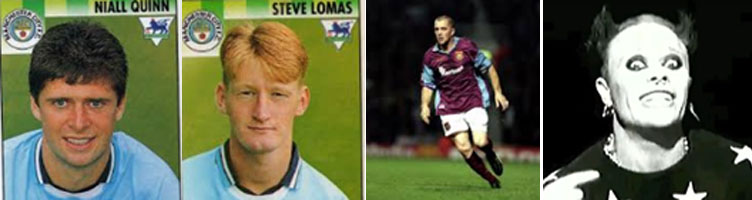
I put my five pounds on and we went in to see the game. I was with my dad and my son. Whenever I took my dad along we always had to buy seats at a low level as he didn’t like climbing the stairs to sit high up. So we had seats in the old West Stand lower just about level with the penalty area in the half where the Bobby Moore stand is. Slaven Bilic was playing for us and Steve Lomas, who came to us at a later date, was a City player at that time. Keith Cooper was the referee. City’s star player was Kinkladze and he was fouled early on for a penalty. I remember Ludo diving to his right to save it. About half way through the first half Iain Dowie scored with a header in front of the Bobby Moore stand, and 1-0 was the half time score. My bet wasn’t looking too hopeful with only one goal in the first half. I’d virtually forgotten about it.

In the second half Dowie headed his, and West Ham’s second goal from a Michael Hughes corner. Redknapp brought on Dani for Dumitrescu and Steve Lomas was sent off for two yellow cards. Ludo then blundered by dropping the ball allowing Niall Quinn to score an easy goal for 2-1.

There were about ten minutes left when Julian Dicks hit a trademark screamer from about 30 yards. From where we sat we were right behind the shot as it burst the net. 3-1. I remembered my bet and retrieved my betting slip from my pocket to look at it to make sure I had put it on correctly. Come on West Ham, just one more goal and £400 was on its way to me.

There were about five minutes left when Ian Bishop threaded a superb pass to Dani who ran on and tucked the ball past the keeper with his left foot. 4-1! This was unbelievable. OK West Ham you can ease up now! But they didn’t. They continued to attack sensing City were out on their feet. Hughes hit the post and Marc Reiper had an easy chance to score from the rebound but missed. I heaved a sigh of relief. I was looking forward to collecting my money!

The ninety minutes were up when the ball fell to Niall Quinn in our area. He swivelled and hit a superb left foot shot. Goal. Then Keith Cooper immediately blew his whistle for the end of the game. We didn’t even have time to kick off. To say I was gutted would be the understatement. It was a terrific game of football but you’ll forgive me for being a little disappointed.

The West Ham scorers that day were Dowie, Dicks and Dani. Have we ever had three “D” goalscorers in one game? Also in the team were Bilic, Bishop and Potts. Ludo had returned to play in goal after the late Les Sealey had made his one and only start between the sticks for us the previous week when we lost 3-0 at Newcastle. He did make one further appearance when he came on as a substitute for Ludo in the final game of the following season at Old Trafford. He had of course previously played for Manchester United, famously being picked for their FA Cup Final replay win in 1990, after their regular keeper Jim Leighton had a poor game in the first match against Crystal Palace.

Number one in the charts on that day was the Take That version of the old Bee Gees song, How Deep Is Your Love. Also in the top ten that week were Oasis with Don’t Look Back In Anger, Mark Morrison with Return of the Mack, and the Beatles with their second hit using the voice of John Lennon, many years after his death, with Real Love. The new chart always came out every Sunday then (I’m afraid I’m not up to date as to when it is changes these days), and the new number one on the day after the City game was Firestarter by Prodigy, which had gone straight in at the top after its release that week.

West Ham 2:2 West Brom

Can we blame the officials? Or did we contribute to our own inability to win the game?

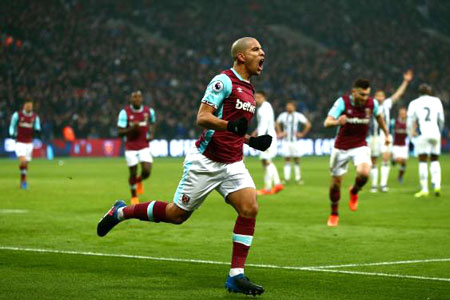
Feghouli v WBAI have written on a number of occasions regarding games involving West Ham and any team managed by Tony Pulis. My articles go back years to when he was the manager of Stoke City, and how I detested their time wasting tactics, their blocking off the ball (American Football style), and their long throw game. Now that he is manager of West Brom he has produced a team of giants who have had a successful season, exceeding everyone’s expectations, and who currently sit in eighth place in the Premier League.
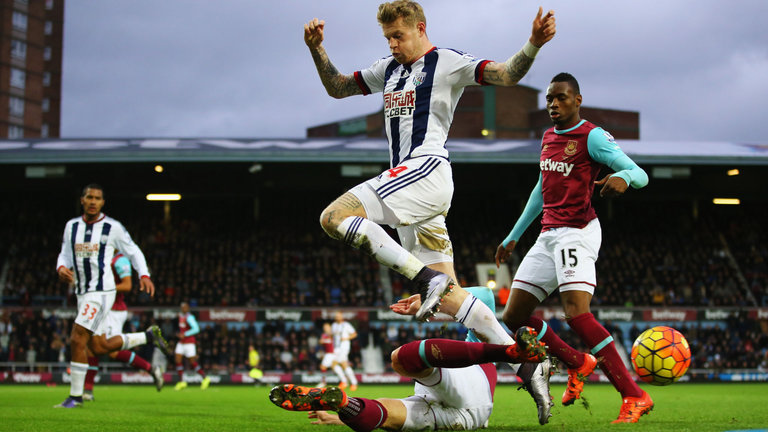
If tittle tattle in the media is to be believed, then Slaven Bilic needs to get us up into eighth place in the final table in order to be offered a new contract by the board. Personally I don’t happen to believe this, and reckon that if we have a decent enough final dozen or so games, and finish comfortably in mid-table, he will be given the opportunity to continue. Whatever fans think of the owners of our club, they have not sacked managers in the past without good reason, and I would not expect them to start doing so now. Anybody in the London Stadium who witnessed the superb atmosphere once we started to play on Saturday, and the continuous support for “Super Slav” by the vast majority of fans, would not believe that he was fighting to retain his job.

Nevertheless his reactions (some might say over-reactions) to some of the decisions in the game might leave you to believe otherwise. Beating West Brom would have gone some way to increasing our chances of getting into the top eight. We started the game five points adrift of them. Losing the game would have put us eight behind, and winning the game just two. So in many ways it was a real mid-table six-pointer.

Was Feghouli fouled for West Brom’s opener on five minutes? From my seat it looked like it, but general consensus seems to be perhaps it was a foul, and perhaps it wasn’t. Sometimes challenges like that are given and sometimes not. What is more pertinent I believe is Noble’s poor decision to play a ball like that to Feghouli, Feghouli’s inability to withstand the challenge, Kouyate’s poor defending in being nutmegged by Chadli, and Randolph’s inability to save a shot straight at him. It was a catalogue of errors and bad decisions. On some days the referee might have blown for a foul and it wouldn’t have happened as it did. But it wasn’t the worst refereeing decision ever. On so many occasions in the past couple of years a multitude of poor decisions have gone against us, and very few have been in our favour, costing us many points, but this one was not so clear cut.

I thought much the same about our “equaliser” that was ruled out for offside, and / or a foul on Foster. At first glance Feghouli appeared onside (as indeed he was) and I believe that the linesman raised his flag in error. But when you get the chance to see it again you notice that Antonio was offside and interfering with play by pushing Foster. The referee seemed to take a long while to walk across to the linesman and I wonder if he was in contact with the fourth official or somebody in the stand watching a video replay? The offside rule is complex and often controversial, and you could question that even if Antonio gently pushed their keeper, he couldn’t have saved it anyway, so perhaps the goal should have stood. Again, it was not clear cut and could have gone in our favour but didn’t.

Antonio was also offside when Feghouli scored the legitimate equaliser, and perhaps this is something that he needs to consider regarding his game. Whilst commending his enthusiasm to get into goalscoring positions, he is sometimes slow to retreat back into an onside position. Feghouli was close to being offside, and I believe some linesmen would have raised their flag as it is virtually impossible for the human eye to move their eyes fast enough to take in all the necessary action. We really need video replays, but that is a topic for another day. In any event this decision quite rightly went our way.

Lanzini’s excellent shot five minutes from time should have been the winner, but of course this is West Ham. How many times have we conceded a late goal to not win, or lose a match? Once again there was controversy. Did Antonio touch the ball or not? Should it have been our throw in? The referee thought that he had and this led to the corner and the 94th minute equaliser. Were we unlucky? Perhaps. But we should perhaps have defended better not to concede a corner in the first place, and also it is criminal to concede a goal headed home directly from a corner. Collins was on the pitch to help counter the Baggies height advantage in the final few minutes, but somehow our defenders and Randolph managed to block each other in a crowded six yard box.

The disappointment was enormous. We had outplayed West Brom for much of the match but ended up with a 2-2 draw. We might also have even had a couple of penalties, one of which looked like a blatant trip on Snodgrass, but it wasn’t our day for decisions. But having said that, in my opinion most weren’t blatantly bad decisions. On another day some might have gone our way but not on Saturday. Slav’s reaction was perhaps a bit over the top, although he endears himself to supporters with his passion. It’s a pity that managers are not allowed to say if they believe officials have got it wrong. It’s also a pity that referees are not made to come out after games to explain their reasoning with regard to “controversial” moments in games.

West Brom spent virtually the whole game time-wasting after they had gone ahead. I wasn’t surprised. I’ve seen Pulis teams do this in the past. Referees should take action, but they rarely do. The irony of the situation was that no extra time was added for time wasting in the first half as injuries accounted for the full three minutes that were added on. The Baggies continued their time-wasting tactics throughout the second half until Lanzini scored, when all of a sudden they began to do everything in a hurry. More time was added on in the second half (5 minutes) and this was just enough for West Brom to benefit.

In so many ways it just wasn’t our day. But we can’t just blame the officials. We contributed to our own downfall. The performance was encouraging, however, and more games like this should enable us to finish in the top half of the table. Eighth may be just beyond our reach though.

I Wouldn’t Bet On It 31

Pedro to repeat his goal from last week?

Fancy A Bet

A profit from last Saturday’s game at Southampton on the following bet:

4 points on West Ham to win the game @15/4 (19)

We’ve had a few bets this season on West Ham to win and Obiang to score in the game, but of course Murphy’s (or Sod’s) Law, it happened this week but it wasn’t one of our bets. You win some and you lose some!

We also got our stake of 1 point back on the following bet as only one team let us down (Palace):

1 point – A six game accumulator for the following six teams to win this weekend: Chelsea, Palace, Everton, Watford, Tottenham and Man City @ 17/1 (18)

Our balance has now increased to 130 points.

This week I’m confident that we will win against a West Brom side, managed by Tony Pulis, who I believe have exceeded the expectations of most people this season and currently sit in eighth place. A win would cut the gap to two points in the league table. My bets are as follows:

10 points on West Ham to win the game @11/10 (21)
2 points on West Ham to win the game and both teams to score @7/2 (9)
1 point on the London bus saying that you wait a long time and then two come along together, so West Ham to win the game and Obiang to score at anytime @18/1 (19)
1 point on the score at half-time to be 0-0, at full time West Ham to be 2-1 winners @40/1 (41)

And finally the real longshot of the weekend:

1 point on the following 11 teams to all win their game – Arsenal, Manchester United, Stoke, Swansea, Villa, Brighton, Derby, Fulham, Leeds, Norwich, and Reading @331/1 (332).

Total stake 15 points – new balance after staking is 115 points. Potential returns if correct in brackets.

What are the chances?

West Brom Preview

Can we reverse the result at the Hawthorns in September?

West Ham West Brom

An excellent victory at St Mary’s last weekend saw us move up into ninth place in the table, which if we maintained that place would equate to prize money of £24 million at the end of the season. According to reports in the media, Slaven Bilic will be offered a new contract if we finish eighth or above this season. The question I ask is – how does information such as this find its way into the media? Does somebody guess, and then the rumour spreads like a lot of fake news these days? Or does it get deliberately leaked by somebody? He may have some tactical shortcomings, but Bilic is adored by the majority of fans according to various polls, and I find it hard to believe that our board will dispense with his services provided that we don’t collapse between now and the end of the season. A top half finish is well within our grasp, and we can go some way towards pushing upwards for an eighth place finish if we can beat West Brom this weekend.

In many ways, the Baggies are the surprise team this season. The top six were very predictable, and it is no real shock to see Everton in seventh, but West Brom eighth was not one that many could see coming. But in eighth position they are, and five points clear of ninth (us) at that, so they will be working extra hard to ensure that we don’t beat them and close the gap to two. One of the best games of football I ever saw was on Good Friday in 1965. We beat West Brom 6-1 but I’ll save the details for another article in my series on favourite games. They were a top tier team throughout the 1960s like ourselves, and we often gave them a thrashing at Upton Park.

In the last 25 years the Baggies have not had a great deal of success. When the Premier League began in 1992, we missed out on being one of the teams taking part in the first season as we were in the second tier. Albion were in a worse position than ourselves as they were even lower; they were a third tier team (the equivalent of League One today). Throughout the twenty-first century they have been the archetypal yo-yo club. Promotion to the Premier League in 2001-2 was followed by relegation the following season (2002-3). They came back up as a result of a successful campaign in 2003-4, and famously avoided relegation the following season with their version of “The Great Escape” when they became the first club to be bottom of the Premier League at Christmas, but stay up, which they achieved on the final day. It didn’t last though as they went down again in 2005-6, came back up in 2007-8, were relegated in 2008-9, and then won promotion yet again in 2009-10. Now that is the definition of a yo-yo club if ever I’ve seen one.

They have retained their position in the top league since then, and this is now their seventh successive season in the Premier League. They will be delighted with how it has gone so far, and early murmurs about the Pulis style of play have evaporated as they have climbed the table with a reasonably attractive style of football (well attractive by Pulis standards, anyway). Their ten wins, six draws and just eight defeats leave them on 36 points, just short of the magical 40 that all clubs aim for, although in truth 36 is often enough (but not in 2002-3, I hear you say!). A bit like ourselves, they could be described as flat-track bullies, in that they haven’t beaten any of the seven sides above them in the table. Away from home they have won three games at Palace, Leicester and Southampton. Of course their seven home wins include beating us comfortably 4-2 in September, after being three up at half-time, and four ahead shortly afterwards as a result of some comedy defending. It certainly wasn’t Masuaku’s finest hour in a claret and blue shirt.

The weather forecast is for another cold day so I’ll be wearing my hat (yes my optimistic West Ham one) and hoping for another victory, perhaps by the odd goal in three? If we can beat them, then there is every chance that we can push them for their position in the table. If we don’t win, then with games beginning to run out this season (just 13 to go after this one), it will be harder, though not impossible, to bridge the gap.

The Lawro Challenge – Week 25

The battle at the top of the Lawro Challenge table hots up as we reach week 25.

Lawro Crystal BallTwenty-four rounds of games in the Premier League have now been completed. That means we have now predicted the results of 240 matches.
In Week 24, Rich scored 7 points, Geoff 6 points, and Lawro 5 points. Rich has narrowly regained his place at the top of the leaderboard, but the competition is well and truly on.

In this challenge we award one point for a correct result, and a further two points (making three in total) if the score prediction is spot on.

We now proceed to week 25.


Rich

Geoff

Lawro

Total after 23 weeks

185

143

186

Score in week 24

7

6

5

Total after 24 weeks

192

149

191


Predictions – Week 25


Rich

Geoff

Lawro

Saturday


Arsenal v Hull

2-0

3-1

2-0

Man U v Watford

2-0

1-0

2-0

Middlesbrough v Everton

1-1

1-0

1-1

Stoke v Palace

2-0

0-0

2-1

Sunderland v Southampton

1-1

2-1

1-0

West Ham v West Brom

2-1

3-0

1-1

Liverpool v Tottenham

1-1

1-2

1-1

Sunday


Burnley v Chelsea

1-2

1-1

0-2

Swansea v Leicester

2-1

1-2

1-1

Monday


Bournemouth v Man City

1-2

0-3

0-2

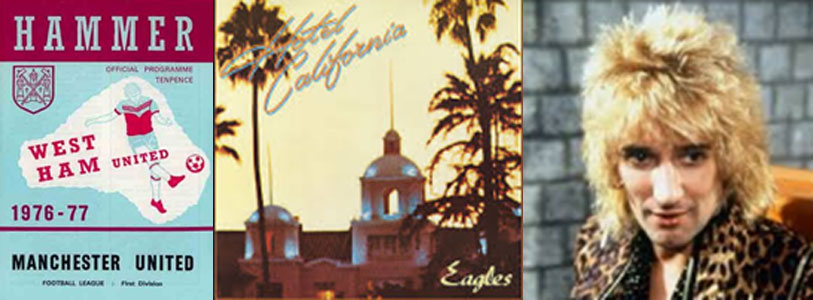
My Favourite Games: Number 4 – West Ham 4:2 Manchester United, May 16 1977

A series of occasional articles recalling my favourite West Ham games, and songs that topped the charts when these games were played

There have been so many great games in the last 58 years and I’ve covered many of them throughout my book, Goodbye Upton Park, Hello Stratford. So many of them are remembered because of the importance of the game, the goals scored, and the spine-tingling atmosphere generated by our fans. Hopefully my memories of these great games will evoke fond memories of fans, (especially older ones like me!), and the music in the charts at the time.

Man Utd 1977

One of the best games of football that I can remember, and certainly one of those with the most incredible atmosphere, came in the last game of the 1976-77 season. United were back again as a force in the top flight and we were facing relegation. It was a Monday night and United were playing in the FA Cup final the following Saturday. The equation was simple. If we won the game we would be safe. I met (lifelong friend and co-weblogger) Geoff Hopkins after work, and we stood on the West Stand Lower Terrace to watch the game. Considering the importance of the game, it was surprising that fewer than 30,000 were there to see it. I guess it was a sign of the times. We had only won two of our previous 13 games, leaving us in this precarious position, although in truth we had spent most of the season in the bottom three.

If we thought that United would be taking it easy with the cup final just a few days later we had another think coming. Firstly they fielded a virtually full strength team, and secondly within 30 seconds of the start their left winger Gordon Hill gave them a 1-0 lead. Frank Lampard (senior of course) scored the equaliser in the first half, yet another of his important goals, and then shortly before half time we were awarded a penalty. With Pop Robson in the team I’m not sure how a young Geoff Pike came to be the penalty taker, but he had scored twice from the spot in the previous month and he stepped up to take the kick. Unfortunately his fierce shot sailed high over the bar and we went into the break at 1-1. Fortunately he atoned for the miss early in the second half when he scored a tremendous goal to put us ahead. Pop Robson made it 3-1 to ease the nerves before Stuart Pearson (later to join us) pulled one back. Robson scored again to ensure a 4-2 victory that kept us in the First Division. Our stay in the top flight only lasted into the next season, as we were relegated after another dismal year when we barely got out of the bottom three for the whole time. Once again we could have saved ourselves from the drop in the final game but a 2-0 defeat at home to Liverpool sealed our fate and we went down for the first time in my life.

The number one in the charts that week was Free, by Deniece Williams. Other notable chart songs in May 1977 were Stevie Wonder with Sir Duke, Rod Stewart with I Don’t Want To Talk About It (which was the number one the following week), Abba with Knowing Me, Knowing You (not by A-ha!), Hotel California by the Eagles, Good Morning Judge by 10CC, and Lucille by Kenny Rogers, which took over at number one after Rod Stewart’s three weeks at the top. Even though it was almost 40 years ago, I can recall practically all the songs in that chart, unlike my non-existent memory of the May 2016 chart recalled in Number 3, the final game at Upton Park, also against Manchester United.

A Poll of Player Ratings from the Southampton Game

Rating the Ratings. How different people viewed individual West Ham performances at the weekend.

Football StatsWhen I was young (I’m talking about between the ages of around 8 to 11, so over 50 years ago) I used to badger my dad to buy the People newspaper every Sunday. Apart from liking their match reports, they were the only paper (to my limited knowledge at the time) who gave the players ratings out of 10 for the game played the day before. You have to remember that all games were 3pm kick offs on a Saturday at that time, so apart from midweek games, I was able to collate the figures for most of the West Ham games throughout the season. I used to painstakingly write out on a schedule the subjective scores of the reporter at the game, and then as the season progressed I would calculate the averages. In this way I believed I was working out which players were the best. I didn’t keep my schedules, although I can recall that Bobby Moore and Johnny Byrne always figured highly at the time.
Now I haven’t really taken too much notice of player ratings since that time all those years ago, but it did occur to me that more and more publications, both newspapers and websites, seem to be giving players scores for their performances. Some of this is done for the purposes of fantasy leagues, dream leagues etc, and some for the purposes of the supposedly ever increasing demand for football statistics. Understanding the subjectivity involved, I decided to analyse some ratings that I researched when looking at the performances of individual West Ham players in our win on Saturday at Southampton. I looked at eight sets of scores, including those by my fellow web co-blogger Geoff, to see how much correlation there was in the figures. I was surprised by the consistency of what I found. I was expecting greater variation knowing how people tend to see games differently.


1

2

3

4

5

6

7

8

A

B

C

Randolph

6

7

7

7.5

6

6

7

7

53.5

40.0

6.67

Kouyate

6

7

7

6.5

5

2

5

7

45.5

36.5

6.08

Reid

7

6

7

6.5

6

5

6

7

50.5

38.5

6.42

Fonte

7

6

7

5

6

5

6

7

49.0

37.0

6.17

Cresswell

6

6

6

6

7

7

7

7

52.0

39.0

6.50

Antonio

6

7

6

6.5

5

6

6

7

49.5

37.5

6.25

Noble

7

7

7

7

7

7

7

8

57.0

42.0

7.00

Obiang

9

9

9

8

8

8

8

9

68.0

51.0

8.50

Feghouli

6

6

5

6

6

6

6

6

47.0

36.0

6.00

Snodgrass

7

6

6

7

7

7

7

7

54.0

41.0

6.83

Carroll

8

7

8

7

7

7

7

8

59.0

44.0

7.33


75

74

75

73

70

66

72

80

585

442.5

6.70

1 – Geoff Hopkins, Under The Hammers
2 – The Sun
3 – ReadWestHam
4 – The Mail on Sunday
5 – ESPN
6 – Football Insider
7 – Sky
8 – Outside 90

The eight sets of scores are listed above. I have only used the scores awarded to the eleven starting players. Of course, when I used to look at the data fifty years ago, there were only eleven players in each game as no substitutes were allowed at the time.

Column A is the total of the eight scores. Using standard statistical analysis to remove some element of bias / unusual scoring, Column B is Column A minus the highest and lowest score awarded to each individual player. For example, the Football Insider score for Kouyate is way out of line compared to the rest of the scores, so this “unusual” score is eliminated from the calculations. Column C is the average score for each player based upon the six “middle” scores, i.e Column B divided by 6.

The resulting table below is the final score for each player in descending order:

1

Obiang

8.50

2

Carroll

7.33

3

Noble

7.00

4

Snodgrass

6.83

5

Randolph

6.67

6

Cresswell

6.50

7

Reid

6.42

8

Antonio

6.25

9

Fonte

6.17

10

Kouyate

6.08

11

Feghouli

6.00

Unsurprisingly, Obiang was considered our player of the match as he was the top scorer in each of the eight sets of scores. His average was well ahead of Carroll who was second, and Noble in third. Feghouli finished at the bottom, although he still scored an average of 6.00. The average for the team using this calculation was 6.70.

It was just a bit of fun, but does give the thoughts of eight individuals subjectively analysing player performances in the game. Pedro Obiang is my player of the season to date, and his performance in this game reinforces my belief. I think, but I am not 100% certain, that he is the only West Ham player to score a goal and create an assist in the same game in the whole of this season. I’m sure someone will correct me if I’m wrong!

Southampton 1, West Ham 3

A good performance to reverse the result at the London Stadium in September

noble

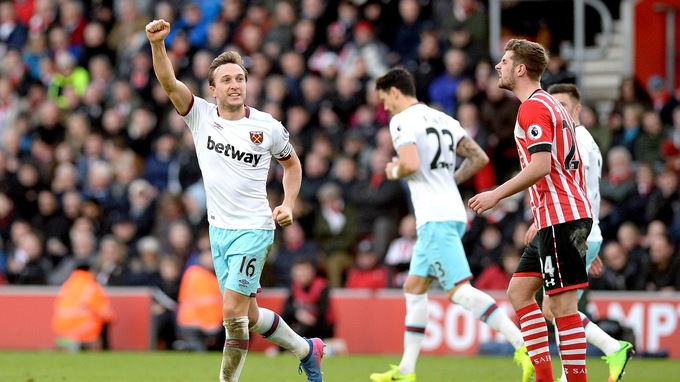
As always, co-weblogger Geoff summarised the game excellently in his article on the game published in Under The Hammers on Sunday:  5 Observations from Victory at St Marys. We were seeking revenge for our early season defeat at the hands of Southampton, and achieved it well.

Throughout this blog we have commented on the plethora of statistics surrounding football and I’ll add some more today.

In the Hull v Liverpool game, Liverpool “won” the possession statistics 72% to 28%, the shots 11 to 7, completed passes 523 to 162, and the pass success 82% to 62%. You all know the score of the game. Hull 2, Liverpool 0.

In the Palace v Sunderland game, Palace “won” the possession statistics 65% to 35%, the shots 17 to 10, completed passes 399 to 195, and the pass success 81% to 71%. You all know the score of the game. Palace 0, Sunderland 4.

In the Everton v Bournemouth game, Bournemouth “won” the possession statistics 54% to 46%, the shots 16 to 12, completed passes 476 to 391, and the pass success 86% to 82%. The final score was Everton 6, Bournemouth 3.

In the West Brom v Stoke game, Stoke “won” the possession statistics 62% to 38%, completed passes 416 to 220, and the pass success 81% to 70%. The final score was West Brom 1, Stoke 0.

In the Chelsea v Arsenal game, Arsenal “won” the possession statistics 59% to 41%, completed passes 475 to 326, and the pass success 84% to 80%. And the game ended Chelsea 3, Arsenal 1.

And finally in our game, Southampton v West Ham, Southampton “won” the possession statistics 55% to 45%, the shots 18 to 5, completed passes 388 to 296, and the pass success 82% to 76%. You all know the score of the game of course. Southampton 1, West Ham 3.

I think that I have proved my point! The TV and written media love to show us these statistics when a game is in progress (sometimes they give you the last ten minutes), and at the end of the match. So what do they prove? Of course it doesn’t always happen this way. Sometimes the team with the most possession and pass success rate will win the game.

I’ll leave you to judge the relationship between the data and the outcome of games. I’ve picked out six of the eight games played on Saturday in this last weekend. I suppose losing managers can hide behind the data to try to prove that they were unlucky. But the only meaningful statistic is goals scored. In each of the games I’ve highlighted the team that “won” in terms of the data lost the game. The teams that “lost” in terms of the data were the ones who picked up the three points.

Despite the four goals scored in the game we were still as low as sixth on Match of the Day! The win was well deserved in spite of the statistics I’ve quoted above. Gabbiadini, a player we have been linked with in the media in the past, took his goal well, although he looked offside to me. I haven’t seen a replay but I’ll be amazed if he was onside.

The timing of our goals couldn’t have been much better. The equaliser from Carroll proved that his right foot isn’t just for standing on, and he coolly slotted the ball home just a minute or two after we had gone behind. Obiang has been threatening to score for a long while now, and his goal on the stroke of half-time was well struck from outside the area. And finally Mark Noble’s free kick, as the Saints were threatening to get back into the game early in the second half, was rightly credited to him, despite taking a deflection of a Southampton boot. The “rules” of goals accreditation work on the basis that if the ball was bound for the goal, then even if it is deflected off a defender, the goal is given to the player who shot. It would have only been given as an own goal if Noble’s shot was deemed to not be heading into the goal.

Three more points and ninth in the table. We have a very important game at home to West Brom next, where a win would help enormously if we want to close the gap on them.