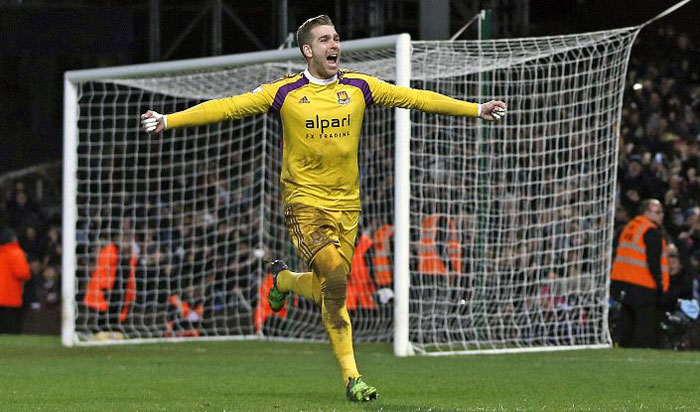
England’s Number One on his way to West Ham? Other signings this week?

Will the anticipated arrival of Joe Hart herald a busy week of transfer activity at West Ham?

With the potentially imminent signing of England number 1 goalkeeper, Joe Hart, and the early arrival in the window of Pablo Zabaleta, West Ham will have made two captures that could improve the quality of the first choice team, without spending a penny in transfer fees so far.

It is all a matter of opinion of course, and I am fully aware that some of our fans on social media would not agree with me, but I am more than happy with these two new arrivals, that is of course if we finally complete on Hart. We do seem to take a lot longer than other clubs to get deals over the line. Zabaleta will undoubtedly be the first choice at right back, and whilst recognising that he is not one for the longer term, he will add stability and experience to a defence that conceded far too many goals last season.

Some writers seem to believe that Hart will be a liability and is no better than the two keepers already on our books. I would disagree. He does make mistakes, but in his position, almost everybody does at times. You don’t earn over 70 caps for England without being a very good player, and you have to remember he is still the first choice England keeper, and has been so for seven years now. You only have to look at the custodians of the top teams in the Premier League to realise that none are infallible. De Gea, Courtois, Mignolet, Bravo, Cech, and Lloris were all at fault at times for goals conceded by their clubs last season, and personally I would personally put Hart in a the same bracket as some of those. At Manchester City, Guardiola didn’t rate him and cited his distribution as not being of the quality he wanted. So he went for Bravo. I know who I would want in goal for my team.

City have now gone out and paid £35 million or so for another keeper, Moraes from Benfica. He is a young Brazilian yet to win his first cap. How does that fit with the work permit regulations that exist for footballers transferring into this country? We were never going to be spending that sort of money, anyway.

And what will we be actually paying? That is a good question, and one that has a different answer according to the source of what we read. As a loan deal, I have seen reported from some sources that City are apparently paying half of his £100,000 per week wages, and we will have the option to buy him at the end of the loan for around £10 million. I have seen other variations that quote City paying as little as 10% of his wages, and the option to buy fee being up to £15 million. In addition there is a loan fee of between £2 million and £5 million, again depending on the writer. Whatever it turns out to be (if it happens) I believe it will be an excellent move for a very good goalkeeper, who in my opinion is certainly a better number one, and a more commanding one, than the two currently in situ.

I’m not entirely convinced of the logic in obtaining a player in this way (as opposed to an outright buy), and some would argue that it only defers our outgoings for a year (and reduces next year’s transfer budget), but our owners are obviously in favour of this method. I’m also not sure of the fairness of the loan system as a whole which surely was devised in respect of young players to let them gain experience, rather than fully fledged international footballers. It will mean that for the two games against Manchester City we will need an alternative keeper, although recent experience suggests that it would make little difference against these opponents.

The best keeper I have ever seen at West Ham is Phil Parkes. He was more or less the same age as Hart is now when we signed him, and he gave us more than ten years of top class goalkeeping. The fee we paid for him was a world record for a goalkeeper at the time, and showed our intent to want the best. Parkes only earned one international cap, although part of the reason for that was that there were two excellent keepers ahead of him in the pecking order, Shilton and Clemence, who between them won almost 200 caps.

I’m always amazed that goalkeepers don’t command the same level in transfer fees as some outfield players. In my opinion, after top class goalscorers, the keeper is one of the most important positions in a team, yet mostly they seem to be undervalued in the market. How many of the current England squad could be picked up on loan for a year, with their current club paying some of their wages, with an option to buy for a relatively modest fee (in today’s inflated market) at the end of the loan period? And look at some of the fees we have paid for our most recent (panic) acquisitions such as Snodgrass, Ayew, and Fonte. Compared to those, we would be spending our money on someone who will actually improve the team, rather than just an addition to the squad.

Of course, we still need to do more in the way of bringing top quality players to the club who can be “game-changers”, and the two that seem to be at the top of the list at the moment according to the media are Arnautovic from Stoke, and Hernandez, currently plying his trade in Germany. It would appear that Arnautovic could be signed for a fee in the region of up to £24 million, which to some seems a lot, but in the current market is probably not. Some commentators have described him as trouble, and a bit of a maverick, but he undoubtedly has talent, as he has shown at times (perhaps inconsistently) for Stoke. I remember a certain Mr. Di Canio being described in similar terms when we bought him and look how he turned out.

According to reports, Hernandez can be bought for around £13 million with his release clause, but the stumbling block is apparently his wage demands, said to be approaching £150,000 per week. Many fans on social media believe that we should just pay it, bearing in mind his goalscoring record at the top level, but they forget the potential unrest this can cause amongst other leading players at the club who would believe that they should be on a par with those figures. But if we really want him, and I believe he could be the type of striker we need, then I am sure that there can be creative ways around giving him the sort of money he wants, for example, a hefty signing-on fee with payments spread over the term of his contract, or perhaps bonus opportunities based on performance. If these two apparent targets were to sign we’d have greater pace and more attacking options. And I’m sure that some current players that we wouldn’t particularly miss would go in the opposite direction.

I’d really love to see us buy a top class creative midfield goalscorer such as Sigurdsson or Barkley, but believe that they are well out of our reach at the moment. We have picked up some very good players at modest prices in recent times, with Cresswell, Kouyate, Obiang, Fernandes, Masuaku (perhaps), Antonio, Lanzini (and even Payet!) as prime examples, and it would be good if our scouting network could unearth some other gems of this calibre. You don’t have to have marquee signings at ridiculous prices to improve the team or the squad. And you never know, one or two of our youngsters could prove to be stars of the future if they are given a chance.

The new season is now less than a month away. Let us hope for some exciting, positive news on the transfer front in the coming week.

Why haven’t West Ham made any signings yet?

Why don’t there seem to be that many irons in the fire of the summer transfer window?

Apart from the signing of a defender (Pablo Zabaleta) West Ham have yet to make any further signings in this transfer window to date. What are the reasons for this?

None of the players that we are allegedly interested in signing want to come to us? Perhaps we have set our sights too high? The very top players only want to sign for a club that will be competing in the Champions League, or at the very least a team that will realistically be challenging for a place in the top four. They don’t see us as a club in that position. Players just below this level with ambition might want to play in the Europa League at least, or be challenging for a place in the top seven, and they don’t see us doing this either.

The top six clubs from last season will almost certainly finish as the top six next season (albeit not necessarily in the same order), and in addition, Everton have the ambition and seem to attract players who believe that they might be the only club who can perhaps break into this elite group. Have you seen the way Everton have gone about their transfer dealing this summer? At the time of writing they already seem to have snapped up at least half a dozen new players in time for them all to gel in pre-season training, with even more to come. They can work on tactics, formations, and playing together so that they can hit the ground running when the season begins. Other mid-table clubs like Leicester and Bournemouth have already wrapped up some new signings too. Even promoted clubs such as Newcastle and Huddersfield have been successful in the market. Compare that to our position.

We don’t have the finances to attract top players in respect of transfer fees or wages? Given our position in the finance league tables that suggest we are among the top twenty richest clubs in Europe, most fans find this hard to believe. Add to this the increased TV revenues, the sale of Payet, Nordtveit etc. and others that we allegedly want to remove from the wage bill, the financially efficient stadium situation with a very low rent, and other factors, you would have to believe that we do have the money if we choose to spend it. Perhaps, despite all the talk of marquee signings, top quality players that will improve the team etc., the owners don’t really have the ambition to attempt to take us to the next level? However many forget that the top clubs generate huge revenues that are a long way ahead of us (even though we are in the top 20), and can afford to pay massive wages that we just cannot compete with.

David Gold has been at the fore on social media and Talk Sport saying “we have got to find the money”. I listened to his interview with Quinn and Brazil and some of the things he said were: “Without strikers, you struggle in the Premier League. You struggle in any division because strikers are your key players. You have to spend your money wisely but it must be on strikers, particularly strikers that have had experience with Premier League football – the very best we can afford.”

“We have tried the route of going overseas to bring in players – that hasn’t worked. We had a very difficult season because players we brought in from Europe didn’t make the grade and we paid the price. We struggled. We were actually flirting for some time with relegation because we couldn’t score goals. That is why we have got to bring in players with Premier League experience and that is what we are working on now. David Sullivan is working day and night in an effort to solve this problem. We have got good midfielders and a good defence ….”

Whilst not disputing that we do need goalscorers, if you look at last season’s league table we were not flirting with relegation purely because of lack of goals. Only a handful of clubs conceded more goals than we did. If you believe that the defence, and to some extent midfielders are responsible for stopping the opposition from scoring, then perhaps our players in those positions are not as good as David Gold thinks they are.

He also gave the impression that the club have little faith in the Academy players coming through. He quoted the case of Reece Oxford playing a couple of times. It is now two years since Oxford made his debut, and he was universally lauded for his performance against Arsenal. So why hasn’t he progressed from that time? What has gone wrong with his development? Why are we loaning him to a German side who believe he is good enough for the Bundesliga but not the Premier League? I don’t believe that that you can just throw in youngsters in big numbers, but few seem to be given the opportunity.

Perhaps potential signings believe there are other problems with West Ham? Our injury record is poor. Why is that? Our training facilities do not match up to those of other clubs – certainly not clubs among the richest in Europe, and many clubs without our finances have far superior facilities in this respect. Perhaps they don’t like our style of play? Perhaps they believe that the manager doesn’t have a strategy? Perhaps they believe he picks his favourites and shoe-horns them into the team without considering the overall picture? Perhaps they are put off in their dealings with the club when considering a move to us?

The Sullivan family have been very quiet so far. Perhaps they have some tricks up their sleeve, and suddenly we will announce some top quality signings, without shouting about them first? Perhaps all the speculation regarding some of the players we are allegedly being linked with is really a red herring to throw others off the scent of our real targets? Perhaps it is all media speculation? How many of the players who we are apparently interested in will be here next season? Is Andre Gray of Burnley really on our radar? Hernandez? Giroud? Iheanacho? Batshuayi? Does our scatter-gun approach put people off? Who knows anything for sure?

But we can all rest easily! David Sullivan is working day and night! Don’t go to bed! I remember the days when we broke world records to sign players. We certainly weren’t a rich club in those days, but players were keen to come here. Now that doesn’t appear to be the case. This transfer window has the same feel as the last summer window. I hope I am wrong. Let’s hope we can tie up our business in the near future with some decent signings, and not resort to transfer deadline day desperation.

Play Fair 5: Crime and Punishment Under the Hammer

In the final part of the series we go above and beyond the IFAB proposals to ensure that the punishment fits the crime.

This is my fifth and final article looking at potential changes to improve the game of football. The first four looked at the Play Fair document being proposed by the International Football Association Board (IFAB). My initial piece was “Play Fair? – An introduction to the document looking to make changes to game of football”, and I followed this up with their proposals for “Improving player behaviour and increasing respect.” The third article looked at “Increasing playing time”, and the fourth looked at their ideas for “Increasing fairness and attractiveness”. In the previous four I added some of my own views on their proposals, and in this final one I will add some additional thoughts that could be considered by the rule makers but haven’t been.

If you watch any football on TV, how many times do you hear the following question asked every weekend of the football season? “Was he denied a clear goal scoring opportunity?” It is one of those subjective decisions which are based purely on the opinion of the officials, and in particular the referee. And it is one which constantly provokes debate. The West Ham v Manchester City game in January 2016 had two incidents that I will now look at further and try to decide if the punishment fits the crime.

Firstly, take the eighth minute of the game. We were already one up inside the first minute thanks to Valencia, when Aguero burst into our penalty area in a very wide position. Jenkinson clumsily challenged him and referee Craig Pawson didn’t hesitate to point to the spot. From my seat in the stand at that end of the pitch I couldn’t believe it but after seeing the replay on TV later accepted that it was perhaps a foul, and at least a very clumsy challenge. I’ve seen similar challenges penalised sometimes and sometimes not. Based on the statistics of penalty kicks then there was an 85% chance of the penalty becoming a goal. But does the punishment fit the crime? Was Aguero being denied a clear goal scoring opportunity? The answer almost certainly is no. But because the infringement takes place within this arbitrary 18 yard penalty area then a penalty kick is awarded which usually becomes a goal.

Secondly, let us consider an incident after about half an hour of the game. An extraordinary piece of slide tackling and through pass from being on the ground by the once-loved Payet sent Antonio through. His pace was taking him towards goal when Demichelis crudely brought him down and he received a yellow card for his misdemeanour. This meant a free kick to West Ham outside the area allowing City the opportunity to bring their players back and build a wall. Does the punishment fit the crime? Was Antonio denied a clear goal scoring opportunity? Almost certainly yes, although referee Pawson decided that was not the case (to the astonishment of most in the crowd, and many more who saw it later on TV). The rule doesn’t say anything about being a certain goal. A referee shouldn’t think that another player within so many yards means that there was no clear opportunity to score. I don’t think players should necessarily be sent off in these circumstances as I prefer to see 11 playing 11. But the award of a penalty in these circumstances would be enough punishment.

So in the first incident a goal was not really threatened and in the second case it was. But the first incident resulted in a penalty, whereas the second was just a free kick outside the penalty area. The first has a statistical goal likelihood of 85%, whereas the second perhaps about 5% or even less. So is justice being done? No, I believe not.

Older readers will remember a certain Keith Hackett, who in 1991 deemed that Tony Gale was denying Gary Crosby a clear goal scoring opportunity even though he wasn’t really running towards the goal! All West Ham fans of that era hate Mr. Hackett, but many would have liked him in charge in this game when Antonio was brought down!

This brings me nicely to my next question. What is the point of having a penalty area at all (other than determining a specific area where goalkeepers than handle the ball)? Why don’t we have a rule change such that if a foul is committed anywhere on the pitch a free kick is given, but if the referee deems that it denies a clear goal scoring opportunity then he awards a penalty, irrespective of the exact place that the infringement happened? This could happen close to goal, or, as in Antonio’s case, some distance from goal. The award of a penalty kick just because an infringement happened within the penalty area (even if the goal is not really threatened) is nonsense if you think about it. Surely the only consideration should be the denial of a clear opportunity to score a goal?

I’ve got a lot of views about offside and I’ve been reading about the law, FIFA guidance, referee guidance etc. One problem I have is that it has been proven in scientific research that human beings (including linesmen!) physically cannot move their eyes fast enough to take in all the necessary action. To make a correct decision they have to assess the positions of the player passing the ball, the player receiving the ball, and the second from last defender at the exact moment a pass is made, bearing in mind that they could be some distance apart, and possibly moving at speed in opposite directions. Am I the only person who believes that when a slow motion replay of an offside decision is shown on TV, when they draw the line across the pitch it isn’t always simultaneous with the exact moment the ball is played? I believe the offside law needs to be changed.

The rule was introduced many years ago to stop the concept of goal-hanging and this makes sense. But why have the situation where you can be offside in half of the pitch? Can you really be goal-hanging more than fifty yards from goal? Why not change the rule so that you can only be offside in this final 18 yards of the pitch? This would prevent the current condensing of play in the centre of the field and stretch it out further. Assistant referees would only have to consider the issue in a smaller area, and it would surely result in fewer incorrect decisions.

And while we are considering rule changes, what about free kicks? These are meant to be an advantage to the side who get awarded them, and currently the opposition have to retreat 9.15 metres. Why such a small distance? Historical I suppose – ten yards. Why not extend this distance to 15 metres to give a real advantage?

The laws of the game were established over 150 years ago. Since then the average height of human beings has increased by more than 10%, we can run more than 10% faster, and jump more than 10% higher and longer. Perhaps the pitch should now be extended to be 10% longer and 10% wider, and the goals should be 9 feet high and 9 yards across to allow for the increased performance of the human body?

There are very few changes that are ever made to the laws of the game or the interpretation of rules. And the game has moved on considerably from when all the laws were drafted initially by Ebenezer Cobb Morley in 1863. Perhaps the last really significant change was the introduction of the deliberate back pass rule almost 25 years ago. Yes, the offside law is tinkered with from time to time to such an extent that the viewing public and the players themselves get confused by first phase, second phase, interfering or not interfering with play etc.

The game of football is simple and great, but let us not rest on our laurels. In most spheres of life changes are made with the intention of improving something. We can do the same with the beautiful game. The International Football Association Board (IFAB) Play Fair document is a step in the right direction. Historically IFAB have always taken rather a conservative view or attitude towards any proposed changes, and in any event FIFA has 50% of the votes when it comes to considering any amendments. So while FIFA hold such power then I fear nothing much will happen. It will be interesting, however, to see the reaction throughout the world to the proposals made by IFAB which are more radical than we have seen before, and in some instances would bring a definite benefit. But in my opinion they don’t go far enough.

Play Fair 4: Increasing Fairness and Attractiveness

Part 4 of the series takes a look at the IFAB proposals designed to produce a fairer and more attractive game.

This is the fourth of my series of articles looking at the Play Fair document being proposed by the International Football Association Board (IFAB), and looks at their ideas for increasing fairness and attractiveness. My initial piece was “Play Fair? – An introduction to the document looking to make changes to game of football”, and I followed this up with their proposals for “Improving player behaviour and increasing respect.” The third article looked at “Increasing playing time”.

The aim of this final strategy is to make the game fairer and more enjoyable to watch, play, coach and referee. This may involve challenging aspects of football which have been traditionally accepted but which some believe can cause minor irritation and spoil the game. The following are the points raised:

A different order of kickers for penalty kicks in a penalty shoot-out

Statistics show that the team that takes the first kick in a shoot-out has an advantage because of greater mental pressure on the second kicker in each round, who may face instant elimination if they miss their kick, especially once the first four kicks have been taken by each side. They propose a system similar to the tie-break in a game of tennis, whereby one team takes just one kick, and then the second team then take two consecutive penalties. The first team then takes two kicks and so on, each team taking two kicks at a time, until one team wins. By doing this, if each kick is successfully converted, then as you move on to the subsequent penalties after each team has taken their five penalties, the “mental pressure” alternates between the teams, rather than one team always being ahead. This sounds a fairer way of doing things to me, and I believe it should be introduced as soon as possible.

Goal kicks and defending free kicks in the penalty area

Under the current rule the ball must be played outside the area before another player can touch it. If it is played before leaving the area the kick is re-taken, and this could be seen as a time-wasting tactic. I’m not sure I understand the reasoning behind this current rule which does not apply anywhere else on the pitch, where a short kick can be taken. The proposal is to allow defending players or the goalkeeper to play the ball inside the area once the goal / free kick has been taken. But I cannot understand why they propose only defending players to be able to play the ball next. Why not the attacking players as would be the case in any other area of the pitch, as long as they are outside the area when the kick is actually taken? The reasoning behind the proposal is that it can speed up the game, stop time-wasting, and they believe it may lead to a more constructive and controlled re-start rather than the current long kick.

Handball

This is one of the most contentious issues in the game, especially when it occurs in the penalty area. Questions arise as to whether the handball is deliberate, if it is hand to ball or ball to hand, and pundits and referees seem to question whether the arms / hands are in a natural or un-natural position. This requires judgement by the officials which many perceive to be incorrect on many occasions. Clearly the game would benefit from a clearer and more consistent definition and interpretation of handball.

One school of thought is that if it hits the hand or arm (deliberate or not) then an offence is committed, taking the subjective judgement out of the hands of the referee. The alternative view is that the referee must be absolutely certain that it is deliberate to blow his whistle. In the penalty area, too many penalties are awarded in my opinion when the action is not a deliberate one. This usually leads to a goal from the penalty spot, when in many instances the goal was not being threatened by the ball being played by the hand or arm. Clearly this is one issue that requires further debate and clarification and needs to be addressed but this document does not really do so. How about this for a solution? If the ball hits the hand and denies a goal scoring opportunity then a penalty is awarded, otherwise a free-kick. Ignore whether or not the “offence” occurs in the penalty area, and take the intent out of the equation.

They do have some proposals, however, that they believe could make the game fairer. These include sending off a player who deliberately scores a goal with his hand, in the same way that a defender who prevents a goal in this way is punished. Personally I do not like to see players sent off which potentially spoils the game for spectators. Perhaps a more radical solution would be for the team of the attacking player who scores a goal in this way to concede a penalty themselves, even though the offence took place at the other end of the pitch.

A further proposal is that a goalkeeper who handles a deliberate pass or throw-in from a team mate should be penalised by a penalty kick awarded against him rather than an indirect free-kick which is currently the case. I like this idea.

Their final proposal in respect of handball is that the referee should be able to award a goal if a defender stops a goal being scored by handling the ball, an idea which is similar to the penalty try in the game of rugby. Again, I believe a sound proposal.

Half-time and full-time whistle only blown when the ball is out of play

This is another proposal borrowed from the game of rugby and, again I believe to be a good one. Sometimes the referee blows his whistle for half / full time just as a shot is going into the goal, or a team has a promising attack or scoring opportunity. The introduction of this change would eliminate any controversy and potentially create more excitement as a team tries to keep the ball in play.

The penalty kick – hit or miss

Their final proposal in this area aims to stop encroachment by defenders or attackers when a penalty is being taken. They propose that a penalty kick is either scored or missed / saved. If the kick is not successful, then the referee would stop play and award a goal kick, thus discouraging all the nonsense as players crowd the edge of the penalty area when a kick is taken. Once again, a proposal that would seem to be a promising idea.

Play Fair 3: Increasing Playing Time

Part three of the IFAB rule change proposals considers how to increase Playing Time.

This is the third of my articles looking at the Play Fair document being proposed by the International Football Association Board (IFAB), and looks at their ideas for increasing playing time in a game of football. My initial piece was “Play Fair? – An introduction to the document looking to make changes to game of football”, and I followed this up with their proposals for “Improving player behaviour and increasing respect.”

The concept of increasing playing time is one of my hobby horses that I wrote about in my introduction to the Play Fair document, having first written about it in 2015. The document begins this section with the comment that many people are very frustrated that a typical 90 minute game of football has fewer than 60 minutes of effective or actual playing time, i.e. when the ball is in play. Their key strategy which could be implemented without any law changes is a stricter calculation of additional time. They state that referees should be required to be much stricter in calculating additional time, by stopping their watch as follows:

  • From the time a penalty kick is awarded until the kick has been taken
  • From when a goal is scored until the kick- off is taken
  • From the time play stops for an injury until play restarts
  • From the time a card is shown until play restarts
  • From a substitution signal until the game restarts
  • From the award of a free kick until the kick is taken – this is especially important when pacing out is carried out.

You would be amazed how much time this would add on compared to what happens now. If you don’t believe me then use the stopwatch on your watch / smartphone every time one of these situations arises in a game. At the moment we typically find that referees add on 1-2 minutes at the end of the first half, and usually somewhere between 3-5 minutes in the second half. This bears little relation to the actual time when no football is being played.

We all remember when Tony Pulis used to bring his Stoke City side to play at Upton Park, and apart from a number of other dubious time wasting tactics, they would try to force throw-ins in our half. Rory Delap had an excellent long throw, but he would take an interminable amount of time drying the ball, waving players into position etc. It could take up to a minute for each throw-in to be taken and incensed the crowd.

I would go further than the initial suggestions in the Play Fair document for adding on time and propose stopping time whenever the ball goes out of play, especially when kicked into the stands, or when the ball goes behind the goal. I believe that the clock should only be restarted at the point a corner, or goal kick, or throw-in is actually taken.

In their points for discussion the document brings up the subject of stadium clocks, and they want to link this to the referees watch. Again, I would suggest going further and take timekeeping totally out of the hands of the referee when there is a clock in the stadium. The officials have enough to think about without worrying about timekeeping. How simple would it be for a clock controller in the stand to stop and start the clock as necessary and only have the clock running when the ball is in actual play? To me this is so easy that I cannot comprehend why it doesn’t get introduced at once. It would totally eliminate the concept of timewasting. It would be necessary to consider how long each half should last, and suggest 30 minutes in each half of actual playing time. You could even have 4 periods of 15 minutes actual playing time, with a 15 minute interval at the end of the second period. This would lead to more playing time than we see at the moment, and time wasting would become a redundant exercise with no benefit.

They do make some other suggestions for increasing playing time, but to me they would have minimal impact, especially if the actual playing time guided by the stadium clock is introduced. These suggestions include, referees to apply the 6 seconds rule for goalkeepers strictly, self-passing at a free kick, corner kick or goal kick, allowing a moving ball at a goal kick, insisting a goal kick is taken at the side where the ball goes out, and substitutions taking place, or players leaving the field when injured at the nearest touchline. All of these would speed up the game to some extent, but the key one regarding the stadium clock is the most important to my mind.

The reasoning behind the “self-passing” proposal is a sound one in the case of free kicks, as it would allow the fouled player to effectively play the ball to himself. The game already allows quick free kicks, but would it be even better, and perhaps encourage speedier attacking play, if the player who has been fouled could (if he wanted to) stop the ball and then immediately continue their dribble or attacking move, thus speeding up the game? Perhaps this could be trialled?

I’m uncertain as to how West Ham would benefit from this change unless we took a different approach to free kicks. On many occasions we already take them very quickly, but without a great deal of thought. How many times last season did we have a free kick in the opponent’s half, only for us to take it straight away, frequently sideways and backwards, with the ball ending up with our keeper? The advantage of having a free kick is lost when we do this.

Play Fair Part 2: Player Behaviour and Respect

In Part 2 of the series the IFAB Play Fair Document proposals to ‘Improving player behaviour and increasing respect.’

In my previous article I introduced the Play Fair document being proposed by the International Football Association Board (IFAB). Today I will look at the first of the three crucial areas where they believe potential changes could be made to improve the game, that of improving player behaviour and increasing respect.

Over the years there have been many attempts to try to get players to improve their behaviour. Of course the main sanction is the issue of yellow and red cards, but how much effect does this have? In many instances the correct issue of both types of card is a subjective one and provokes much controversy.

Some of the ways in which IFAB believe that behaviour of players and team officials can be improved make some sense, whilst I don’t believe that others will have any real impact at all. The changes that could be implemented immediately without a change in the Law are fairly obvious ones but have no real clout:

  1. The captain must become the main point of communication with the referee.
  2. The captain must be the only player allowed to approach the referee when there is controversy.
  3. The captain must help the referee to calm flashpoint situations.

These are all sensible enough, but can you see it realistically happening unless there are meaningful sanctions in place when they don’t?  Some captains in recent years, and we all know who they are, would be less equipped to help the referee to calm down their players in flashpoint situations.

We all know what happens in reality. Players don’t like a decision, either because the officials have got it wrong, or because they feel that if they make a significant protest when they are in the wrong the referee will be sufficiently intimidated not to give decisions against the team in the future. Some teams in recent years have turned mobbing the referee into an art form, and unfortunately with weak referees it works. Is it a coincidence that teams noted for this type of protest appear to have more than their fair share of contentious decisions go in their favour?

The mobbing or surrounding of match officials is a problem that has existed for as long as I can remember but has, perhaps, escalated in recent times. For me the reason is clear. The officials do nothing about it. How many times do you see players around the referee or one of his assistants, and the referee keeps trying to wave them away? Do they go away? No. And what are the sanctions? None.

IFAB believe that the following sanctions could be tested out to solve the problem.

  1. “Referees should deal more strongly with players who mob the referee or linesman by the use of yellow cards.” Personally, I thought that they already had this power but are too weak to use it in the majority of cases. And an increase in yellow cards would lead to an increase in red cards, which then leads to more games without the full complement of players on the pitch. I hate to see this. I don’t understand the cheering when a player gets sent off. It leads to a changed, and usually, duller game, where the team with fewer players brings everyone back behind the ball, thus ruining the entertainment.
  2. “Only the captain can approach the referee to discuss a controversial decision.” They call this a sanction! It is not and will be totally ignored without anything meaningful happening.
  3. “Fines or points deduction for a team guilty of mobbing.” Now they are beginning to get somewhere, although fines are a total waste of time with the money around at the top level of the game. The only meaningful sanction that I can see working is that of points deduction. We now have panels that review all kinds of incidents retrospectively, and if a team surrounds the referee in a game then, in my opinion, something like two points (perhaps even three) should be deducted from their total if found guilty of this offence. This may seem harsh, but if they seriously want to put an end to it then this is what they must do. Managers will soon drum it into their players that the consequences of this kind of action would be harmful to the team and I’m sure it would soon cease.

I have an alternative suggestion, too. In addition to the potential retrospective action of points deductions, a penalty would be awarded against the team who are mobbing. And if they continue with their protests then the penalty is taken without a goalkeeper allowed in the goal. And if the protests continue a second penalty is awarded and so on until the protests stop. Clubs will soon understand the consequences of surrounding a referee and this type of protest will be consigned to history. Unless there are meaningful sanctions then nothing will change.

IFABs other suggestions for improving player behaviour and increasing respect will, I believe have little impact. They want to test red and yellow cards for coaches and team officials, and discuss a pre-match handshake between the referee and two coaches in the technical area, and a plan to reduce the number of substitutes a team can use if a substitute is sent off. The last one baffles me. What is the point of that? There are so many things they could look at I think this is just tinkering at the edges. Perhaps the game can learn something from rugby where officials are respected, and players tend to refer to the referee as “sir”? Can you see this happening in football? Unless the sanctions for mobbing that I refer to are strong enough then I feel that all of their proposals in part 1 of the Play Fair document will have little impact upon improving player behaviour and increasing respect.

Play Fair: Taking A Hammer To The Rules of The Game

An introduction to the document produced by the International Football Association Board (IFAB) looking to make changes to game of football.

There are conflicting schools of thought when it comes to attempting to improve the game of football. One side of the argument suggests that the game is fine as it is. Many believe that it is already the best and most popular game in the world and should be left alone. An alternative view is that you cannot stand still and it is prudent to make changes from time to time when there is an opportunity to make improvements for players and spectators alike.

I come down on the side of the latter view, and believe it is necessary to make alterations to the Laws to move with changes in the way that the game is played. If you look back to the late 1950s at video footage of games played at that time, you will realise that it has changed since then, and some amendments are necessary to keep the game up to date. As a regular columnist on the best West Ham fanzine ever, Over Land and Sea, as a co-author of this blog, and in my book Goodbye Upton Park, Hello Stratford, I have frequently suggested changes that I believed would improve the game.

Within the book I made regular calls for the introduction of video technology, and devoted more than one chapter to this as it is something I am very much in favour of, as long as it is introduced in the right way and doesn’t alter the flow of the game. I am pleased to say that this is something that is now well on the way to becoming part and parcel of the professional game at the top level. In my prelude to our game against Stoke City in April 2015 I explained how I believed it should work, and future chapters on the topic reinforced my reasoning, especially resulting from some of the poor refereeing decisions that went against us in the 2015-16 season.

We had a batch of games in the second half of the season; away at Manchester United in the cup, away at Chelsea and Leicester in the league, and at home to Palace and Arsenal, all five of which resulted in draws. With a video assistant referee, all five would probably have resulted in victories, which would have seen progression into the semi-final of the cup, and eight more points in the league, which would have given us a Champions League place. Some will argue that these incorrect decisions balance themselves out over a season, but in reality they do not. I cannot recall a single instance where we benefitted from a contentious decision that later proved to be wrong in that season.

In my book I also unleashed another big bugbear of mine, the question of timekeeping, and timewasting. In a later article for Over Land and Sea, and also within the book after the home game had been played against West Brom on 29 November 2015, I went to town on this topic, and also re-watched the whole game on Sky with a stopwatch, and bemoaned the fact that less than 25 minutes of football was actually played in the second half of the game.

On 23 January 2016, after the game against Manchester City on that date, I wrote a chapter entitled Crime and Punishment. In this I pushed for changes in respect of the awarding of penalty kicks, questioned the need for having a penalty area, introduced my reservations about the offside law, questioned the concept of deliberate handball, and even made suggestions about increasing pitch sizes and goals by around 10% to allow for increases in sizes and performance of the human body since the original sizes were brought in 150 years ago.

The Laws of the game haven’t changed drastically in my lifetime (I’ve been following since 1958) but there have been some developments and amendments to the laws, and changes to rules of competitions. Some will say they have been beneficial, others will say that tinkering sometimes confuses the issue. So, for example, one of the most controversial laws in the game is the offside rule. This provokes a lot of debate, and was introduced initially to prevent “goal-hanging”. But quite how a player could be accused of “goal-hanging” when just inside his opponent’s half is beyond me. One change I would like to see is that a player can only be offside in the final eighteen yards of the pitch, but I reckon that change is a long way off. But it shouldn’t be.

The offside rule used to include “interfering with play” and there are a number of famous quotes surrounding this along the lines of “if he’s not interfering with play, or seeking to gain an advantage, then what is he doing on the pitch?” I haven’t quoted it exactly I’m sure, as there are contradicting views as to who first said it, but many attribute it to Bill Shankly. Nowadays they talk about first phase, second phase, active play etc. Anybody with any doubt as to the complexity of this rule should look up Law 11 in the Laws of the Game. It is a minefield, and almost impossible to explain.

Other changes in the last fifty years or so include the introduction of substitutes (many younger people will not remember a time when substitutes were not part of the game), the back pass rule, goalkeepers now being allowed to run with the ball without bouncing it (look up some old footage of the game to see this), the six second rule for keepers (but how often is this broken without being penalised?), three points for a win (it used to be two), and penalty shoot-outs. I am old enough to remember European ties ending all square and progression to the next round of the competition being decided by the toss of a coin. Many will believe that these changes have benefitted the game, although of course there are always detractors.

Recent innovations which are gaining momentum but still give rise to controversy in their initial trial stages include experimentation with video assistant referees, and changes to the sanctions for denial of obvious goalscoring opportunities. Now the International Football Association Board (IFAB), the independent guardians of the rules of the game, have issued a discussion document entitled “Play Fair”. I was looking forward to reading their proposals. The main aims are to develop the Laws to promote integrity and fairness, improve accessibility, and use technology to benefit the game. The three-pronged strategy within the document is a kind of five-year-plan to improve player behaviour and increase respect, increase playing time, and increase fairness and attractiveness. For each of these three areas they have three sub-divisions: “no law change needed – could be implemented immediately”, “ready for testing / experiments”, and “for discussion”

I will look at each part of the strategy in turn and consider its merits, and spread my writing over five articles on consecutive days, starting with this one. Many are sound ideas, (and even include areas that I have previously touched upon) that would improve the game in my opinion, but are they tackling all of the real issues that give rise to controversy? They don’t have any proposals for changes to the offside rule, the awarding of penalty kicks when the goal is not really being threatened, and they don’t really tackle the handball situation. Nevertheless some of their ideas are sound ones and I will describe them in some detail in following articles.

West Ham Transfer Sensation

Club remained tight-lipped on impending summer transfer revelation.

At the beginning of this month I wrote about the transfer speculation in various media outlets regarding potential West Ham signings in the summer transfer window which officially opened this week. Unlike last year when there were bullish reports coming out of the club in respect of marquee signings, breaking transfer records to land players, especially a top striker, the sensational news is that this year we appear to have learned our lesson, and are keeping quiet about our potential targets! This would seem to go completely against what has happened in the past, perhaps because the season ticket sales went better than many dared to hope, and we should comfortably sell out the 52,000 seats available.

The players that we were being linked with via the media at the end of May were the following names, and some of these have continued to appear during the past few days, especially Joe Hart, the current England keeper, who let in two free kicks from outside the box against Scotland at the weekend, which won’t have increased his value in the market:

Goalkeepers: Hart, Pickford, Ruddy, Szczesny, Krul.

Defenders: Clichy, Semedo, Gibson, Maguire, Keane, Raggett.

Midfielders: Asamoah, Tadic, Barkley, Wilshere, Sigurdsson, Mertens.

Strikers: Batshuayi, Gray, Iheanacho, Braithwaite, Long, Sturridge, Mitrovic, Mboula, Selke, Ibrahimovic, Bacca, Slimani, Perez.

In the last couple of days some new names have emerged which we can add to the list of supposed targets, although pleasingly West Ham appear to be remaining coy about all speculation, and are refusing to confirm any of them. That is good news!

The strongest rumour appears to be a 19 year old Nigerian, Onyekuru, who was joint top scorer in the Belgian League last season with 24 goals. More than one report (although it is impossible to say if it was just one report copied by many others) suggests that he is due to have a medical with us on Tuesday.

Other reports suggest we are interested in Kruse of Werder Bremen, a 14 cap German international, who scored 15 goals in just 23 games in the Bundesliga last season, and has a supposed £10.4m release clause.

Apparently, Giroud of Arsenal also interests us, and would be available for £20 million. He is allegedly unhappy about his lack of game time with the Gunners, with Arsenal seemingly preferring pace up front, something I would like to see in any strikers that we buy, too.

Another German on the radar is Modeste of Cologne who bagged 25 goals in the Bundesliga last season which helped them to qualify for the Europa League. The suggested fee would be around 30 million euros, although quite why he would want a switch to the London Stadium is unclear to me.

Two other attacking players are quoted by some media outlets as being of interest to us, firstly Traore of Chelsea, who has been on loan at Ajax, and secondly Munir of Barcelona who spent the season on loan at Valencia.

And finally there are two England internationals that we would want to bring to West Ham according to some reports; Delph of Manchester City, who is unlikely to get too many opportunities of playing in the first team at his current club, and the best one of all, Alex Oxlaide-Chamberlain, who some outlets claim would be available for £17 million. I don’t believe any of the rumours that I’ve mentioned above, but this one at the price is the most ridiculous of them all, and would be a fantastic buy for us. Sadly, I think that this rumour is way off the mark.

So there you have it. Another eight names to add to the 30 quoted a week ago, making 38 potential signings. The rumour industry is in full swing, but I am pleased to report that the club seem to be keeping very quiet this time around. That is how it should be. Let us hope they keep it that way and then surprise us by announcing that one or two top players that would improve the team significantly have signed for us. I won’t hold my breath.

Will West Ham ever play in the Champions League?

Will we ever hear the “We Are Champion’s League” chant echo around the London Stadium?

Did you watch the Champions League final at the weekend between Real Madrid and Juventus? I thought it was an excellent game that was light years away from any of the domestic football we’ve seen this season. My first experience of seeing a European Cup Final was as a six year-old watching on black and white TV with my dad. I was enthralled seeing Real Madrid thrash Eintracht Frankfurt 7-3 in the 1960 final. In those days the European Cup (which became the UEFA Champions League in the 1990s) was only for the champions of countries. Nowadays of course it is a mega highly branded competition where up to four teams can qualify from leading countries.

So all we need to do is finish in the top four of the Premier League and we are in. Sounds easy? Of course not. I am afraid that the Premier League is now so predictable and driven by money that I can easily forecast which clubs will be in contention for a top four finish next season. It will be simply a case of perm any four from this season’s top six teams. The two Manchester clubs, Liverpool, and the London trio of Tottenham, Arsenal and Chelsea are so far ahead of the rest in terms of revenue, I can see them dominating our domestic league for years to come.

What about Leicester in the season before last you may ask? Yes, they were the exception to the rule, an absolute freakish surprise, but I honestly can’t see anything like that happening again. If you look at the Deloitte table of the richest clubs, then there are ten Premier League clubs that have appeared in the Top 20 in Europe in the last couple of years. In addition to our big six then the nearest challengers in revenue terms are Newcastle, Everton, Leicester and ourselves. But when you consider that Tottenham (the sixth richest club in England) are so far behind Liverpool in fifth, and then see how far behind Tottenham we are, then we are just not in a position to compete financially. Of course the move to the London Stadium will help us in financial terms, but all it will do is slow down the rate at which the top clubs are pulling away, which grows bigger every year.

Apart from Leicester you have to go back to season 2004-05 to find anyone outside of the big six who managed to break into the top four, when Everton crept into fourth place. Newcastle themselves did so a couple of times prior to that season, and Leeds also did around the turn of the century, but although money was a factor in those days, the differential between the top clubs and those below them wasn’t so great then. Now the differences are so huge, and the gap is getting wider, that I cannot see it happening again in the foreseeable future.

Our bullish owners are hopeful that we can compete to join this elite club, and indeed we gave it a good go in our final season at Upton Park when we finished seventh, and could perhaps have finished even higher. Almost twenty years ago we achieved our highest ever placing in the Premier League when we finished fifth in 1997-98, and a little over ten years before that in the days when the top flight was called Division One, the boys of 1986 came so close when we finished third. But it was a different world then as teams such as Southampton, Forest, Watford, Ipswich, and Norwich all managed top four finishes in the 1980s.

In many ways the Premier League is more competitive than most with six teams regularly contesting to finish at the top. In the other top leagues such as Germany, France, Spain and Italy, there are perhaps two or three teams at the most who are likely to finish as champions. This is not too surprising as our top six clubs make up half of the top dozen richest clubs in the world. But this only means that we will find it harder to earn a place in the Champions League.

To break into the elite we would need to sign some top players. But the very best players only want to play in clubs competing in the Champions League, so even if we were prepared to pay top dollar for the best, I am afraid that they wouldn’t join us anyway. I cannot see a day when we will ever play in the Champions League. Next season the best we can possibly hope for is to be among a group of middle ranking clubs who will fight to finish in seventh place (as we did a year ago) in the Premier League. I’d love to be wrong and see us emulating Leicester of a year ago. But it won’t happen.

48 Hours in the Life of West Ham Transfer Speculation

With several squad’s worth of targets linked in the past 48 hours which ones are we supposed to believe?

Has it always been like this? There is now a whole industry surrounding transfer rumours, fuelled largely by social media, the newspapers, Sky Sports and Talk Sport. I guess that as a West Ham fan I only really notice our involvement in these, but we always seem to be at the forefront when it comes to speculation regarding potential targets.

How much truth is there in what we read and hear? I find it quite amusing how some on social media appear to believe everything put before them, and start making judgements on how good or bad the players are, how they would fit into the team, and our possible best line-up to start the new season. How much of what we see exists to tempt readers to read further, whilst being bombarded with advertising?

In the past some of the West Ham hierarchy and their families have been allegedly quoted in confirming our interest in this player or that. But I think that the penny has finally dropped, and there is a realisation that this is not the way to do business. Some say it is a ploy to sell season tickets, but surely if there is any truth in the 46,280 renewal rate (90%, which incidentally is way above the Premier League average, and significantly more than many forecast), and a waiting list of 50,000 plus, then that would be totally unnecessary?

Last summer there was, of course, the talk of the marquee striker that we wanted to sign, and despite the fact that we were in Europe, albeit we qualified for the lesser competition, all the talk came to nothing, and Ayew became our record signing at the last minute. This time around I would love to see us do all our business early in the window, which doesn’t actually open for another month, and get our squad finalised in time for a full pre-season, to enable us to work on a strategy for how we are going to play, with any new recruits fully settled into the squad.

Out of interest I have compiled a list from a variety of sources of all the players that we are supposedly interested in bringing to the London Stadium. The list is confined to a 48 hour period on 30 – 31 May, and of course, it is not definitive, as I may have missed some!

Goalkeepers: Hart, Pickford, Ruddy, Szczesny, Krul.

Defenders: Clichy, Semedo, Gibson, Maguire, Keane, Raggett.

Midfielders: Asamoah, Tadic, Barkley, Wilshere, Sigurdsson, Mertens.

Strikers: Batshuayi, Gray, Iheanacho, Braithwaite, Long, Sturridge, Mitrovic, Mboula, Selke, Kruse, Ibrahimovic, Bacca, Slimani, Perez.

How many of these supposed potential targets can we expect to don the claret and blue shirt next season? I’d love it if one day I could read about a really good signing after it has been finalised, with no knowledge or speculation about it beforehand. But I won’t hold my breath.