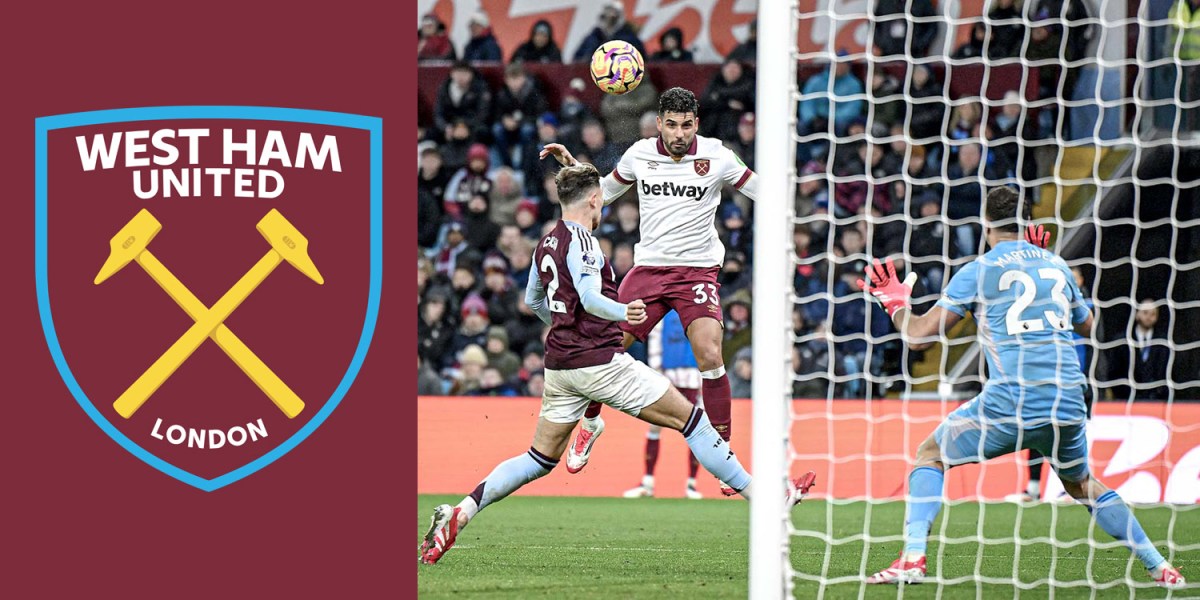
Anfield Retrospective: West Ham Reprise Role of Gallant Losers in Attempt to Derail Liverpool Title March

The two best known anthems in English football sing about the fragility of dreams. Once more it is the dreams that are tossed and blown that triumph over those which fade and die

Looking back at Sunday’s game Liverpool in isolation left the impression of a decent performance where West Ham were maybe unfortunate not to come away with a share of the spoils. Whether, as some suggest, it represented the green shoots of improvement for the Graham Potter era is far less certain. The reality remains that league position, points per game, and goals scored have all deteriorated since the new manager’s appointment. The Hammers are now statistically the worst side in the league outside of the woeful bottom three. Such a decline is a huge disappointment for any coach, no matter what position was inherited at outset.   

The match itself was less the game of two halves that has become the Hammer’s signature for much of the season, and more a game of four quarters. An opening quarter of total domination by the hosts, a period of relative stability where the visitors might easily have equalised and culminating with a final two quarters where, for long periods, the visitors looked much the better team. To bring the scores level only to quickly concede shortly afterwards was so West Ham. Adopting the role of gallant losers that is as much part of the club’s DNA as blowing bubbles.

If you watched the game on TV, you would have been exposed to a stream of nauseating Salah-vation during the match commentary in celebration of Mo’s contract extension. A situation that only got worse when his ‘goal-involvement’ cross was stroked home by Diaz after 18 minutes.

It was an afternoon to forget for Ollie Scarles who was given a torrid time by Salah. At times his defending was both naïve and weak, and his confidence shot to the point where it looked like he might burst out into tears. Hopefully, just a part of the learning curve although he has been unconvincing defensively in seeral of his recent games. A game or two out of the spotlight might help.

It did not come as a surprise to see Potter reverting to a back three when the teams were announced. It is a formation that is easier to justify away at Anfield than at home to Crystal Palace or Leicester. The drawback is that it doesn’t allow Jarrod Bowen, Mohammed Kudus, and Niclas Fullkrug to fit into the system or shape at the same time. Following the positive impacts made by Fullkrug’s introduction in previous games it was extremely disappointing not to see him feature on the pitch until the 78th minute.

Elsewhere, I would have preferred Edson Alvarez to have started in place of JWP but was relieved to see Tomas Soucek left on the bench. Until there is a rule change that allows players to come on just for set pieces, I don’t see what role the slumbering Czech can play in any side with an ambition to hold on to possession.  

The pairing of Lucas Paqueta and Carlos Soler in the attacking midfield areas provided more creative spark and interplay than we have been used to in recent times. Both may have contributed their best football of season, especially during the second half when they were instrumental in the Hammers running the show. I wonder how many Paqueta Islanders had put a wager on the Brazilian knocking over the referee.   

Paqueta did rather blot his copy book, however, with his role in the lead up to the Liverpool winner. There are certain areas of the pitch where looking to buy a foul is way too risky if there are no takers. His reputation for going down too easily and theatrically does him no favours at all. Of course, it is almost impossible these days to be certain what is and isn’t a foul. Without an insider understanding of the permitted force of a shove in the back; or how long you can rightfully hold on to an opponent’s shirt without being penalised we can only bow to the officials’ superior knowledge. Heads there was contact, he had a right to go down; tails, it was minimal contact, he went down too easily.

The dilemma was perfectly illustrated when Van Dyke headed the Liverpool winner. As the co-commentator euphemistically described it: “the nudge by Van Dyke moving Fullkrug out of the way”. Must be a little like pinball where a ‘nudge’ is allowed but a tilt is game over.

Whatever the likley outcome of the match, Liverpool will eventually be the 2024/25 Premier League champions. The home win simply brings forward the date on which it will be confirmed. It is difficult to argue that it is not deserved and a major achievement in Slot’s first season.

Thankfully, from a West Ham perspective there are only another six games to endure before the curtain comes down on one of the dullest campaigns in living memory. With a lowly league finish, no cup runs or European football, the Hammers have taken a massive step backwards compared to the clubs we mighty have imagined to be our financial equals outside the rich six – notably Newcastle and Aston Villa. It will be goodbye to a place in the list of the world’s top twenty richest football clubs when the results are announced next year.

All hopes must now be pinned on a successful summer of recruitment, apparently spearheaded by Potter and Kyle Macaulay but unlikely to be free of interference from the self-styled Director of Football in the boardroom, David Sullivan. Our best hope is that their decision making improves significantly from the one that lumbered the club with a loan deal for an unfit (and arguably unmotivated) Evan Ferguson. Even from a distance it looked like a really stupid move that was never going to benefit West Ham.

A lot of work is required to assemble a functioning squad from the spare parts that are currently in place. All the more difficult is a club that lacks any clear strategy on its recruitment aims. It is fanciful to believe the Potter/ Macaulay partnership were instrumental in Brighton’s successful and money-spinning transfer dealings, but perhaps they learned something from the experience. The worst of all worlds is that recruitment activity again focuses solely on existing short-term firefighting issues in the squad at the expense of building for the future. Past performance does not instil a great deal of confidence.

It got to the point on Sunday where I was relived to hear that Chelsea had equalised against Ipswich. And I am not overly confident that we will not allow Southampton to overhaul Derby’s lowest ever Premier League points total this weekend either. How on earth did we get here? COYI!
West Ham Versus Bournemouth: A Bargain Bucket Of Matchday Takeaways

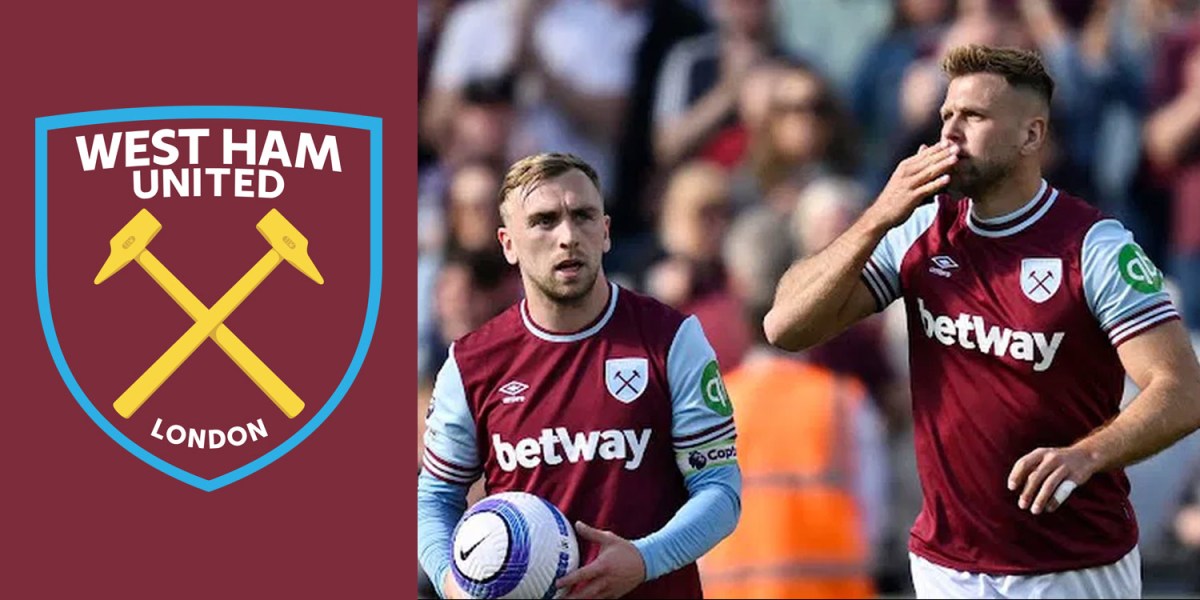
Despite little enthusiasm remaining for West Ham’s season of dismal decline into a bottom six club, here are the random takeaways from a mildly interesting draw with Bournemouth

My Kingdom For A Centre Forward

According to one report I read over the weekend, a cartoon style lightbulb flashed on in the London Stadium boardroom on Saturday when it was suddenly realised that all the Hammer’s current woes could be put down to not having a centre forward. Well, I never! Such valuable insight is outstanding and encoraging. It would otherwise never have occurred to the average supporter who has been bemoaning the shortage of striking options for the past ten years or more. We can now rest easy that having finally uncovered this hidden weakness it will be quickly resolved when Chairman David Sullivan returns to basics by taking back control of the summer transfer dealings. There must be 50 ways to sign a third-rate striker, and Sullivan has given each one of them a go. He will have learned his lesson though, won’t he?   

Hello Square Peg, Meet The Round Hole

It’s a shame that the striker revelation hadn’t been uncovered before the team sheets for Saturday’s home game against Bournemouth were handed in. Then highly paid and experienced Premier League manager, Graham Potter would surely have acted very differently when leaving the two centre forwards he did have available on the bench. If only he’d been aware that goals win games, the first half might have turned out very differently. I could almost sense the awful screech of metal sraping on metal as the starting eleven were forcibly squeezed into the semblance of a formation. There was some good news, however, in that whatever that formation was it wasn’t to be the 3/5 at the back that had bored us senseless in the previous run of games. None of the top teams elect to use such a formation as their default setting. It is one designed not to lose rather than win. I pray we see a good deal less of it as the season fizzles out into a disappointing finale and a worthless bottom six finish.   

It Was the Worst of Halves, It Was the Best of Halves

Has there been any game this season where West Ham have played well in both halves? Nothing springs to mind, although perhaps a case could be made for Ipswich at home and Newcastle and Arsenal away. Otherwise, the standard operating model has been the slow, unadventurous, low energy start that only perks up after a slew of half-time substitutions. Intriguingly, this has remained a consistent aspect of performances despite the transition of the coach’s baton from Lopetegui to Potter. Why would that be? Poor preparation, poor team selection, poor attitude by the players or a lack of leadership and belief on the pitch? Coming from a tradition where Moyes treated substitutes as a new-fangled development he didn’t really agree with, we now appear to lead the field in half-time changes. A total of 24 replacements made at the break in 14 different games.

A coach or manager calling for greater intensity is really just pointing the finger at himself. It can be excused in a one-off game but certainly not when it happens every week. As anyone with a pair of eyes could see, the whole performance and atmosphere changed on the introduction of Niclas Fullkrug. I hope Potter made a mental note that having a proper spearhead in attack made all the difference in the world. After all, he was probably the only person in the stadium who didn’t think he should have started with one at outset. And great to see West Ham score with two great throwback bullet headers evoking the spirit of Hurst and Peters.   

Do You Want Rice with That?

When Declan Rice was sold to Arsenal (and rescuing West Ham’s otherwise dodgy PSR position), the response was to sign a single defensive midfielder as replacement. But Rice offered far more than that. His ability to break/ surge/ carry the ball forward from deep at pace was an invaluable transition option. It was a capability that no member of the current squad possesses and the gap has never been filled – none of Alvarez, Soler, Soucek, JWP, Rodriguez, or Irvine come close, either technically or in speed of movement. So, while the club might give themselves a round of applause for recognising the need for a centre forward, this is an equally pressing deficiency. No amount of tippy tappy, backwards and sideways passing (no matter how high the pass completion rate) is going to bother a well drilled defence who have been given plenty of time to get back into shape. The alternative is to go long (high chance of failure) or move the ball through the lines quickly. A player capable of successful carries not only causes defences to panic but also creates space for others to exploit. Joao Gomes demonstrated this perfectly in our recent game at Wolves. It must be a top recruitment priority in the summer.

The Defence Rests

It is fair to say that the statistics back up Potter’s claim that he has been successful in tightening up the West Ham defence. Goals conceded have reduced from an average of 1.95 per game under Lopetegui to 1.18 under Potter. But it has been achieved by piling more numbers into defence and dropping deeper in the style of a David Moyes tribute act. It is not a tactical or coaching masterstroke. It may be no coincidence that we were back to conceding twice upon the reintroduction of a back four. Unfortunately, there are serious questions at the heart of the defence. Jean Clair Todibo (if he stays) does have the qualities to be a top-class defender but has struggled to string a run of games together due to one fitness issue or another. A warning sign or has he been handled badly? Max Kilman is a bigger worry for me. After a reasonably steady start to the season, his performances have gradually fallen away and looks well short of a player purchased at a cost of £40 million – and committed to a seven-year contract. He just seems to lack the necessary determination, aggression and assertiveness to perform as a Premier League centre back – in much the same way that Nayef Aguerd struggled with the physical aspects of the English game.

Who’s The Joker in the Orange

Years ago, there was a Two Ronnies Mastermind sketch where the specialist subject was ‘Answering the question before last.’ I can only think that referee Tim Robinson was applying a similar concept to his random acts of officiating. Little correlation was apparent between his decisions and the action that had jsut taken place.  Not that he favoured one team or the other, although his major contribution to the game’s outcome was penalising (and booking) JWP for being in the vicinity when an opposing player fell over – with Bournemouth equalising from the resulting free-kick. You have to wonder where PGMOL find these guys; and at a time where they believe what the game really needs is even more refereeing judegement. At least Robinson is from West Sussex and not another member of the north-west England cluster. A look at his record shows him as one of the Premier League’s least used refs who rarely gets a look in at any of the rich club games. I wonder why?

Paquetagate: Latest Odds

From the trickle of information leaking from the Paqueta spot-fixing enquiry, it sounds like the FA are failing to present a compelling case that any offence has actually been committed. Just a handful of samba dancing Paqueta islanders betting on the high chance of yet another yellow card for their favourite son. Hopefully this is more than wishful thinking and the Brazilian will be free to either continue his erratic contributions at West Ham, or be sold on at a decent PSR boosting fee. If the case does fall apart, it could have serious implications for the denial of the £85 million transfer that never was, as well as the lucrative contract that would have inevitably come with it. It would be a severe embarrassment for the FA. And for the various talking heads who looked at slow motion replays of the yellow card incidents and concluded he was guilty as hell.

Graham The Builder: Can He Fix It At West Ham?

It’s been a tough start at the London Stadium for Graham Potter whose record has dipped back below that of Julien Lopetegui. The honeymoon period is well and truly over. Where does he go from here?

It is frequently said that Graham Potter is a builder rather than an impact manager. Although a record of ten games played, just eleven points earned and a meagre nine goals scored could be classified as the level of impact expected in a car crash.

I get what people mean though. He was never going to be the guy strutting up and down the touchline waving his arms around in a maelstrom of passion. And, anyway, West Ham’s situation wasn’t that dire that immediate improvement was essential to avoid a relegation dogfight. The season’s silver lining was always the three teams already doomed for the drop, no matter how poorly the Hammer’s played.

Indeed, what the club badly needed was stability, consistency and someone able to implement a model that reflected the club’s financial position in the pecking order. That is, better than the average club in terms of revenues but way, way behind the richer six or seven opponents. Enter the manager touted by some on the Board to be West Ham gaffer for the next ten years.

To become competitive witin the prevailing financial regulations, an astute recruitment regime where profits on player sales contribute as a significant source of ongoing income. It is a model heavily focused on little nown emerging talent rather than chasing established internationals looking to see out their remaining days at the London Stadium on lucrative contracts. The approach that has failed for the past 15 years – underpinned by the Hammer’s miserable record on player sales (Declan Rice apart) – and has to change if progress is to be made.

While Potter’s ultimate assignment might reasonably be to establish a long-term footballing dynasty at West Ham, the inconvenient matter of today’s performances on the pitch cannot be ignored completely. On this score, Graham the Builder is looking more like Mr O’Reilly from Fawlty Towers than Barratt Homes.

When Potter was first appointed, I had hoped for signs that he had shaken off the ‘shot shy’ reputation that his style had earned at Brighton (and the short spell at Chelsea). As yet, the evidence suggests only a continuation of the norm. In his three full seasons on the south coast, the Seagulls goal tallies were 39, 40, and 42 – comfortably below the 49, 62, and 60 recorded by West Ham. Conversely, his side conceded fewer goals than the Hammers in each of the three seasons. On the face of it then, a defensive coach who uses possession for the sake of it to mask caution and an absence risk taking.

Three of the nine league goals scored during his West Ham reign came in the first game against Fulham – after just one training session where his methods had yet to be taken on board. Leaving just a further six in the subsequent nine games. Not the encouraging start we had imagined from a new manager bounce, or one which generates hope and excitement for the seasons to come. Circumstances change- but can he with better resources?

Tuesday night at Molineux was a typical 2024/25 West Ham performance. A abysmally poor first half that required emergency half-time substitutions in an attempt to salvage a game in which we were barely hanging on. It suggests either poor preparation or poor attitude on the part of the players; and has been seemlessly carried over from the Lopetegui era. Not for the first time it was good fortune rather than endeavour that had kept the score respectable at the break. A better shape in the second half led to an improved performance – which might have produced an equaliser – but it was far from convincing.

What Potter had hoped to achieve during the second half of the season is not obvious. Sitting on a worse points per game record and league position than his predecessor was probably not high on his list targets. It should have been an opportunity for experimentation – different styles and formations – and taking a detailed look across the squad. But while he has been hampered with injuries – and has made some attempt to blood youngsters – most of what we have seen is more of the same. Results weren’t a priority, so why not risk a little enterprise to get the fans onside. What is the incentive to watch West Ham in the final eight games of the season where there is nothing to play for and the level of entertainment is so low.

After appearing as a breath of fresh air after the Lopetegui debacle, Potter’s media appearances have gradually transformed into meaningless claptrap. The interview after defeat at Wolves could have been the HR guy giving a talk on mission statements in the after lunch session of the company offsite. All that was missing was a Powerpoint presentation.

Of course, it is a squad that Potter inherited rather than built, and we must allow him a transfer window (or two) to show what he can do and the direction in which he intends to travel. Hopefully, it will not involve the risk averse three at the back formation as the default setting.

All indications are that (yet again) a significant squad renewal and dead wood removal exercise is needed in the summer. It will be back to square one on all the issues this raises with the integration of new signings. There are talented players at the club but perhaps there is no way for them to compensate for the significant weaknesses that have been allowed to develop – most notably the lack of pace, movement, ball carrying and agility in midfield.  

The big question is whether the club can make a better fist of recruitment than it did last time around. There are plenty of gaps to fill and sacrifices may be needed to fill them all. Some are pinning their hopes on the association of Potter and Kyle Macaulay with the successful Brighton transfer model but that might be wishful thinking. I’m not convinced how deeply they were ever involved in that side of things. Equally, I’ve little knowledge on how extensive the West Ham scouting network is these days given that is was largely staffed by family members of previous employees. It’s a widespread undertaking in better run clubs and is no longer a case of taking your dog over the park at the weekend to find the next Bobby Moore.

My guess is that the scale of the changes will need to involve a mix of young talent and a handful of experienced older hands to keep things balanced. Only time will tell how successful the rebuild will turn out or how well the Chairman with his love of razzmatazz deals can be kept away from the recruitment process.

The honeymoon period is well and truly over for Potter. He has time to recover if he can conjur up a good summer and pre-season, but the football will have to be a lot easier on the eye to win over the fans. COYI!

West Ham Stuck In Endless Potter’s Wheel Interlude Loop

Years ago the BBC would screen a film of a potter’s wheel as an interlude between regular programming or when something had gone wrong. It feels that’s where we are at West Ham at the moment.

There is a certain symmetry that a pointless game in a pointless season ended pointless for West Ham on Monday night. The visitors couldn’t have imagined a more leisurely, low-key warm up in advance of Sunday’s Carabao cup final – unless it had been a behind closed doors friendly. Indeed, for all the excitement generated at the London Stadium, it could well have been played behind closed doors.

It should come as no surprise to anyone that the London Stadium is a very different venue in almost every way to the old Boleyn Ground. The most electric of atmospheres in E13 could never come close to being matched at the E15 bowl in its current configuration. But atmosphere and the London Stadium are not mutually exclusive when supporters are given something to shout about – whether that is moments of awesome individual flair, a demonstration of high intensity attacking football, or games which have some meaning or importance to them. As things stand though all are missing. And there is very little hope that anything can improve during the remainder of the season.

There is a concept used when developing the TV seasons and series churned out by the various streaming platforms known as ‘second screen’. It involves plots and dialogue being dumbed down to satisfy viewers who are only half-watching because they are otherwise distracted by their smartphones. With football becoming more TV content than sporting competition, the fear is that it may well be following a similar path. Increasingly, the drama and talking points of games are dominated by VAR reviews of each significant incident and whether the correct minutes of added time have been allocated.

For all the exaggerated best-league-in-the-world media hype, the growing levels of tactical rigidity, gamesmanship and over-complicated officiating have chipped away at Premier League entertainment with each passing year. A situation that has been brought into even sharper focus in a season where most of the major issues have effectively been settled with a quarter of the season still to play.

Manchester United have received a great deal of media scrutiny recently for an abysmal track record since the departure of Sir Alex Ferguson. At last, pundits have woken up to the idea that years of failure might rest with the club owners rather than the lengthy list of hapless managerial casualties. A club run as brand, lacking in footballing strategy who believe the key to renewed success is to sack the tea lady. Well as the great Neil Diamond once sang “well except for the names and a few other changes, if you talk about West Ham, the story is the same one.” And nothing says ‘absence of a strategy’ better than a club needing to be ‘in transition’ twice in a solitary season. As with the Mancs, West Ham have a club board which has consistently taken bad decisions – often for reasons of self aggrandisement – and failed to move the club forward in any significant way.   

The latest indications are that the club are not actively looking to fill the vacancy for Director of Football or Technical Director left by the departure of Tim Steidten. Club sources have denied any interest in Dan Ashworth citing a happy camp where Graham Potter is a mate of Karen Brady’s husband and (new head of recruitment) Kyle Macaulay is also a long-term pal of Potters. Now, this might all work very nicely if Potter is a success and stays in post as coach/ manager for the next five to ten years. But if it all goes horribly wrong and we are looking for a replacement in 18 months or 2 years then, with no footballing continuity, it will be back to square one with the need for rebuild, refresh and transition to suit the next appointment. The only detectable strategic intent shown by the Board is to repeat the same mistakes of the last 15 years and hope for a different outcome.

I do hope Potter turns out to be the right man for West Ham. The early goodwill earned from being a breath of fresh air after Julen Lopetegui has begun to fade as delivery in press conferences and interviews is not matched on the pitch. For reasons best known to himself, he has decided to concentrate on fixing the defensive frailties at the expense of everything else. A manager who was accused of presiding over shot shy teams during spells at Brighton and Chelsea has unfortunatley reinforced that tag at West Ham, with a return of just 17 shots on target in ten games played to date.

Quite what Potter’s objectives are for the rest of the season is uncertain. He has the reputation as a coach prepared to vary formation and yet he has been most conservative in setup and team selection. There is nothing of note left to play for and we must hope he has already realised that a huge squad overhaul is required in the summer. So, why the reluctance to try a few different options now?

Very few teams use a three-man defence as their preferred formation. Those that do tend to be basement dwellers organised to sit deep and grind out results on the break. And where wing backs are deployed, it typically requires a target in the middle for them to aim at. There seems no point or benefit for this setup at West Ham either in the immediate or longer term. It is the polar opposite of the attacking style of football promised to supporters when Potter joined.

Previously, I had expressed surprise when the coach would put out the same team at home Leicester that had won away at Arsenal. The mentality of not breaking up a winning side disappeared years ago. The two games – away to a title chasing side and home to a relegation threatened one – were about as different in ambition as you could get. At Arsenal the low defensive block to frustrate Arsenal made sense, and Jarrod Bowen and Mohammed Kudus were ideally suited to exploiting the space vacated as the hosts committed players forward. In fact, it was replacing Bowen with Evan Ferguson that handed the initiative back to the ten-man Gunners in the closing stages.

But a team with nine defensive minded players at home to Leicester was simply unnecessary. The result may have provided some vindication but was it not an opportunity to try something a little different? When you play at home there is a certain level of expectations from your supporters, especially against an opponent as woeful and unambitious as Leicester. A combined midfield of Edson Alvarez, James Ward-Prowse and Tomas Soucek – whatever their individual attributes – simply would not have the pace, guile, ball carrying ability or passing range to work effectively as a group. These collective shortcomings were abundantly clear in the display against Newcastle.

The Newcastle game might have been very different if Soucek had not spooned that early chance over bar. I wanted to get another look at his goal celebration as I never realised it was supposed to be a helicopter until he mentioned it after the Leicester game. I had it down as a small girl pretending to be a fairy.

The Hammers pay a farewell visit to Goodison on Saturday for the Moyesiah showdown and that will be it for games in March. Do they really need to drag the season out like this? COYI!

The Quick Bowen Prod Bumps Over The Lazy Fox

West Ham make it back-to-back Premier League wins and clean sheets in what must be a candidate for the most uneventful game of the year. Not even a single yellow card.

It turned out to be a good week for West Ham and Graham Potter as the Hammers followed Saturday’s heroic victory at the Emirates with a stroll past relegation bound Leicester City at the London Stadium. Back-to-back wins and clean sheets are a rarity for the club, even at the best of times.

The two opponents presented very different challenges for the coach, and he elected to face them with an identical setup and personnel. Following a brief period of experimentation and a good look at what is available, Potter may now have settled for the time being on the 3-5-2 formation that has seen his personal points return boosted to ten from seven games.

The principal takeaway from those last two games is that he has settled on a system that plays to the strength of the players involved. An encouraging change following an era of square pegs and round holes. Max Kilman looks more comfortable in a three, the returning Jean-Clair Todibo looks a class act, and even old-man Aaron Cresswell has looked fit and assured. Aaron Wan-Bissaka and Oliver Scarles have looked the part and excelled in their respective wingback roles. The midfield three work hard, look compact and have complemented each other despite an underlying absence of pace and guile. Up front, Jarrod Bowen and Mohammed Kudus have demonstrated great movement and energy; and are a threat to any defence. It is a setup better suited to counterattacking than breaking down opponents but that’s where we are at moment – until the deficiencies can be addressed in the summer.

The display at Arsenal had been a masterclass in frustrating the hosts with the type of hardworking, low defensive block that we have become to know and love. But unlike late period Moyes it retained the ability to launch rapid counterattacks through the pace and industry of Wan-Bissaka, Bowen and Kudus. With the Hammers defending in numbers and providing outstanding support and backup to each other, the hosts had run out of ideas well before the end. Not even two minutes of added time at the end of eight minutes of added time could produce a worthwhile attempt to alarm Alphonse Areola. If anything, it was the visitors who created to the more clear cut opportunities to add to the goal tally.

In contrast to the lung-busing efforts at the Emirates, last night’s encounter with Leicester was something of a stroll from start to finish. The visitors offered no clues to suggest they were a team fighting for their Premier League lives. They were low on quality, fight and spirit; and look doomed to a quick return to the Championship next season. The Hammers needed only to be competent to earn the three points, knowing that sooner or later the Foxes would gift them a couple of goals.

A kind man might give Cresswell the benefit of the doubt that his was a clinical pinpoint pass to set up the first goal. But it really looked like a shot to me. The move had started with good interplay bewteen by Bowen and Tomas Soucek on the right. Leicester failed to take several opportunities to clear their lines before Cresswell’s shot, the keeper’s save from Kudus, and Soucek arriving on the scene to claim a birthday goal – his sixth of the season.

The second goal just before half-time realistically ended the game as a contest. A mis-hit James Ward-Prowse corner (which should probably not have been given) was bungled by the visitor’s rearguard allowing Bowen to nip in smartly between three defenders – his shot from a tight angle hitting Vestergaard on its way into the net.

The second half was as drab as anything. The inoffensiveness of the match was underlined by the absence of a single yellow card award – a great disappointment for the residents of Paqueta Island. When was the last time that happened? As Potter said after the game this was not champagne football. In the circumstances we must simply take the win and focus on the positives in the knowledge that stability has returned to the playing side of the club. The players look far happier than in the early part of the season, and a sense of structure, organisation and movement has returned to the pitch.

It was surprising that the second half wasn’t seen as an ideal opportunity to take a better look at Luis Guilherme. He looks fully involved and engaged in the training session videos posted regularly by the club, so a bit of a mystery why he wasn’t given a 30-minute run out last night free from any pressure. Surely, it would have added a modicum of interest to the evening’s ‘entertainment’.

Meanwhile, the Evan Ferguson situation continues to bemuse. He looks as rusty as anything and is going to need a lot more time than is available to get up to speed. Without knowing how the situation might eventually pan out, it looks the most peculiar loan arrangement for West Ham.

The Hammers are now in a weird situation where they play just two games in the next 32 days. In all, there are 11 Premier League games left to play – at home to Newcastle, Bournemouth, Southampton, Tottenham, and Nottingham Forest; and away to Everton, Wolves, Liverpool, Brighton, Manchester United and Ipswich. A chance then to improve our league standing although a 4-way battle for 13th place with Tottenham, Manchester United and Everton might be as good as it gets. At least its in our own hands.

Ironically for the end of February, the Premier League season is effectively done and dusted as far as the major issues are concerned. Liverpool will almost certainly be champions, and it will take a huge turnaround in fortunes if any of Southampton, Ipswich and Leicester are to avoid the drop – none of them is on course to break the 30 point barrier. And what are the odds that Arsenal, Manchester City and Chelsea finally nab the remaining Champions League spots away from the plucky challengers. A Super Sunday Damp Squib beckons for the end of May.

Next up for West Ham is yet another exile to the Monday night graveyard slot (on March 11) against a Newcastle side who may well have one eye on the EFL Cup Final which takes place on the following Sunday. We can hope for another win – and a little more entertainment, perhaps. COYI!

Pumping Up The Press Conference Volume and West Ham’s Hopes of Putting A Needle On Arsenal’s Unbeaten Home Record

West Ham’s stuttering season moves across the capital to face would-be title contenders Arsenal. An improved performance following last week’s shambolic display against Brentford is the least we should expect.

The most (or only) entertaining part of watching a West Ham pre-match press conference is attempting to match up the answers given with the media questions you haven’t been able to hear. There’s possibly be a new ‘Guess The Question’ game show format in there somewhere!

The club’s media team obviously don’t read – or aren’t interested in reading – the torrent of comments which universally condemn the inaudibility of the questions each time a presser is streamed online. In these days of digital communications, Wi-Fi and Bluetooth, it wouldn’t be rocket surgery (sic) to install the necessary technology. Failing that a minion could be brought in to pass a microphone among the assembled reporters. Something to keep Danny Ings occupied, perhaps. The tin-pottery of the event does nothing to dispel the impression of a Board that is all show and no substance.

Graham Potter appeared a little less confident – less convincing – about what he was saying this time around. His customary grin not quite reaching his eyes, let alone his brain. Was it the enormity of the task facing his team at the Emirates today? Or a realisation that the whole idea of pre-match press conferences is largely futile where nothing of importance will be divulged? A case of going through the motions in response to essentially the same questions every week. Questions that could just as easily be answered by an AI support bot – ChatGP. “This or that player is still working on his recovery  or is not yet ready to play a full 90 minutes”; “We’ve had a good week on the training ground, the attitude in the squad is positive although there is plenty more work to do.”; “It’s a difficult place to go to and get a result, the opposition manager has done a great job.”

Today’s visit to Arsenal is a chance for the Hammers to contribute a minor supporting role in determining the destination of the Premier League title. The Gunners being the only team able to mount a credible challenge to runaway leaders, Liverpool. With a home win seeing the gap at the top close to five points – at least until tomorrow – the hosts need no more incentive to be motivated. Only the most optimistic Hammer would likely forecast an alternative outcome, even if away performances have generally been more encouraging than those seen at home. Unless that is, the backs-to-the-wall upset of last season’s 2-0 victory can strike for a second year in succession.  

The faint glimmer of hope in the game is Arsenal’s relative lack of quality in the final third. In their game at Leicester last weekend, they struggled to break down what is now the league’s worst defence until the closing stages. With several striking options absent through injury, it was shocking to see what a pale imitation of his former self Sterling had become. Only the introduction of Merino as makeshift striker finally turned the tide.

While the Gunners regularly fail to impress in attack, they are rock solid in every other department. The meanest of the league’s defences and a consistent, well-balanced midfield three that blends power, pace and artistry. An added irony has been the development of Lewis-Skelly and Nwaneri as first team players – two of the Arsenal side defeated by West Ham in the 2023 FA Youth Cup Final. By contrast, only Ollie Scarles from the victorious Hammer’s side has looked the part in east London.

For the trip to north London, Potter must do without the services of Lucas Paqueta who picked up an ankle injury in training and joins Michail Antonio, Crysencio Summerville, Niclas Fullkrug and Vladimir Coufal on the sidelines.

In each of the last two away games, the coach has opted for a 3-4-3 formation, and I wonder if he will be tempted to do the same again. Assuming a low block is against Potter’s instincts he needs to find some way to match up with Arsenal in midfield and minimise the influence of Odegaard and Rice. It’s a tall order with little in the way of pace, mobility and athleticism available to him.

Eventual team selection may depend on Potter’s assessment of whether Jean-Clair Todibo and Evan Ferguson are ready to start. That a player may be unable to last the full 90 minutes is no reason to automatically put him on the bench. If both are fit to feature, then it should be from the start. There’s no point in waiting until we are a goal or two down.

Fear of the Arsenal set piece threat may well convince Potter to persist with the lumbering Tomas Soucek in a midfield that includes Edson Alvarez and James Ward-Prowse. What a woeful lack of creativity that would deliver. For me, Carlos Soler in the middle would provide a better, if not ideal, balance – but never stick him out on the left wing again.

A starting eleven perhaps then of Areola, Wan-Bissaka, Kilman, Todibo, Scarles, JWP, Alvarez, Soler, Bowen, Ferguson, Kudus. And more than a mere five minute cameo for Luis Guilherme please.

Arsenal boast the only unbeaten home record in the Premier League this season. The probability of that record being at risk this afternoon would appear very low. An encouraging performance is required more than anything and, who knows, we could add to the four draws that have already been witnessed at the Emirates in the current campaign.

Taking at least a modicum of momentum into Thursday’s home encounter with Leicester will be important; if only to dispel any lingering concerns over relegation battles. COYI!

I Can’t Believe It’s Not Potter

The Hammers are once again utterly beatable as Brentford slice through their defences like a hot knife. Has the chronic West Ham self-harm syndrome spread too widely for a simple cure?

Two brain teasers for you to start the day.

Question 1. If Team B (let’s call them Brentford) are adept at scoring early goals and Team A (West Ham, say) are prone to conceding them, what do you think might happen? Could it be that Team B race into an early lead which they are then easily able to defend?

Question 2. If Team B are known for playing on the front foot, with a high press and fast, direct attacks, how should Team A lineup against them? Would it be by deploying a slow as molasses double pivot and with no discernible attacking creativity or focus? Answers please on a post card.

The early FA Cup elimination had given the Hammers coaching staff just short of two weeks to prepare for Saturday’s game. A set of circumstances that makes their attempts at finding a solution all the more baffling. I would love to have a look at their workings. Even if the Rush Green VHS recorder had been on the blink, it is easy enough to google how Brentford setup to play every week.

Graham Potter still has a healthy balance of goodwill in the bank. He is personable, articulate, prepared to give young players an opportunity – and he is not Julen Lopetegui. Most supporters have been positive about his impact on and off the pitch although much of that is a sense of relief over what had been endured before. While it is still early days, the improvement in optics has yet to manifest itself as better results on the pitch. In fact, the opposite is true as a quick glance at the Under The Hammers New-Gafferometer (league games only) clearly demonstrates.

The Potter reign got off to a spirited, yet rather fortunate winning Premier League start with a victory over Fulham. Since then, the better, more committed, performances have been on the road. The last two home games – London derbys againsy Crystal Palace and Brentford – have been especially disappointing; and for large parts, no better than what had been witnessed earlier in the season. The first half on Saturday could easily have been mistaken for the typical chaotic Lopetegui lineup and performance.

I can’t be the only one who finds the Evan Ferguson situation a little weird. An emergency loan who apparently will need careful handling due to past injuries when there are only 14 games of the season left to play. He did show several decent touches when he came on at half-time and his first significant contribution really should have been an assist for a Mohammed Kudus equaliser had the opportunity not been squandered through a rush of blood to the head. I don’t doubt Ferguson’s potential but a ‘dry’ loan for an injured player is just so West Ham.

The half time change of shape allowed West Ham to dominate the ball for much of the second period. James Ward-Prowse provided the control and direction in a way that the excruciatingly slow Tomas Soucek is never able to. Take away his goal threat and the big Czech is largely anonymous. Yet, not quite as anonymous as Carlos Soler on the left wing who would have been more gainfully employed if given a flag and asked to run the line.

The Brentford goal illustrated perfectly why West Ham have one of the worst defensive records in the league. It all began from a West Ham corner on the right. Emerson went across to take, with the big men coming into the box as targets. The corner came to nothing. Brentford cleared to Damsgaard; Edson Alvarez attempted to close him down, but he was able to play a simple pass to Wissa whose run had not been tracked by Soucek. Even at that point though, West Ham had five players (Aaron Wan-Bissaka, Max Kilman, Dinos Mavropanos, Emerson and Jarrod Bowen) between ball and goal to Brentford’s two (Mbeumo and Schade.)

Wissa’s pass over the top was simple, Wan-Bissaka and Bowen stood and watched, Dinos was slow getting back in position, with Kilman the wrong side of Mbeumo. Emerson’s aerial challenge with Mbeumo was not strong enough leaving Schade unmarked to pick up the loose ball and score at the second attempt. A collective Sunday league failure to deal with a sraightforward counterattack.

The visitors dominated the remainder of the first half and there could have been no complaints had they gone into the break with a two or three goal cushion. The two ‘goals’ were rightly disallowed for offside but at least one of them might have stood had it been scored in the VAR-less FA Cup the previous weekend.

Although, the improved second half performance boosted the numbers for the unimportant statistics (possession, pass accuracy, number of corners) West Ham created few clear goalscoring opportunities. The glaring miss by Kudus and a blocked goal-bound effort from Ollie Scarles being the most notable. Flekken in the Brentford goal – who has been the Premier Leagues most overworked keeper all season – is unlikely to have enjoyed a more comfortable ninety minutes. The Hammers doing nothing to dispel the shot-shy reputation that Potter brings with him from Brighton and Chelsea.

It’s tempting to simply write the season off with a shrug – “we are where we are, and it is what it is” – but that risks throwing away a significant portion of the campaign. It is so very dispiriting. It’s not Potter’s fault that he has inherited a slow, ageing, unbalanced squad but he needs to find a way of at least creating some interest in the final months of the season – a reason to look forward to matchdays – or else it’s all just a waste of time and effort. If the players are incapable of playing the way the coach wants them to, then he needs to find a system that does suit. Surely, there is some way of harnessing the potential attacking talent available. Without that all that’s left is a team that appears to be going through the motions. Defeat we can live with; limp and effortless displays are unacceptable.

Next up is Arsenal. Hopefully, it won’t turn out to be as painful as I fear. COYI!

I’ve Got Those Lost Season and Blank Weekend West Ham Blues

Despite an uplift from the new manager appointment, the low key, lacklustre season will be one that is easily forgotten at West Ham. With little to play for the end of May can’t come soon enough.

So, here we go. Not in the Fabrizio Romano sense of the phrase to announce an imminent incoming transfer; but rather in resigned contemplation of yet another blank weekend of West Ham football. Early cup exits, international breaks and routinely exiled to the graveyard Monday night slot due to the absence of European competition, the Hammers will feature on a maximum of 29 of the season’s 41 weekends. They will play just twice in the whole of March, with those two games – at home to Newcastle and away at Everton – coming just four days apart.

It’s been a good many years now that TV has called all the shots on scheduling with little concern for the inconvenience to the matchday supporters who create the atmosphere for their product. More and more of Saturday afternoons are now 100% football free for the typical Premier club. Free from a lunchtime pint or two in the Central or Boleyn, a burger in a bun (no onions for me, mate) from the sizzling food stand, Percy Dalton’s peanuts (tanner a bag), golden goals ticket, the brass band playing on the half-way line, and half-time scores hung on the alphabetical grid behind the goals (that’s enough misty-eyed nostalgia for now – Ed!)  

During the course of this season, West Ham will play a total of just 41 revenue generating games, compared to 53 last term and 57 in 2022/23. Where Aston Villa have already earned an estimated €71m from their Champion’s League group games – and fellow strugglers Manchester United and Tottenham have pocketed €20m+ from the Europa League equivalent – the Hammers are poised to fall ever further behind in the rich league stakes.

And with little left to play for, apart from avoiding the highly remote possibility of being dragged into the relegation dogfight, it promises to be an underwhelming four months until the end of May. Less of a problem when football was an affordable, Saturday afternoon ritual with fellow supporters, friends and family; but less appealing now that we are customers with membership schemes and high ticket prices. As the old Queen might have said as she tucked into a portion of pre-match pie and mash, it has been a ‘seasannus horribilis’ at the London Stadium.

Last Monday’s match at Chelsea reached its inevitable conclusion when the hosts came from behind to claim their customary victory. If you read Richard’s preview you would have been aware how rare West Ham wins have been at Stamford Bridge in the recent past.

The West Ham versus Chelsea rivalry perfectly encapsulates the influence of money in football today. In the Football League, the Hammers statistically held the upper hand. Even in the early days of the Premier League – before the arrival of dirty Russian money in 2003 and the new low bar for football club ownership – the Hammers led the Blues with nine victories to eight. Since then, Chelsea have won 24 of the 38 league encounters. Of West Ham’s seven wins, one was at Stamford Bridge, two at Upton Park, and four at the London Stadium.

The game itself saw another patched up Hammer’s side put in a committed but ultimately fruitless performance. It was reminiscent of the Aston Villa cup game with West Ham’s holding a slender but comfortable lead, but losing the faith once the scores were levelled. Graham Potter gave an honest assessment after the game highlighting the effort, shape and application of his players but accepting they had not done enough with the ball themselves.

There was a welcome return for Jarrod Bowen but injuries to Lucas Paqueta and Edson Alvarez required adjustments to the starting eleven – the underused and undervalued Andy Irving putting in a mature performance for his first league start. While Bowen had made a text-book recovery from his fractured foot, Crysencio Summerville has joined Jean-Clair Todibo in the Rush Green treatment triangle where precautionary substitutions have mysteriously developed week by week into extended long-term injury absences.

Potter’s honeymoon at West Ham continues to hold good despite results not yet picking up. The massive turnaround in attitude and atmosphere since he replaced Lopetegui is clear to all, and we now see a team not resigned to its fate before a ball has been kicked. There have been extenuating circumstances with injuries but at some point, positivity needs to be converted into points. The six Premier League clubs who have sacked their managers since the start of the season comprise six of the bottom seven clubs in the current standings. The bounce isn’t always obvious and here is how they have performed pre and post the change in terms of points per game.

Monday evening also saw the slamming shut of the January transfer window. As usual, very little happened despite the daily speculation peddled on the made-up rumour sites – which have already turned their goldfish like attention to potential summer signings.  

I’m in two minds about the straight loan signing of Evan Ferguson. A potentially excellent striker if he can rediscover his fitness and the form of two seasons ago; but without any option to buy, the deal surely favours the player and Brighton more than it does West Ham. If we get him fit and he starts to knock in the goals, then great for time being but bigger clubs with bigger budgets will then be chasing for his signature. If he’s a flop, then it will all have been a waste of time.  

Also making a comeback at the London Stadium is James Ward-Prowse following a mostly unsuccessful loan period at Champion’s League chasing Nottingham Forest. No surprise he didn’t get much of a look-in at a team based on rapid transition and fast counterattacking. He joins a pool of older, slower, unadventurous midfield players – but at least he can take a decent corner. And perhaps he will finally equal that Beckham direct free-kick record. Despite any reservations I may have, I wish both players well whenever they turn out in the claret and blue.

The final expected news of the week was the announcement that Tim Stediten has left his role as Technical Director. It is not clear whether any replacement is anticipated or whether the entirety of the role is viewed as a failure. A clear vindication in the eyes of the Board for reverting to the shambolic system of boardroom meddling, agent influence and short-term thinking that has held the club back for the last 15 years. Lasting improvement is impossible until the club addresses its inability to adopt a long-term strategy and direction.

It is fascinating how widely repeated the narrative has spread that West Ham’s current woes are all down to Steidten’s recruitment. Not just from in-the-knows with cosy relationships at the club but also from the supposedly more thoughtful and balanced reporters at the Athletic and Guardian who have given a free pass to the most significant mistake of all – the disastrous appointment of Lopetegui by David Sullivan. The flaw of modern journalism where if you want access to the inside track, you mustn’t say anything bad about the source.

I’ve no idea if Steidten is difficult to work with or not, but he was set up to fail and was clearly not in full control of recruitment. He might have believed he was driving the transfer bus but in reality, he was the kid in the front seat on the upper deck imagining it to be true – until it hit the low bridge of the club’s ambition. The ironic thing about football transfers is that the number of people claiming responsibility is inversely proportional to how badly they work out.

Enjoy your free weekend. COYI!

Graham Potter and the Labyrinth of Sullivanity

What level of wizardry is required by West Ham’s new coach to negotiate the tightrope of fan expectation, sporting success and boardroom meddling?

Looking back at the opening exchanges of last weekend’s visit to Villa Park and it had all the hallmarks of a Super Sunday evening to forget. Only ten minutes had passed, and I was already watching the game through my fingers. With a patched-up defence, the back three/ five formation that had failed to impress against Crystal Palace, and still not a striker in sight, a severe mauling was on the cards.

Villa were carving through the Hammer’s rearguard at will and when Ramsey breezed past Tomas Soucek’s lack of mobility in midfield to open the scoring on eight minutes, it threatened to be the first of many. But gradually the complexion of the game changed. Did the hosts become complacent, believing this was going to be all too easy, and with one eye on their midweek Champions League fixture with Celtic? Or was it down to the visitors eventually settling into their unfamiliar formation? Either way the remainder of the first half was a more balanced affair, even if it was largely scrappy and lacking in technical quality.  

No-one has conceded more goals in the opening ten minutes of Premier League games than West Ham this season – and they would be a bottom three team in a table based on first half performances alone. True to form though, the second half Hammers were a very different proposition to what had gone before. They were well worth the point earned thanks to Emerson’s fine header from Edson Alvarez’s wonderful cross; and looked the far likelier of the two teams to grab a winner in the closing stages.

The second half was an excellent all-round team performance which may well reflect the result of a solid week’s work on the training ground under Graham Potter. The standout performers may have been Aaron Wan-Bissaka and Lucas Paqueta but all of those involved looked up for the challenge and put in a decent shift. We can ask for no more.

There was also an underlying feistiness to the game thanks largely to the wayward officiating of the consistently inconsistent Peter Bankes. Alongside death and taxes, baffling refereeing decisions are just as inevitable these days it seems. Officials have created their own self-important world where they randomly choose to either exercise discretion or apply the letter of the law depending how the fancy takes them.

For example, a case for common sense could be made in stopping the game when Mings went down with what looked to be a serious injury (even though it wasn’t a head injury) – and also in not booking the same player when he caught the ball having felt a recurrence of the injury. But no such discretion was available when Max Killman was forced to leave the field after receiving treatment, even though it was patently obvious that no pretence was involved. A goalkeeper can stay on but not a central defender despite being equally critical in defending set plays.

Not that West Ham were not also recipients of Bankes’ unpredictable largesse. Notably when he failed to act upon two attempts by Alvarez to secure a second yellow card. It is probable that I am in a minority believing the Mexican to be a fine player who will likley improve under Potter once freed from the obligation of “tackling for two” in the defensive midfield double pivot. But his commitment had for some reason boiled over into recklessness in the lead up to his late sensible substitution.

The other big news of the week was the apparent departure of Tim Steidten from his role as Technical Director. I say apparent because I have yet to see (or have missed) any official confirmation of his dismissal. Potter’s buddy Kyle Macaulay has been appointed Head of Recruitment but that is a different role from the one that Steidten left. Does that mean the Technical Director role has been demised to allow Sullivan free rein in doing deals with his favourite agent mates?

One can rightly question how well the transfer funds were spent in the summer but even a cursory examination reveals too many fingers in the pie with no coherent strategy in place. It was never made clear who was responsible for which signings, while most of what we heard on shortcomings the result of intentional leaks from the Boardroom to useful in-the-know reporters. Some of the criticism of Steidten may well be justified, but was the club’s transfer business any worse than any of the other 14 years under Sullivan’s stewardship? For me, Steidten was setup as the fall-guy to distract attention from the major recruitment blunder of the summer – the appointment of Julen Lopetegui as coach – against the advice of the Technical Director. In a hotly contested competition, it was up there with the most disastrous managerial appointments in West Ham’s recent history.

None of the current debacle should really come as any surprise. It has been Sullivan’s MO since his days at Birmingham City. It’s not that he refuses to invest – far from it – but he has rarely spent wisely or with the future in mind. Deep down he may even mean well, but any benevolence is overshadowed by an overwhelming preference for self-promotion; a desire that manifests itself in the fruitless pursuit and occasional purchase of what he sees as showbiz signings. As one Birmingham City fan summed it up (speaking of Gold and Sullivan): “While I’ve always quite admired Sullivan’s bluntness, I would have to admit that I’m one of those who are sceptical of his and David Gold’s motives. If you want a steady club, with a chairman who likes interviews with helicopters in the background, they’re the men for you. If you want a bit more substance to the words, maybe not.”

The essence of football club ownership has been a contradiction ever since the ne’er-do-wells in N17 created a holding company in the 1980s to circumvent the FA rule that had previously protected the game from undue commercialisation. It has been downhill ever since as business priorities has eaten away at the sporting and community roots of football; and where supporters are now regarded as customers to be milked for replica kits, exhorbitant matchday pint and programme prices, and other assorted paraphenalia. The media hype machine will have us believe the game is better for it, but I am not convinced the overall entertainment and experience has improved.

The corporatisation of football was reinforced by the publication of the annual Deloitte Football Money League which was published this week. On the surface, it is satisfying to see West Ham ranked as the 17th richest in the world by revenues. But look into the detail and it becomes apparent how huge the gulf is between clubs such West Ham, Newcastle, and Aston Villa and the so-called Big 6.

West Ham’s Matchday and Commercial income is tiny compared to those generated Tottenham and Chelsea. Where the Hammers rely on Broadcasting for 60% of their revenues this reduces to 32% and 35% respectively at the Tottenham Stadium and Stamford Bridge. With squad costs becoming increasingly tied to a percentage of revenues there seems little hope of closing the gap.

The London Stadium is a conundrum for West Ham. Seen by some as the “deal of the century” when the tenancy was first agreed, it is apparent that it also imposes severe limitations on the club’s ability to pursue some of the more lucrative retail and sponsorship revenue opportunities.

If West Ham are to punch above their weight on a regular basis, then adopting the smart recruitment strategies practised by clubs like Brighton, Brentford, and Bournemouth has to be the way forward. Identify emerging talent from lower leagues, recruit for the future and succession, improve through coaching, and sell at a profit. It is the very antithesis of the traditional West Ham Transfer Way where players have been regularly sold at a significant loss. It is a strategy that should have been apparent for many years, but hubris, arrogance, incompetence and stubbornness have routinely prevailed.

We are, of course, in mid transfer window at the moment with just six more days before its ceremonial slamming shut. The January window is forever the poor relation to its summer cousin but that doesn’t stop the speculation factories pumping out the usual nonsense. West Ham are one of nine Premier League clubs yet to complete a deal as rumours of strikers, centre backs and box-to-box midfielders abound. Whether to recruit now or wait until the summer when there is more time and choice is the immediate dilemma facing Potter. His greater challenge will be navigating past Boardroom meddling and the Chairman’s propensity to scupper preferred deals because they have the wrong agent.

For the second season running the Hammers have a fixture on the night the window closes which might be considered a constraint or an excuse, depending on your point of view. COYI!   

Puzzling Potter Picks A Pack Of Pointless Passers

If he didn’t know before, Graham Potter must now be painfully aware of the imbalance and limitations of the West Ham squad. A long-term rebuilding job is on the cards but there is hope that youth can be part of the solution.

New manager bounces have been in short supply in this year’s Premier League with the changes at Manchester United, Leicester, Wolves, and Southampton unable to deliver any lasting improvement to failing fortunes. Will it be down to the Moyesiah to buck this trend on his return to Goodison Park?

At West Ham, the optimism that followed Graham Potter’s fast start in the opening Premier League victory against Fulham was dashed by a refusal at the second fence in Saturday’s encounter with Crystal Palace. A case of reality bursting the bubble of hope that followed Julen Lopetegui’s departure, and which had placed too much emphasis on the improvements in attitude and effort witnessed during the Fulham win.

A fan-base who have become well versed in quirky and difficult to understand team selections over the years might well have thought “here we go again” when the teams were announced on Saturday. It was only one change on paper, but the inclusion of 35-year—old Aaron Cresswell represented a switch of formation to a back three and wing backs system that has rarely worked well for the Hammers – either because there aren’t the players to execute it properly, or because insufficient time has been spent on the training ground perfecting the roles and responsibilities involved.

It is far from a given that full backs can effortlessly switch between the two roles, with Aaron Wan-Bissaka a prime example. Highly regarded for his defensive abilities – and quite capable of storming forward in the style of a traditional overlapping full back – he appears to regard tracking back as optional when deployed as a wing back. Surely, that cannot be what the coach expects.

Even more problematical in the selection was an entire West Ham midfield populated by defensive minded players – Edson Alvarez, Guido Rodriguez, and Tomas Soucek. The recognition that eight out of ten cats outfield players possessed so few creative instincts and ideas was painfully apparent all afternoon – meaningless short passing, no imagination, little movement and an inability to create space. With Lucas Paqueta once again out of sorts, Palace were easily able to double (or even treble) up on Mohammed Kudus as the only credible attacking threat.

Potter’s rationale for changing the starting eleven was reported to be a worry over the fitness of Carlos Soler. That he opted to compensate with a formation to match up with the opponents was not, however, the only choice available – and was a big mistake in my opinion. No disrespect to the visitors but this was Crystal Palace at home – a team that had started the day below us – not Barcelona in the Nou Camp. A more obvious straight swap replacement for Soler using either Andy Irving or Lewis Orford, or starting with Danny Ings up front and dropping Paqueta deeper, would have been less disruptive and made far more sense for a team hoping to seize the initiative. It is puzzling why Irving hasn’t had more of a look in, having always looked capable in his occasional substitute appearances.

As it was, a Premier League defence couldn’t have hoped for a more comfortable afternoon than the one experienced by Crystal Palace. The visitors did not need to be excellent, merely competent. Hughes and Kamada were not a glamorous pairing at the heart of the Palace midfield but did the simple things well; demonstrating a pace, energy, and ability to move the ball forward quickly (to Eze and Sarr) that was missing from their West Ham counterparts. Equally, they had a willing and effective runner up front in Mateta, a relaive unknown who has evolved into a quality Premier League striker under the guidance of Oliver Glasner.

Aside from the feeble attacking threat, the Hammers continued with their run of defensive generosity and have now conceded 43 times in 22 league games. The first goal featured a shockingly bad example of defending by Max Killman who inexplicably allowed Mateta to run straight at him without making any attempt at a challenge. The striker hit the ball well, but a younger Fabianski would likely have saved it. The second was a well taken spot kick after the clearest cut of all penalty awards.

West Ham had rallied slightly following the introduction of Ings, Orford and Ollie Scarles but still failed to register a shot on target all afternoon. The game was effectively done and dusted when they went down to ten men on 80 minutes. I was so concerned that Alvarez was on course for a second yellow that my immediate instinct was relief on realising it wasn’t him who had made the high challenge on Mateta – that Dinos Mavropanos was also on a yellow only registering when the red card came out of Thomas Bramall’s pocket. There could be no complaints even if the referee had been consistently lenient with Hughes throughout the game.

The scale of the surgery required at West Ham must now be glaringly apparent to Potter. The squad had been allowed to get into a sorry state under Moyes and the summer investment failed to address the most critical structural issues. The current mini-injury crisis does offer some mitigation for the new manager’s approach and the eventual return of Jarrod Bowen and Crysencio Summerville is sure to improve matters. Fortunately, there is a low bar in the Premier League this season and the Hammers should comfortably avoid getting drawn into any relegation discussion. I remain confident that Potter can prove a good long-term bet at the London Stadium – if he is allowed to do his job. One criticism of him spells at Brighton and Chelsea was that his teams did not create enough clear goalscoring opportunities relative to the possession they enjoyed. Hopefully, he has learnt from these experiences. As a side note, the team with the lowest possession stats in the Premier League this season are Nottingham Forest. Make of that what you will!

The big positive from the weekend was to see three teenagers on the pitch at the end of the game. Young players being given a chance is always encouraging for fans, especially when they have come through the academy. Scarles and Orford both did well and looked very confident on the ball; Guilherme, as usual, was given too little time to impress.

With two weeks remaining in the January transfer window, there has been little activity by Premier League clubs to date, and none at all at West Ham. Opinions are divided on whether it’s best to muddle through with what we’ve got until the summer – in the hope that injuries clear up and the youngsters can contribute – or try to plug the most glaring gaps now. It goes without saying the club looks no closer to having a strategy for recruitment and succession than it ever has.

While smarter clubs – such as Bournemouth who have already made two interesting teenage signings in this window – seek to build on the Brighton model of player recruitment, the Hammers remain hostages to David Sullivan’s dream of creating a Galacticos B Team. It is the greatest obstacle to progress at Wst Ham. Can no-one rid us of this turbulent pest? COYI!