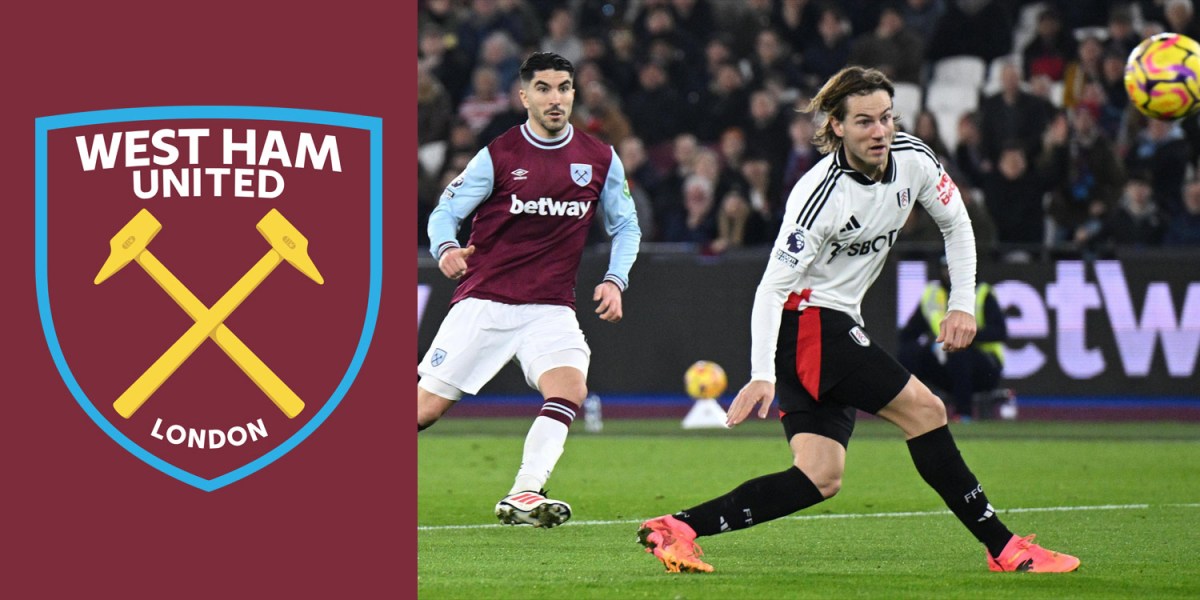
Fourteenth play Sixteenth as West Ham entertain Everton at the London Stadium in the final game before the third international break.

Bookmakers have the West Ham Head Coach as favourite for the next Premier League manager to leave his post.

It hasn’t been going too well has it? Is there a timeframe for our head coach to prove himself? I guess it can vary depending on several factors. Lots of our fans are giving their views on social media.  How much ambition does the club truly have? What are the resources available? How much patience does the West Ham board have? Will they want to admit that they may have got it wrong again? Are they prepared to pay for a change? How much patience do our supporters have? Here are a few considerations:

Our new head coach should surely be expected to have shown some immediate improvement or at least a clear direction within the first few games after taking over. This might be in the form of improved performances, better team morale, or a more cohesive (and entertaining?) playing style. Have performances improved this season so far compared to last? We are 14th in the Premier League having picked up 11 points from our opening 10 matches. I’m not sure about team morale. Are all the players on board with understanding the tactics, the team selections, and the direction that we are heading in? What is our playing style?

Should a full season be considered a reasonable period to assess the impact of a new head coach? He asks to be measured next May to give him time to implement his tactics, work with the team through a full schedule, and make necessary adjustments during transfer windows. Is that realistic in the modern football world?

Clubs looking for sustained success may want to give a new manager more time to build a squad to implement their long-term strategy. This can mean 2-3 seasons, especially if the club is undergoing a significant rebuild or transition period. This may be true for clubs with lower expectations who might allow more time for a manager to develop the team. But we are a top-tier club and we demand quicker results. Managers just don’t have the time to implement a long term strategy without results and a clear direction showing improvement.  

Ultimately, it’s a balance between patience and the need for results. The key is consistent progress and a clear sense of direction for the team. But Lopetegui will find himself under increasing pressure if the results don’t improve soon. He believes he needs time as we had a lot of new faces in the summer transfer window. Yes, it has been an inconsistent start to the season and as a fan going back to the late 1950s I kind of expected that it might not be great to begin with, and it would take time.

But I find his team selections baffling and as for formation well that seems to be changing all the time. Team selection (has he begun to work out his best team yet?), formation and tactics show no consistency. I appreciate that different opposition may necessitate a change of approach but clearly it is not (yet?) working.  

What do you think is a fair amount of time for our new head coach to prove himself?

Oddschecker give odds on the next Premier League manager to leave his post, and of the seven major bookmakers who have a market for this Lopetegui is the favourite on all of them at odds of between 13/8 and 15/8. Russell Martin and Gary O’Neil are next in the betting. Social media and the written press are full of it and names being banded around to take over include Kasper Hjulmand, Roger Schmidt, Sebastian Hoeness, Graham Potter, David Moyes, Frank Lampard, Edin Terzic, and Jose Mourinho to name a few. Yes, some more ridiculous than others. They were spot on with the last favourite to leave who was Ten Hag. I read that Jim White on Talksport has a source allegedly close to Sullivan who apparently said that if West Ham lose 5-0 to Everton Lopetegui will still retain his job.

It is probably a little premature to talk about Saturday’s visit of Everton to be a six-pointer, and while we are averaging over a point a game a relegation struggle is not (yet?) an issue. But should we be beaten in this game then we will be overtaken by them and fall into 15th place at least with more than a quarter of the season gone as we enter the third international break.

It won’t be easy coming back after the break with a Monday night trip to Newcastle and then a Saturday home game against Arsenal to take us to the end of November. News that the Kudus three match ban will be extended by a further two games to include Newcastle and Arsenal is not good news. What started as a yellow card in the Tottenham game, that then was upgraded to red following a VAR review, that became a three game ban has now turned into a five game ban. How many other five game bans have been incurred this season?

Alvarez’s red following two yellow cards was our third this season, and his second! Yellow cards are mounting up too. Paqueta leads that (for West Ham) with five (in all competitions), including one in each of the last three games. However, we are not that indisciplined as we are in the bottom half of that league table too with 19 in the 10 league games played. Chelsea lead the way with 30.

Six more games in December will take us up to the halfway point in the season which comprise visits to Leicester, Bournemouth and Southampton, and home games against Wolves, Brighton and Liverpool.

And if you like your football at three o’clock on a Saturday then I’m afraid you won’t be happy with the eight games between now and the end of the year. Just one of the eight is scheduled to be 3pm on the traditional football day of Saturday (Brighton on 21st December). The other seven include three Monday 8pm kick-offs, a Tuesday 8.15 game, a Thursday 3pm (Boxing Day), Saturday 5.30pm, and Sunday 5.15pm.

Everton’s start to this campaign is worse than ours with just two wins in their ten games (against Palace and Ipswich). However, after four straight defeats to begin the season they have only lost one of the last six (at Southampton last weekend), winning two and drawing three, leaving them 16th with nine points.

There was a period between 2007 and 2015 where Everton were considered to be a real bogey team and we failed to beat them in 15 straight games. However in recent times the results have been more balanced with four wins apiece in the last four seasons. Last season both games were won by the away side with Everton winning 1-0 at the London Stadium in October, but then we beat them 3-1 at Goodison in March coming from a goal down with the score at 1-1 when we went into added time. If we fail this weekend the pressure will mount.

Lopetegui’s Road to Nowhere and an Out of Capital Punishment Beating

The promised Lopetegui revolution continues to shuffle aimlessly from week to week. Time to pull the plug or sit and hope that a well concealed plan will eventually emerge?

As in all long running soap operas, each game in West Ham’s season ends with a cliffhanger to keep us talking until the next unstalment. Has the corner been turned? Will the manager be sacked? Is there an oubreak of turmoil and unrest in the Hammer’s camp?

Two weekends ago, a welcome win and an encouraging second-half performance of up-tempo football against Manchester United left us wondering whether this was finally the point where Lopetegui-ball shook off its slumber and gained momentum. On Saturday’s evidence it was no ore than a lucky break?

It had been a very different story for the Red Devils who shaken by the ignominy of defeat by West Ham ended their patient support of Erik ten Hag. The twist being that the next Old Trafford boss will be the same Ruben Amorim, who had been interviewed in the summer from the London Stadium job but – according to reports – was considered too risky an appointment at this stage of his career. The board opting to go for a safe pair of hands in the guise of former goalkeeper and compensation-free, Julen Lopetegui.

It was the battle of the goalkeeping managers when the Hammers headed to Nottingham for their first Premier League fixture of the season outside of the M25. The high-flying hosts now coached by another former Wolves manager, Nuno Espirito Santo.  

People say that Lopetegui is a steady rather than innovative manager and yet his ability to find new and ingenious ways of deploying players out of position really takes some beating. His response to the Manchester United success was not to build on the success but to introduce a surprise overhaul of formation whereby Max Kilman, Jean-Clair Todibo and Dinos Mavropanos formed a three-man central defence. The full backs would become wing backs for the day, there would be a double pivot of Edson Alvarez and Guido Rodriguez and Jarod Bowen would operate as the central striker, in preference to either Michail Antonio or Danny Ings.

While the coach had bowed to calls for Crysencio Summerville to be given a start following his game changing exploits a week earlier, he was conspicuously consigned to an inside-left berth where he could do less damage. For balance, Lucas Paqueta was also given the opportunity to demonstrate he could be equally s ineffective at inside-right as anywhere else on the pitch. The Brazilian is clearly not in the right frame of mind for football.

 West Ham saw a lot of the ball in the opening period, but it was possession for the sake of it, without any hint of penetration inside the box. Forest were the more incisive side by some distance. Nuno’s style is not far removed from that of the old Scottish manager, favouring the low block and quick transition. But with pace to spare in both midfield and attack, it was too hot for the Hammers to handle – even while the game remained 11 a-side.

The opening goal came as Forest again exploited the acres of space that West Ham were gifting along the flanks. Not for the first time, Mavropanos was more concerned with adopting the hands-behind-the-back Riverdance pose than closing the space between him and his opponent. Moreno allowed all the time in the world to calmly pick out Wood’s head as several Hammer’s defenders looked on.

Despite fashioning a first meaningful shot at goal just before the break, the game was effectively done and dusted when Alvarez picked up two yellow cards in the space of eight minutes. Taking one for the team has become an acepted part and parcel of the modern game but the more astute sides know how to spread the load and are careful not to use up lives when it isn’t absolutely necessary. Both of Alvarez’s card were avoidable as the threat wasn’t immediate at either time. In defence of the Mexican, he often looks to be the only player interested in hunting down the ball in midfield or chasing lost causes in defence. He has always liked a card though, and it is difficult to lump this behaviour with any wider lack of discipline that may be creeping into the club.

In the second half it was simply a matter of time before the hosts scored again, and a lottery as to how many goals they would rack up before the final whistle. There was little sign that the visitors had any hunger or passion to make a fight out of adversity. Ultimately, Forest contented themselves with extending a three-year home sequence that has seen them score 1, 2 and then 3 goals against West Ham without reply. It was a win that saw them climb into third spot in the table as the season passed its quarter way point.

A common reason put forward for Lopetegui’s poor start to his West Ham career is that “he doesn’t know his best team yet.” That has always felt a lame argument to me as lineups are never static. Players lose and find form, injuries and suspensions must be managed, and approaches to games are adjusted according to opposition. What is a concern though is that after 12 league and cup games we are no nearer understanding what the coach is trying to achieve. What evidence exists of   progress towards a style, formation and tactics that can be effective in the Premier League, while suiting the players available to him? Lopetegui has been stumbling from match to match apparently learning little and reacting to events with apparent random acts of management.

Everyone knew that the Hammers faced a major squad rebuilding in the summer. Looking at the individuals recruited in isolation, a case can be made for the sense of each signing. But as an overall strategy, the conclusion has to be that the club got the priorities very wrong – both from a positional sense and the age profile of the squad.

This is perfectly illustrated with a midfield that can neither cover the ground defensively nor support rapid transition in possession. No matter who is selected out of Alvarez, Rodriguez, Paqueta, and Tomas Soucek the midfield is short of legs without anyone capable of breaking forward with the ball at speed. A data driven analysis isn’t required to tell us this. We can all see it with our own eyes. Games are often won and lost through control of the midfield and our solution is akin to entering a Morris Traveler in a Formula 1 race.

The question now is how much time Lopetegui will be allowed to demonstrate he has a plan, and knows what he is attempting to do. I doubt even the extravagantly patient board members will be convinced by what they have seen to date. Or impressed by the stories of unease that arisen within the squad. If a slow and gradual improvement could be detected, we might be inclined to grin and bear it in the near term. But that has not been happening. It would be out of character but does it make cutting the losses – even at this early stage – a sensible course of action.  

The dilemma, of course, is that if Lopetegui was sacked who would replace him. Assuming David Sullivan would again be the primary decision maker we know how predictable and unimaginative he will be. Dazzled by coaches who have managed at big clubs, regardless of how successful that ha turned out. And narrowing the field to those currently unemployed where no compensation would be required. Any chance of boardroom coup? COYI!    

Memories of West Ham playing Nottingham Forest in the 21st Century

This weekend will be the fourteenth meeting of West Ham and Nottingham Forest in the twenty-first century. So how have we fared so far?

Overall, West Ham has won eight, lost four and drawn one of the thirteen games played. We are unbeaten in the seven home fixtures winning six and drawing one, but the record at the City Ground is not so good; we have won twice but lost four times. Four of the thirteen games have been Premier League matches, six have been second tier games (variously called League Division 1 or Championship), and we have met three times in the FA Cup.

In the three FA Cup games, five goals were scored in each. In our relegation season (2002-03 – Glenn Roeder) we met Forest in Round 3. Jermaine Defoe scored twice and Joe Cole once in a 3-2 victory. Marlon Harewood scored one of the Forest goals. We went out of the competition in Round 4 losing 6-0 to Manchester United. We also lost in Round 3 of the League Cup 1-0 at home to Oldham. And at the end of the season of course we went down.

In our next relegation season (2010-11 – Avram Grant) we met Forest in Round 4. Once again we won the game 3-2. Victor Obinna scored a hat trick – remember him? We went all the way to the sixth round where we lost 1-0 at Stoke. And surprisingly we had a long run in the League Cup losing on aggregate in the two-legged semi- final to Birmingham. But at the end of the season we went down.

So when we were once again drawn against Forest in Round 3 (in the 2013-14 season – Sam Allardyce) the manager decided that it would not be a good idea to win the game as history told him that it could lead to relegation. So he put out the following team: Adrian, Callum Driver, Dan Potts, Alou Diarra, Stewart Downing, Matt Jarvis, Sebastian Lletget, George Moncur, Modibo Maiga, Ravel Morrison, Danny Whitehead. And on the bench we had: Raphael Spiegel, Reece Burke, Matthias Fanimo, Blair Turgott, Jaanai Gordon-Hutton, Elliott Lee, Sean Maguire. Hardly 18 of West Ham’s most famous!

Do you remember Jannai? Me neither. He never actually played a game for the first team. An unused substitute in this game was the closest he got. I looked him up on Google. Still in his twenties he currently plays for Alvechurch in the Southern League Premier Central in step 3 of non-league football. That’s the level below the National League (North and South) and two levels below the National League. He’s done the rounds in non-league football. Alvechurch is his eighteenth club in the last ten years.

I remembered us signing Sean Maguire from Waterford in Ireland. Like Gordon-Hutton an unused substitute in that game against Forest was the closest he got to first team action at West Ham. He did go on to have a decent career in the lower leagues though and played eleven international games for the Republic of Ireland.

A weakened team to say the least in that game with debuts to five youth team players. In hindsight (or even before then to those of us who saw the team he had selected) it was a disaster as we were overrun by the more experienced Forest side who thrashed us 5-0! The manager was heavily criticised and rightly so.

In the calendar year of 2003, in addition to our 3-2 cup win, we drew our home game against Forest 1-1 (Defoe) and won 2-0 at the City Ground (Harewood & Defoe). These games were in the second tier called League Division One at the time. We met them again at that level the following season when it became known as the Championship losing 2-1 at the City Ground to goals in the 84th and 90th minute. Our goal was once again scored by Harewood. We won the return on Boxing Day 3-2 (Etherington, Sheringham 2).

In our promotion winning season (2011-12) we did the double over them winning 4-1 at the City Ground (OG, Nolan, Carlton Cole, Reid) and 2-1 at Upton Park (2 Mark Noble penalties).

Since that win at the City Ground in August 2011 we have not won a game at the ground and haven’t even scored. The 5-0 drubbing in the FA Cup at the City Ground in 2014 has been followed by two defeats there since Forest came up to the Premier League two seasons ago.

The four meetings at the top level in the last two seasons have always been won by the home side. In 2022-23 we won comfortably 4-0 (Ings 2, Rice, Antonio) and then last season another 3-2 victory (Paqueta, Bowen, Soucek). In the away games we lost 1-0 in the first game of the season (Awoniyi 45) in 2022-23, and the last time we met in February this year we lost 2-0 (note the times of the goals – Awoniyi 45+4, Hudson-Odoi (90 +4).

So we haven’t won at the City Ground for over 13 years and in the three games since we haven’t scored losing 5-0, 1-0 and 2-0.

Forest are perhaps the surprise team of the Premier League in the first nine games of this season winning four, drawing four and losing just once with 16 points and sitting in seventh place. The wins have been against Southampton, Liverpool (away), Palace and Leicester. The draws were against Bournemouth, Wolves, Brighton (away) and Chelsea (away).

It’s interesting that their most impressive results were all gained on the road at Liverpool, Chelsea, Brighton and Leicester. At the City Ground they could only draw against Bournemouth and Wolves, they narrowly beat Palace 1-0, and their sole defeat this season was 1-0 at home to Fulham. So they have been unbeaten away from home with 11 points from their 5 games whereas at home they’ve won just once in four.

Our head coach loves to surprise with his team selections doesn’t he? Last week we were all aghast when we saw the starting eleven (well I was anyway), but he realised at half-time, made three changes, and the second half was much improved even if we did win the game with one of the softest penalties I can recall us being given. I make just one plea for this game. Play Summerville from the start!

Don’t Tease Me This Way: Summerville’s Spark Propels West Ham To Unlikely Victory

The classic game of two halves as West Ham survive a first half bombardment to claim victory with a spirited response in the second. Relief also for Julen Lopetegui who managed to fix his own mistakes at half time to earn a welcome three points.

Sometimes you have to wonder what is going on inside a coach or manager’s head when they make their team selections. With Mohammed Kudus starting his red card suspension, the world and his wife were confident that Crysencio Summerville was the obvious natural replacement to fill his boots. But Julen Lopetegui had other ideas and decided that playing Carlos Soler out of position on the left hand side was a far more sensible and insightful solution. Does he consider Summerville too direct for his particular brand of slow build-up football? And doesn’t Soler deserve an opportunity in the Lucas Paqueta position to do himself justice? After all, the Brasilian is rarely at the races these days.

The other changes from the drubbing at Tottenham saw a recall for Lukasz Fabianski in goal, Dinos Mavropanos replacing Jean-Clair Todibo at centre back and Edson Alvarez ousting Tomas Soucek in midfield. The unbalanced nature of the starting lineup instinctively looked liked poor judgement. But it did allow the coach to take the plaudits when he fixed his own mistake with three substitutions at half-time. Perhaps it was the plan all along to start with a duff formation in order to demonstrate the genius of his tactical use of substitutes later.

The first half ably demonstrated the folly of both selections and tactics. The team lacked any sense og cohesion, control or goal threat. What’s more, the persistence with the use of inverted full backs, the high defensive line and the uncertainty of how the defensive midfielders should fill the resulting gaps allowed Manchester United to pick off the Hammers at will through simple balls over the top. Time and again the Hammer’s defence found itself exposed by the simplest of all plays. A deficiency of organisation and tactics rather than personnel.

It is always easy to speculate on should-haves and could-haves in football games depending on what story you are wanting to tell. Not all the chances that the visitors created were gilt-edged, but a couple were more than presentable – especially the comical Dallo miss and the Fernandez header. Had West Ham found themselves two or three goals down at the break, there could be no complaints that it didn’t reflect the balance of play.

It was a different story after the break. The introduction of Summerville was the catalyst for change. His energy and single-mindedness at driving at the Red Devils defence inspired his team-mates and the crowd. All of a sudden, the Hammers looked like a team with purpose, One that was prepared to ask questions of its opponent. Todibo speed, awareness and positioning also gave the defence a more solid feel. He looks to be a very good signing – whoever would like to claim the credit for that one! Tomas Soucek did OK without being influential. I would like to have seen Soler moved centrally for a while although he doesn’t have the same aerial abilities as the Czech.

As the second period progressed, it was West Ham who looked the more threatening even if it was manifested in enterprising approach play rather than the creation of scoring opportunities. When the opening goal came there was a touch of good fortune as Danny Ings scuffed shot became a perfect set up for Summerville to slot home. His joy at scoring was obvious despite the yellow card shown for removing his shirt. It is good to see that the officials have a handle on the most serious issues apparent in the game – such as this and delaying the restart for a nano-second. While blatant diving, cheating, time wasting and other dark arts go unpunished.

Another piece of officiating that provides a solution to the wrong problem is forcing a player who has had treatment to leave the field until the referee sees fit. Of course, it is meant to discourage fake time-wasting injuries by Arsenal, but was there really any suspicion that Alvarez had faked a ball crashing into his face? I believe he was still off the pitch when Manchester United equalised – an equivalent situation that Ten Hag had complained about the previous week. We should, however, acknowledge the achievement of Alvarez in lasting the full 108 minutes without incurring a single yellow card

The circumstances surrounding the West Ham winner have overshadowed much of the reporting on the game. I doubt that many watching the game in real-time had seen anything untoward in the brief goalmouth skirmish and it came as quite a surprise when the game was stopped, and the referee directed to view the pitch-side monitor. In the days of VAR, we have become well aware how subjective these penalty calls are, allowing pundits and commentators alike to waffle on incessantly about whether there was contact and whether it was ‘enough’ – presumably measured in Newtons per square metre. How much is enough is never fully explained and we must await development of the AI powered degree of contact test before it can be resolved. It is rare for a referee to go to the monitor only to disagree VAR. I’ve a sneaking feeling by the time taken by David Coote to review the five seconds of footage that he was not convinced with. But he knew better than to incur the wrath of Michael Oliver. It is said these things even themselves out over time – so, just another dozen or so dodgy decisions in our favour and our account will be back in balance.   

Jarrod Bowen dispatched the spot kick with aplomb and after that there was just 15 minutes of added time to cope with. Bowen was another who came to life in the second half and his run was instrumental in the opening goal. His corner kicking is terrible though and generally results in a gentle chip into the keeper’s arms.

Summerville was the obvious choice for man of the match (or man of half a match) but I thought Aaron Wan-Bissaka was outstanding throughout. A good shift also from Michail Antonio who can still unsettle defences with his physical presence under the right circumstances, as long as you don’t try to involve him in any quick, intricate passing movements. Well done also to Fab for a sound display of goalkeeping – and not forgetting Mr Oliver. COYI!

Following the chaotic second half display last weekend with West Ham in total disarray, ask not for whom the bell tolls. The vultures are circling.

We are only eight games into the Premier League 2024-25 season, which I would suggest means that it is still early days for our new head coach Julen Lopetegui. But there is no getting away from the fact that West Ham have made a poor start to the campaign. As we were overrun by a rampant Tottenham in the second half of last Saturday’s early kick-off many fans took to social media sites making the case that Lopetegui’s team are no improvement on that of David Moyes. The “be careful what you wish for” brigade reared their head once again. The head coach has apparently asked for fans to judge him next May. Is that an optimistic request with the patience of fans wearing thinner after each passing game? Did I say passing game? Oh yes, our new style.

Just one more game, the two o’clock home game against misfiring Manchester United on Sunday will bring us virtually up to the season’s quarter point stage. How long should the bedding-in period last? Surely our Spanish coach with a distinguished career in charge at Porto, Real Madrid, the Spanish National team, and Seville deserves more time? Some say yes, others are not so sure. As for ‘distinguished’ then despite Europa League success at Seville and guiding them to qualification for the Champions League, wasn’t he sacked there and at Real Madrid following a string of poor results in each case?

He lasted barely two months at Real Madrid, but three years at Seville. Prior to his Spanish appointments he began his senior managerial career at Porto in Portugal, one of the two most decorated clubs in Portuguese football with a massive budget but was dismissed in under two years, failing to win any silverware in the process.

Prior to his appointment at West Ham he had a ‘relatively successful’ few months at Wolves guiding them to thirteenth after taking over a team in a poor position. However, that reign was ended apparently due to reported financial constraints at the club and other alleged disagreements and he left by mutual consent.

The early days here show an unclear identity and tactics, an attack that based on goals scored that ranks in mid-table (=10th), a leaky defence where only three other Premier League teams have conceded more so far (identical to Moyes defence too for the whole of last season) (=17th!), a slow midfield lacking creativity (Rodriguez, Alvarez, Soucek), and despite  highly lauded transfers in the summer still one of the oldest squads.

We have lost four of the opening eight league games, but not just lost, we have been comprehensively beaten in some. Are we just not good enough or has the quality of the opposition been too much? Three goal margin league defeats to both Chelsea and Tottenham, and an even greater (four goal) deficit to Liverpool in the League Cup bear comparison to some of the heavy defeats last season.

For some reason unbeknown to me, Summerville has barely been given much opportunity, but when he has had limited chances he has looked lively and promising. Guilherme and Soler have been barely used, whereas Paqueta, despite obvious skills has failed to impress, his commitment is questioned by some with ongoing uncertainty over his situation following match-fixing allegations which are dragging on (with his mind, perhaps not surprisingly elsewhere) but he continues to be selected.

Fullkrug, not everyone’s choice for the forward we so desperately needed, has been injured, and with irony we look from a distance as Duran goes from strength to strength pulling up trees at Aston Villa. On top of all that we will now be without Kudus for three matches after his meltdown and red card at the weekend.

Following a summer transfer spree there is now mounting scrutiny on West Ham’s technical director Tim Steidten too. Supporters always want someone to blame when things are not going as well as hoped, although how long will it be before it will once again be directed at the owners as well if our poor run continues?

Based on what I had read I don’t think Lopetegui would have been my choice to take over from Moyes, although a change was needed to improve from where we were, and hopefully to give us a more enterprising brand of football. It doesn’t have to mean entertainment at the cost of results as some ‘Moyes in’ supporters constantly claimed. Just look at Brighton. Their fans are in dreamland, not only because of the results and position of the club, but because of the football they love to watch both home and away that their team give them.

My personal view is that it would be too hasty a decision to change the head coach right now. Whilst we are not in trouble (and I hope it doesn’t come to that) as a fan I hope he can turn it around, although at the moment there doesn’t appear to be solid evidence that he will. I also wonder if he has the support of the players? The impressive win against Ipswich before the last international break gives us some breathing space, but how patient will the fanbase be? Many social media sites (although not necessarily a true reflection of the fanbase as a whole) seem to suggest that discontent is growing. The vultures are circling waiting and watching for the opportunity to strike.

We face a Manchester United team this weekend in similar disarray with vultures circling around there too.

Do you think we should keep Lopetegui in charge, or is it already the time to change? What do you think?

The Reign From Spain Fails Tamely At The Lane: West Ham Are Humbled By Tottenham

Another shameful surrender and defeat by close London rivals leaves the Hammers tottering in the bottom six and the future of coach Julen Lopetegui looking increasingly shaky.

Following a convincing victory just prior to the international break, the question was raised as to whether West Ham had finally turned a corner or had that been a very poor Ipswich performance. I think we now know the answer to that one.

I felt little optimism going in the run up to Saturday’s game at Tottenham. The Hammers have been notoriously slow starters after international breaks and I fully expected to be a couple of goals down in the opening quarter of an hour. Events didn’t turn out like that, though. In fact, the first half was reasonably competitive, even if the defensive approach owed more to an old-school low block rather than high lines and defending by maintaining possession. Dropping deep and deploying Guido Rodriguez as an auxiliary centre back, meant the home side struggled to fashion any real threats on the visitor’s goal during the initial exchanges. West Ham even looked dangerous on the break and prior to scoring the opener from Jarrod Bowen’s pull-back, Mohammed Kudus was thwarted in an equally presentable early chance from the same source.

Everything changed, however, after the Tottenham equaliser. Lucas Paqueta lost possession, Tomas Soucek missed his tackle, the gap between midfield and defence was huge and Tottenham were up and running. If that wasn’t bad enough, the opening 15 minutes of the second half were nothing short of shambolic. With no obvious sign of leadership on or off the pitch, heads dropped, and all sense of discipline or organisation was lost.

Typical of the disarray was that while the decision was made to make three substitutions at 2-1 down, the players did not enter the pitch until it was 4-1. Were Julen Lopetegui’s instructions ‘lost in translation’ and where was Kevin Nolan’s old iPad when you need it?

Seeing the coach standing on the touchline, his face twitching as the game plan crumbled in front of his eyes, brought to mind Chief Inspector Dreyfus from the Pink Panther movies. Difficult to believe a seasoned manager with over 400 games under his belt would look this startled.

The performances so far this season have not had sufficient consistency to identify what the style or pattern of play is meant to be with any confidence. Assuming it revolves around enjoying a greater share of possession, the evidence suggests there are serious questions as to whether the squad has the right calibre of players to carry that off – including those who have been newly recruited. The gap is particularly noticeable in the midfield three which lacks serious pace or anyone capable of storming forward with the ball under control. While Lucas Paqueta is able to pick out the occasional sublime pass, these have been few and far between since his mind has been distracted elsewhere. But even he is not the quickest or adept at running with the ball

The shortcomings in midfield lead to transitions being far too slow and relaint on long diagonals. And with no obvious ‘out-ball’ option the opportunity to break the press is almost non-existent. I have sympathy with Alphonse Areola in this respect as attempts to play out from the back routinely end up with the ball played back to him under pressure. He is then caught between an instinct to clear his lines and the instruction to play the ball short.

How to fix this in the short term should be the coach’s top priority if the team are to improve. I don’t see how more than one of Rodriguez, Soucek and Edson Alvarez can be in the team at any one time. It needs Carlos Soler, Andy Irving – or perhaps Lewis Orford – to be given the opportunity to show if they can offer anything different.

Julen Lopetegui was not what most supporters wished for when the club took the correct decision not to renew the Scottish manager’s contract. Unfortunately, when imagination and foresight were needed from the Board, we got predictability with the apparently ‘safe’ option. Someone who had managed at big clubs (regardless of how successful that had turned out) and, perhaps most importantly, was out-of-work and available without compensation.  It never felt like an ideal fit for a club that is second tier in terms of finances which wanted to punch above its weight through a programme of smart recruitment.

Despite this, most supporters understood the degree of change required and were prepared to see how the appointment went. That patience is wearing perilously thin. As the 2024/25 campaign moves towards the quarter mark it looks set to be playing out as a lost season with lower mid-table the most probable outcome.  

The Rear-View Transfer Window Mirror

In the summer, there were excited claims that West Ham had won the transfer window. From what we have seen so far though, it is just as well the club held off on the open top bus parade to celebrate that particular victory.

As supporters, we don’t have the inside track on who does what with recruitment. The impression in some quarters is that Tim Steidten arrives back at the London Stadium with a shopping cart of new players to show the coach what he has bought him. It is highly unlikely it works like that and there is sure to be input from the coach on the type of players he requires, and from the Board on what deals can be completed from a financial perspective. Steidten’s reputation is for unearthing little-known gems and only Lusi Guileherme and Mohamadou Kanté from the summer intake truly fits that bill. Only time will tell whether they turn out to be gems.

The greatest failure of the transfer window was in not resolving the long-running striker problem. The injury to Niclas Fullkrug is obviously unfortunate but a 31-year-old journeyman was never more than a temporary fix. Second to that, recruitment of a midfield general (do they still exist?) with pace and energy was sadly overlooked.

No Club For Young Men

Despite splashing a significant quantity of cash during the summer, the club have not addressed their ageing squad problem. West Ham were the oldest squad in the Premier League (weighted by minutes played) until knocked off the bottom spot by Everton a week or two ago.

Similarly, West Ham are ranked 19th out of 20 for matches played by former academy players in their current squad – only Brentford have a worse record. The only Hammer’s entry is the one minute played by Kaelan Casey against Luton last May.  We would have been able to add another 32 minutes for George Earthy had he not been out on loan, but it would not have affected the overall rankings. Not an impressive statistic for the self-styled ‘Academy of Football’.    

Premier League appearance this season for players under the age of 23 have been limited to Crysencio Summerville (174 minutes) and Guileherme (5 minutes).

Who Referees the Referees?

Nothing in the performance of the referee, Andy Madley, impacted the final outcome of Saturday’s game. The match was not close enough for that to happen. Under the current interpretation of the rules, it was no surprise when Kudus received a red card in the aftermath of his tussle with van de Ven. Such scuffles were not uncommon when I first started watching football and a stiff talking to was the usual outcome. But now, when there are more bookings in a single match than you would previously see in a whole season, it was obvious that action was going to be taken.

But what seemingly continues to go unpunished is the acting and simulation that have become a feature of the modern game. Kudus would have had to walk anyway given the number of players he had altercations with, but the reaction of both van de Ven and Richarlison – who both went down as if there was a sniper in the stadium – was pure cheating. The sole objective of getting an opponent into trouble. Crackdowns are regularly threatened but short of being pulled up for imaginary card waving, players have little to fear from their antics in diving and rolling around on the floor.

The situation where referees both establish interpretations of the laws and then enforce them doesn’t seem right to me. It lacks accountability. And trying to replace common sense judgements with hard and fast codified rules has resulted in ridiculous situations that clearly hadn’t faced a sniff test by people with experience of playing the game. The handball rule is a perfect example of this as demonstrated in the incident when the ball struck Udogie’s arm on the goal-line and a penalty was (correctly) not awarded. For the past few seasons, the ball hitting anyone’s hand in the penalty area was seen as an unquestioned offence but now it isn’t. How does that happen? Did no-one ever consider the implications of how fast the ball can move or how players use arms for balance? It is difficult to have any faith in the wisdom of the PGMOL.

Momentum, International Breaks, Current Form, and Notable Games as West Ham visit the Tottenham Stadium in the lunchtime kick-off on Saturday

You hear a lot of talk in football circles about momentum. What is momentum? Some kind of invisible force that keeps an event moving or developing after it has begun. Wouldn’t it be great if the football authorities understood the concept. But oh no, as football fans, or rather fans of the domestic game, we now have to put up with international breaks designed to discourage momentum during the season, especially at the beginning of a campaign, where it is interrupted after just three games and then once again after seven. But fear not international fans because another one will be coming along once four more Premier League games have been completed.  

In all honesty our start to 2024-25 under our new head coach has been a stuttering one to say the least, although not unexpected with new ideas, new tactics, and an influx of new players that would take time to get used to each other and fit into what everyone expects to be a different way of playing. But what chance has there been to gain any momentum in matches? If all the players were at home then you could say that the boss would have time to work with them to enable them to gel more quickly, but with so many away with their international teams that is not the case.

Prior to the first international break we had lost narrowly to Aston Villa to the inevitable Duran goal following the summer shenanigans in attempting to sign him, we had come back with a not entirely convincing win at Palace but had then put up a spirited second half performance in the third game against champions Manchester City. But any chance to build on that was lost when the break came.

The second segment of the season began with an away draw at Fulham followed by a massively disappointing home defeat to Chelsea, then another away draw at Brentford before finally getting off the mark with a convincing 4-1 win at home to Ipswich. But could we build on that? Once again the momentum was lost with the second break enabling us to watch England lose at home to Greece before winning in Finland. I’m afraid that despite it being a competition this Nations League leaves me cold.

One consolation I suppose was the performance of Dinos Mavropanos who had played the first few games for us this season before dropping to the bench to let in new signing Todibo. Our Greek defender received rave reviews although interim manager Carsley had decided to play with what is described as ‘false nines’ in modern parlance. That was one experiment that didn’t work and the win in Finland wasn’t enough to save Carsley with the surprise announcement of ex-Chelsea manager Tuchel as the new boss of the international team. He’ll have the chance to get going in November and assess the team when the third international break arrives, although I understand that the current interim boss will remain in charge for those games.

Matchday 8 this weekend sees us visiting North London for a game at the Tottenham Hotspur Stadium. So how has their season begun? They have won three of their seven games and sit ninth in the table having defeated Everton and Brentford at home and Manchester United away and drawn at Leicester. An away defeat at Newcastle, a home defeat by local rivals Arsenal, and then just before the break a comical loss at the Falmer Stadium where they let slip a two goal half-time lead to lose 3-2 at Brighton.

We are twelfth just two points adrift of them at this stage and an unlikely win would take us above them. Despite our inconsistent start we are unbeaten on our travels, well I say travels, but we haven’t left London for a league game yet. A win at Palace and draws at Fulham and Brentford has given us five points, which is five points more than the equivalent three games last season where we were well and truly beaten in all of them with a combined goals record of scored 4, conceded 13.

Comparing our record to Tottenham’s this season, with just a few of the statistics, then they lead with goals scored (14-10), they have conceded fewer (8-11), shots at goal are very similar (83-80), but they have more on target (48-34). Have they had easier fixtures? The current league table might suggest so as they have faced four teams currently sitting in the bottom half of the table in the seven games played, whereas we have played four sides in the top eight. They have however won two of their three home games losing only by the only goal to Arsenal.

Head-to-head records between West Ham and Tottenham going back to 1898 in history give them the edge 55 wins to 45, with 28 draws. Notable games at their stadium include last season’s win there in December when we overturned a 1-0 half-time deficit with goals from Bowen and Ward-Prowse. Unlike many of our fans I am sad to see the latter gone.

In April 2019 we became the first team to win at their new stadium when Antonio’s second half goal was the only one in the game. Pedro Obiang’s stunning goal in January 2018 helped us gain a point in a 1-1 draw. There were two league cup wins over them in 2013 and 2017, the latter being at Wembley where Ayew scored a couple for us in a 3-2 victory, after we trailed 2-0 at the interval. And who can forget the Ravel Morrison game eleven years ago when his amazing solo run from our half was the third goal in a convincing 3-0 win?

Apart from those games our record there has generally been very poor and you have to go back to the twentieth century for the previous win (before 2013) there when Ian Wright and Marc Keller scored the goals in a 2-1 win. Before then Dani (remember him?) scored for us in a 1-0 win in Slaven Bilic’s debut game in our defence in 1996. There was a great win there towards the end of the 1993-94 season when we overcame them 4-1 with two goals from Trevor Morley and one each from Mike Marsh and Steve Jones. Before then it was 1983 when Steve Whitton and Dave Swindlehurst scored the goals in a 2-0 win.

My favourite game of all our visits to Tottenham though came in 1981 when we crushed them 4-0 at White Hart Lane, a personal triumph for David Cross who bagged all four goals. And perhaps the most exciting game between the teams that I can remember came in a 1966 victory there (4-3) with goals from Brabrook, Byrne, Hurst and Sissons when Gilzean, Greaves and Venables scored for them. That was the third game in an eleven match run where we scored 42 goals (yes you read that right) which included a 7-0 rout of (then) mighty Leeds and a 5-5 draw at Chelsea. Just a few months before then a 4-1 win came in the previous season with goals from Byrne, Boyce, Redknapp and Hurst.

I have vague memories of a 4-4 draw there in the early sixties, but I do remember more clearly a 4-1 win there on Boxing Day in 1958 in our first season following promotion to the top flight. That win came the day after my first ever visit to Upton Park for a league match – yes we played on Christmas Day (that was the last time we did) – when the famous duo of Johnny Dick and Vic Keeble scored the goals in a 2-1 win. Any momentum that might have been built at the start of the season has been interrupted by the international breaks. It’s hard to predict what will happen on Saturday but we went into the break on the back of a 4-1 win and perhaps would have preferred to play the next game sooner rather than later, whereas Tottenham were probably pleased for a break after their miserable second half performance at Brighton. It will be a good result if we avoid defeat to extend our unbeaten away record but I’m hoping for a win of course.

“Went Better Than Expected.” From unconvincing team selection to runaway victors as West Ham thump Ipswich

Fearing the worst when the teams were announced, the Hammers surprised us all with an enterprising and spirited performance to overcome the Tractor Boys and record a first London Stadium league win of the season

One of the great innovations of the 2024/25 Premier League season is the unveiling of team sheets 75 minutes before scheduled kick-off time. It provides an additional 15 minutes in which to fume over the idiocy of the coach’s latest selection brain fog and to share those frustrations to all and sundry on social media.

And so it was that a collective “what is he thinking?” reverberated around the London Stadium when confirmation was received that Julen Lopetegui would keep faith with the same eleven who performed so inadequately in the first half at Brentford the week before. Edson Alvarez returned from suspension but only to a seat on the bench, while Andy Irvine could celebrate his call-up by Scotland by being omitted completely from the matchday squad.

Already, I was planning the article headline that would follow a fourth consecutive home defeat by the visitors from Suffolk. “Tractor (rather than Taxi) for Mr Lopetegui” might be appropriate given the identity of the opposition. The extra 15 minutes even allowed time to invent an imaginary agricultural vehicle ride hailing app know as TUber!

The pre-match gloom, however, was quickly shattered when the Hammers joined the growing trend for scoring first minute goals. It was a move initiated by one pantomime villain – Tomas Soucek – and finished by another, as Michail Antonio anticipated Jarrod Bowen’s cross to stroke the ball into the net. The goal even featured a contribution from the hapless Kalvin Phillips who meekly conceded possession and belatedly made a positive impact to the West Ham cause.

Despite the visitor’s early equaliser – a shocking example of token defending by Lucas Paqueta – West Ham were the more dangerous side throughout. Even if the intensity ebbed and flowed during different phases of the match, the Hammers were largely in control. Other than set pieces and crosses, Ipswich posed few problems for the home defence where the axis of Max Kilman and Jean-Clair Todibo has the hallmarks of a promising partnership.

I sensed two significant tactical adjustments introduced by Lopetegui for the game. The first was a more obvious and balanced representation of the 4-1-4-1 formation which better suited the cast on the pitch. Guido Rodriguez played the anchor role effectively (albeit without spectacle), dropping into a back three as required and giving the full backs greater licence to roam. The second was an intent to move the ball forward quickly wherever possible. This was the tactic mistakenly branded as long ball by the Ipswich manager in his post-match gripe. It was a perfect example of West Ham playing on their toes (at last). It particularly plays to the strengths of Jarrod Bowen and Mohammed Kudus who arre at their most dangerous when attacking the space in front of them. It was also reassuring to see them more active inside the opposition box when the full backs provided width.

We should also mention a further deciding factor which was that McKenna clearly thought his side could win the game and heap further pressure on the struggling hosts. Gone was the caution that had underpinned their performances against Brighton and Villa to be replaced by an adventurous high-line that on the day played directly into the West Ham hands.

Despite a creditable all-round team performance by West Ham, it was amusing to read some of the ratings on the clickbait websites who appear contractually obliged to have a scapegoat highlighted in their misleading headline. This week, Aaron Wan-Bissaka – who put in a very decent performance in my eyes – was singled out for a 3/10 rating and summed up as ‘Useless’. At least they didn’t say ‘he stunk the place out’.  

Surprise package of the afternoon was probably Antonio who rolled back the years in causing grief to the Ipswich defenders – at least until he tired just after the hour mark. It was good to see but does excuse the fact that the club has so few options in this critical position.

The greatest concern is the indifferent form of Paqueta who continues to play without the creative spark that we know he can offer . No doubt the ongoing betting scandal – and the prospect of a lifetime ban – will be playing on his mind but he needs to sort out his antics and attitude. There is a point in every game where he loses possession to a fair challenge but goes down as if struck by a thunderbolt as the game continues around him. Is he now only being picked because there is no viable alternative. Although Carlos Soler might have been signed as a positional alternative, all we have seen so far is a player content to make short 5-yard passes.

Goalkeepers have been increasingly in the news recently, not because of their shot stopping antics but due to calamatous bloopers when attempting to play out from the back. It has been puzzling listening to pundits crticising keepers for having an inflated sense of their ball-playing abilities when in fact all the short passing around the box is done under instruction, rather than by choice. It is abundantly clear how uncomfortable our own keeper, Alphonse Areola, is with the concept. But he will know that it will incur the wrath of the data guy and his iPad if he doesn’t go along with the craziness.    

One interesting aspect of West Ham’s four goals is that only one – the first – is credited with an assist. I’ve never been a fan of the assist concept in that it is no more than identifying the previous teammate to touch the ball before a goal is scored, regardless of theusefulness of their input. So, there can no assist for Emerson’s fine run and cross or Antonio’s powerful header before the Kudus goal because the ball had hit the bar. And no assist for Bowen on the Paqueta goal, presumably because the ball brushed an Ipswich sock on its path across goal.

It was a welcome first home win for Lopetegui and three points which give the table a more respectable look going into the international break. The question is whether the team can build on it when the games resume. Was it a West Ham performance that demonstrated clear signs of improvement under a new regime or merely a victory against a naïve opponent who got their tactics wrong on the day? We often read or hear in the media about corners being turned in football – usually about Manchester United who turn so many corners in a season that they end up back where they started – but we must wait for two weeks and a trip to the Spursy Stadium for the next instalment. Although I’ve not checked the results, my instinct is that West Ham retrun from these breaks with a below par performance.  

At least we have a feel-good factor to carry us through the next empty weekend. COYI!

Can West Ham win their second game this season when we face a spirited Ipswich team?

We haven’t played against Ipswich Town since our promotion winning season of 2011-2012 when we were both in the Championship. That was the season when we finished third (Sam Allardyce had been appointed as the new manager at the beginning of the campaign – the aim was to gain promotion at the first attempt following relegation under Avram Grant). Do you remember Big Sam’s first signings? They were four of his old Bolton players, Kevin Nolan, Matt Taylor, Joey O’Brien, and Abdoulaye Faye.

Despite losing just one of our last 18 games (to eventual champions Reading – yes you read that right – Reading) and leading the table at the start of that run we were unable to secure automatic promotion. However, we were successful in the play-offs defeating Cardiff over both semi-final legs and Blackpool in the Wembley final. We would have gone up automatically if we had done better in our two league games against Ipswich who finished in the bottom half of the table.

At Upton Park we lost 1-0, and then at Portman Road on 31st January we were thrashed 5-1. A certain Aaron Cresswell was in the Ipswich side for both of those games. Following the 5-1 defeat we began that 18 match run where we lost just once. Victory in just one of those games against Ipswich would have been enough to finish the season as champions. The home defeat was the most annoying one to lose. But all is well that ends well, we secured promotion and Ipswich spent many years in the doldrums. And despite promotion to the Premier League where are Reading now? In the lower half of league one.

The last time we beat Ipswich was in the Championship Play-Off Finals in 2005. After drawing the first leg 2-2 at Upton Park (we were 2-0 up in the first 15 minutes – Zamora and Harewood)), two second half Bobby Zamora goals secured a place in the final in Cardiff where we nervously beat Preston 1-0 – Zamora again.

Ipswich didn’t like playing us in play-off semi-finals. Two years earlier they had won the first leg 1-0 before we came back at Upton Park with Matt Etherington’s superb shot early in the second half and a winner from Christian Dailly following a corner 20 minutes from the end. Unfortunately, our trip to Cardiff for the final that time ended in a 1-0 defeat to Crystal Palace. That season Ipswich had finished third in the league 12 points clear of us – we had finished sixth just scraping into the play-offs.

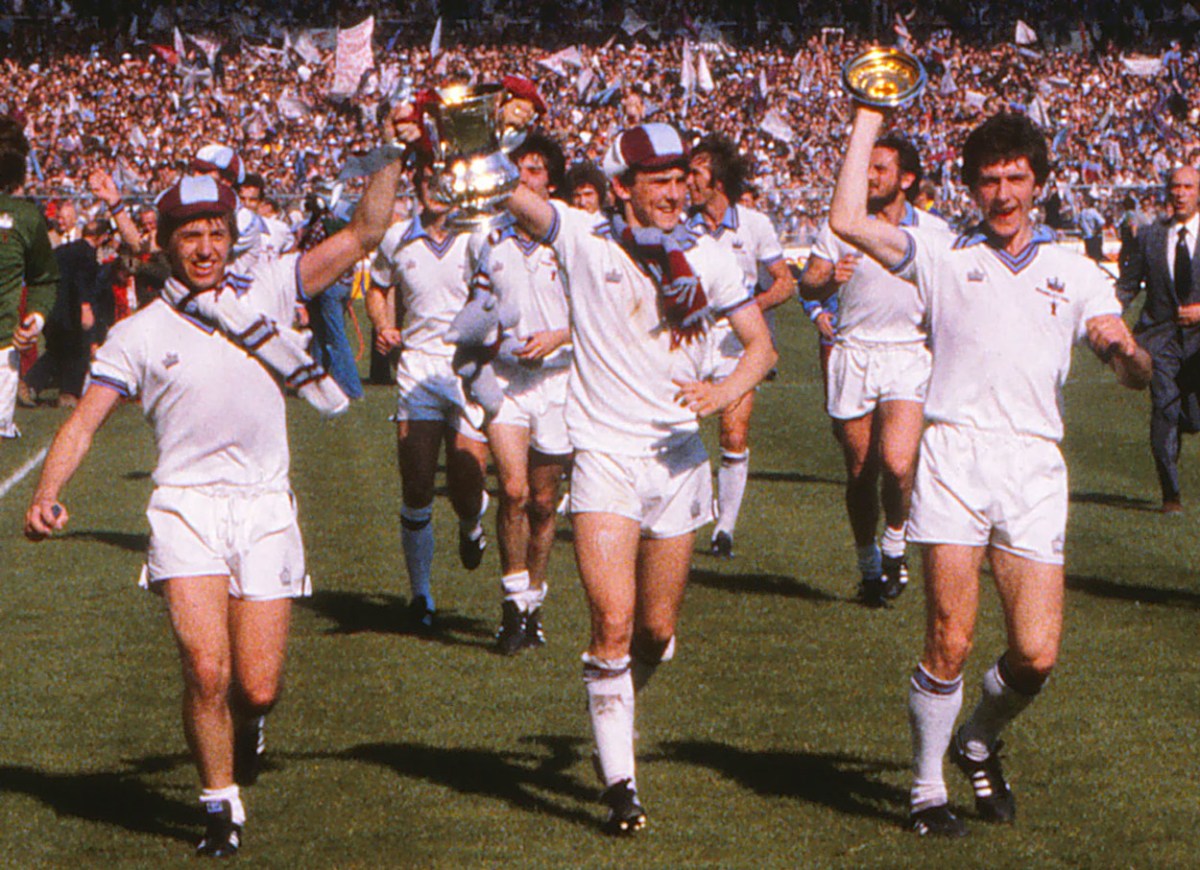
Those of you who are old enough may remember the two games against Ipswich in the semi-final of the FA Cup in 1975. The first game played at Villa Park was possibly one of the most tedious games of football I have ever witnessed. It ended 0-0 with neither side come close to scoring. The return at Stamford Bridge in the snow the following Wednesday was won 2-1 with Alan Taylor scoring both goals, as he had done at Highbury in the quarter-final, and as he did at Wembley when we beat Fulham 2-0 in the final. Ironically, a couple of weeks after our semi-final replay win over Ipswich, and a week before we played in the Cup Final, Ipswich beat us 4-1 in a league game.

Ipswich are now back in the Premier League for the first time since they were last relegated in 2002. They have achieved this with two record-breaking back-to back promotions under the impressive Kieran McKenna and have begun this campaign without a victory in their six games played to date. There was no disgrace losing their opening two games to Liverpool and Manchester City, but since then they have become the draw kings sharing the points with Fulham, Brighton, Southampton and Aston Villa. Their two defeats and four points leaves them 15th in the current table, one point below us in 14th. Five of the six teams they have faced so far are currently in the top nine of the Premier League including four of the top six.

In the first half of the season opener against Liverpool, Ipswich started strongly, nullified the Merseysiders attacking threat in the first half, but couldn’t quite match their stronger second half performance and went down 2-0. It didn’t get any easier for the Tractor Boys with a visit to face the champions Manchester City the following week. After surprising their hosts in the first few minutes taking a lead against the run of play, they were 3-1 down after just 15 minutes and ended up losing 4-1 which included a Haaland hat-trick.

They led against Fulham in the next game and were perhaps the better team but were pulled back and drew 1-1. A difficult trip to the Amex Stadium followed and Brighton displayed their attacking skills throughout the game. However a dogged defensive display saw Ipswich hold on for another point in a goalless draw.

Away at St Mary’s in their next game Southampton took the lead in the first few minutes but Ipswich fought throughout for an equaliser, and their relentless never give up attitude saw them snatch a deserved 95th minute equaliser. Last weekend they took the lead against high flying Villa, fell 2-1 behind and then rallied to equalise the game at 2-2 in the second half with both goals coming from ex-Manchester City player Delap who looks quite a handful. I don’t think he takes throw-ins like his dad though!

Their games to date sum up how it will not be easy for us to beat them this weekend. If we underestimate them they could make us pay. They’ve made some fine acquisitions in the summer to add to the players who have shone in the past couple of seasons. Apart from Delap from City, Hutchinson from Chelsea, Szmodics from Blackburn, the highly skilled Jack Clarke from Sunderland, Greaves from Hull, and Kalvin Phillips (who we never saw the best of, but who is a very good combatative midfielder), they have a superb attacking left back in Leif Davis.

Geoff’s excellent article (published on Tuesday) sums up our season to date. It’s well worth a read and really sums up the current state of affairs at the start of a new season under our new head coach. Excellently described as always Geoff highlights how the players don’t seem to understand much of what the coach is looking for, how the formation and tactics don’t appear to be clear to them, and how they don’t seem to be aware of their roles and responsibilities within the team. He questions whether they even have the necessary skills and ability to follow what the manager wants them to do. It seems like we are watching a group of individuals not a collective team, players not playing in their best positions where they can be most effective (e.g. Kudus), and I just don’t know what Summerville has to do to be picked in the starting eleven.

The sub-heading of Geoff’s article sums it up succinctly in a sentence: “As the stuttering disjointed start to West Ham’s Julen Lopetegui enters its third month we are still awaiting signs that the tactical plan and player capabilities are converging.” Following this game we head off to the second International break after just 7 games of the season. Ridiculous! Lets hope we go into it with our second league win of the campaign

Unpicking West Ham’s Tactical Knot: Is It The Players Or The Plan?

As the stuttering disjointed start to West Ham’s Julen Lopetegui enters its third month we still awaiting signs that the tactical plan and player capabilities are converging.

It is always tempting at the end of a disappointing game of football to channel one’s dissatisfaction towards the performances of individual players. It fuels the fascination for player ratings and the juvenile clickbait reports as to which of this week’s starting eleven had ‘stunk the place out!’

Of course, there are games where individual performances have stood above the rest as match winning or where individuals have let the side down through ill-discipline or poor execution. But generally, the success or otherwise of a team relies on the collective efforts. And at the elite level – especially with the modern trend of obsessive micro coaching – that depends on everyone being aware of their roles and responsibilities and capable of carrying them out within a team dynamic.

The job of the coach is to know the strengths and weaknesses of each of his players – accepting they haven’t all necessarily been hand-picked to meet his specific needs – and deploy them in a manner that maximises their effectiveness as a group. The sum must become greater than the value of the parts if success is to be forthcoming. It can be no use having a theoretical style of play if the players do not collectively understand it or do not have the individual attributes to pull it off.

As things stand, it is apparent that Julen Lopetegui’s West Ham team are a long way short of team comfortable with the style of football they are meant to be serving up. It remains a group of individuals rather than a team. If we are to believe it is a ‘work I progress’, then shouldn’t we be seeing an obvious shape starting to emerge by now? On the evidence so far tactics and formations look all over the place.

It is a possibly unfair comparison, but it brought to mind the star studied squad which managed to get relegated under Glenn Roeder in 2002/3. If you can remember that far back, this was a side that featured the talents of Di Canio, Sinclair, Kanoute, Cole, Carrick and Defoe but which misfired chaotically for most of the season until Sir Trevor instilled a degree of organisation in the final knockings.

It is far too early to speculate that an equivalent outcome might arise, but it does highlight the importance of structure and organisation in making the most of individual excellence.

At the weekend, several pundits had suggested that Lopetegui didn’t yet know his best eleven. That may be true, but the bigger issue is the failure to create an identity and style of play that can be executed on the pitch by the resources available. Can we know the who before we know the what and the how? This was the part of the tactical transition where many understood the need for time and adjustment where a balance was struck between the coach’s dream and the player’s capabilities. Compromises were always going to be needed – but right now progress is looking slow and painful.

Let’s take the tactic of playing out from the back as an example. We have a goalkeeper who was never recruited for his ability with the ball at his feet. The centre back pairing has yet to be settled, the full backs have very different attributes, and the defensive midfield options are lacking in pace, and touch. The upshot is that collectively they find it difficult to break the press resulting in one of two things happening. Either they ultimately play it back to the keeper under pressure who resorts to the time-honoured punt up field, or the ball is switched repeatedly from side to side, losing momentum and the opportunity for rapid counter attacks.

While better movement and positioning can perhaps improve with practice, no amount of coaching can instil pace where it does not already exist. If the plan and the people don’t coincide then one or other must change. Unless a solution is found for moving the ball forward quickly and accurately then creating quality chances in the final third will remain challenging.

The implications of the ponderous build-up are obvious further forward. Creative midfielders get dragged deep into their own half where they can cause no damage, and attacking players, whose strength is running into space, are faced with one or more opponents in their path. Frustration takes hold and they end up down blind alleys or taking hopeful pot shots from distance. That West Ham are top seven for number of shots but bottom six for Expected Goals illustrates the quality of the chances being created.

To conclude that, say, Mohammed Kudus is sulking, or Lucas Paqueta is disinterested in this context is based on flimsy evidence – although it makes for a good headline. It is staggering how many pundits and commentators speak fluent body language these days. The player’s role in most teams is tightly defined with little independent scope to try something different when they are having little success carrying out the coach’s instructions. It must surely lead to tensions and my immediate reaction to Kudus being replaced at half-time was that there had been a dressing room bust up Later reports have supported this version of events although we cannot know if they are true. Are there any supporters who believe that Kudus is being played in the position where we will see the best from him? The interesting thing was that he was replaced by Carlos Soler rather than ‘Jimmy’ Summerville who would have been the natural replacement – and who had been very unfortunate to have been benched in the first place.

Whether it was because of or in spite of the substitutions, the Hammer’s second half showing against Brentford was much improved. Having scored their customary first minute goal – at least we held out longer than Manchester City and Tottenham thanks to the advantage of taking the kick-off – the home side appeared reluctant to press home their early advantage. They would not pick up the pace again until after the West Ham equaliser. In all it was a scrappy, low-quality affair in which the Bees might point to a lengthy injury list in mitigation.

The West Ham highlight of the afternoon was the performance of Aaron Wan-Bissaka who excelled back in a conventional full back role. And proved he is both our best right and left back. Can he be cloned? It was another unexpected choice to introduced Dinos Mavropanos instead of Vladimir Coufal but it was a move that gave the defence a more solid feel.

It was another enigmatic showing from Tomas Soucek. No-one can dislike the big Czech for his attitude and commitment, but he is as much a part of the defensive midfield problem as he is of its solution. However, he has managed to pick up a re-brand during the early season struggles as the old dependable – and while he is popping up with a share of the goals, who can argue with that?

The final game before the international break will see the Hammers hoping to break their London Stadium wipe out against new promoted Ipswich Town. The spirit and determination of the visitors cannot be underestimated and will need to be matched if the first home points are to be put on the board. COYI!