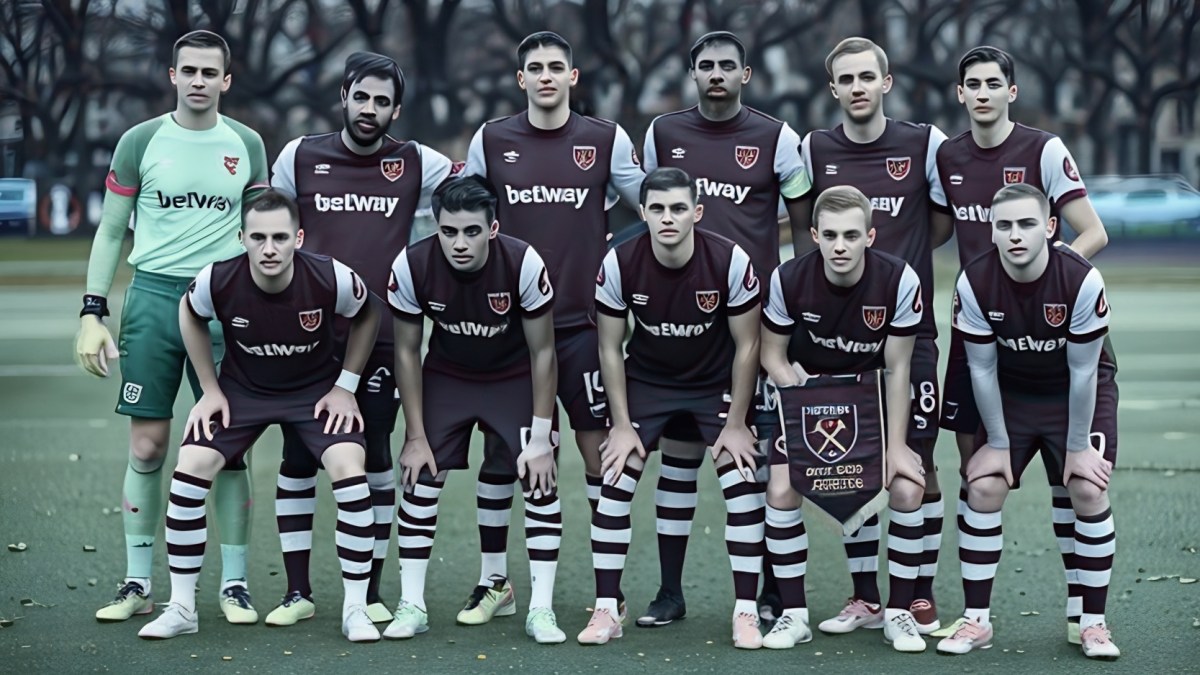
What Can West Ham Expect This Season From The Four Ps Of Potterball

The promised squad overhaul has yet to materialise as the new season gets ever closer. Potter’s preference for patience, possession, passing and probing has looked more cohesive in pre-season but has yet to be put to the test.

Pre-season preparations have changed significantly over the years. What were once low-key trips down the road to Oxford or Southend have been repurposed into fully fledged televised tournament extravaganzas. Hosted in any far-flung corner of the planet prepared to stump up enough cash for Premier League clubs to play exhibition games.

The idea of a Premier League Summer Series seemed to have all the appeal of the low budget seaside specials – starring Vince Hill, Mike and Bernie Winters and the dancers of the Young Generation – that dominated holiday TV schedules many years ago. In the event it wasn’t so bad. Fans were able to watch a handful of nearly competitive games blissfully free from VAR interference. The clubs banked a bounty of PSR boosting pre-season revenue. And the organisers happily settled for the desired outcome of a Manchester United victory.

It was obvious from the outset that the Red Devils were the big draw here. An opportunity to celebrate the latest in an ongoing series of corners turned since the retirement of Sir Alex in 2013. The remaining three clubs duly obliged by playing the role of the Washington Generals to Manchester United’s Harlem Globetrotters.

The wider context here, however, is the increasing interest and involvement in the business of Premier League football by US investors, with more than half of this season’s top flight clubs having American owners. Just short of the majority needed to enforce rule changes should their financial interests align. How long before regular Premier League games are actually staged in North America?

With the advent of live TV coverage comes the pressure on pundits to analyse what we have seen. So, what can be read into performances and what does it mean for the upcoming season? In truth, nothing we didn’t already know as far as the style and approach of Potterball are concerned. The major conundrum is whether the squad will have more and better options to accomplish it by the time the transfer window closes (slams shut, surely) on 1 September. The promised squad overhaul has seen plenty of departures but just the one significant addition at time of writing. It is a situation that would suggest another year of lower table struggle is on the cards.

Graham Potter is now fully committed to a preferred 3-5-2 formation. That one significant signing of the summer (El Hadji Malick Diouf) underlines the desire for attacking width to be provided by the wing backs. The club is now well placed in this area with Kyle Walker-Peters and Ollie Scarles as backup.

The middle three of the midfield five is less clear cut. There are plenty of names to throw in here from the current payroll: Edson Alvarez, Tomas Soucek, Guido Rodriguez, JWP, Lucas Paqueta, Andy Irving and Freddie Potts for a start. Plus, a coiple of youth players waiting in the wings. But how to get the right attacking and defensive balance from that group of (at best) tidy rather than explosive players. Potter’s caution is likely to favour a double pivot and one attacking midfielder rather than a more adventurous one defensive and two box-to-box midfielders. The obvious gaps in pace, power and someone with the ability to carry the ball forward from the middle of the park have yet to be addressed.

Another puzzle is whether there is a role in the system for wide attacking players such as Crysencio Summerville and Luis Guilherme? Both are quick, direct players which may be at odds with Potter’s pass, probe, possession, patience preference which contributed to the poor goal attempts statistics in the second half of last season. The limited game time for Guilherme in pre-season is probably telling – a shame for a player who reminds me of a Brazilian Alan Devonshire.

The primary innovation from pre-season has been the way the front two have operated. Niclas Fulkrug regularly dropping deep to receive the ball from central defenders with Jarrod Bowen deployed in a much narrower role than we are used to seeing him. Fulkrug has looked sharp and keeping him fit may be essential to West Ham’s attacking intent. The wisdom of bringing Bowen in from wide left remains to be seen given how effective he has proven from that position in the past.

Pre-season indications are that Potter’s preferred combination in central defence will be Nayef Aguerd, Max Kilman and Jean-Clair Todibo. It is a surprise rehabilitation for Aguerd who appeared to have had one foot out the exit door at the start of the summer. His pace and passing may serve him well on the left-hand side of a three but doubts remain over the physical aspects of his game. He also offers more of a threat in the opposition box at set pieces than his defensive colleagues. Kilman and Todibo are both good passers of the ball but each have their own defensive frailties. Kilman a tendency to spectate when he should be putting his body on the line. Todibo never looking to have the stamina to last beyond the hour mark.

Recruitment of a goalkeeper is the current hot topic on the transfer grapevine. The release of Lukasz Fabianski and a handful of recent errors by Alphone Areola have made this a priority position. Areola’s clear discomfort with using his feet and playing out from the back look to have shattered his fragile confidence. I need a lot of convincing that this tactic is anything other than suicidal. Perhaps teams with ball players in every position and possessed with fluid movement can carry it off but the Hammers are a long way off that level. It is a play that is fine to use when appropriate to do so but it is a liability once the opposition have cottoned on.

As ever with West Ham recruitment, there is the usual conflict between the players identified by the coach/ recruitment team and the deals that the Chairman is prepared to get done. The suspicion that only players with the right agent ever get signed never goes away. It is debateable whether any of the summer signings to date have come from the Potter/ Macaulay wish list. With all the misinformation circulating on transfer sites and the smoke and mirrors that PSR compliance generates, we really have little clue as to what is going on.

A new season should always be a time of excitement. For me, it has become a little less so with each passing year as professional football incrementally moves away from its community roots towards corporate ownership. The game has taken itself into an endless doom spiral. Each year, maximising revenues is pursued at the expense of loyal support to keep pace with the rising squad costs required for success or survival. It is a problem for everyone but even more apparent at West Ham, a club which has never made any attempt to plan beyond the here and now.

To end on a more upbeat note. There have been a few positives during the summer. The squad have looked to be in good spirits, the weight of a lifetime ban has finally been lifted from Paqueta’s shoulders and there were encouraging performances from academy products during the pre-season games. Potter would do his standing with the club’s support a great deal of good by putting more trust in youth and giving them the opportunity to develop as the season progresses. We can but hope. COYI!

As a West Ham fan I know we will never win the Premier League

Premier League football is no fun anymore with the vast differential in money available leading to predictability.

The Premier League has become a financial juggernaut, but the gap between the top clubs and the rest has stretched to a point where competitiveness feels like an illusion. When a handful of teams can outspend entire leagues it’s no surprise that some of the magic gets lost. Underdog stories become rarer, and the league becomes predictable.

It’s interesting how the same financial might that brings in the world’s best talent and global attention can also erode the soul of the sport for long-time supporters. Loyalty, local identity, and the joy of unexpected triumphs can get drowned out by branding and billion-pound transfer sagas.

As a West Ham fan I know at the beginning of every season that cup competitions are our only opportunity to win trophies. Sometimes I have despaired when we haven’t even seemed to make the effort to try to succeed in those. I have been fortunate to witness successful FA Cup wins in 1964, 1975 and 1980 as well as a couple of European trophies in 1965 and 2023. Not a lot to show for almost 70 years of following the team. A near miss in the 2006 FA Cup Final too, as well as in the 1981 League Cup final when we were possibly one of the best second tier sides that there has ever been. And I’ll never forget our amazing run in the 1975-76 European Cup Winners Cup competition where we lost in the final, but the quarter final and semi final second legs at Upton Park were two of the greatest games I’ve witnessed.

Our best ever league season was of course 1985-86 when we finished third in the old First Division just four points adrift of winners Liverpool after being in contention right up until the final week. We might have even been champions with a better start to that campaign – we only won one of our first seven games and languished in 17th place at that point. But there is no chance of a repeat of that season 40 years ago. The best we can possibly hope for in the league is to qualify for European competition. So many clubs can qualify now – we have 9 teams from England playing in one or other of the three available competitions next season. I cannot see any way that we can compete for the Premier League title.

So I racked my brains to try to consider what potential reforms could restore competitiveness in top flight football? There are a few that I have often heard floated that could inject some much-needed balance back into football, especially in the Premier League. Several sports have implemented reforms that significantly improved competitiveness, fairness, or sustainability. Here are a few examples:

  1. Salary Caps / Redistribution of Broadcast Revenue: One of the most debated ideas. A ceiling on player wages, like in American sports leagues, could help level the playing field. The National Football League (NFL) in the USA introduced a hard salary cap in 1994, ensuring teams couldn’t spend beyond a set limit on player wages. Combined with equal sharing of TV revenue, this has helped maintain parity—any team can realistically compete for the Super Bowl. The Premier League currently splits TV revenue more evenly than some leagues, but there’s still a disproportionate benefit to finishing higher. A more socialist approach could help smaller clubs grow sustainably. But with global competition and the Premier League’s appeal, enforcing this without causing talent drain would be tricky, and probably impossible.
  2. Competitive Balance Tax: American Basketball (NBA) and also Major League Baseball impose a luxury tax that penalises teams that exceed a spending threshold, redistributing funds to lower-spending teams. It wouldn’t stop spending but might redistribute its impact.
  3. Draft System The NBA and the NFL use a draft system that gives weaker teams first pick of new talent, helping to balance the league.
  4. Tighter Financial Fair Play (FFP) Rules: FFP exists, but surely it lacks teeth. Stronger regulations with real consequences for overspending might rein in runaway budgets. At the moment some clubs spend vast sums on new recruits that the majority of Premier League teams cannot compete with. Not surprisingly this makes the strong teams stronger.
  5. Squad Size & Loan Limits: Big clubs stockpiling talent and loaning out dozens of players distorts competition. Capping squad sizes and loans could force more even distribution of quality players.
  6. Fan Ownership or Influence Models: Inspired by Germany’s 50+1 rule. This rule ensures that club members (usually fans) hold a majority of voting rights, preventing external investors from taking full control. It’s credited with preserving club identity and financial responsibility, even if it limits spending compared to the Premier League.
  7. Formula 1 – Budget Cap (2021): To reduce the dominance of wealthier teams, F1 introduced a cost cap on team operations. It’s already led to closer racing and more unpredictable outcomes, with mid-tier teams occasionally challenging the front-runners.

These reforms weren’t always popular at first, but many have stood the test of time. If football took a page from these examples, it might just rediscover some of its lost unpredictability. Of course, the real challenge is that the very clubs most resistant to reform hold the most sway. Still, the soul of the game relies on the thrill of the unexpected. Unfortunately, Leicester 2016 was a one-off, it won’t happen again.

Adapting successful reforms from other sports to the Premier League probably isn’t possible – but it could be transformative if only it could be achieved. Here’s how some of the systems might be tailored (watered down!) to fit football’s culture and structure:

1. Salary Cap with Flexibility: A hard cap like in the NFL might clash with the global football transfer market, but a soft cap with luxury tax—like the NBA—could work. Wealthier clubs could still spend big, but they’d pay a hefty penalty for doing so. That tax revenue could then be shared with lower-tier clubs or reinvested in grassroots development.

2. Draft-Style Youth Allocation: While a full American-style draft might feel out of place, the Premier League could introduce a mechanism for sharing standout academy talent. For example, smaller clubs might get priority access to players released by top-tier academies or receive compensation tied to playing opportunities they provide young players.

3. 50+1-Style Governance: Replicating Germany’s 50+1 rule might be a tough sell politically and commercially but encouraging greater fan ownership or mandating supporter representation on club boards would help bring accountability and reconnect clubs with local communities.

4. Enhanced Revenue Sharing: The Premier League already shares a portion of broadcast revenue, but tweaking the formula to provide more meaningful support to lower-revenue clubs could make a big difference. For instance, increase the base share for all teams and reduce performance-based bonuses slightly to even things out without removing incentives.

5. Cost Control Through Squad Caps: Clubs could be limited not just by spending but by total squad value or squad size. This would prevent talent hoarding by the biggest clubs and ensure more players get competitive minutes across the league.

6. Centralised Contracting for Young Talent: Adapting the Irish rugby model, the FA or Premier League could centrally contract a pool of national youth or U21 players. These players could be distributed based on developmental needs, ensuring both top-level experience and competitive balance.

Of course, any of these changes would require buy-in from stakeholders—owners, players, fans, and governing bodies. But if the goal is to make football more open, more exciting, and more equitable, there are definitely paths forward. But as I wrote before we are too far down the road and there are too many reasons why it won’t happen.

Clutching at straws I wondered if a handicapping system as in horse racing could be implemented? It’s a fascinating idea, and not as far-fetched as it might sound at first. In horse racing, handicapping works by assigning different weights to horses based on their ability, aiming to equalise their chances of winning. Theoretically, a similar system in football could involve performance-based disadvantages for stronger teams to level the playing field.

Here’s how a football version might look:

  • Points Handicaps: Start dominant teams with a points deficit at the beginning of the season. It’s radical, but it would certainly shake things up.
  • Transfer Restrictions: Limit the number or value of incoming transfers for top-performing clubs, effectively “weighing them down” in the market.
  • Fixture Difficulty Weighting: Adjust scheduling so stronger teams face tougher fixtures earlier or more frequently away from home.
  • In-Game Constraints: This would be controversial but imagine limiting substitutions or squad depth for top clubs in certain matches.

Of course, the challenge is that football isn’t a closed system like horse racing or American sports leagues. It’s global, with interconnected competitions and massive commercial interests. Any artificial constraint would be seen as undermining meritocracy and would spark legal challenges.

Still, the spirit of handicapping – engineering unpredictability and fairness – is something football desperately needs. Maybe a hybrid model, like enhanced revenue redistribution or dynamic squad caps based on recent success, could capture that essence without breaking the game.

A handicapping-style system in football would be a radical shift from tradition, but if implemented thoughtfully, it could offer several compelling benefits—particularly for restoring competitive balance and reinvigorating fan engagement. Here’s how:

1. Increased Unpredictability: By design, handicapping would reduce the advantage of dominant clubs, making outcomes less predictable. That unpredictability is what keeps fans glued to their seats—think of the buzz around surprise title runs like Leicester’s in 2016.

2. Renewed Relevance for Mid-Table Clubs: Clubs outside the elite would feel they have a genuine shot at silverware or European qualification. That alone could re-energise fanbases, attract better players to smaller clubs, and create a more dynamic league overall.

3. Rewarding Long-Term Planning Over Just Spending Power: If the system penalises consistent overperformance or overspending, clubs would need to be smarter focusing on scouting, youth development, coaching, and chemistry rather than just flexing financial muscle.

4. Boosted Viewer Interest: Global audiences tune in for drama and storylines. A more level playing field would mean more meaningful matches and tighter title races, which boosts engagement, TV ratings, and revenue for everyone.

5. Revived Romanticism of the Game: Football has always been about hope – the belief that any club can dream big. A handicapping system could help restore that spirit, making football less like a billionaire’s playground and more like a battleground of passion and grit.

Of course, implementing it fairly would be a tall order—defining the metrics, avoiding legal challenges, and maintaining meritocracy. But philosophically? It taps into something a lot of fans yearn for: the feeling that anything is possible again.

If only some of these ideas were adopted in a small way it might help, but has it gone too far now? There’s a sense among many fans, including me, that football’s drift into a money-dominated spectacle has passed the point of no return. The financial stakes are so enormous, and the power so concentrated at the top, that even small reforms feel like drops in an ocean of imbalance.

But I wouldn’t say it’s too far gone – almost but not totally, not yet. Could small changes still be possible? Football still has its grassroots, its local heroes, and a global fan base that genuinely cares about the integrity of the sport. If enough pressure comes from fans, regulators, and smaller clubs, meaningful changes could still happen. It might not be a revolution, but even incremental changes like stronger FFP enforcement or better revenue sharing can start nudging things in the right direction.

If it has really gone too far now (and if I’m honest with myself it probably has) then it speaks volumes about how disconnected the upper echelons of football have become from the people who helped build it: the fans. When billion-pound ownerships and corporate interests dictate the rhythm of the game, it’s easy to feel like voices from the stands are just background noise.

But even small ripples can make waves. The fan protests that helped derail the European Super League weren’t backed by billions—they were powered by sheer passion and public pressure. The 50+1 conversations in the UK? Sparked by fans. Even safe standing and more equitable ticket pricing have gained traction in some clubs thanks to persistent grassroots lobbying. Maybe it won’t flip the pyramid overnight, but change doesn’t always need to be seismic.

As well as supporting West Ham in the Premier League I like to watch lower league and youth football, The Premier League has the best players of course but the excitement is missing because of the predictability. There’s something raw and beautifully human about lower league and youth football—where matches aren’t drowned in glitz, but crackle with real tension, local pride, and moments of unexpected brilliance. It’s football in its purest form, unfiltered by billionaire ownership or endless VAR delays. Unpredictability is the heartbeat of sport. The feeling that anything can happen. When it’s missing, even the most technically flawless performance can feel sterile.

There’s magic in seeing a teenager curl one top corner for the Under 15s or watching a non-league side grind out a win in front of 500 fans who know every chant by heart. No fireworks show required—just graft, heart, and the echo of hope in every tackle. – it’s football with soul. You’re watching young players develop before your eyes, where every pass and goal actually means something deeply personal to the community. It’s not about megastars or multi-million-pound sponsors—it’s about belonging. That feeling when a small crowd roars like it’s 60,000 strong, or when a player claps every hand on the touchline because those faces actually mean something. That’s football at its most human.

The Premier League may have the flash, but lower league and youth football feels more authentic, more grounded. There’s no corporate gloss just muddy boots, raw talent, and a crowd that claps for effort as much as for goals. I have been rediscovering the joy of football not in superstars, but in the passion of a local lad sprinting down the wing in the rain, or a promotion campaign that means everything.

And yet even now as I reflect on this article I still get a buzz in anticipation of the new football season that is approaching. I still want to see West Ham really performing well at the top level. I still read the ridiculous articles every day that suggest we are going to buy x/y/z and laugh to myself. I enjoy the summer sport, the cricket, especially the test matches, the Open, Wimbledon, horse racing on the flat, and this year the Women’s Euros. But nothing beats watching football at all levels. And despite the predictability of the Premier League I’ll still be hoping for a successful season for West Ham just as I have every year since 1958. But one thing is for sure. We won’t be challenging to win the Premier League. I’m afraid we won’t even come close.

West Ham Monday Briefing: Too Quiet On The Transfer Front

With less than seven weeks to go before the big kick-off what is happening to the much needed rebuild at the London Stadium. How skint are we, who will be sold, who will be banned and are we ever going to sign any new players?

It was Kick-Off Day minus 47. The wind howled around the empty, soulless Rush Green portacabins, as dust swirled across the cracked, abandoned car park. A single corner flag flapped rhythmically in the breeze, forgotten when the last training session ended just a few short weeks earlier. Nothing stirred except for an old man and the squeaking wheels of a white line marker in the far distance – otherwise, no life, no sound; only silence and despair.

In one corner, a rusty padlock hung above a door marked ‘Head of Recruitment’. A handwritten paper sign sellotaped to the splintered window read: ‘First Class Players Wanted – All Positions. Please state age, experience and preferred agent.’ Welcome to West Ham in the Transfer Window!

***

 If You Can’t Convince Them, Confuse Them

A few weeks ago, I published an article on the realities of the financial situation at West Ham. Although, it is now accepted that West Ham had never faced an immediate threat of a PSR breach, the rules continue to be waved around as a portent for troubled times ahead – possibly the 2026/27 season but more probably the one after that. Yet in all likeihood, the existing PSR rules won’t survive that long now that Chelsea have destroyed their credibility.

Not surprisingly, it was in the Board’s interest to point the finger at ‘externally’ imposed rules rather than admit their own mismanagement for the club’s current woes. I had often wondered why the remaining Premier League clubs had voted for PSR in the first place given its major impact was to preserve the rich club status quo. But then you realise that for most, the priority is not to compete with the rich but to maintain their own advantage over those who are newly promoted.

The dilemma in understanding what is going on at West Ham in this age of misinformation is whether what we read has genuinely been leaked by the club, has been misunderstood/ misreported by the messengers or simply been made-up in the interest of internet clicks.  

The major talking points in recent weeks have been the suggestion that only 75% of player sales will be made available for purchases, and the hint that a £90 million injection of capital is about to be made by the Board. The former is almost certainly a confusion arising from PSR accounting principles where only the excess of sale price over book value can be shown as player sale profit. I’m guessing that someone has made a back of an envelope calculation that this might equate approximately to 75%.  As for the latter, the Board now find themselves in a position where they are obliged to invest further or face the prospect of PSR losses over the next three years being limited to £15 million, rather than £105 million. What form the investment takes, who puts their hands in their pockets, and how the money is used will provide interesting insights into the mindset and intentions of each of the owners.

Such is the dislike and distrust of David Sullivan by many supporters that is has spawned all manner of wacky conspiracy theories. Allegedly the Chairman has a secret plan to get the club relegated as a deliberate act of revenge, making a moonlight flit out of Stratford and baling out of an airplane over the nearest tax haven hugging his parachute payment. Personally, I believe the woeful management of the club is better expalined by Hanlon’s razor which suggests: “never attribute to malice that which is adequately explained by stupidity.” For stupidity, read collective incompetence driven by a gaggle of overblown egos.

 What A Waste of Money

It should come as no surprise to many that the effectiveness of West Ham’s transfer spending over the years has been atrocious. Take Declan Rice out the equation and the player trading profits are at the bottom of the league. If there was any lingering doubt, then take a look at the estimates of squad value calculated by the Transfermkt website (below). Not just that West Ham is ranked in 14th place – despite their relatively high spending – but how far they are behind clubs such as Brighton, Bournemouth and Forest.

1) Man City – €1.35 BN, 2) Chelsea – €1.21BN, 3) Liverpool – €1.09 BN, 4) Arsenal – €1.01BN, 5) Man United – €818 M, 6) Tottenham – €805 M, 7) Brighton – €732 M, 8) Newcastle – €597 M, 9) Aston Villa – €574 M, 10) Bournemouth – €466 M, 11) Nottingham Forest – €444 M, 12) Brentford – €432 M, 13) Crystal Palace – €426 M, 14) West Ham – €370 M, 15) Fulham – €318 M, 16) Wolves – €276 M, 17) Everton – €257 M, 18) Leeds – €211 M, 19) Burnley – €187 M, 20) Sunderland – €137 M

This is no accident or from run of bad luck but a direct consequence of failing to move with the times. Refusing to adopt a professional approach to scouting, recruiting and longer-term planning. Taking the easy option of relying on agents to identify targets rather than trusting the club’s own resources. Paying lip service to the trends of data analytics and appointing experienced football directors in the belief that a bunch of amateurs can do it better.

Profits on player sales is a significant component of football finances – and will continue to be important if/ when squad cost ratios replace PSR. A smarter club in West Ham’s position would have recognised this long ago and planned for the recruitment and development of younger players who can sustain and raise the club out of its current stagnation. It is a strategy that also calls for the setting aside of sentiment. There is an optimum time to sell any player, no matter who they are.   

All Quiet On The Transfer Front

As usual the early days of a West Ham transfer window has been all noise and no action. Last summer I made of point of making a note of every player linked to the club but gave up after the list broke through the one hundred barrier.

The backdrop to this summer’s business have been the baffling public announcements of “we’re skint and must sell before we buy.” Quite why anyone would show all their cards before entering into any negotiations is beyond bizarre. Was the intention solely to manage supporter expectations, an attempt to hide behind PSR regulations or something more sinister. Now we know the club’s problem is cash flow (and not PSR), we also know that it is something the Board can quite easily fix – after all they broke it in the first place. The promised £90 million injection – in whatever form it takes – should serve to partially ease the impasse.  

We know very little about the direction Graham Potter and Kyle Macaulay’s thoughts. The assumed principles of pursuing younger emerging talent sounds eminently sensible. Hopefully they are locked away in a quiet corner somewhere, methodically poring over the rows and columns of a recruitment spreadsheet. Keeping tabs on the players that the data has identified and preparing the bids to be put forward. But will they be allowed to excel themselves in the transfer window or will their preferred targets end up as more names in the list of the ones who got away? Sacrificed to the rubbish bin of low-ball bids, take-it-or-leave-it offers and DFS style payment terms.

Potter and Macaulay have a massive job on their hands to rebuild the Hammer’s sqaud. If they also to lose Kudus and Paqueta as predicted to fund recruitment the challenge becomes even greater – both in finding the players and subsequenting moulding a team from a bunch of strangers. My preference is that they are shopping in the under £25 to £30 million aisle, prioritising pace and excluding anyone aged 27 or over, except in exceptional circumstances. Otherwise, it will be a case of rinse and repeat when we reach the same time next year, requiring a third consecutive summer reconstruction.  

Today, is when the majority of Premier League clubs get to close their accounts (West Ham’s closed at the end of May), so we can expect activity to pick up this week. There may also be last minutes manoeuvrings by any club (e.g. Aston Villa) who find themselves on the cusp of a PSR breach.

In truth, transfer business has been relatively slow across the board, but we have been here before at West Ham. Looking patiently at the clock as the minutes, hours and days tick by. When others start to spend while West Ham sit on their hands, making enquiries, considering targets and preparing talks.

As things stand the Hammers are deep in the ‘conversation’ for relegation. We cannot rely on there being three worse promoted teams again. We have to make ours better. It really is time to act. COYI!   

Counting And Spilling The Beans On West Ham United’s Finances

Here we go! The silly season of transfer bids, player wages, contract lengths, amortisation and PSR breeches is upon us. How does this leave West Ham’s Finances. Strong and stable, or in a mess?

The once simple beautiful game has mutated into a strange and complicated beast for its followers in recent years. A plague of over analysis, statistical overload, tactical complexities, formation paralysis, and eccentric rule interpretations requires fans to understand double pivots, false 9s, low blocks, high presses, inverted wingers, box-to-box midfields and whether a player was entitled to go down. But making matters even worse is the need to be a financial wizard, understanding concepts such as profit and sustainability rules, associated party transactions, player amortisation, shareholder loans and squad cost ratios.

As we enter the summer madness of the transfer window, we take a look at the current state of West Ham’s finances and how they compare with selected other clubs.

Revenues – Where Does The Money Come From?

Despite being ranked as a top twenty club in the 2024 world football rich list – a status they will struggle to retain in 2025 in the absence of European competition – a massive gulf remains between West Ham’s income and the ‘rich 6’ of English football.  Clubs such as Liverpool and Arsenal are able to generate revenues 2.7 times larger than those currently earned by the Hammers. The gap is impossible to narrow for any club lacking regular Champions League participation; or the financial muscle and ambition to challenge for it.

Broadcasting revenues (the central distribution of funds from the Premier League and UEFA for TV rights and prize money) continue to dominate at West Ham where they account for 60% of all income received. Comparable metrics for Liverpool and Arsenal are 33% and 43% respectively, illustrating how the bigger clubs use their global appeal to drive Matchday and Commercial revenues that dwarf those achieved at the London Stadium.

Although West Ham can boast the second largest matchday attendance in the Premier League, they drop to eighth in terms of matchday revenues, even in a season that saw a creditable Europa League campaign. Average revenue per fan is on a par with Fulham and Brentford, and behind the rich six, Newcastle and Brighton. The move to the London Stadium has not proven to be the money spinner promised and attempts at squeezing more from those attending, removing concessions, or attracting a greater proportion of higher spending casual visitors (tourists) have met with understandable resistance.

Commercial revenues have seen incremental growth through additional or improved sponsorship deals, pre-season tours and retail merchandising, but with a slower rate of growth than broadcasting. However, certain income streams, such as naming rights, food and beverage sales and income from the staging of non-football events, are not available due to the stadium ownership. This is a flip side to Brady’s much heralded ‘deal of the century’ in securing a low rent 99-year lease.

Expenses – Where Is The Money Spent?

The principal, and most high-profile, expenses at a football club are those related to player wages and transfer fees. While wages have increased significantly at West Ham over the years, they rank 9th in the league overall for staff costs (wages plus player amortisation). Unsurprisingly, these are way below the ‘rich’ clubs but they have also fallen further behind Newcastle and Villa as they pursue their Champions League ambitions. In total staff costs represented 91% of revenues in 2023/24.

To avoid confusion, it is worth taking a moment to consider how transfer fees are accounted for in profit and loss statements. Suppose a player is purchased for £50m on a 5-year contract. The £50m cost will be amortised in the accounts over 5 years at £10m per year, not as a lump sum. This is independent of how the transfer fees is actually paid in practise. For example, the whole fee up front or against a schedule of instalments.

Brighton provides an interesting comparison here. While their wage bill is not far behind those at West Ham, amortisation is significantly lower. A reflection of their strategy of unearthing emerging talent at a lower cost than the lazier West Ham obsession with experience and/ or recruiting players recommended by agents.  

With many of the operating expenses at the London Stadium paid for by the stadium owners, other expenses at West Ham are relatively modest. Not owning the stadium possibly also contributes to the club being in the rare position of having no financial debt. They do, however, owe significant amounts in future transfer instalments which we will return to later.

Transfers and Player Amortisation

If there are limited options for West Ham to achieve a significant increase in matchday and commercial revenues – and become less dependent of broadcasting income – then surely, they must pay more attention to generating player trading profits. For reasons best known to the owners, the club has chosen to ignore the model of buying low and selling high pioneered by the likes of Brighton. The policy of recruiting older, already established players and selling later resulted in an average annual player sale profit of just £15.4m in the nine years from 2014-23. A figure that was below the league median in seven of those nine years.

Indeed, it is rare for clubs to achieve operating profits. Most rely heavily on profits from player sales to comply with the Profitability and Sustainability Rules (PSR). West Ham’s poor record on player sales – the direct result of a transfer policy prioritising experienced, older players – has been a consistent drag on the club’s progress.

The reason the sale of Declan Rice was such a massive bonus for West Ham’s accounts is that, as an academy product, he had no ‘book value’. The entire sale proceeds could be shown as pure profit. Just as Rice’s contribution papered over the cracks on the pitch during his last season, his sale may have done the same for the club’s finances. The record profits in 2023/24 were almost entirely down to the one-off sale of a single player.

The financial implications of selling a player who had previously been purchased is not so clear cut. Consider the following example of a player bought two years ago on a five-year contract for £50m.

After the completion of two years, the player has a book value of £30m. If he has been a success and can be sold for £75m then great, a profit of £45m can be shown in the accounts. Conversely (and the more usual West Ham scenario) if the transfer has not worked out and he is sold for less than book value then the negative difference must be recorded as a loss. Thus, selling Gianluca Scamacca and Nikola Vlasic may have brought in some much-needed cash but did not generate any profit, as their transfer fees were aligned with current book values.

PSR and All That

The Athletic recently published a club-by-club table of Premier League PSR positions over the latest three-year period. Although interesting in that it confirmed West Ham did not have an immediate PSR problem (as many suspected), it was also a largely irrelevant rearview mirror exercise given the club’s financial year had already closed on 31 May. Whatever transactions take place this summer will become part of the 2025/26 accounts and factored into the three-year PSR period 2023/24 to 2025/26.

In calculating PSR limits, certain allowable costs (depreciation, woman’s football, youth and community development) are added back in to the profit and loss totals. For West Ham this is estimated at approximately £14m per year. Thus, for PSR purposes, West Ham’s 2023/24 profit would increase to £71m and allow for equivalent losses of up to £170+m in the two subsequent seasons without falling foul of the rules. Beyond that timeframe (once the Rice transfer drops out of the equation), the PSR outlook (assuming it remains) looks bleak unless the club significantly ramps up revenues or increases profits on player sales on a regular basis.  

The caveat to the above is that clubs can only lose £15m of their own moneyacross a three-year PSR period. Anything above that, and up to the £105m threshold, must be guaranteed by owners providing ‘secure funding’. According to The Athletic report, the most recent capital injection at West Ham has expired for the purpose of PSR calculation. If the Board (combined wealth £8 billion) do not address this, future PSR consequences would look very serious indeed.

Where Has All The Cash Flow  Gone?

When David Sullivan presented the 2023/24 accounts he gushed “It fills me with immense pride, as a steward of this illustrious club, to see West Ham United on solid financial ground, with all profits reinvested into our squad, infrastructure, and local community, providing a strong basis for our ongoing progress and long-term objectives”.

If we are to believe that is true, then why are we now hearing noise about the finances being in a mess? Or that players must be sold before signings can be made? And what exactly are the Board’s long-term objectives?

There is clearly a problem with cash flow that is beyond the hysterical headlines on the usual clickbait sites. There is nothing sinister about the club resorting to receivables finance or revolving credit facilities. They are standard business practices which I’m sure other clubs must also use.

A standout statistic from West Ham finances is that they are among the leaders for transfer fees owed, with a staggering £191m outstanding when the 2023/24 accounts were published. The equivalent figures available for selected other clubs are Brighton £104m, Newcastle £160m, Arsenal £268m and Liverpool £128. In part this will reflect the Hammers activity in the transfer market but may also be the result of holding out for extended payment terms – a kicking the can down the road tactic that anecdotally scuppers many a West Ham deal at the last minute.   

And here lies the conundrum. On the face of it, West Ham accounts have shown strong operating cash flows in recent seasons, and the club have successfully cleared all outstanding debts. In a normal business it would be an enviable position; but football is an abnormal business. Clubs are not owned for annual profits but for reasons of prestige, ego, and asset accumulation. In 2007, Forbes valued West Ham at £195m. Last May that had increased to £882. An increase achieved with limited shareholder funding beyond the issue of £125m in shares in 2022/23, much of which was used to reduce debt.

This has left a net funding/ investment in the past 5 years of just £54m, compared to £496m at Villa and £391m at Newcastle. It feels like an act of self-harm if the owners decline to make further investment now both to ease PSR pressures and to assemble a squad capable of competing at the right end of the table. This brings us back to the question of long-term objectives. Does this go any deeper than preserving Premier League status (and hence asset value) as a plodding mid-table team?

 What is apparent is that caution gets the better of ambition in the West Ham boardroom. No-one wants a reckless club owner, but some risks are worth taking where the rewards are high. Sound financial management is fine, but a clubs ultimate success lives or dies on its player and management recruitment. As the overall steward of West Ham’s recruitment, I’m not sure whether Sullivan should be ashamed or embarrassed by his record – probably both! Is there any chance of it ever changing? COYI!

So why was 2024/25 a horror season for West Ham? 

All season Geoff and I have been writing articles with our thoughts on why West Ham’s season has been so poor and so uninspiring, putting forward our theories. But my friend Stefan King, a massive fan of both West Ham and the band Queen, who also writes horror stories, insists that we have got it all wrong. He sent me his most recent short story to read. He certainly has a very vivid imagination. I thanked him for his work of fiction and he sent me a one word reply. “Fiction?” I’ll leave you to make up your own mind.  

“Boleynian Rhapsody – Hammer to Fall” 

A tale of profound dread, psychological turmoil, and an ancient force with an insatiable thirst for pain, all cloaked in claret and blue. 

The 2024/25 season was not just bad; it was horrific; it was apocalyptic. West Ham didn’t merely lose games; they deteriorated; they decayed from the inside out. The rot wasn’t confined to the results; it permeated the walls, the players’ bodies, and the air. 

No one dared to voice it, but something or someone had followed them from the Boleyn Ground. When they demolished the old Boleyn stadium to make way for nearly a thousand dwellings, they believed they were moving forward; progress, the next level, corporate boxes; they would become the best team in the country, in Europe, in the world. But some things, some very ancient things, resent being forgotten. How dare they move! 

Legend has it that the Boleyn witch, Anne Boleyna, had a son. A creature that was born wrong, all teeth and shadow. They imprisoned him in the tunnels beneath the Upton Park pitch, feeding him rats. He was born under a blood moon, a night when the veil between worlds was thinnest. He was a creature of darkness, with eyes that glowed like embers and a voice that could freeze the soul. Anne hid him away, knowing that the world would never accept him. She taught him her secrets, and together, they wove a web of power beneath the Boleyn Ground. Every time the Hammers won, they said it was him—howling beneath the turf, sated by the sacrifice. It was dismissed as East End folklore. 

Anne Boleyna was no ordinary witch. She was born in the 16th century, a time when fear and superstition ruled the East End. Her mother, a healer, was accused of witchcraft and burned at the stake. Anne, then a child, watched in horror and vowed revenge. She grew up learning the dark arts, mastering spells that could bend reality and summon spirits. Her reputation spread, and soon, she was feared and revered in equal measure. She passed it all to her son. 

For a time after the stadium move all was well. Nothing outstanding but it was always going to take time. Then David Moyes had some spectacular results and led them into Europe. Unbelievably a European trophy was secured. But then everything unravelled. The victories ceased, and the nightmares came to the fore. Moyes couldn’t stop the decline, and by the end of 2023-24, he was gone. 

A new head coach arrived—Julen Lopetegui from Spain. By November, every player was plagued by night terrors. One gouged his own thigh with a fork muttering, “I must bleed for the badge.” Others vanished during an away trip to the Tottenham Hotspur Stadium. One lost his mind. Security footage showed his ghost wandering onto the pitch alone in the dead of night. He was rarely seen in good form again. 

December arrived with a visit to Leicester. A goal down in under two minutes. Another defeat. Some of the travelling West Ham supporters turned on manager Julen Lopetegui, jeering at him towards the end of the game. Home or away it made no difference. The season was turning into a nightmare. 

The year ended with a 5-0 home defeat to Champions-Elect Liverpool. Fans began disappearing before the end of the game. At first, it was those seated in the Trevor Brooking Stand. Then entire rows throughout the stadium. Empty seats, still warm, coats and phones left behind. The official explanation? “Evacuations due to a fire alarm.” But nobody heard an alarm. The footage revealed something else, figures crawling up from the touchline. Pale and long-limbed, wearing kits from the ’60s. Former players. Faces familiar from grainy black-and-white films, but distorted. Skin stretched too tight. Eyes set too deep. Moving with that horrible jerky grace, like puppets at the end of rusty wires. 

Then came the fog. It rolled in one day during training, low and dense, smelling like you wouldn’t believe. It was thick and oppressive, wrapping around the players like a shroud. Once it touched someone, they were never the same. They spoke strangely, moved differently. One player bit a goalpost and laughed and laughed until his jaw unhinged. Another began scratching marks into the dressing room tiles. The fog carried whispers, voices from the past, echoing through the corridors of the London Stadium. It was as if the fog was alive, a force that fed on fear and despair. 

The players’ experiences grew increasingly harrowing. Night after night, they were tormented by visions of the witch and her son. Some players reported seeing shadowy figures lurking in the corners of their rooms, whispering secrets in a language they couldn’t understand. Others woke up with unexplained bruises and scratches, as if they had been in a struggle. The team doctor was baffled, unable to find any medical explanation for their symptoms. 

During training sessions, the players moved like automatons, their eyes vacant and their movements stiff. They spoke in hushed tones, afraid to voice their fears. One player, in a fit of desperation, tried to flee the stadium, only to be found hours later, wandering the streets of Stratford, muttering incoherently about the witch’s curse. Another player, who was once the star striker, refused to step onto the pitch, claiming he could hear the witch’s laughter every time he touched the ball. What chance of him ever scoring any goals again? 

The head coach was found in his office one morning, kneeling within a circle of matchday programmes, that he refused to leave. He had written one phrase over and over on the whiteboard: “She demands the chant. I can’t leave the circle until she hears the chant.” But what chant? He didn’t know the chant.  

It surfaced once, on a social media recording by a fan before the servers mysteriously crashed: “Come on you Irons, bleed for her name, forge us in fire and burn in her flame.” The clip was deleted within minutes. The fan who uploaded it went missing. His flat, newly built above the old Upton Park pitch, was found empty except for a claret and blue scarf tied into a noose and a puddle of water on the floor—still rippling, forever rippling. 

A new head coach arrived. But did things improve? By April, the club was dead in the water. But not relegated. They would fight another day. But what would 2025-26 bring? Fortunately, Ipswich, Leicester, and Southampton were also having nightmares. 

It was as if, for one whole season, West Ham United had never existed. But the London Stadium still stands. You can hear it at night. That chant. Warped and slow, echoing out into the empty Stratford streets and the surrounding Olympic Park. 

Some say if you get too close, you’ll see lights on in the stands at night when the stadium is empty. You’ll hear boots on the turf. A final match being played in the shadows, for no one and everyone. They say the witch watches from the boxes now. Forever smiling and waiting for kick-off. 

The great Queen song “Hammer to Fall” can be heard repeatedly through the PA system. 

But the Hammer never truly falls. 

It just waits to rise again. 

West Ham face a week of the two extremes. Liverpool away (the top) and Southampton home (the bottom).

And a few thoughts on the evolution of football since the 1960s.

In our next two games we go from one extreme to the other. On Sunday we visit champions elect Liverpool for what is traditionally our annual Premier League beating on Merseyside. I hate sounding defeatist, I’d love to believe otherwise but it is hard to think that we are going to go up there and surprise them. I know that they lost at Fulham last week but sadly the Cottagers were a much tougher proposition than facing West Ham at the moment, and you cannot believe that with our current form the three points, or even one, are there for the taking.

Then the following Saturday we go to the following extreme when entertaining (?) Southampton at the London Stadium. Surely, even in our current transitional mode three points is a certainty? Well I say that but 67 years of following the Hammers tells me otherwise. No guarantees of a win even against one of the poorest sides that the Premier League has seen.

Geoff’s article following the Bournemouth draw last Saturday says all I would want to say regarding the current state of affairs. I couldn’t add to that. Instead as I sat down to write this article my mind wandered and I got to thinking about the evolution of football in my time watching the game. I read an article about somebody from the 1960s coming back to life in the present day and the changes that they would encounter such as mobile phones, colour TV, internet and so much more, and thought about applying it to football.

When football fans reach a certain age, and I guess I have reached it, it is common to complain about how football has changed. “The beautiful game”, “a funny old game” or whatever you want to call it has undergone significant transformations over the decades since I first watched a game at Upton Park way back in 1958. As a youngster I thought it was a simple game, but it has evolved dramatically, especially in the 21st century. Football when I first knew it and football today are worlds apart in many ways, reflecting changes in tactics, technology, culture and the global nature of the game.

The football I remember from my youth was direct and more physical. The emphasis seemed to be on long balls and robust challenges. Teams at that time set up in a 2-3-5 formation, the players were numbered one to eleven, with each number relating to a specific position, 9 was centre forward, 11 outside left, 5 centre half etc. Players wore black boots, the kick-off had to travel forward, goal kicks had to clear the penalty area, almost all games kicked off at 3.00 on a Saturday or midweek games at 7.30 on a Wednesday. The referee didn’t draw any lines on the pitch to indicate ten yards, and players could back pass to a goalkeeper who could then pick it up.

Now boots are multi-coloured, the kick off always travels backwards, goal kicks can be small touches aimed at ball retention and building from the back. Referees now draw lines to indicate ten yards for free kicks in attacking areas but their accuracy at marking out the distance is sometimes questionable. Balls deliberately passed back to the keeper require modern keepers to demonstrate ball-playing skills that their predecessors didn’t have to. Some are better than others in this respect.

Years ago I don’t remember the term false nine at the time, or a number 41 playing as an eight or a 16 as a ten. I do remember Ron Greenwood studying continental football and introducing 4-2-4 to West Ham. Today, modern football is highly tactical, with variations in formation allowing for fluid transitions. There’s a greater focus on possession, pressing, and data-driven strategies.

In the 1960s training was less scientific, and fitness levels were varied. Some players had second jobs, Geoff Hurst for example played cricket for Essex in the summer alongside his main job as West Ham’s number 10. There was little focus on nutrition. Today footballers are generally elite athletes with access to advanced training methods, sports science and tailored diets.

Back in the day there was no VAR, no goal-line technology, no advanced analysis. Referees made decisions, often leading to controversy. Today technology plays a huge role from the tracking of player and team performance to VAR. And we still get controversy, VAR may have improved fairness (usually?) but at a cost where the natural flow of the game is disrupted. And we are also bombarded with statistics that may or may not be of interest too.

Back in the 1960s, time wasting was prevalent but less scrutinised than today. Goalkeepers could bounce the ball for some time before releasing it, players could pass back to them and they could pick it up and waste more time. In theory the modern game has introduced stricter enforcement against time wasting, with sometimes many minutes added to compensate for delays. However, despite these measures problems still persist. Substitutions in the final minutes or in added time remain tactics to disrupt the rhythm of the game.

And talking of substitutes they didn’t exist when I first watched the game. Players were known to return to the pitch with broken bones (even a broken neck in one famous instance) so that they had eleven on the field. Gradually that changed with one substitute allowed (for injury) and has gradually expanded so that now five are allowed with further additions for games with extra time or concussion injuries. How long before it becomes like rugby or American Football with “finishers” or “specialist teams”?

Social media did not exist in the 1960s whereas players today can be global influencers. Stadium safety has dramatically improved as a result of tragedies such as Hillsborough, Bradford etc which highlighted the need for stricter regulations. Modern stadiums are designed with advanced safety measures, including all seater stadiums and in theory better crowd control. However many still stand, especially behind the goals. But it is definitely safer.

Back in the sixties there was little football on TV – the cup final, England internationals and tournaments like the 1966 World Cup. Now of course, TV football is extensive. If you wish you can watch football almost non-stop day and night. The Champions League and other European competitions are a case in point. I remember the days when only the league champions gained entry into the European Cup, the cup winners entered the European Cup Winners Cup and perhaps a couple of others went into the Fairs Cup.

It has now changed to such an extent that we now have four English teams in the Champions League each season. Based on coefficient rankings that number will increase to five next season. And in the (unlikely perhaps) event of Aston Villa winning this season’s Champions League and finishing outside the top five in the Premier League then that will give English teams another spot taking it to six. Also, with Manchester United and Tottenham both languishing in the lower reaches of the league, but in the quarter finals of the Europa League, then if either of them win the competition that would be yet another team from England in next season’s Champions League bringing the total to seven!

The European competitions continue to expand. There has been a big rise in the number of games this season using the Swiss chess tournament method in the early stages. Never mind the quality feel the width is a phrase that is used to persuade us that quantity is more important than quality. Purely financial though isn’t it? Sometimes less is more. There’s a lot to be said for quality.

Football has evolved significantly since the 1960s, reflecting broader changes in society, technology and the global economy. The passion and essence of the game remain unchanged, its transformation has brought both opportunities and challenges. Football continues to evolve, sometimes for the better and sometimes not. I still believe that there is a lot that could be done to improve the game. Here are just some off the top of my head. You can probably think of others.

  • A solution is needed to the nonsense that takes place at corner kicks and free kicks involving pushing, pulling and holding.
  • The offside rule. Offside was designed over 100 years ago to eliminate goal hanging yet you can be offside anywhere in your opponents’ half. Why?
  • Timing of games – why can’t we adopt the rugby method of timekeepers independent of the referee via a stadium clock which could be stopped upon signal from the referee.
  • Unpunished time wasting.
  • Improvements are needed to VAR
  • Players surrounding the officials

I still enjoy watching good football, but I’m not sure that the enjoyment is what it was back in the 1960s / 1970s. In many ways modern football is perhaps better than old football. But my rose-tinted nostalgia for the game I watched back in my youth makes me lean towards those days. It’s probably just an age thing? Or is it?

Graham The Builder: Can He Fix It At West Ham?

It’s been a tough start at the London Stadium for Graham Potter whose record has dipped back below that of Julien Lopetegui. The honeymoon period is well and truly over. Where does he go from here?

It is frequently said that Graham Potter is a builder rather than an impact manager. Although a record of ten games played, just eleven points earned and a meagre nine goals scored could be classified as the level of impact expected in a car crash.

I get what people mean though. He was never going to be the guy strutting up and down the touchline waving his arms around in a maelstrom of passion. And, anyway, West Ham’s situation wasn’t that dire that immediate improvement was essential to avoid a relegation dogfight. The season’s silver lining was always the three teams already doomed for the drop, no matter how poorly the Hammer’s played.

Indeed, what the club badly needed was stability, consistency and someone able to implement a model that reflected the club’s financial position in the pecking order. That is, better than the average club in terms of revenues but way, way behind the richer six or seven opponents. Enter the manager touted by some on the Board to be West Ham gaffer for the next ten years.

To become competitive witin the prevailing financial regulations, an astute recruitment regime where profits on player sales contribute as a significant source of ongoing income. It is a model heavily focused on little nown emerging talent rather than chasing established internationals looking to see out their remaining days at the London Stadium on lucrative contracts. The approach that has failed for the past 15 years – underpinned by the Hammer’s miserable record on player sales (Declan Rice apart) – and has to change if progress is to be made.

While Potter’s ultimate assignment might reasonably be to establish a long-term footballing dynasty at West Ham, the inconvenient matter of today’s performances on the pitch cannot be ignored completely. On this score, Graham the Builder is looking more like Mr O’Reilly from Fawlty Towers than Barratt Homes.

When Potter was first appointed, I had hoped for signs that he had shaken off the ‘shot shy’ reputation that his style had earned at Brighton (and the short spell at Chelsea). As yet, the evidence suggests only a continuation of the norm. In his three full seasons on the south coast, the Seagulls goal tallies were 39, 40, and 42 – comfortably below the 49, 62, and 60 recorded by West Ham. Conversely, his side conceded fewer goals than the Hammers in each of the three seasons. On the face of it then, a defensive coach who uses possession for the sake of it to mask caution and an absence risk taking.

Three of the nine league goals scored during his West Ham reign came in the first game against Fulham – after just one training session where his methods had yet to be taken on board. Leaving just a further six in the subsequent nine games. Not the encouraging start we had imagined from a new manager bounce, or one which generates hope and excitement for the seasons to come. Circumstances change- but can he with better resources?

Tuesday night at Molineux was a typical 2024/25 West Ham performance. A abysmally poor first half that required emergency half-time substitutions in an attempt to salvage a game in which we were barely hanging on. It suggests either poor preparation or poor attitude on the part of the players; and has been seemlessly carried over from the Lopetegui era. Not for the first time it was good fortune rather than endeavour that had kept the score respectable at the break. A better shape in the second half led to an improved performance – which might have produced an equaliser – but it was far from convincing.

What Potter had hoped to achieve during the second half of the season is not obvious. Sitting on a worse points per game record and league position than his predecessor was probably not high on his list targets. It should have been an opportunity for experimentation – different styles and formations – and taking a detailed look across the squad. But while he has been hampered with injuries – and has made some attempt to blood youngsters – most of what we have seen is more of the same. Results weren’t a priority, so why not risk a little enterprise to get the fans onside. What is the incentive to watch West Ham in the final eight games of the season where there is nothing to play for and the level of entertainment is so low.

After appearing as a breath of fresh air after the Lopetegui debacle, Potter’s media appearances have gradually transformed into meaningless claptrap. The interview after defeat at Wolves could have been the HR guy giving a talk on mission statements in the after lunch session of the company offsite. All that was missing was a Powerpoint presentation.

Of course, it is a squad that Potter inherited rather than built, and we must allow him a transfer window (or two) to show what he can do and the direction in which he intends to travel. Hopefully, it will not involve the risk averse three at the back formation as the default setting.

All indications are that (yet again) a significant squad renewal and dead wood removal exercise is needed in the summer. It will be back to square one on all the issues this raises with the integration of new signings. There are talented players at the club but perhaps there is no way for them to compensate for the significant weaknesses that have been allowed to develop – most notably the lack of pace, movement, ball carrying and agility in midfield.  

The big question is whether the club can make a better fist of recruitment than it did last time around. There are plenty of gaps to fill and sacrifices may be needed to fill them all. Some are pinning their hopes on the association of Potter and Kyle Macaulay with the successful Brighton transfer model but that might be wishful thinking. I’m not convinced how deeply they were ever involved in that side of things. Equally, I’ve little knowledge on how extensive the West Ham scouting network is these days given that is was largely staffed by family members of previous employees. It’s a widespread undertaking in better run clubs and is no longer a case of taking your dog over the park at the weekend to find the next Bobby Moore.

My guess is that the scale of the changes will need to involve a mix of young talent and a handful of experienced older hands to keep things balanced. Only time will tell how successful the rebuild will turn out or how well the Chairman with his love of razzmatazz deals can be kept away from the recruitment process.

The honeymoon period is well and truly over for Potter. He has time to recover if he can conjur up a good summer and pre-season, but the football will have to be a lot easier on the eye to win over the fans. COYI!

West Ham Stuck In Endless Potter’s Wheel Interlude Loop

Years ago the BBC would screen a film of a potter’s wheel as an interlude between regular programming or when something had gone wrong. It feels that’s where we are at West Ham at the moment.

There is a certain symmetry that a pointless game in a pointless season ended pointless for West Ham on Monday night. The visitors couldn’t have imagined a more leisurely, low-key warm up in advance of Sunday’s Carabao cup final – unless it had been a behind closed doors friendly. Indeed, for all the excitement generated at the London Stadium, it could well have been played behind closed doors.

It should come as no surprise to anyone that the London Stadium is a very different venue in almost every way to the old Boleyn Ground. The most electric of atmospheres in E13 could never come close to being matched at the E15 bowl in its current configuration. But atmosphere and the London Stadium are not mutually exclusive when supporters are given something to shout about – whether that is moments of awesome individual flair, a demonstration of high intensity attacking football, or games which have some meaning or importance to them. As things stand though all are missing. And there is very little hope that anything can improve during the remainder of the season.

There is a concept used when developing the TV seasons and series churned out by the various streaming platforms known as ‘second screen’. It involves plots and dialogue being dumbed down to satisfy viewers who are only half-watching because they are otherwise distracted by their smartphones. With football becoming more TV content than sporting competition, the fear is that it may well be following a similar path. Increasingly, the drama and talking points of games are dominated by VAR reviews of each significant incident and whether the correct minutes of added time have been allocated.

For all the exaggerated best-league-in-the-world media hype, the growing levels of tactical rigidity, gamesmanship and over-complicated officiating have chipped away at Premier League entertainment with each passing year. A situation that has been brought into even sharper focus in a season where most of the major issues have effectively been settled with a quarter of the season still to play.

Manchester United have received a great deal of media scrutiny recently for an abysmal track record since the departure of Sir Alex Ferguson. At last, pundits have woken up to the idea that years of failure might rest with the club owners rather than the lengthy list of hapless managerial casualties. A club run as brand, lacking in footballing strategy who believe the key to renewed success is to sack the tea lady. Well as the great Neil Diamond once sang “well except for the names and a few other changes, if you talk about West Ham, the story is the same one.” And nothing says ‘absence of a strategy’ better than a club needing to be ‘in transition’ twice in a solitary season. As with the Mancs, West Ham have a club board which has consistently taken bad decisions – often for reasons of self aggrandisement – and failed to move the club forward in any significant way.   

The latest indications are that the club are not actively looking to fill the vacancy for Director of Football or Technical Director left by the departure of Tim Steidten. Club sources have denied any interest in Dan Ashworth citing a happy camp where Graham Potter is a mate of Karen Brady’s husband and (new head of recruitment) Kyle Macaulay is also a long-term pal of Potters. Now, this might all work very nicely if Potter is a success and stays in post as coach/ manager for the next five to ten years. But if it all goes horribly wrong and we are looking for a replacement in 18 months or 2 years then, with no footballing continuity, it will be back to square one with the need for rebuild, refresh and transition to suit the next appointment. The only detectable strategic intent shown by the Board is to repeat the same mistakes of the last 15 years and hope for a different outcome.

I do hope Potter turns out to be the right man for West Ham. The early goodwill earned from being a breath of fresh air after Julen Lopetegui has begun to fade as delivery in press conferences and interviews is not matched on the pitch. For reasons best known to himself, he has decided to concentrate on fixing the defensive frailties at the expense of everything else. A manager who was accused of presiding over shot shy teams during spells at Brighton and Chelsea has unfortunatley reinforced that tag at West Ham, with a return of just 17 shots on target in ten games played to date.

Quite what Potter’s objectives are for the rest of the season is uncertain. He has the reputation as a coach prepared to vary formation and yet he has been most conservative in setup and team selection. There is nothing of note left to play for and we must hope he has already realised that a huge squad overhaul is required in the summer. So, why the reluctance to try a few different options now?

Very few teams use a three-man defence as their preferred formation. Those that do tend to be basement dwellers organised to sit deep and grind out results on the break. And where wing backs are deployed, it typically requires a target in the middle for them to aim at. There seems no point or benefit for this setup at West Ham either in the immediate or longer term. It is the polar opposite of the attacking style of football promised to supporters when Potter joined.

Previously, I had expressed surprise when the coach would put out the same team at home Leicester that had won away at Arsenal. The mentality of not breaking up a winning side disappeared years ago. The two games – away to a title chasing side and home to a relegation threatened one – were about as different in ambition as you could get. At Arsenal the low defensive block to frustrate Arsenal made sense, and Jarrod Bowen and Mohammed Kudus were ideally suited to exploiting the space vacated as the hosts committed players forward. In fact, it was replacing Bowen with Evan Ferguson that handed the initiative back to the ten-man Gunners in the closing stages.

But a team with nine defensive minded players at home to Leicester was simply unnecessary. The result may have provided some vindication but was it not an opportunity to try something a little different? When you play at home there is a certain level of expectations from your supporters, especially against an opponent as woeful and unambitious as Leicester. A combined midfield of Edson Alvarez, James Ward-Prowse and Tomas Soucek – whatever their individual attributes – simply would not have the pace, guile, ball carrying ability or passing range to work effectively as a group. These collective shortcomings were abundantly clear in the display against Newcastle.

The Newcastle game might have been very different if Soucek had not spooned that early chance over bar. I wanted to get another look at his goal celebration as I never realised it was supposed to be a helicopter until he mentioned it after the Leicester game. I had it down as a small girl pretending to be a fairy.

The Hammers pay a farewell visit to Goodison on Saturday for the Moyesiah showdown and that will be it for games in March. Do they really need to drag the season out like this? COYI!

West Ham Monday Briefing: FA Cup Exit, Striker Crisis and Pottering About in The Transfer Window

A breath of fresh air in the dugout has lifted the mood in the dressing room despite a growing injury problem. Can the new sense of optimism spread to cooperation and sensible decisions in the transfer window

My story is probably similar to many other fans. Becoming a supporter of West Ham was never a conscious decision. Rather, it was an inherited condition passed down by a long line of labourers, rascals and urchins who had lived in the county borough of West Ham as far back as the earliest census records go. Being a Hammer is just one more genetic marker alongside colour of eyes and annoyingly large ear lobes.

Despite the congenital nature of the affliction, a great deal of time was wasted over the years looking for justification, as if the decision had been taken by free will. Whether this was the emotional connection of following the East End’s family club, the attractive brand of football played by “everyone’s second favourite team” in the 1960s, effectively winning the World Cup in 1966, or the club’s admirable loyalty to its managers.

It feels strange mentioning that last point now – having personally willed the last two managers out of a job for the best past of two years – but for the first 87 years of existence, West Ham had employed just five managers, each surviving at least ten years at the helm. I don’t know if it is, but it sounds like it should be some sort of record.

Around 36 years have passed since the last of the famous five (John Lyall) was unceremoniously sacked in the summer of 1989. In that time, a further 15 full-time managers have taken their turn to sit in the dugout with varying degrees of disappointment. The longest was Harry Redknapp (a little short of seven years) while four others lasted less than a year (Avram Grant, the first coming of David Moyes, Lou Macari and now, Julen Lopetegui.) The timeline doesn’t precisely match the creation of the Premier League, but it is close enough to suspect a connection.

Under the circumstances, it is difficult to get too excited when names of managerial targets are mentioned these days. Most appointments ultimately end in failure even where there is a hint of success in between. Naysaying has become the new national pastime when it comes to football matters and there is always someone ready to point out the relative weakness of a win percentage or critique a previous failing regardless of any mitigating circumstances. Even I may be guilty as charged, having previously described Graham Potter’s Brighton side as “all sizzle and no sausage.” However, I don’t see his career being defined by the shambles that was taking place at Chelsea during the period of his tenure.

Potter may not fit the bald, designer stubble, chinos and turtleneck sweater wearing profile of the trendy manager, but I am reasonably happy with his appointment. I thought he acquitted himself well at the press conference following the announcement of his appointment. It can’t have been easy trying to answer essentially the same question from assembled journalists using different words. Everything he said about identity, alignment and collaboration makes perfect sense provided he can follow through on the training ground. My general takeaway was that here was a man with an air of competence – an attribute that has been in short supply at the club in recent years.

Then again Lopetegui wasn’t completely unbelievable in his initial pre-season utterances. It was only when the matches started, and he lost the ability to speak English that it became clear someone had been duped by his Powerpoint presentation. Quite why Potter was suddenly seen as the perfect fit for West Ham in January but was not considered last summer must remain a mystery.

Although it was disappointing to go out of the FA Cup on Friday night, the performance did suggest a lightening of the mood in the West Ham camp. Until the team ran out of steam and players early in the second period there was much to be encouraged about. At last, a coach with ideas on how best to use the resources at his disposal rather than one with a half-baked and poorly communicated philosophy which had his favourite players shoehorned into it. It was only one game (and one training session) but there are signs that Potter is an authentic coach who can improve players, is tactically flexible, a good communicator, and prepared to give youth a chance. It is a relief to have a glimmer of hope that we might see anincremental improvement in performances over the remainder of the season, despite having little other than pride to play for.

The already dire striker situation deteriorated even further in the Aston Villa cup-tie when Niclas Fullkrug pulled up with a hamstring injury which, according to rumours, will rule him out for three months – effectively the rest of the season. Witnessing the rickety, injury-prone German replaced by a rusty, misfiring Danny Ings provided ample evidence as to why you shouldn’t panic buy strikers at the breaker’s yard. Replacement striker, central defensive reinforcements and someone with pace, energy and technique in central midfield are now all transfer window priorities. A tall order for what is traditionally a disappointing January for the Hammers. Whatever moves are taken they should be made with the future in mind, not just quick fixes.

The transfer window is sure to intensify the media noise surrounding the role of Tim Steidten – a role that is routinely misunderstood or misrepresented. As Technical Director he is not employed by the coach although the pair need to be part of the ‘alignment’ that Potter spoke about. The problem is that Steidten appears to be Kretinski’s man in a role that Sullivan never really wanted – as he had always regarded himself as de facto Director of Football. I’m convinced most of the Steidten under pressure stories are intentionally briefed from the Chairman himslef in an attempt to undermine his efforts and deflect from the appalling decision to appoint Lopetegui – against the Technical Director’s advice.

I can imagine Sullivan struggling to cope with a far richer and more astute partner in the Boardroom. All was fine when David Gold was playing Sergeant Wilson to his Captain Mainwaring, but the perspective has now changed, and he is no longer undisputed king of the castle. Whether the club can progress while being held hostage to a fragile ego is open to debate. Sullivan and Co have invested heavily in the squad but he must learn not to interfere and to cut the strings with the interests of his preferred agents.  

At least we can now start to look forward to watching games again. It will be intriguing to see how Potter copes with the striker shortfall in the upcoming games against Fulham and Palace. The change of coach should also be a clean slate for the players who had lost all faith in Lopetegui. If the stories coming out about dressing room bust-ups and Lopetegui’s lack of engagement are true, it must have been a highly toxic environment in which to operate. Forever onwards and upwards. COYI!   

It was the worst kept secret that Julen Lopetegui would be leaving West Ham, but why did it take so long?

I was reminded on social media this week of Mark Noble’s comments on finishing his playing career at the club: “West Ham aren’t run like a circus anymore.” Some might suggest that this week’s shenanigans involving the sacking of head coach Lopetegui would differ from that. I guess all clubs should have succession planning, but somehow ‘the West Ham way’ of doing it did seem a little unsavoury being played out in public. Or was that just how I saw it? Anyway, as with all managers / head coaches who lose their job I am sure he and his staff will be well compensated for the remaining terms of their contracts. 

Because just as I began to write this article the news that we knew was coming has finally been confirmed officially and Julen Lopetegui has been sacked. And he can have no complaints. Like so many I was underwhelmed by his appointment in the first place. But unlike many of our fans who are so called experts in who the club should appoint I didn’t know enough about him and was happy to see if he really was a good choice. Unfortunately he wasn’t and he has since proved that he was the wrong person right from the start.

We have not improved from a defensive point of view this season, and just like the last campaign under Moyes we have the poorest record in respect of goals conceded outside of the bottom three. Has it been poor recruitment in the summer or poor coaching / management since as we brought in Kilman, Todibo and Wan-Bissaka at the back to hopefully improve in this area? Wan-Bissaka has been relatively successful, but we don’t know about Kilman and Todibo yet.

But teams defend as a whole and I believe a key reason for our poor defensive record lies with the lack of pace in midfield which does not offer sufficient protection for the back four. Rodriguez just doesn’t seem to fit the Premier League, Alvarez (for whatever reason) seems to be getting slower and he wasn’t that fast to begin with, and Soucek for all his effort just doesn’t have the pace or quality. Paqueta has looked poor and disinterested for much of the time and has Soler got what it takes to be a success here, and why was he so easy to recruit and not wanted by PSG?

From the outset it just didn’t seem right. The players lacked direction or didn’t seem to understand what was required of them. What were the tactics? They weren’t very clear or again not understood. The team selections were baffling as were many of the substitutions. Inexplicably to me a player like Summerville just wasn’t given a chance, never given a full 90 minutes, hauled off when playing well then on the bench for the next game with no opportunity for continuity.

Prior to our game against Newcastle towards the end of November I wrote a poem entitled The Head Coach. I was expecting him to be dismissed very soon. I tried to predict the outcome of the game and was completely wrong as we won the game 2-0. My forecast was a 2-0 defeat. Pleased though I was (and always am) that we had won the game it didn’t really change my thoughts that he was the wrong choice. He was given more time, but even then I was convinced that he wouldn’t be around for too much longer. It has taken a further six weeks for the inevitable to happen. I repeat the poem here. Let us hope that this time we get it right.

The Head Coach

In the quiet of the changing room there’s tension in the air,
The head coach sits alone, lost in silent prayer,
The team, once full of promise, now struggles in the fight,
The season’s hopes are fading, slipping slowly out of sight.

In the cold winds of November under the floodlights glare,
The head coach stands in silence, with a burden hard to bear,
The team’s form has faltered, each defeat a painful blow,
The whispers growing louder, from the boardroom to below.

The night is cold, the winds are strong, the stadium lights are bright,
Two Premier League teams clashing on a freezing Monday night,
The Magpies on the front foot, their wingers standing wide,
The Hammers block is narrow, they fight to halt the tide.

He paces on the sideline, staring at the pitch,
Hoping to find the magic to turn this losing glitch,
He wonders about his lineup, he rethinks every play,
Hoping for a miracle to chase the doubts away.

One down at the interval, fans patience growing thin,
Every formation has been tried to bring the wins back in,
The half time talk determined, he rallies one more time,
A second goal goes in the net, the finish quite sublime.

After the game he faces the press, he knows not where to start,
Questions probing for cracks within, have the players got the heart?
He talks of faith and unity, of turning it around,
But shadows of the sack loom close, a win just can’t be found.

The players lack direction, the tactics quite unclear,
And baffling team selections, departure must be near,
Behind the scenes the murmurs rise, of replacements lined in wait,
Another loss, its Arsenal next, the coach awaits his fate.