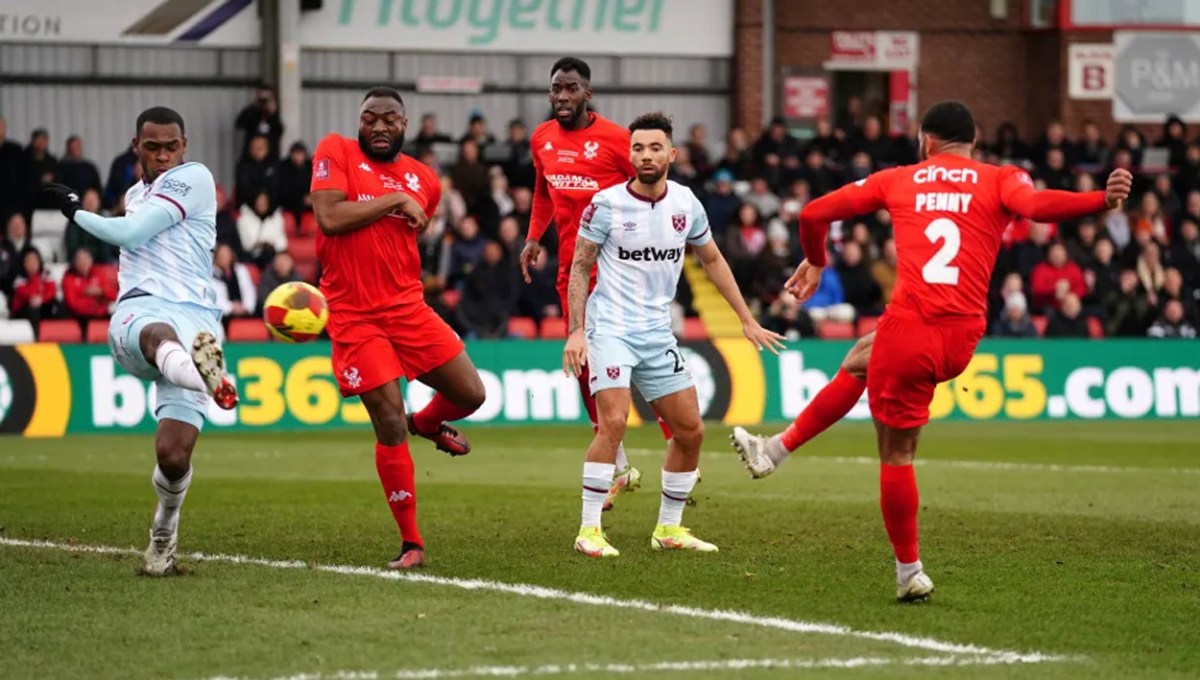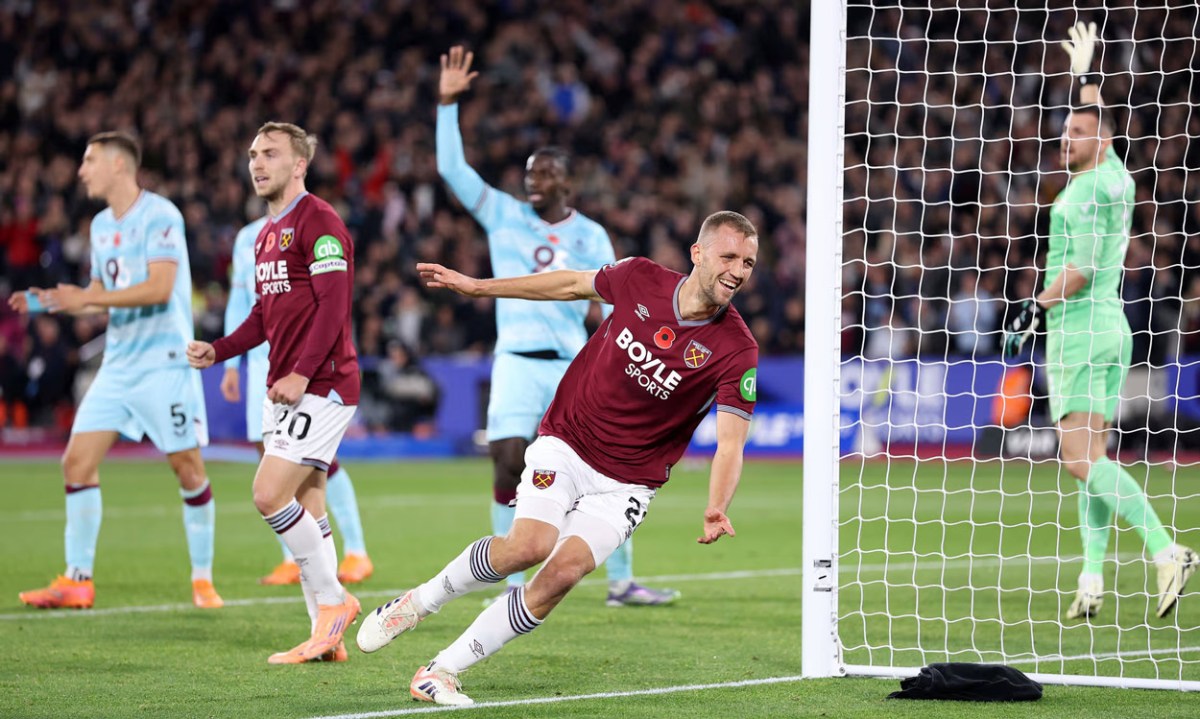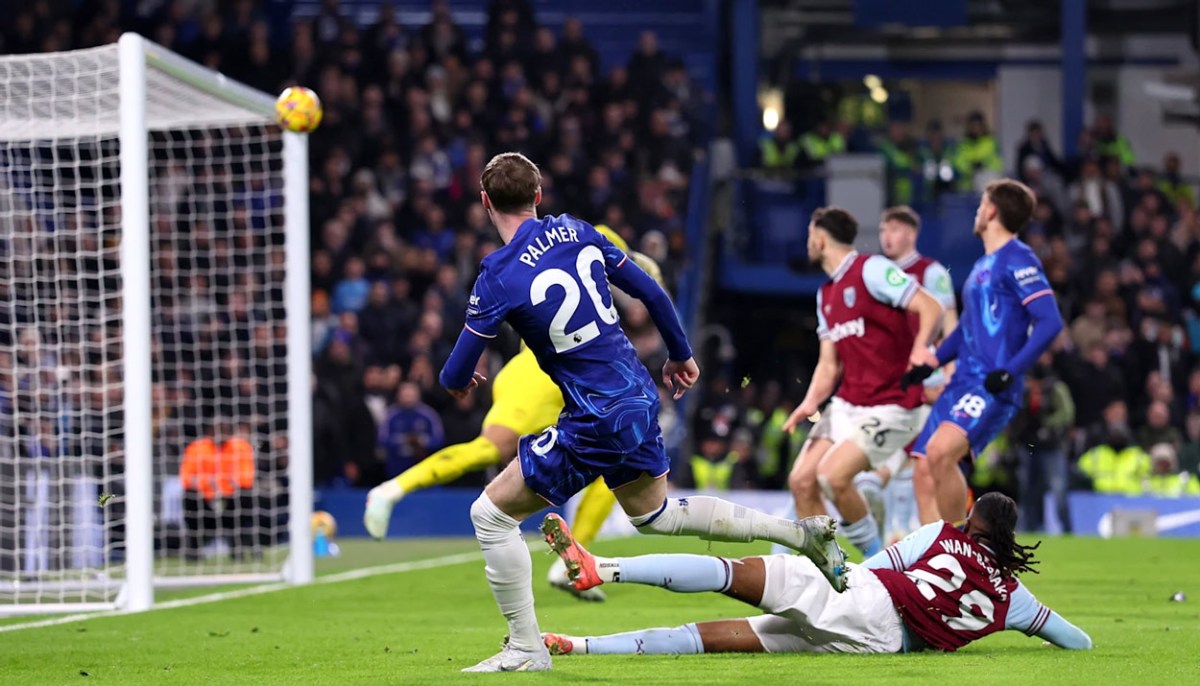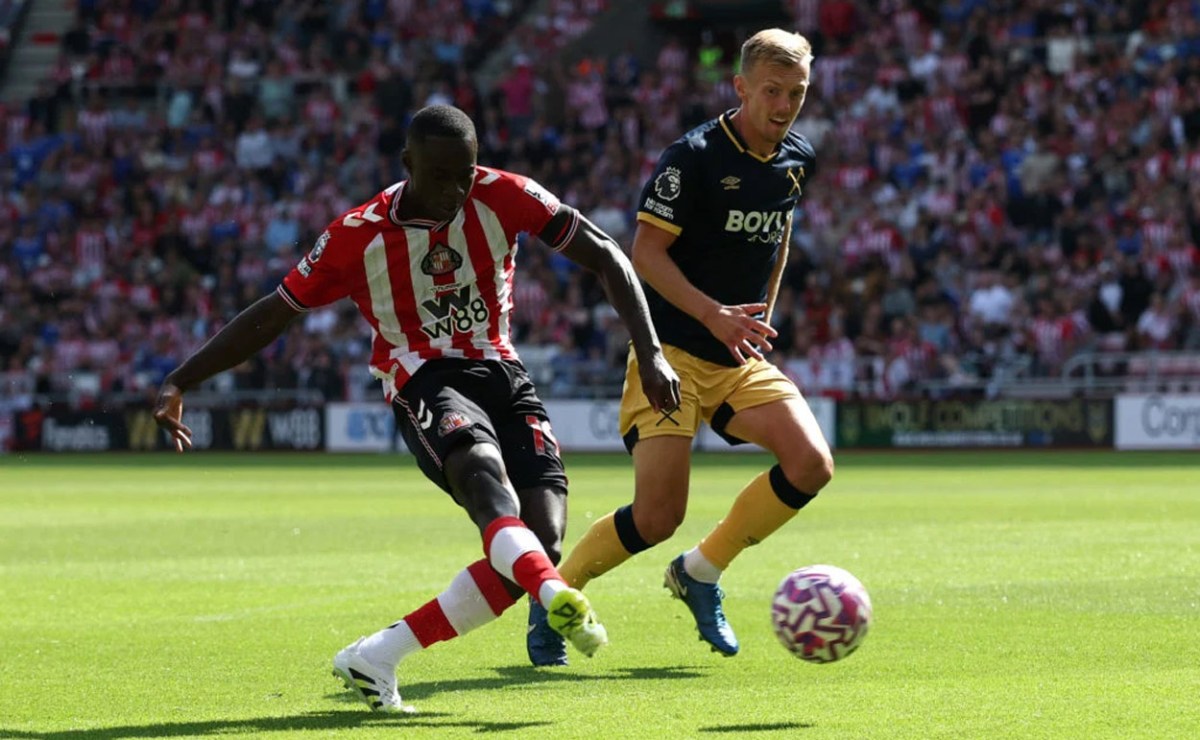
Can West Ham fix the leaky roof or will Sunderland rain on our parade?

Desperation meets ambition at the London Stadium in the early Saturday kick-off as West Ham fight for survival and Sunderland chase European dreams. The match is crucial for both sides; West Ham are fighting to escape the relegation zone, while Sunderland, newly promoted, are pushing for European qualification.

West Ham sit in 18th place in the league on 17 points, five points adrift of safety, which effectively could be six with our inferior goal difference. With just 16 games of the season left, closing the gap on 17th place quickly is important if we are to have any chance of avoiding the drop.

We ended a 10-game winless run with a 2-1 victory at Tottenham last weekend and also won against QPR in the FA Cup. But we have only one win in the last six home games; and we have conceded in 16 consecutive league home matches (going back into last season) and have no clean sheet in the last 19 Premier League games, conceding 44 goals this season, the worst defensive record in the Premier League.

In fact if you had visited the London Stadium to watch every game for the last one and a half seasons you would have only seen two games where the opposition failed to score a goal, a 0-0 draw against Everton in November 2024 and a 2-0 win over Leicester in February 2025 (our last home league clean sheet!). Surely we cannot go a whole year without keeping a clean sheet at home!

If you go back to the campaign before last (2023-24) we actually kept four clean sheets in the season! If you are looking for any kind of omen in that season we kept three clean sheets in a row either side of Christmas at the London Stadium just a few days after a 2-1 victory at the Tottenham Hotspur Stadium. Do you think we can do it again? No, nor do I. But can our defence finally lock the door, or will Sunderland find the spare key?

Sunderland have defied pre-season expectations and currently sit in 9th place on 33 points. They beat Crystal Palace 2-1 last weekend, ending a five-match winless run, and also progressed in the FA Cup. However they are winless in their last six away games and have struggled to score on the road. They have been solid defensively with the third-fewest goals conceded in the league, but they have not kept a clean sheet in four games.

We are desperate for points to escape the relegation zone. Our recent last minute win at Spurs has lifted spirits, but defensive frailties remain a major concern. Newly promoted Sunderland have exceeded expectations and are pushing for European qualification. However, their away form is a worry for them.

We can expect a tense, hard-fought encounter with goals at both ends. The most likely outcomes are a draw or a narrow win for either side, with Sunderland’s away struggles and West Ham’s defensive issues perhaps balancing the scales. Head to head we have lost just one of our last 12 Premier League home games against Sunderland, winning nine and drawing two, going down 3-0 in May 2011. We’ve won our last three all by the same 1-0 scoreline. But a fourth in a row would seem unlikely as we don’t keep clean sheets. But I’m hoping …. I’ve made a big play on our inability to not concede in this article and I’m desperately hoping to be proved wrong.

Sunderland are looking to complete the Premier League double over us for just the second time, previously doing so in 2010-11 when we were relegated. But our record at the London Stadium against promoted sides is very good, winning 16 of the last 21, drawing four. We haven’t actually lost at home to a promoted side for over four years, the last one was a 2-1 loss to Brentford in October 2021.

I’ve just got a feeling that maybe, just maybe, we are going to pick up three points again with a 1-0 or 2-0 victory. What are the chances of a Black Cat-astrophe for our visitors?

London’s Underachievers Collide. But with a gap that’s becoming too wide, and no place to hide, can West Ham turn the tide and be the better side when they visit Tottenham?

This London derby is usually a tense affair, with both clubs under immense pressure. Tottenham sit 14th in the Premier League, while West Ham are 18th and very deep in relegation trouble. Both managers, Frank for Spurs and Nuno for West Ham are under scrutiny, and defeat could have serious consequences for either side’s future, although Tottenham are not as deep in the mire as we are. Historically, Tottenham have the edge in this fixture, but both teams are struggling for form and confidence.

Tottenham are winless in 2026, with only one win in their last seven games. Their home form is poor, with just two wins in their last ten league matches at the Tottenham Hotspur Stadium. They were recently knocked out of the FA Cup by Aston Villa. West Ham are winless for even longer, in our last ten Premier League matches in fact, where six have been lost and four drawn. We are seven points adrift of safety, an almost but not yet impossible position. We cannot afford to fall any further behind and need to start closing the gap on teams above us quickly if we are to have any hope of avoiding the drop. Our only recent win came in extra time against QPR in the FA Cup. Defensive frailties are a major concern, with no clean sheets in 19 matches.

Tottenham will be without Richarlison (hamstring), Kudus (thigh), Kulusevski (knee), Maddison (ACL), Bentancur (hamstring), and Sarr (AFCON). Bergvall is also a doubt.  New signing Conor Gallagher is available and could debut, Romero returns from suspension. And both Solanke and Udogie are back in the squad.

West Ham will be without Mavropanos (neck), and Diouf (AFCON). Paqueta is doubtful (back, and supposedly unsettled anyway, did I read correctly that he has only provided one assist in the last two seasons?), and Fernandes (don’t think I’ve read why). Wan-Bissaka returns from AFCON and is likely to start at right-back. Kilman will probably partner Todibo in central defence?

Tottenham have struggled to score and win at home, but (I hate to say it) have a slight edge in quality and squad depth. Six of their seven league wins have come with a clean sheet. Their defensive record is shaky, but the return of Romero could help.

Our defensive issues are glaring, especially from set pieces (most goals conceded from corners in the league, a fact that we constantly are reminded of with every corner we concede when shown on TV). We have lost all six London derbies this season and have not won away in 11 games. However, clutching at straws, Nuno has a good personal record at Spurs’ ground from previous roles.

Most experts predict a narrow Tottenham win (2-1 is a common scoreline), but a draw is also seen as plausible given both teams’ struggles. This is really based on Tottenham’s home advantage, West Ham’s defensive woes, and the psychological pressure on both managers.

There is a real sense of crisis and frustration for the fans of both clubs, but more so for us as relegation is now an odds-on probability. I can’t remember where I read of the fixture being described as “The Underachievers Derby,” but it is very true with both sets of fans desperate for a positive result but realistic about the limitations of the teams this season. There’s also the continued speculation about managerial changes and the need for squad rebuilds at both clubs. How long have we needed a squad rebuild at West Ham?

In summary we head to the Tottenham Hotspur Stadium desperate to halt a winless Premier League run and close the gap on safety. With defensive frailties exposed and relegation looming, the pressure is mounting on Nuno and the squad. Injuries and absences have left the team stretched, but the return of key players may offer a glimmer of hope, especially as Tottenham are missing some key players. Despite a poor record in London derbies and away matches, we know that tightening up at the back and showing resilience could make a difference in this high-stakes clash. All of us as fans are craving a turnaround, but realism tempers expectations as we fight for survival against fellow underachievers. But unless we start to close the gap soon relegation will become an inevitability well before the end of the season, and this is the type of game where we must pick up something if we are to stand any chance of playing in the Premier League next season. It’s looking pretty hopeless isn’t it, but I try to be as optimistic as I can.

Margins, magic and misery; lines, laws and lost causes; offside, out of luck and out of time? West Ham’s fight for survival and the FA Cup’s fading romance

I’ll start by looking back at the Forest game in the week. West Ham thought they had doubled their lead early in the second half when Crysencio Summerville scored, but VAR intervened and ruled the goal out for offside. The controversy centred on Taty Castellanos, who was deemed offside in the build-up. The confusion for fans and pundits was heightened because the ball reached Castellanos after a block tackle by Forest defender Nikola Milenkovic. According to current offside law, a defender’s block or tackle does not reset the offside phase unless it’s a “deliberate play” (i.e., a controlled pass or clearance). In this case, Milenkovic’s intervention was not considered deliberate, so Castellanos remained offside, and the goal was disallowed. I would disagree. I believe that the intervention was deliberate (if it wasn’t deliberate then why was he trying to win the ball?) and that the goal should have stood.

Former referees and experts have criticised this interpretation, arguing that the law is too technical and fails to reflect the spirit of the game. The exact moment the ball is played is also notoriously difficult to judge, especially with frame-by-frame video, and the difference of a split second can mean a player is onside or offside by millimetres. The interpretation of deliberate or uncontrolled intervention is also impossible to judge. Surely it is deliberate if the defender is trying to win the ball?

The offside law was originally introduced in the 19th century to prevent “goal hanging”—players loitering near the opposition’s goal waiting for a pass. Over the years, the law has been revised several times (notably in 1925 and 1990) to encourage attacking play and make the game more exciting. However, the law now hinges on technical definitions of “deliberate play” and “active involvement,” which can be difficult to interpret even with video technology. Many (including me) have argued that it should be amended even further to the attacking team’s advantage. This could easily be done by introducing the clear daylight rule in that there has to be a gap between the attacker and defender before offside decisions are given. Let’s do away with this nonsense about parts of the body that can legitimately play the ball.

Many argue that the law is out of date and does not reflect the modern game, where split-second decisions and marginal offsides are decided by technology rather than the naked eye. The spirit of the law, to prevent unfair advantage, has been lost in a sea of technicalities.

Late in the match, Nottingham Forest were awarded a penalty after Alphonse Areola caught Morgan Gibbs-White in the face while attempting to punch clear a set-piece. VAR advised the referee to review the incident, and the penalty was given. West Ham midfielder Tomas Soucek labelled the decision “a joke,” arguing that such incidents happen frequently and that goalkeepers should be given more leeway when challenging for the ball. Former referee Mark Clattenburg, however, said the decision was correct because Areola failed to make contact with the ball and caught the player instead. I have always argued that penalties should only be awarded when an obvious goal scoring opportunity is denied which is not the case when so many penalties are awarded in football games.

Is VAR ruining football? VAR was introduced to eliminate clear and obvious errors, but its use has become far more pervasive. Instead of correcting blatant mistakes, VAR now scrutinises marginal offsides and subjective fouls, often leading to long delays and confusion. Fans and players complain that the flow of the game is disrupted, celebrations are muted, and the joy of football is diminished.

Should VAR only be used for clear and obvious errors? According to IFAB, the game’s law-makers, VAR should only intervene for “clear and obvious errors” or “serious missed incidents” in four match-changing situations: goals, penalties, direct red cards, and mistaken identity. However, in practice, VAR is often used for marginal decisions that require multiple replays. Many (including me) argue that if a decision needs to be viewed more than once, it cannot be “clear and obvious,” and the original on-field decision should stand. We shouldn’t have to wait so long for a decision to be made. These delays ruin the spontaneity of the game.

If the decisions had not gone against us the gap to Forest might now be just one point or perhaps four points. But our defeat to Forest leaves us seven points adrift of safety, with relegation odds now as short as 8/11 or even 1/5 with some bookmakers. The team is winless in ten matches, and the pressure on manager Nuno Espirito Santo is mounting. While mathematically possible, survival looks increasingly unlikely unless there is a dramatic turnaround in form, which is hard to see at the moment.

There have probably been games this season when controversial decisions have gone in our favour although I cannot recall any important ones. But these are not the reasons behind why we are very likely to be relegated. So often we put ourselves in situations where marginal calls become decisive, but a whole book could be written to describe why we are in the position we are where Championship football next season is probable. We’ve written about them all through this miserable season and I won’t return to them now!

West Ham host QPR in the FA Cup third round at the London Stadium on Sunday. I can remember when I was young there was magic and romance attached to the FA Cup competition right from the early rounds when local non-league clubs took part in the qualifying rounds, then when West Ham entered in Round 3 and all 32 games kicked off at 3 o’clock on an early January Saturday, and right up to Cup Final day itself in May. But has the magic and romance disappeared from the FA Cup?

The Premier League and UEFA Champions League now overshadow the FA Cup in terms of prestige, financial reward, and global attention. Top clubs often prioritise these competitions, fielding weakened teams in the FA Cup’s early rounds, which can diminish its importance and allure. The crowded football calendar means the FA Cup sometimes feels like an afterthought. Kick-off times are often dictated by TV schedules rather than tradition, making it harder for match-going fans to attend and reducing the sense of occasion.

The financial gap between Premier League and lower-league clubs has widened. The FA Cup’s prize money is modest compared to league placements or European qualification, reducing its incentive for bigger clubs. Having said that the big clubs are almost always the winners in the end.

Changes such as the abolition of replays and the moving of the final from its traditional Saturday 3pm slot have eroded some of the competition’s unique traditions, making it feel less special to some supporters.

Does the magic and romance still endure in any way? The FA Cup remains famous for “giant-killings”, when smaller clubs defeat Premier League giants, it still makes news. Recent years have still produced memorable upsets, such as Stevenage beating Aston Villa, Crawley Town thrashing Leeds, Plymouth Argyle’s shock win over Liverpool, and even yesterday when statistically we had the biggest upset of all time with sixth tier Macclesfield deservedly knocking out the holders Crystal Palace. These moments capture the essence of the competition and keep the romance alive. As West Ham fans we’ve been on the receiving end of so many of these giant killings in my lifetime!

As the world’s oldest national football competition, the FA Cup still carries a unique historical and cultural significance. For most fans and clubs, winning the FA Cup is still a dream and a source of immense pride. How we’d love to repeat 1964, 1975 and 1980!

For lower-league and non-league teams, the FA Cup offers a rare chance to play on a big stage, secure financial windfalls, and create lifelong memories for their fans. These stories, like non-league teams reaching the later rounds, are the heart of the FA Cup’s enduring appeal. The competition still inspires passion, especially in local derbies or when underdog teams are involved. For many, the “magic” is now more selective, shining brightest in these moments rather than universally.

Some fans and commentators argue that the FA Cup’s “magic” is now a cliché, used to paper over the reality that the competition has lost some of its former glory. Others point out that the romance is still there, but it’s harder to find amid the dominance of elite clubs and commercial pressures. There is nostalgia for the days when the FA Cup final was the highlight of the football calendar, but also recognition that the competition still produces drama, upsets, and moments of pure football joy.

The FA Cup may not hold the universal magic and romance it once did, especially for top clubs and younger fans raised on the Premier League and Champions League. However, for smaller clubs, traditionalists, and those who cherish football’s unpredictability, the FA Cup still provides unforgettable moments and upsets that keep its spirit alive. The “magic” hasn’t disappeared, it’s just harder to find, and perhaps more precious when it appears.

There was a time when I was young when I would have been really excited by this third round game against Queens Park Rangers and hoping that we would still be in the draw for the fourth round that I would listen to on the radio on the following Monday lunchtime, another tradition that has disappeared. But this season has been such a miserable one that my interest is much diminished. In times gone by there was always a hope that we could win a few games and reach Wembley. This time around I would love us to do this but I reckon there is less chance of us going to Wembley than escaping relegation. But it is so long since we won a game that it would be good to beat QPR (even a weakened QPR with several players out injured and chasing a play-off position in the Championship) and perhaps give some of our fringe players a run out to show what they can do (or not!). I remain hopeful!  

Relegation Showdown: Will Wolves Whip Up A Win or Will the Hammers Happily Hammer Home the Headlines and Head Home With The Precious Points

At Molineux’s ground, the tension will rise
Wolves and West Ham, both chasing the prize
The table looks grim for the Old Gold pack
Winless at home, with defenders pulled back.

Rob Edwards’ Wolves, at the foot of the league
Have struggled for points, they’ve shown their fatigue
Injuries, suspensions their squad’s looking thin
But hope springs anew when the Hammers roll in.

West Ham aren’t flying, we’re gasping for air
Away days bring trouble, our victories are rare
Nuno’s men, hungry, will look to attack
Who will join Bowen leading the pack?

Both teams have struggled to keep the back tight
Goals at both ends could light up the night
A draw seems likely, with goals at each end
But a single bright moment could see fortunes bend.

So gather your scarves and ready your beer
For Wolves v West Ham is so nearly here
A battle for points, for hope and for pride
Who’ll climb from the bottom? There’s no place to hide.

A few years ago Wolves won four on the spin
But just three from the last ten, they’re desperate to win
Last April Wolves triumphed, a one-nil delight
Can they light up the stands on this Saturday night?

West Ham at Molineux have found it quite tough
Five losses from seven; those fixtures were rough!
But two April victories (2021 and 2024),
just two wins that’s right!
Can the Hammers strike gold on this Saturday night?

From Promises to Peril: West Ham’s Premier League Future Hangs In The Balance

Can we turn our season around or is relegation now inevitable?

Saturday’s clash at the London Stadium is more than just another fixture—it’s a pivotal moment in West Ham’s season. The Hammers are mired in a relegation battle, sitting 18th in the table as we head into our 18th game of the season, and there’s no getting away from it, form and morale are at a worrying low. Forget all the talk about resurgence under Nuno, we are now six points adrift (if you take goal difference into account) and how many games have we won recently? Our last six league games have failed to produce a single win and just three points from three draws. That’s relegation form.

Fulham, meanwhile, arrive in better shape, unbeaten in their last ten London derbies and with a more balanced squad. They’ve won four of their last six league games, but in a tight division, although they are 13th in the table, they are just four points away from sixth place. Recent meetings have favoured Fulham, with West Ham winless in the last three encounters and suffering heavy defeats in previous derbies.

Predictions from analysts and betting sites suggest Fulham are favourites, with West Ham’s defensive frailties and lack of attacking threat making a home win unlikely. The Hammers have conceded in every home game this season and have one of the worst home records in the league.

Our struggles are rooted in a combination of poor recruitment, tactical confusion, and a lack of clear direction from the top. The club has cycled through managers—Julen Lopetegui, Graham Potter, and now Nuno Espirito Santo—without finding stability or a coherent playing style. The squad has been reshuffled, but new signings have failed to make a significant impact, and key departures (such as Declan Rice) have left a leadership void.

On the pitch, the problems are clear, defensive lapses, especially at set pieces and in aerial duels, players out of position leading to a lack of cohesion, poor discipline with a high number of fouls and cards and a worrying inability to convert chances into goals. The atmosphere at the London Stadium has also suffered, with fans feeling disconnected and apathetic, further compounding the team’s lack of confidence.

Who is to blame? While managers have taken much of the criticism, expert analysis and fan sentiment increasingly point to the board, particularly David Sullivan and Karen Brady, as the root cause. Poor decisions in the transfer market, questionable managerial appointments, and a lack of long-term strategy have left the club adrift. The recruitment failures and boardroom mismanagement are more to blame than the managers themselves. The club’s identity has been eroded since the move to the London Stadium and promises of a “world-class team” have not materialised.

There’s also blame to be shared among the players, who have not performed to their potential, and the managers, who have struggled to impose a clear tactical identity. However, the underlying structural issues mean that even talented individuals have been unable to thrive.

The importance of retaining Premier League status and the financial and sporting consequences cannot be underestimated. Relegation would be catastrophic for West Ham. The club stands to lose up to £120 million in revenue from TV rights, ticket sales, and sponsorships if we drop to the Championship. This would not only impact the ability to attract and retain top players but could also lead to further instability and decline.

The Premier League’s financial gap with the Championship is ever-widening, and survival is essential for maintaining the club’s profile, competitiveness, and future prospects. The new financial regulations (Squad Cost Ratio) will also make it harder for clubs to recover from relegation, increasing the stakes for West Ham.

Historically, teams in 18th place at Christmas have survived two-thirds of the time, but the odds are against those in the bottom three. Our situation is precarious, but not yet hopeless; recent seasons have seen dramatic escapes, but only with decisive action and improved performances.

Saturday’s game is beginning to look like a must-win for West Ham. Unless we turn recent results around in the next six games (which are as winnable as it gets in the Premier League) then we can start to prepare for trips to Blackburn, Swansea and Wrexham and, dare I say it, Millwall (that’s if they don’t change places with us!). The team needs to show resilience, tactical discipline, and attacking intent to have any hope of climbing out of the relegation zone. The board must act decisively in the January transfer window, addressing squad weaknesses and supporting the manager. Above all, the club needs unity—between fans, players, and leadership—to avoid repeating the mistakes of the past and secure our Premier League future.

If West Ham fail to turn things around, the consequences will be severe—not just for this season, but for the club’s long-term health and identity.

Merry Christmas everyone!

Miracles, Memories and Missed Bets: Reliving some of West Ham’s greatest moments against Manchester City

West Ham travel to Manchester this weekend to face City, and while I’d love to believe in an upset, history and current form make that hard to imagine. City are unbeaten in their last 19 Premier League games against us, winning 16, and we’ve lost 15 of our last 16 away games there. The only exception was in the final Boleyn season, when we managed a 2-1 win in September 2015, with Victor Moses and Diafra Sakho scoring before De Bruyne pulled one back just before half time. We held on for a famous victory that day.

City don’t show mercy to teams in the relegation zone; it’s been 46 games since they last lost to a team starting the day in the bottom three, and they’ve won the last 14 of those, scoring 43 and conceding just 7. If you’re hoping current form might give us a chance, City have won five of their last six league games to climb into second place, just two points behind Arsenal, while we’ve only managed one win in our last six, though we have picked up three draws.

Rather than dwell on the chances of an upset, I find myself reminiscing about the times we’ve managed to get the better of City. I sometimes like a small wager on the football, and over the years I’ve had my share of luck and disappointment. One memory stands out from 23rd March 1996, when City were struggling near the bottom of the table. I fancied a bet on the correct score and thought the odds on us winning 4-1 at 80-1 were too good to pass up. We had seats in the old West Stand lower, and I remember Ludo saving an early penalty from Kinkladze. Iain Dowie scored with a header for 1-0 at half time, and in the second half he added another from a corner. City pulled one back after a blunder from Ludo, but then Julian Dicks smashed in a screamer from 30 yards for 3-1. I started to believe my bet might come in, and when Dani tucked away a fourth, I was already counting my winnings. But in the dying seconds Niall Quinn scored for City, and the game ended 4-2. So near and yet so far – a terrific game, and a great result, but just a little personal disappointment at the end.

That wasn’t the only time fate played a hand. In the 2000-01 season, on Remembrance Day, I told colleagues about my unlucky 4-2 betting tale and fancied another go at 4-1. The new stand was under construction, and strong winds delayed kick-off. I forgot to place my bet, and as it turned out, despite being a goal down at half time, we won 4-1 again with a last minute Di Canio penalty. This time, missing the bet meant missing out on £165, as the odds had dropped to 33-1.

Among my earliest football memories is the 1959-60 season, when we beat City 4-1 during a run of eight wins in ten games. In 1962-63, we thrashed City 6-1 twice, home and away, and in 1966, shortly after England’s World Cup win, we beat them 4-1 at Maine Road with goals from Ron Boyce, two from Geoff Hurst, and Martin Peters. In 1968, we beat City 2-1 at Upton Park with two classic near-post headers, and perhaps the most famous game came in March 1970 on a mudbath of a pitch at Maine Road. Jimmy Greaves scored twice on his debut, but the highlight was Ron Boyce’s volley from 50 yards, and we won 5-1. In 1982-83, we beat City 4-1 again early in the season, and once more, City were relegated that year.

I haven’t had a correct score bet on a West Ham v Manchester City game since that day in 1996, almost 30 years ago. The odds for a 4-1 West Ham away win this weekend are 200/1, and just to win by any score is around 12/1. I think I’ll keep my fiver in my pocket this time. As much as I’d love to believe in a miracle, history suggests otherwise – but football is nothing if not unpredictable, and memories of those famous wins remind us that anything (however unlikely!) is possible.

From Upton Park Thrashings to Where We Are Now. The changing fortunes of West Ham and Aston Villa (part two)

Ten years ago we were about half way through the final season at the Boleyn Ground. Geoff and I were writers on the West Ham fanzine Over Land And Sea which was sold outside Upton Park. During that season I was writing my book Goodbye Upton Park, Hello Stratford. In the book I wrote a chapter to precede each fixture and another to review the game after it had been played. I thought that as Villa were our opponents this weekend I’d look back at what I wrote then. The game was played on 2nd February 2016.

Ten years is a long time in football. In yesterday’s article I looked back at previous fixtures against Villa that I remembered. At the time we were riding high in the Premier League and they were bottom. Contrast that to the present where we are in the relegation zone and they are third having won their last five games in a row and are now just three points behind league leaders Arsenal.

Today’s article is the follow on chapter which reviewed what actually happened. What especially made me smile was where I wrote about Villa in freefall, a club in decline, in a downward spiral, and made comments about their ownership. West Ham finished seventh that season and qualified for the Europa League. Villa finished at the bottom with just 17 points, 22 points adrift of safety. Oh how times have changed. As I said, ten years is a long time in football!

2 February 2016 – The Villain of the Piece West Ham 2 Aston Villa 0

For a quarter of an hour Aston Villa belied their lowly league position several points adrift at the foot of the table and probably had the better of the early exchanges. They might have even been awarded a penalty when the ball struck the outstretched arm of Antonio when Agbonlahor attempted to cross the ball but referee Moss waved the appeal away in dramatic fashion. You know the way some referees do; they make an exaggerated crossing of their arms in front of them to signify that they are aware of a potentially contentious decision that they are about to make by denying an appeal of the players and crowd. It wasn’t his final theatrical wave of the arms in the evening as there were others to follow, normally when denying that a foul had been committed, usually upon one of the home players.

My friend John sent me a text message that said that Howard Webb (on BT Sport’s coverage on TV) had disagreed with the referee (another unusual occurrence) and felt that the penalty should have been awarded as Antonio’s arms were not in a natural position. I have since looked at the laws of the game and, in respect of hand ball I could find nothing about arms being in unnatural positions. I have written before about the constant debates over hand ball decisions (almost always occurring in the penalty area) and suggest that some clarity must be forthcoming to ensure some form of consistency.

Then for some inexplicable reason Jordan Ayew took exception to being closely marked by Cresswell and deliberately swung an elbow into our left back’s face in full view of many in the crowd. The referee obviously hadn’t seen it but his assistant had (for once) and drew his attention to it. The referee didn’t hesitate to theatrically flourish the red card from his pocket and Ayew had to go. Why do footballers do this for no apparent reason? It shows the complete lack of a brain. Even if the officials hadn’t seen it there are so many cameras around these days that their stupidity is picked up on camera and retrospective punishment is meted out after the game anyway.

Up until that point Villa would have been in with some sort of chance in the game as West Ham had in the early stages continued in the form that they showed a few days earlier at Anfield, that is to say not impressively. I could not understand the delight and cheering of the crowd as Ayew slowly made his way off the pitch. I hate watching eleven versus ten. It doesn’t make for good entertainment and so it was to prove for the remainder of the first half as we struggled to open up any spaces in the Villa defence. They had pulled everybody back deep into their own half, surrendering any form of attacking initiative, and hoping to play out 75 minutes for a 0-0 draw. In their perilous position one point wouldn’t really have been much of a result for them, only slightly better than none at all, although I was surprised by their total lack of ambition.

Payet looked to be the only one who had the necessary creativity to create a chance, but he was below his imperious best. Noble was the main instigator of our attacks but we were constantly thwarted and had to move the ball across the pitch and back again in an attempt to get through. How we could have done with the additional guile of Lanzini in a game like this. Towards the end of the half Valencia headed the ball over when it seemed easier to score but, apart from that the first 45 minutes were massively disappointing.

Our back four must have had more touches of the ball in the opposition half than ever before, but there were no incisive passes, it was just safely moving the ball across amongst themselves, occasionally Noble and Song retreating to join them. Villa continued to waste time, especially at throw-ins and at goal kicks where their keeper decided to slowly walk across to the opposite side of the six yard box, place the ball down as if he was handling a precious object and then hesitate before finally sending the ball back into play.

I’ve raised this point before, but I was interested to see how much time the referee was going to add on at the end of the first half to make allowance for the sending off and time wasting. It should have been at least five minutes but I wasn’t surprised to see the (almost mandatory) number one on the fourth official’s board, indicating that the referee had paid total disregard to proper timekeeping and was just adding one minute at the end of the first half. Shocking. My previous writing about the need for an independent timekeeper in the stand, stopping and starting the clock appropriately came to mind. Why can nobody else, especially the authorities see this?

In so many games this season we have begun the second half in lethargic fashion, but this time we were definitely showing more urgency and moving the ball quicker. The breakthrough eventually came with about half an hour to go when a long through ball from Noble was met by the head of Antonio. Everything seemed to be in slow motion as his header appeared to be going wide and the Villa keeper was almost rooted to the spot, probably also believing that it was missing the target. But it nestled into the bottom of the net to the great relief of the home crowd. Some reports afterwards suggested that he may have been marginally offside, but I refer once again to my previous writing. It would only take seconds for a video replay to confirm or deny this, but we don’t use video to help the officials so their instant decisions are always the ones that stand.

Villa at this point would have nothing to lose and I felt, with half an hour to go, that they would press forward to try for an equaliser. Such was their ineptitude that nothing changed. They seemed to be content with a 1-0 defeat, pulling all players back behind the ball and showing no signs of adventure whatsoever. In fact, I reckon they had forgotten about our goal, as they (especially the keeper) inexplicably continued to waste time. They only really moved players forward with a few minutes to go, and this was their undoing for our second goal. Valencia broke from deep inside our half and was unchallenged as he ran towards the Villa penalty area before releasing a perfect pass to Kouyate who had admirably kept pace with him. Our box to box midfielder finished with aplomb and the game was all over.

Two other really good incidents in the second half shouldn’t go unreported. Firstly, an impudent free kick from a wide position by the relatively quiet Payet struck the outside of the woodwork. Secondly, a long corner kick by Payet to the opposite side of the pitch was inch perfect and met with great technique by Noble on the volley bringing out an excellent save from the Villa keeper. A move right out of the training ground as they say. Villa were poor and will undoubtedly finish the season in bottom place. They are a club in free-fall and I wouldn’t be surprised to see them in League One the season after next unless something drastic is done to halt their steep decline. They certainly won’t be visiting us in Stratford in the foreseeable future. It just goes to show how even famous clubs can go into a deep downward spiral when ownership falls into the hands of disinterested or incompetent foreign owners who don’t really understand the game, and don’t appoint competent executive management.

So, not a particularly entertaining evening, we certainly weren’t at our best and many passes and attempted moves did not come off. But the three points kept us in contention in sixth place, just a point behind Manchester United, and still only six points away from the top four. Of course we aren’t going to trouble the top four teams in the remaining games but it would be good to overtake United and finish fifth. We have opened up a five point gap ahead of the teams below us, but it will be important to pick up points in the next two away league games at Southampton and Norwich to maintain the possibility of qualification for the Europa League.

Leicester continue to march on relentlessly at the top and they beat Liverpool 2-0 with goals from Vardy, the first being a wonderful strike and contender for goal of the season. Manchester City were apparently fortunate to hold on to a one nil win at Sunderland (who are our next visitors in the League at the end of February – looking forward to seeing Big Sam again!). Arsenal blew their chance of keeping up the pressure at the top by drawing 0-0 at home to a Southampton whose returning goalkeeper Forster apparently made a number of world class saves. Wenger had a bust up with both the referee and the Saints manager after the game. This is becoming the norm these days. Every time Arsenal don’t win Wenger seems to lose the plot falling out with all around him, blaming everyone else. Surely he is approaching the end of his time in the Arsenal manager’s chair? Although perhaps not? He seems to be untouchable in the eyes of the Arsenal board, but despite his past achievements in the early years of his management of the club, he seems unable to get a really good team to become Premier League champions again. Perhaps he will prove me wrong in the final games of the season? I really thought that this was their best chance of winning the league for many years, but even Tottenham have now overtaken their North London rivals with an impressive 3-0 win at Norwich to keep up their chances of finishing at the top.

From Upton Park Thrashings to Where We Are Now. The changing fortunes of West Ham and Aston Villa (part one)

Ten years ago we were about half way through the final season at the Boleyn Ground. Geoff and I were writers on the West Ham fanzine Over Land And Sea which was sold outside Upton Park. During that season I was writing my book Goodbye Upton Park, Hello Stratford. In the book I wrote a chapter to precede each fixture and another to review the game after it had been played. I thought that as Villa were our opponents this weekend I’d look back at what I wrote then. The game was played on 2nd February 2016. Ten years is a long time in football as you can see from my article written then when I looked back at previous fixtures against Villa that I remembered. At the time we were riding high in the Premier League and they were bottom. Contrast that to the present where we are in the relegation zone and they are third having won their last five games in a row and are now just three points behind league leaders Arsenal. Tomorrow I will publish the follow on chapter which reviewed what actually happened.

Going Down, Going Down, Going Down West Ham v Aston Villa – Before The Game (as published prior to the game in 2016)

On 9 January I recalled my earliest vague West Ham memories at the start of the 1958-59 season. We had won away at Portsmouth on the opening day, and then we beat the champions Wolves in the first home game under floodlights. The next game was our first Saturday home game of the season against today’s opponents, Aston Villa. We gave them quite a thrashing, 7-2! All of our goals were shots from outside the penalty area apparently and we also hit the woodwork several times. Incidentally Villa were relegated that season. It is rare to get a score like this in the modern game, but at the time in my earliest football recollections it wasn’t that unusual for big scores. In that first season we had league games at Upton Park that finished 6-0, 6-3, 5-1, 5-3, 4-3, 4-2 and I was disappointed when we didn’t win a game scoring lots of goals. As a four year old I thought it was the norm.

Just over a week later after beating Manchester United in another night game we were top of the league six games into the season. My football team headed Division One. Once again I thought it was the norm! I was disappointed that by the end of the season we had dropped to sixth! Never mind, I thought we would probably win the league the next season. 58 years on and I am still waiting! I was desperate to go to see a game live but that wish wasn’t fulfilled until a couple of months later.

A lot is made of the cost of going to football these days, especially the admission prices considering the vast TV money that comes into the game which should, in theory, enable clubs to keep down entrance costs. It is all relative of course but you may be interested to know what it cost to watch West Ham in that first season back in the top flight. Promotion the previous May had enabled the board to increase ticket prices for the 1958-59 season to: North and South Bank 10p, Chicken Run 15p, West Stand Lower (standing) 17.5p, and in the West Stand you would pay between 22.5p up to 37.5p for the best seats. Children had concessionary prices in the North and South Bank at 5p. The cost of the programme rose from under 2p to 2.5p. Some rough equivalent prices at the time were Milk 3p pint, Bread 2p loaf, Beer 4.5p pint, Petrol 2p per litre. You can do the maths to decide whether we get good value now compared to then. I’ve converted the prices to the current currency – at the time we used pounds, shillings and pence. It is frightening to think that in a couple of weeks it will be 45 years since we made the change to the current decimal currency system (it happened on my dad’s 46th birthday). Anybody reading this under the age of 50 will not really remember the old system, with 12 pence to the shilling and 20 shillings to the pound.

Villa returned to Division One a couple of seasons later and they were our visitors in the first game of the season, but this time we could only beat them 5-2! By the time we met them in March 1966 we beat them 4-2, with Geoff Hurst scoring one of our goals to celebrate his international debut just a week before. Martin Peters was still two months away from winning his first international cap. It’s amazing to think that at the end of that season they were so instrumental in England winning the World Cup. Can you imagine a modern scenario of a footballer who hasn’t yet played for England making his debut in the next three months and then scoring all the goals in the final of Euro 2016?   

I can’t recall anything much of note in Villa games from then until our FA Cup quarter final in 1980, when as a second division club over 36,000 crammed into Upton Park to see us win 1-0 with a coolly taken late penalty from Ray Stewart. With my friend Geoff we were season ticket holders in the West Stand B Block that season, which was particularly useful for getting into this game, as well as getting tickets for the subsequent Wembley final. The Villa game was an “all-ticket only” match which was quite unusual in those days when paying at the turnstiles was the norm for most games. 20,000 standing tickets were on sale to fans queueing at Upton Park on the Sunday before the game as postal applications were not allowed. Obviously this was not especially convenient for those supporters who lived some distance from the ground, but 36 years ago this was perhaps less of an issue than it would be today. In an attempt to be helpful the club decided to allow two tickets per applicant so that only one fan had to attend rather than the fan and his friend. This led to ticket touts having a field day on the day of the game. Well done West Ham!

In the record breaking league season of 1985-86 we beat them 4-1 with two goals from McAvennie and two from Cottee. McAvennie scored quite a few goals for us in his two spells at the club, especially in this season when he scored 26 league goals, a figure that hasn’t been bettered in a single season since. He frequently scored a brace of goals (don’t you just love that phrase when used for goal scoring) but didn’t manage a hat-trick until his very last game for us when he came on as a substitute against Nottingham Forest in 1992.

When this fixture was played in October 1985 (just 12 games into the season) Manchester United were unbeaten and running away with the league with 11 wins and a draw giving them 34 points and a ten point lead from Liverpool in the title race. We were 17 points off the pace in eleventh so it is incredible how we got so close to winning the league. Considering we had a 17 point deficit and then finished 8 points ahead of United means that there was a 25 point turnaround with them in the last 30 games of the season! They finished fourth in the end losing ten of their final 30 games, quite a decline after such an outstanding start.  

It is easy to forget in the current climate of capacity crowds at Upton Park that the game was in the doldrums in the mid-1980s in terms of spectator numbers. Just 15,000 were there to see the Villa game in October 1985, and there had been three even lower league attendances than that prior to the game that season. As the season progressed and we were challenging for the title the numbers began to rise into the 20,000s, but it wasn’t until our final home league game on a Wednesday night in April against Ipswich that 30,000 was exceeded for the first time. The attendance didn’t even reach 20,000 for the visit of Liverpool who ended the season as champions.

With just a few days of the twentieth century remaining on a Wednesday evening shortly before Christmas we experienced another of those incidents that was so West Ham. We played Aston Villa in the quarter final of the League Cup. The score was 2-2 with just a few minutes of extra time remaining when Harry Redknapp sent on Manny Omoyinmi as a late substitute. He barely touched the ball and the game was decided on penalties which we won 5-4 to take us into the semi-final. Omoyinmi didn’t take a penalty so he had no influence on the game whatsoever.

However there was one big problem. He had been out on loan earlier in the season and had played in the League Cup for Gillingham and was therefore ineligible to play for us in the competition that season. The Football League ordered the game to be replayed and of course we lost when it was played in January, despite leading late in the game and Di Canio missing a penalty in extra time (the only penalty he ever missed in a West Ham shirt I believe). Rules are rules I guess. The League had the power to throw us out of the competition but at least gave us another chance. Omoyinmi never played for us again and two club administrators resigned as a result of the incident.

Incredibly it wasn’t the first time we had played an ineligible player that season! In the UEFA Cup we played Igor Stimac in a game when he shouldn’t have played because he had a European ban outstanding from his days before joining us. We got away with that one as UEFA admitted fault saying they didn’t tell us he was ineligible. We were lucky that time but not when we played Aston Villa. Does it only happen to us?

In the past ten years or so there is little to recall. Goals have dried up since Marlon Harewood scored a hat-trick in one of the season’s early games in our return to the top flight in 2005. In fact since that day, in our last eight league games at Upton Park against Villa we have managed just seven goals. Last season we met them when we were in the middle of a superb pre-Christmas run which yielded just one defeat in eleven games, but the game finished 0-0.

So what will happen in tonight’s game? In theory we should give them quite a hammering given their abysmal form this season. They are surely on their way down to the Championship. But we only drew with them at Villa Park on Boxing Day. This is West Ham remember. You never know. I’d love to see a return to the fifties or sixties tonight. 4-2? 5-2? Or even 7-2? Perhaps not, but a good entertaining game with a few goals and three more points would do nicely.

Can West Ham break the Brighton curse? Will the Seagulls soar or the Hammers strike? The Sunday showdown at the Amex.

West Ham United visit Brighton & Hove Albion at the Amex Stadium this Sunday, with both sides seeking to improve their fortunes as the season approaches its midpoint at the end of the month. Historically, Brighton have dominated this fixture, losing only once in 16 Premier League encounters with West Ham (seven wins, eight draws), with our sole win coming in August 2023. West Ham’s win rate against Brighton stands at just 6%, our lowest against any opponent faced more than twice in the competition. Brighton have also scored more Premier League goals against West Ham (31) than against any other side, and only Manchester United (8 times) have been beaten more often by the Seagulls than the Hammers (7 times).

Brighton enter the match in solid form, having won three of their last six league games. Their recent results include victories over Leeds (3-0), Brentford (2-1), and Nottingham Forest (2-0), a draw with Crystal Palace (0-0), and a 4-3 defeat to Aston Villa and a 4-2 loss to Manchester United. The Seagulls have shown attacking prowess but also some defensive frailties, scoring 12 goals and conceding 9 in this period. For the season to date they have won 6, drawn 4 and lost 4, 24 goals scored and 20 conceded, and sit in seventh place with 22 points prior to this round of matches. But the table is so congested they are just two points below Chelsea in fourth and three points above Bournemouth in fourteenth.

West Ham, meanwhile, have struggled for consistency throughout the season. In our last six matches, we have shown an upturn and recorded two wins (3-1 vs Newcastle, 3-2 vs Burnley), two draws (2-2 vs Bournemouth, 1-1 vs Manchester United), and two defeats (2-1 vs Leeds, 2-0 vs Liverpool). The Hammers have scored 10 goals and conceded 10, highlighting defensive vulnerabilities that have plagued our campaign. For the season as a whole we have won 3, drawn 3 and lost 8 giving us 12 points with 16 goals scored and 28 conceded. Only Wolves (29) have conceded more. As a result we sit in the relegation zone in 18th place, two points adrift of 17th placed Leeds.

Brighton’s squad is stretched by injuries, with Tzimas, Milner, March, and Webster ruled out. Mitoma, Ayari, Watson, and Rutter are doubtful. Danny Welbeck, who has scored six Premier League goals against West Ham, is expected to lead the line, supported by the creative talents of Minteh, Gruda, and De Cuyper.

According to Nuno West Ham welcome back Lucas Paquetá after suspension (but not welcome back for me!), which he believes should bolster our midfield creativity. However, we remain without Igor Julio, Oliver Scarles, and possibly Crysencio Summerville. Callum Wilson, with eight goal contributions against Brighton, will be a key attacking threat, while Jarrod Bowen continues to be our most potent source of goals and assists, although his form appears to have dipped of late. So many of his shots are either missing the target or are getting blocked.

Our last game in midweek was a deserved 1-1 draw at Old Trafford. Personally I was impressed by the efforts of the team as a whole, particularly the performances of Magassa, Wan Bissaka, Potts, Fernandes and Todibo. At last we are getting greater pace and mobility in midfield but I didn’t understand the selection of Soucek and the position he was asked to play; I would have liked to see Earthy given his opportunity to add further mobility to the middle of the pitch. And I couldn’t understand why there was such a delay in making substitutions when we were a goal down either.

Some of the points from Nuno’s conference on Friday: he confirmed Lucas Paqueta is “going to play” from the start after serving his one-match suspension for his red card against Liverpool. Asked if he had any concerns over Paqueta’s dissent, Nuno added: “I already spoke about that. It is in the past. I am positive it will not happen again because he personally admitted his mistake. We spoke about it in the dressing room. I am positive it is over and it will not be repeated.” We shall see!

On Crysencio Summerville’s fitness: “Hopefully returns soon. We miss him. We know what he gives to the team. Let’s see. We need all the players. I hope he can be back. I hope Oliver Scarles can join the team. We are going to need him because we lose our full-backs to Afcon.”

Nuno believes the midfield unit is “slowly progressing in knowledge and complicity”, adding: “Energy. They are all very young. They are growing together. They are slowly understanding the specifics. This is what makes a good midfield. You can’t be an individual. You can’t put two players together and expect them to click immediately.”

Being in the bottom three: “We cannot avoid it. It is a reality. We have to face it. We are fighting for survival. We cannot hide it. The results of other teams we cannot control. It is up to us.” Nuno says he is “slowly trying to fix” our poor record of defending set-pieces and we are now “trying to take advantage of offensive corners” like the one we scored from against Manchester United on Thursday. He added: “We know how important set-pieces are in the game. They are basic and fundamental for any kind of team. Working, working, working. Repeating, repeating. Trying to find the consistency of delivery, trying to mark the strong opponents we will find. The blocks are important. Alphonse got a big help with that also.”

Only Aston Villa have won more points from losing positions this season. But not too many teams fall behind as often as we do! “Everybody in the club is realising we have to give the best of everything. We have to give the best of us to get out of this situation. That is the reality. A club like us, as big as we are, we have to face the situation so we can go out. It is hard to build with urgency but the boys are committed and we think we can do it.”

Brighton have been particularly effective at home, scoring at least twice in each of their last six Premier League matches at the Amex. Their attacking rhythm and possession-based style have yielded results, though defensive lapses remain a concern for them. Under Nuno Espirito Santo we have shown some resilience but lack stability, especially at the back, having failed to keep a clean sheet in our last 11 league games.

Given Brighton’s historical dominance in this fixture, their strong home form, and West Ham’s defensive frailties, the Seagulls are favourites. We can expect an open contest with chances for both sides, but Brighton’s attacking cohesion and home advantage could prove decisive. A high-scoring affair is likely, with Brighton tipped by the bookmakers and most pundits to edge the match. I’d love to think we can surprise them but hope that we can at least add to our recent tally of drawn games and get a 2-2 draw. What are the chances?

West Ham with seven points from their last three games entertain Liverpool who have three points from their last seven games

When we were five games into this Premier League season, the reigning champions Liverpool sat at the top already holding a five point lead. They had won all five games, albeit with some very late winning goals, and had 15 points, five clear of second placed Arsenal. They had scored 11 goals and conceded five and were odds on favourites even at that early stage to retain their title. What has happened next has taken almost everyone by surprise.

We are now 12 games into the season and their five point lead just seven games ago has not just disappeared but they have tumbled down the league table and now are twelfth with 18 points, 11 points off Arsenal at the summit, meaning just one win and six defeats in those games (with nine defeats in their last 12 games across all competitions). They have scored 18 goals and conceded 20 in the Premier League to date. These games include some heavy defeats to Manchester City (0-3), Nottingham Forest (0-3), and PSV Eindhoven (1-4 in the Champions League).

Defensive frailties have been exposed, with Liverpool conceding three goals in three of their last five matches. Injuries have compounded their woes, with Hugo Ekitike, Florian Wirtz, and Jeremie Frimpong all doubts for this weekend’s game, while Alisson Becker faces a race to be fit.

Apparently, it is Liverpool’s worst run since 1953. And what odds would you have got when they were comfortably leading the league that by the end of November Arne Slot would be second favourite at around 2/1 (Daniel Farke is the odds-on favourite) to be the next Premier League manager to be leaving his post? Quite an astonishing turn round that everybody seems to fail to understand the reason why.

And after all that they now face the mighty, massive Hammers at the London Stadium! West Ham come into this fixture unbeaten in their last three Premier League games, having picked up seven points from matches against Newcastle (3-1 win), Burnley (3-2 win), and Bournemouth (2-2 draw). Our seven points from those three Premier League games in November exceeds the four we managed in August, September and October combined. It could have been nine points if the manager had gone about substitutions in a different way at Bournemouth where we surrendered the initiative after holding a two-goal half time lead. (I’ll leave you to review Geoff’s analysis of that game – I’ll say no more here.)

We seem to have found new energy under Nuno Espirito Santo with his (in my opinion) improved team selections in the last three games, with Callum Wilson in fine form, scoring twice against one of his old clubs last weekend. Always a fine goalscorer but why was he hauled off so early? I remember the days when the same eleven who started the game ended it too! Lucas Paqueta returns from suspension (I have mixed feelings about this), and Crysencio Summerville is expected to be fit, boosting our attacking options. We have also recorded back-to-back home wins for the first time this calendar year, and our attacking play has notably improved, scoring eight goals in our last three league matches (compared to seven in the previous nine). However, I still have my reservations about our new manager. Team selections and substitutions mainly but I hope he proves me wrong and is successful in taking us up the table.

Liverpool have dominated this fixture historically, winning 86 of the 153 competitive meetings, with West Ham claiming 29 wins and 38 draws. In recent years, Liverpool have won five of the last six encounters, including a 5-0 thrashing at the London Stadium last December and a 5-1 EFL Cup win. West Ham’s last home victory over Liverpool came in November 2021 (3-2), (didn’t Mr. Klopp blame the bubbles?) but that remains our only win in the last 20 attempts.

The fixture tends to produce goals, with both teams scoring in many recent meetings. Liverpool have scored 25 goals in their nine Premier League visits to the London Stadium against West Ham, including a 5-0 win in this fixture last season. Indeed, Man City (28) and Arsenal (26) are the only visiting sides with more goals at the ground.

Liverpool have lost each of their last five away league games against London sides, as many as in their previous 31. They last had a longer losing run in the capital between September 1952 and April 1954 with eight.

Current form favours West Ham (something that isn’t usually the case when we face Liverpool!). History favours the Merseysiders and bookmakers make them odds on favourites to win the game. I hope we can inflict more pressure on Mr Slot and boost our own position in the table with three points. However, I note that Liverpool are the only Premier League team to have not shared the points in any of their twelve league games so far this season. They haven’t drawn any of their five Champions League games either nor their two league cup games when they exited the competition at the hands of Crystal Palace. They did draw the Community Shield game at the beginning of the season before losing on penalties to Palace. Palace were also one of the teams to beat them in the league too.

Perhaps time for our second 2-2 draw in consecutive weeks? Or our second 3-2 win in consecutive home games?