Graham Potter and the Labyrinth of Sullivanity

What level of wizardry is required by West Ham’s new coach to negotiate the tightrope of fan expectation, sporting success and boardroom meddling?

Looking back at the opening exchanges of last weekend’s visit to Villa Park and it had all the hallmarks of a Super Sunday evening to forget. Only ten minutes had passed, and I was already watching the game through my fingers. With a patched-up defence, the back three/ five formation that had failed to impress against Crystal Palace, and still not a striker in sight, a severe mauling was on the cards.

Villa were carving through the Hammer’s rearguard at will and when Ramsey breezed past Tomas Soucek’s lack of mobility in midfield to open the scoring on eight minutes, it threatened to be the first of many. But gradually the complexion of the game changed. Did the hosts become complacent, believing this was going to be all too easy, and with one eye on their midweek Champions League fixture with Celtic? Or was it down to the visitors eventually settling into their unfamiliar formation? Either way the remainder of the first half was a more balanced affair, even if it was largely scrappy and lacking in technical quality.  

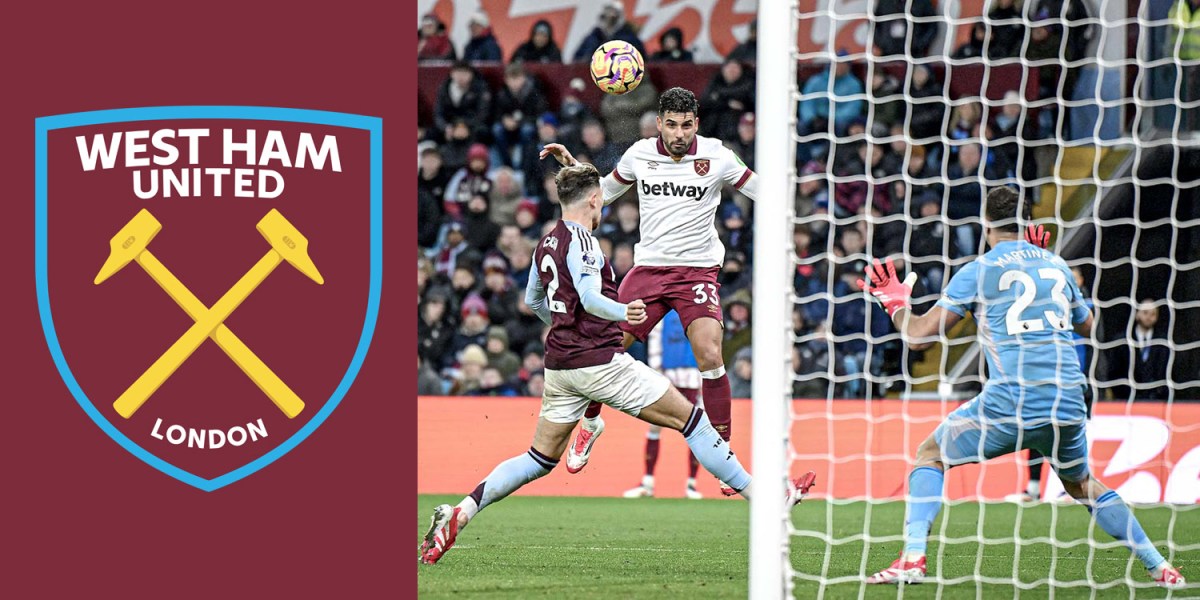
No-one has conceded more goals in the opening ten minutes of Premier League games than West Ham this season – and they would be a bottom three team in a table based on first half performances alone. True to form though, the second half Hammers were a very different proposition to what had gone before. They were well worth the point earned thanks to Emerson’s fine header from Edson Alvarez’s wonderful cross; and looked the far likelier of the two teams to grab a winner in the closing stages.

The second half was an excellent all-round team performance which may well reflect the result of a solid week’s work on the training ground under Graham Potter. The standout performers may have been Aaron Wan-Bissaka and Lucas Paqueta but all of those involved looked up for the challenge and put in a decent shift. We can ask for no more.

There was also an underlying feistiness to the game thanks largely to the wayward officiating of the consistently inconsistent Peter Bankes. Alongside death and taxes, baffling refereeing decisions are just as inevitable these days it seems. Officials have created their own self-important world where they randomly choose to either exercise discretion or apply the letter of the law depending how the fancy takes them.

For example, a case for common sense could be made in stopping the game when Mings went down with what looked to be a serious injury (even though it wasn’t a head injury) – and also in not booking the same player when he caught the ball having felt a recurrence of the injury. But no such discretion was available when Max Killman was forced to leave the field after receiving treatment, even though it was patently obvious that no pretence was involved. A goalkeeper can stay on but not a central defender despite being equally critical in defending set plays.

Not that West Ham were not also recipients of Bankes’ unpredictable largesse. Notably when he failed to act upon two attempts by Alvarez to secure a second yellow card. It is probable that I am in a minority believing the Mexican to be a fine player who will likley improve under Potter once freed from the obligation of “tackling for two” in the defensive midfield double pivot. But his commitment had for some reason boiled over into recklessness in the lead up to his late sensible substitution.

The other big news of the week was the apparent departure of Tim Steidten from his role as Technical Director. I say apparent because I have yet to see (or have missed) any official confirmation of his dismissal. Potter’s buddy Kyle Macaulay has been appointed Head of Recruitment but that is a different role from the one that Steidten left. Does that mean the Technical Director role has been demised to allow Sullivan free rein in doing deals with his favourite agent mates?

One can rightly question how well the transfer funds were spent in the summer but even a cursory examination reveals too many fingers in the pie with no coherent strategy in place. It was never made clear who was responsible for which signings, while most of what we heard on shortcomings the result of intentional leaks from the Boardroom to useful in-the-know reporters. Some of the criticism of Steidten may well be justified, but was the club’s transfer business any worse than any of the other 14 years under Sullivan’s stewardship? For me, Steidten was setup as the fall-guy to distract attention from the major recruitment blunder of the summer – the appointment of Julen Lopetegui as coach – against the advice of the Technical Director. In a hotly contested competition, it was up there with the most disastrous managerial appointments in West Ham’s recent history.

None of the current debacle should really come as any surprise. It has been Sullivan’s MO since his days at Birmingham City. It’s not that he refuses to invest – far from it – but he has rarely spent wisely or with the future in mind. Deep down he may even mean well, but any benevolence is overshadowed by an overwhelming preference for self-promotion; a desire that manifests itself in the fruitless pursuit and occasional purchase of what he sees as showbiz signings. As one Birmingham City fan summed it up (speaking of Gold and Sullivan): “While I’ve always quite admired Sullivan’s bluntness, I would have to admit that I’m one of those who are sceptical of his and David Gold’s motives. If you want a steady club, with a chairman who likes interviews with helicopters in the background, they’re the men for you. If you want a bit more substance to the words, maybe not.”

The essence of football club ownership has been a contradiction ever since the ne’er-do-wells in N17 created a holding company in the 1980s to circumvent the FA rule that had previously protected the game from undue commercialisation. It has been downhill ever since as business priorities has eaten away at the sporting and community roots of football; and where supporters are now regarded as customers to be milked for replica kits, exhorbitant matchday pint and programme prices, and other assorted paraphenalia. The media hype machine will have us believe the game is better for it, but I am not convinced the overall entertainment and experience has improved.

The corporatisation of football was reinforced by the publication of the annual Deloitte Football Money League which was published this week. On the surface, it is satisfying to see West Ham ranked as the 17th richest in the world by revenues. But look into the detail and it becomes apparent how huge the gulf is between clubs such West Ham, Newcastle, and Aston Villa and the so-called Big 6.

West Ham’s Matchday and Commercial income is tiny compared to those generated Tottenham and Chelsea. Where the Hammers rely on Broadcasting for 60% of their revenues this reduces to 32% and 35% respectively at the Tottenham Stadium and Stamford Bridge. With squad costs becoming increasingly tied to a percentage of revenues there seems little hope of closing the gap.

The London Stadium is a conundrum for West Ham. Seen by some as the “deal of the century” when the tenancy was first agreed, it is apparent that it also imposes severe limitations on the club’s ability to pursue some of the more lucrative retail and sponsorship revenue opportunities.

If West Ham are to punch above their weight on a regular basis, then adopting the smart recruitment strategies practised by clubs like Brighton, Brentford, and Bournemouth has to be the way forward. Identify emerging talent from lower leagues, recruit for the future and succession, improve through coaching, and sell at a profit. It is the very antithesis of the traditional West Ham Transfer Way where players have been regularly sold at a significant loss. It is a strategy that should have been apparent for many years, but hubris, arrogance, incompetence and stubbornness have routinely prevailed.

We are, of course, in mid transfer window at the moment with just six more days before its ceremonial slamming shut. The January window is forever the poor relation to its summer cousin but that doesn’t stop the speculation factories pumping out the usual nonsense. West Ham are one of nine Premier League clubs yet to complete a deal as rumours of strikers, centre backs and box-to-box midfielders abound. Whether to recruit now or wait until the summer when there is more time and choice is the immediate dilemma facing Potter. His greater challenge will be navigating past Boardroom meddling and the Chairman’s propensity to scupper preferred deals because they have the wrong agent.

For the second season running the Hammers have a fixture on the night the window closes which might be considered a constraint or an excuse, depending on your point of view. COYI!   

With a week of the transfer window remaining, a trip down memory lane looking back at some of West Ham’s most successful incoming transfers

With the winter transfer window nearing its close it got me thinking about West Ham’s transfer successes and failures in the years that I have been following the team. In this article I will mainly concentrate on some of the successful ones and my favourites.

The first notable incoming transfer that I remember vaguely, mainly reinforced by my dad was that of Vic Keeble in 1957. We bought him from Newcastle for £10,000 which set up a partnership with one of my all time favourites Johnny Dick which yielded 40 goals as the Hammers became Second Division champions (Dick 21, Keeble 19). In the following season in Division One the pair scored 47 between them (Dick 27, Keeble 20), a key reason why we finished sixth in the table. In the next campaign he was forced to retire with back trouble and ended with 49 goals in 80 appearances, £10,000 well spent! What a partnership that was with Dick in the days when a twin spearhead produced such success.

The next one I remember was when West Ham smashed the British record transfer fee signing Johnny Byrne for £65,000 from fourth division Crystal Palace. He formed an exciting partnership with Geoff Hurst, with the bigger target man feeding off the skilful smaller partner and vice versa. He was an England international and when he was sold back to Crystal Palace in 1967 he had scored over 100 goals for us in just over 200 appearances. Perhaps his best ever game for us came in a League Cup tie in 1966 when we slaughtered ‘mighty’ Leeds 7-0. He didn’t get on the scoresheet that night but had a hand in virtually every goal and put in a performance close to perfection. Once again the twin partnership was a key factor.

In 1967 three signings were made to strengthen our defence. John Cushley arrived from Celtic and also from Scotland came goalkeeper Bobby Ferguson at £65,000 a record fee for a British goalkeeper. Both of the Scottish signings were not complete successes, finding it difficult to adapt to the English game. Ferguson was an excellent shot stopper but not the best when it came to dominating his penalty area. It was reported at the time that we could have bought Gordon Banks at the time as Leicester wanted to promote a teenage Peter Shilton, but for some reason we went for Ferguson. Most significantly at the time right back Billy Bonds was signed from Charlton for £50,000, arguably the best transfer ever made by the club in my lifetime.

Billy Bonds is a true legend at West Ham United, having made an indelible mark on the club both as a player and a manager. He quickly established himself as a key player, initially as a right-back before transitioning to midfield and then centre back. He was known for his hardworking, uncompromising, swashbuckling style, which perfectly complemented the skills of his teammates. He played a crucial role in West Ham’s successes, including their FA Cup victories in 1975 and 1980. Bonds was the only West Ham captain to lift the FA Cup twice. He also won the Hammer of the Year award four times, showcasing his consistent excellence.

His legacy at West Ham is immense. He made 799 first-team appearances for the club, scoring 61 goals over his 27-year association. His commitment to the club and his ability to inspire both as a player and a manager have cemented his status as an all-time great, and perhaps our best ever signing. The East Stand at the London Stadium is named in his honour, recognizing his contributions to the club.

In 1970 we signed Tommy Taylor for £78,000 from Leyton Orient. A very good centre half who had played in the first team at Orient at just 15 years old he played for nine seasons at Upton Park appearing in almost 400 games. He gained many under 23 caps for England but never quite made the full international team.

One of the great mysteries to me of international football was why Bryan ‘Pop’ Robson was never selected to play for the full England team. After a successful career at Newcastle where he won a Second Division Championship medal and a European Fairs Cup medal and scoring almost 100 goals West Ham paid a club record fee of £120,000 for his services. He went to Sunderland in 1975 and then we bought him back for £80,000 in 1976, staying with us for a further three seasons before again joining Sunderland. He scored over 100 goals for the Hammers and in 1972-73 was the First Division leading scorer with 28 goals. Ironically he left us twice just before we won the FA Cup, firstly in 1975 and then in 1980!

Alan Taylor became a household name in 1975 when his goals swept us to Wembley. He joined from Rochdale for £45,000 in 1974. He won an FA Cup winners medal in 1975 and a year later was in the side that lost to Anderlecht in the European Cup Winners Cup final. In five seasons at Upton Park he scored 36 goals in 121 appearances, but the statistic we all remember is that he scored two goals in the quarter final at Highbury against Arsenal, two goals in the semi-final replay versus Ipswich, and two goals in the final against Fulham.

There were two other relatively successful signings at the same time as Alan Taylor with Billy Jennings (£110,000 from Watford) and Keith Robson (from Newcastle) forming an entertaining front three.

Alan Devonshire is another West Ham United legend whose career is filled with remarkable achievements and memorable moments. He began his football journey at non-league Southall, where his exceptional skills caught the attention of West Ham scouts. Despite initial rejections from Crystal Palace, Devonshire’s talent shone through, and he signed for West Ham in 1976 for a fee of just £5,000. He quickly became a fan favourite, known for his mazy runs down the left flank and his ability to glide past defenders. His partnership with Trevor Brooking in midfield was telepathic, contributing to West Ham’s successes during the late 1970s and 1980s.

He played a crucial role in West Ham’s FA Cup victory in 1980. He also helped the team reach the League Cup final in 1981 and achieve their highest-ever finish in the top-flight with a third-place finish in 1986. Over his 14-year career at West Ham, Devonshire made 448 appearances and scored 32 goals. Despite his club success, his international career was limited to eight caps for England between 1980 and 1983. Many fans believe he deserved more recognition at the international level given his talent and contributions to West Ham.

Phil Parkes is widely regarded as one of West Ham United’s greatest goalkeepers. He began his professional career at Walsall before moving to Queens Park Rangers in 1970. During his time at QPR, he made over 400 appearances and earned his only England cap in 1974.

In 1979, West Ham broke the world record for a goalkeeper by signing Parkes from QPR for £565,000. Despite concerns about his knee problems, Parkes proved to be a fantastic acquisition for the club. He played a crucial role in West Ham’s 1-0 victory over Arsenal in the 1980 FA Cup final. In the 1980-81 season, he helped West Ham win promotion back to the First Division by keeping 22 clean sheets. He was voted Hammer of the Year for his outstanding performances in the 1980-81 season. He made over 400 appearances for the club and was known for his agility, shot-stopping ability, and leadership qualities. In 2003, a poll of West Ham fans voted him the club’s greatest ever goalkeeper.

Ray Stewart, affectionately known as “Tonka,” is another West Ham United legend whose career is filled with remarkable achievements and memorable moments. He began his professional career at Dundee United, where he quickly made a name for himself as a talented defender. His performances caught the attention of West Ham United, and he joined the club in 1979 for a then-record fee of £430,000 for a British teenager.

Known for his resolute defending and fantastic penalty-taking ability, Stewart became a fan favourite. He played a crucial role in West Ham’s 1980 FA Cup victory, scoring two goals in the fourth round against Leyton Orient and a last-minute penalty winner in the quarter-final against Aston Villa. His penalty-taking prowess was legendary, with him scoring 62 league goals for West Ham, 84 in total including all competitions, with 76 from penalties. He did miss 10 but his 88% success rate is one of the best. He played a crucial role in West Ham’s FA Cup victory, and was a key member of the team that won promotion back to the First Division, playing 41 games and scoring five goals. He made 432 appearances for the club.

Paul Goddard was signed from QPR for a club record fee of £800,000 in 1980. He scored 71 goals in just over 200 appearances and won an England cap whilst at the club before leaving for Newcastle in 1986, finding his first team chances restricted following the signing of Frank McAvennie.

Frank McAvennie was signed by John Lyall for £340,000 from St Mirren in 1985 and quickly set up a prolific scoring partnership with Tony Cottee. In their best season 1985-86 they scored 46 league goals between them and he won the first of his Scotland caps. He went to Celtic for £750,000 in 1987 and in 1989 he came back, although this time he was not so successful. In May 1992 he played his final game for us at home to Nottingham Forest and said goodbye in style with a hat-trick in a 3-0 victory, taking his tally to 60 goals.

Jarrod Bowen has been a standout player for West Ham United since joining the club in January 2020. After Hereford’s expulsion from the Football Conference in 2014, Bowen signed for Hull City on a free transfer. Bowen quickly made an impact scoring 15 goals in the 2017-18 season and winning the club’s Supporter’s Player of the Year and Players’ Player of the Year awards. His performances caught the attention of bigger clubs, and he eventually joined West Ham United.

Regarded as a quick, direct, mobile, energetic player with good technique and an eye for goal, Bowen is predominantly known for his speed, movement, clinical finishing, agility and ball control, as well as his ability to use both his pace and flair on the ball to create scoring opportunities for himself or his teammates. A versatile forward, he primarily plays as a winger on the right flank, a position which allows him to cut into the centre onto his stronger left foot, and either shoot on goal or play quick exchanges with other players and make runs in behind the defence towards goal. He can also play in the centre, behind the main striker as either an attacking midfielder or second striker or as the main striker. He has consistently performed at a high level, scoring goals and providing numerous assists in his time at the club. His contributions have been crucial in helping West Ham achieve notable finishes in the Premier League. Bowen scored the winning goal, in the 90th minute, against Fiorentina to give West Ham their first trophy in 43 years with a 2–1 victory. He has also represented England, earning 14 caps and scoring one goal. His performances at the international level have further solidified his reputation as one of the top players in English football. Despite a recent injury he has returned to training and we look forward to his return.

There have been many other excellent transfers including Ludek Miklosko, Scott Parker, Julian Dicks and Paolo Di Canio. And how good would Dean Ashton have been if injury had not cruelly forced him into early retirement from the game? There are others too that I may have temporarily forgotten when writing this article. But for all these there have been so many that turned out to be disasters, especially forwards such as Boogers, Hugill and too many others far too numerous to mention. In our current predicament lacking goalscorers I wonder if anyone of significance will arrive in this window? I won’t hold my breath.

Puzzling Potter Picks A Pack Of Pointless Passers

If he didn’t know before, Graham Potter must now be painfully aware of the imbalance and limitations of the West Ham squad. A long-term rebuilding job is on the cards but there is hope that youth can be part of the solution.

New manager bounces have been in short supply in this year’s Premier League with the changes at Manchester United, Leicester, Wolves, and Southampton unable to deliver any lasting improvement to failing fortunes. Will it be down to the Moyesiah to buck this trend on his return to Goodison Park?

At West Ham, the optimism that followed Graham Potter’s fast start in the opening Premier League victory against Fulham was dashed by a refusal at the second fence in Saturday’s encounter with Crystal Palace. A case of reality bursting the bubble of hope that followed Julen Lopetegui’s departure, and which had placed too much emphasis on the improvements in attitude and effort witnessed during the Fulham win.

A fan-base who have become well versed in quirky and difficult to understand team selections over the years might well have thought “here we go again” when the teams were announced on Saturday. It was only one change on paper, but the inclusion of 35-year—old Aaron Cresswell represented a switch of formation to a back three and wing backs system that has rarely worked well for the Hammers – either because there aren’t the players to execute it properly, or because insufficient time has been spent on the training ground perfecting the roles and responsibilities involved.

It is far from a given that full backs can effortlessly switch between the two roles, with Aaron Wan-Bissaka a prime example. Highly regarded for his defensive abilities – and quite capable of storming forward in the style of a traditional overlapping full back – he appears to regard tracking back as optional when deployed as a wing back. Surely, that cannot be what the coach expects.

Even more problematical in the selection was an entire West Ham midfield populated by defensive minded players – Edson Alvarez, Guido Rodriguez, and Tomas Soucek. The recognition that eight out of ten cats outfield players possessed so few creative instincts and ideas was painfully apparent all afternoon – meaningless short passing, no imagination, little movement and an inability to create space. With Lucas Paqueta once again out of sorts, Palace were easily able to double (or even treble) up on Mohammed Kudus as the only credible attacking threat.

Potter’s rationale for changing the starting eleven was reported to be a worry over the fitness of Carlos Soler. That he opted to compensate with a formation to match up with the opponents was not, however, the only choice available – and was a big mistake in my opinion. No disrespect to the visitors but this was Crystal Palace at home – a team that had started the day below us – not Barcelona in the Nou Camp. A more obvious straight swap replacement for Soler using either Andy Irving or Lewis Orford, or starting with Danny Ings up front and dropping Paqueta deeper, would have been less disruptive and made far more sense for a team hoping to seize the initiative. It is puzzling why Irving hasn’t had more of a look in, having always looked capable in his occasional substitute appearances.

As it was, a Premier League defence couldn’t have hoped for a more comfortable afternoon than the one experienced by Crystal Palace. The visitors did not need to be excellent, merely competent. Hughes and Kamada were not a glamorous pairing at the heart of the Palace midfield but did the simple things well; demonstrating a pace, energy, and ability to move the ball forward quickly (to Eze and Sarr) that was missing from their West Ham counterparts. Equally, they had a willing and effective runner up front in Mateta, a relaive unknown who has evolved into a quality Premier League striker under the guidance of Oliver Glasner.

Aside from the feeble attacking threat, the Hammers continued with their run of defensive generosity and have now conceded 43 times in 22 league games. The first goal featured a shockingly bad example of defending by Max Killman who inexplicably allowed Mateta to run straight at him without making any attempt at a challenge. The striker hit the ball well, but a younger Fabianski would likely have saved it. The second was a well taken spot kick after the clearest cut of all penalty awards.

West Ham had rallied slightly following the introduction of Ings, Orford and Ollie Scarles but still failed to register a shot on target all afternoon. The game was effectively done and dusted when they went down to ten men on 80 minutes. I was so concerned that Alvarez was on course for a second yellow that my immediate instinct was relief on realising it wasn’t him who had made the high challenge on Mateta – that Dinos Mavropanos was also on a yellow only registering when the red card came out of Thomas Bramall’s pocket. There could be no complaints even if the referee had been consistently lenient with Hughes throughout the game.

The scale of the surgery required at West Ham must now be glaringly apparent to Potter. The squad had been allowed to get into a sorry state under Moyes and the summer investment failed to address the most critical structural issues. The current mini-injury crisis does offer some mitigation for the new manager’s approach and the eventual return of Jarrod Bowen and Crysencio Summerville is sure to improve matters. Fortunately, there is a low bar in the Premier League this season and the Hammers should comfortably avoid getting drawn into any relegation discussion. I remain confident that Potter can prove a good long-term bet at the London Stadium – if he is allowed to do his job. One criticism of him spells at Brighton and Chelsea was that his teams did not create enough clear goalscoring opportunities relative to the possession they enjoyed. Hopefully, he has learnt from these experiences. As a side note, the team with the lowest possession stats in the Premier League this season are Nottingham Forest. Make of that what you will!

The big positive from the weekend was to see three teenagers on the pitch at the end of the game. Young players being given a chance is always encouraging for fans, especially when they have come through the academy. Scarles and Orford both did well and looked very confident on the ball; Guilherme, as usual, was given too little time to impress.

With two weeks remaining in the January transfer window, there has been little activity by Premier League clubs to date, and none at all at West Ham. Opinions are divided on whether it’s best to muddle through with what we’ve got until the summer – in the hope that injuries clear up and the youngsters can contribute – or try to plug the most glaring gaps now. It goes without saying the club looks no closer to having a strategy for recruitment and succession than it ever has.

While smarter clubs – such as Bournemouth who have already made two interesting teenage signings in this window – seek to build on the Brighton model of player recruitment, the Hammers remain hostages to David Sullivan’s dream of creating a Galacticos B Team. It is the greatest obstacle to progress at Wst Ham. Can no-one rid us of this turbulent pest? COYI!     

How Much Do You Know About West Ham versus Crystal Palace – Take The Quiz

This weekend sees West Ham take on Crystal Palace in our 22nd game of the 2024-25 season. Something a little different for today – a quiz. See how many you can answer – the answers can be found at the end.

Question 1: This weekend is the anniversary of David Sullivan and David Gold taking over at West Ham – but how many years ago did they buy the club? (A-12, B-13, C-14, D-15)

Question 2: In what year did West Ham last beat Crystal Palace at the London Stadium? (A-2018, B-2019, C-2020, D-2021)

Question 3: How many games have West Ham played against Crystal Palace since we last failed to score at least one goal in the game? (A-6, B-11, C-16, D-21)

Question 4: If West Ham win the game today, Graham Potter will become our third manager to win the first two Premier League games in charge. Who are the other two?

Question 5: West Ham have played Palace 9 times in the last 5 seasons and scored 18 goals. Which two West Ham players have scored the most goals in those nine games?

Question 6: West Ham have played Palace 9 times in the last 5 seasons – every player in the starting West Ham XI in those games is a full international footballer apart from three players. Can you name them?

Question 7: In the history of West Ham v Palace fixtures there have been 3 0-0 draws, in 1970, 1971 and 2012. Who were the 3 West Ham goalkeepers in those games?

Question 8: Palace have failed to win any of their last 13 London derby away games. Who did they beat when they last won an away London derby?  

Question 9: Who scored West Ham’s second goal in the 2-2 draw against Palace in the very last game that we played against them at Upton Park (in April 2016)?

Question 10: Who scored West Ham’s first goal when we met Palace for the first time at the London Stadium (in January 2017)?

How Many Did You Get? (Click on the question numbers to reveal the answers)

Question 1

The answer is D – David Sullivan and David Gold bought West Ham 15 years ago this weekend.

Question 2

The answer is A – 2018. We beat them 3-2 with goals from a Scotsman, a Mexican and a Brazilian – Snodgrass, Hernandez and Anderson.

Question 3

The answer is D – 21 games since we last failed to score in a game against Palace when we lost the game 1-0 in April 2014.

Question 4

The other 2 managers were Sir Trevor Brooking and Gianfranco Zola.

Question 5

Soucek and Antonio have each scored 4 times in those 9 games.

Question 6

The answers – Ben Johnson, Craig Dawson and Max Kilman. But Craig Dawson actually played three times for the Great Britain Olympic team at London 2012. Max Kilman is an England international Futsal player.

Question 7

Peter Grotier, Bobby Ferguson, Rob Green

Question 8

Answer – West Ham! Palace’s last away win in a London derby was at the London Stadium in November 2022 when they beat us 2-1.

Question 9

Dimitri Payet scored West Ham’s second goal in the 2-2 draw against Palace in April 2016 with a superb free kick.

Question 10

Well done if you knew the answer to this one. West Ham’s first goal when we met Palace for the first time at the London Stadium (in January 2017) was scored by Sofiane Feghouli.

Call Out The Ingstigator, Because There’s Something in the Air at West Ham

Graham Potter opened his Premier League account with a battling victory over Fulham on Tuesday night. Saturday provides an opportunity to make it two in a row with the visit of Crystal Palace.

And Graham said: “Let there be light (at the end of the tunnel)”. And lo, the light divided the darkness shrouding the London Stadium since last August. And the supporters saw the light and said it was good – considering the current injury situation. And the people rejoiced: “We can see clearly now the (man from) Spain has gone.”

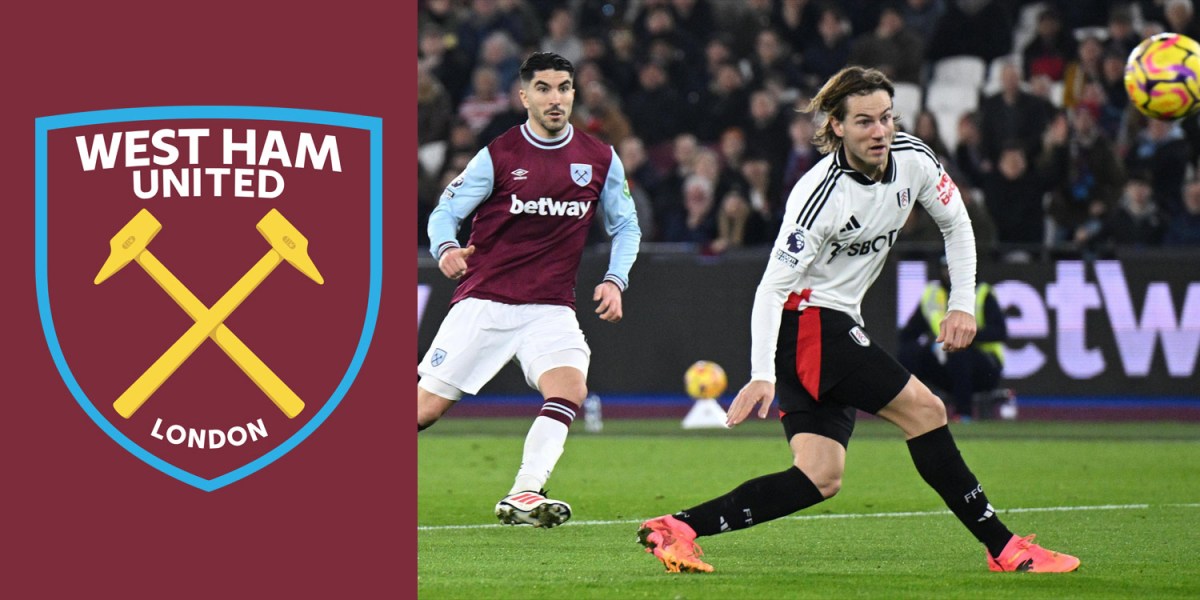
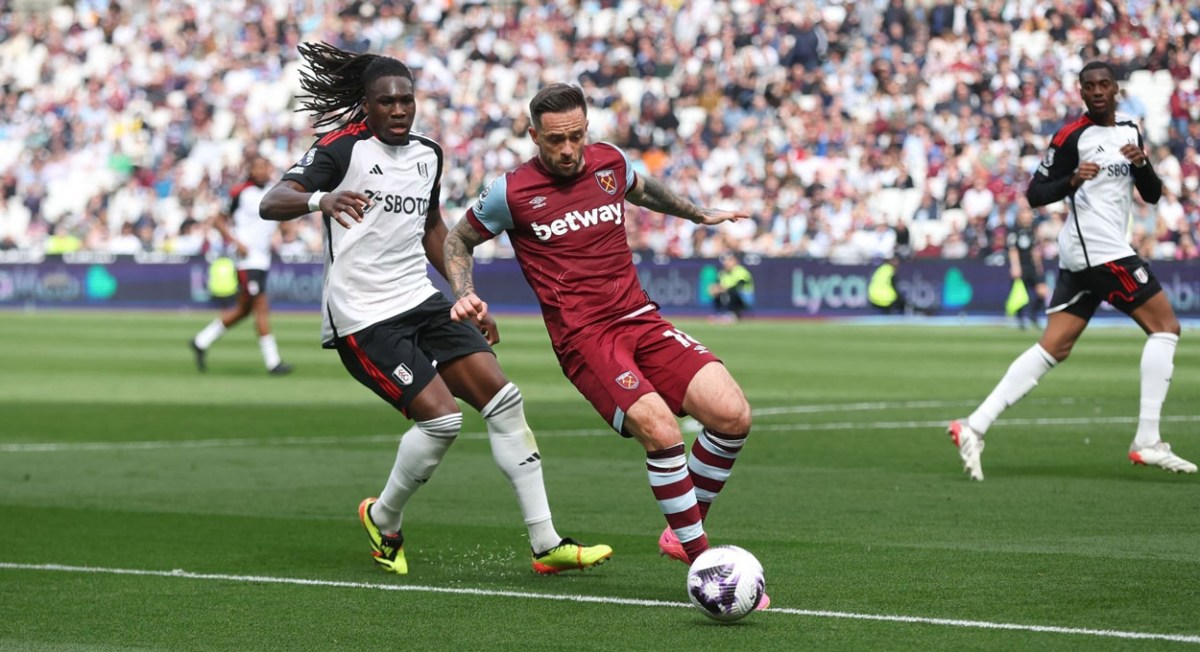
The Graham Potter Premier League era got off to an ideal winning start on Tuesday evening as they overcame Fulham by three goals to two in the nostalgic 7:30 pm kick-off. It wasn’t a vintage performance by any means, but there was no faulting the effort, endeavour or commitment of the players. Not something that could be said about most of the season that had gone before.

As fans we have a right to expect the players to give 100% effort in every game (equivalent to 110% in pundit language). We might have other opinions about them – too old, too slow, not technically good enough at this level, exorbitant transfer fee, wages too high – but these are factors of poor recruitment or selection rather than of their own making. Bad attitude and lack of effort, on the other hand, are unacceptable. Where it becomes difficult is determning the line between individual player effort and deficiencies caused by the inadequacies or vagaries of coaching pigheadedness. Edson Alvarez is a perfect example. Many considered him to be excellent against Fulham while a few weeks earlier he had been ridiculed as an abysmal footballer. Which is true? He had reportedly fallen out with Lopetegui and was routinely set up as the scapegoat for the coach’s baffling defensive tactics. Can we blame a player for not performing in a role they are unsuited for?

I never believed Alvarez ever gave up trying, but his lack of pace was magnified by the role he was given to perform. The same could be said of Danny Ings, who with the best will in the world was never likley to be a like for like replacement for Michail Antonio, someone capable of ploughing a lonely furrow up front. Hopefully, square pegs and round holes are a thing of the past under Potter’s more thoughtful and considered tutelage.

The new coach had hinted towards creativity to fill the gaps created by injuries to Antonio, Niclas Fullkrug, Jarrod Bowen, and Crysencio Summerville. He did this by pushing Lucas Paqueta forward to ‘lead’ the attack, playing Tomas Soucek as a Number 10 and shifting Carlos Soler out wide on the left. He was not let down with all three registering on the scoresheet. Soler and Paqueta executing their finishes expertly, while Soucek’s fifth strike of the season was one of those excellent team goals that never fail to impress.

Although I do have reservations about Soucek in possession, his commitment to the cause is second to none. And all the while he is scoring, the goals are able to compensate for other shortcomings. The more advanced role suits him, as it did in his first season at West Ham. He is a box-and-box midfielder rather than a box-to-box variety. Someone really should bottle the excitement shown in his post-match interview.

It was a pleasant change for West Ham to score as the result of errors forced from a high press. Alvarez harassing Pereira into making a suicidal blind pass across the area for the first, and Ings punishing Leno for dwelling on the ball for the third. I’ve yet to be convinced that playing out from the keeper is worth all the potential grief associated with it. No doubt the visitors were following team orders but unless you have a keeper specifically recruited for his ball-playing skills it comes with huge risks attached.

Still, it gave Marco Silva something to moan about. Silva is an excellent coach who has done a great job at Fulham and, to be fair, his team did boss most of the game. It is not the first time they have been unlucky to come away from the London Stadium empty handed, but he always finds something to complain about when they lose, doesn’t he? And it’s Hey Ho, Silva Whining.

True to form, the Hammers conceded their regulation couple of goals as two hopeful crosses from Iwobi found their way into the back of net. For me, both were goalkeeping errors by Lukasz Fabianski although the coach might want to consider of the positioning of the centre backs and the wisdom of inviting rather than preventing crosses from coming in. During the low block years, full backs were played narrow to limit the space opponents could exploit in the box. The theory being that crosses can easily be defended by towering centre backs and that crossing has become an inefficient tactic in the modern statistically driven game. Something for Potter to revisit, perhaps, given the attributes of existing personnel.    

In contrast to the sunnier outlook on the pitch, threatening storm clouds in the baordroom suggest that David Sullivan has taken back control of transfer business. Whether this is a) true or b) makes any material difference to what transpired in the summer is anyone’s guess. Worst case is an open season for every reject, drifter, has-been, and loser (and his agent) who calls himself a striker to add their name to the list of 50+ duds who have been signed in the past.

Even if there are pertinent questions to answer on last summer’s transfer dealings – was too much of the budget spent on Killman, how much have we really paid for Luis Guilhereme and was he expected to play a role this season, should we have been aware that spare parts for Fullkrug were no longer available – is the return to a system that delivered 15 years of flops and failure with no resale value the logical alternative? I’ve no strong attachment to Tim Steidten as an individual but surely a professional recruiter is the preferable choice to a chairman too easily seduced by shiny objects.

The dilemma in the transfer window is how much sense it makes investing in the squad now – in the hope of picking up an extra place or two in league position – against a more thorough overhaul in the summer. There is no obvious urgency to make quick fixes unless they are short-term loans or genuine long-term targets. As ever, the best advice is to treat all the transfer speculation you read as an entertaining work of fiction.

The Hammers return to action on Saturday when they entertain Crystal Palace at the London Stadium. It is a fixture they haven’t won since December 2018 when Manuel Pellegrini’s side won 3-2 (Snodgrass, Hernandez and Anderson.) Palace have recovered from a poor start to the season to sit 5th in the current form table (last 6 games) and just two points behind West Ham in the table.

Prior to the Fulham game, Potter said that if he had to choose, he would prioritise points above performance. The same will likely apply here in the absence of key individuals. As long as the direction of travel is consistent – playing higher up the pitch and getting more bodies into the box – then that is good enough for now. I hope we continue to see good use of the squad with the opportunity to see more from Ollie Scarles and Andy Irving or even Guilherme and Lewis Orford.

We’ve got to get together sooner or later. Because the revolution’s here. COYI!

West Ham’s new boss, their FA Cup defeat at Villa, coincidences, and the visit of draw specialists Fulham who’ve not lost in eight league games

So Julen Lopetegui has gone. 22 games at the helm, 20 Premier League and 2 EFL Cup. In the league we faced every other club once and Manchester City twice. We won six league games – on matchdays 2, 7, 9, 12, 15, 18. So we never managed back-to-back wins. We spent one week in the top half of the table when we were ninth after beating Palace in the second game, but apart from that we have been fourteenth for most of the time. We did climb to thirteenth after our four-game unbeaten run (2 wins and 2 draws – Matchdays 15-18), but two heavy defeats conceding nine goals to Liverpool and Manchester City saw us back in fourteenth and spelled the inevitable end for the head coach.

We’ve conceded 39 goals in 20 league games; only Wolves, Leicester and Southampton have let in more. A goal difference of minus 15, only Leicester and Southampton are worse than that. And 24 goals scored – we are fourteenth in that table too!

Graham Potter was installed last Thursday and immediately faced a tricky away FA Cup third round tie on Friday at Villa Park. And it was there that the coincidences begin. Because just like Lopetegui his first game was against Aston Villa. And despite a bright first half performance we lost the game 2-1 just as Lopetegui had done. Our goal was scored by the left foot of Paqueta just as it was in the game last August. Onana scored Villa’s first goal just as he had done at the London Stadium. At least it wasn’t Duran scoring the winner as he was suspended for the FA Cup game.

Potter’s first five league games in charge will be against Fulham, Palace, Villa, Chelsea and Brentford. Lopetegui faced those five plus Manchester City in his first six games, where we picked up five points, beating Palace, drawing with Fulham and Brentford, and losing to Villa and Chelsea. All five points were gained away from home with two defeats at the London Stadium. In these reverse fixtures Palace, Fulham and Brentford are the home games.

Fulham are unbeaten in their last eight league games having drawn six of them, Palace have only lost once in their last six games and have come on since we beat them very early in the season. Brentford are poor away from home. These three games are ones that we need to win to stand a chance of moving up the table. The Villa and Chelsea away games will be big tests.

**************************************************

Graham Potter’s first game, oh what a plight,
We lost to the Villa on a January night,
In the ninth minute West Ham struck a blow,
Paqueta’s left foot we led in the show.

A game of two halves, in the first we’d attack,
But then in the second, the Villa fought back,
Two quick goals they scored, how we did jeer
Onana and Rogers they cost us so dear.

A corner was given it caused quite a fuss,
A referee’s error threw us under the bus,
Onana’s goal followed, you get the drift,
That’s when the momentum it started to shift.

In sorrowful defeat thus began Potter’s reign
But positive’s taken, a lot we could gain,
Just a day to prepare once Lop did depart,
Half a season is left, it’s only the start.

So next up it’s Fulham, last season on song
5-0 and 2-0 it really went wrong.
Seven goals conceded, who could we blame?
They were just too good, both games the same.

So now winless against them, now three games long,
Why can’t we beat them, what has gone wrong?
Before then we’d won five games out of six,
But now we all know we’ve got something to fix.

London derbies we’ve struggled, five with no win,
Last two were awful, nine goals went in.
4-1 to Spurs, and Arsenal scored five,
A really poor record, it’s time to revive.

Fulham’s London matches unbeaten in ten
In derbies they shine again and again,
Five wins five draws such strength they’ve found,
Five on their travels and five on home ground.

Our last two league games we also shipped nine,
Enough is enough we must draw the line,
Fulham unbeaten in their last eight,
About time they lost, let’s end the wait.

West Ham Monday Briefing: FA Cup Exit, Striker Crisis and Pottering About in The Transfer Window

A breath of fresh air in the dugout has lifted the mood in the dressing room despite a growing injury problem. Can the new sense of optimism spread to cooperation and sensible decisions in the transfer window

My story is probably similar to many other fans. Becoming a supporter of West Ham was never a conscious decision. Rather, it was an inherited condition passed down by a long line of labourers, rascals and urchins who had lived in the county borough of West Ham as far back as the earliest census records go. Being a Hammer is just one more genetic marker alongside colour of eyes and annoyingly large ear lobes.

Despite the congenital nature of the affliction, a great deal of time was wasted over the years looking for justification, as if the decision had been taken by free will. Whether this was the emotional connection of following the East End’s family club, the attractive brand of football played by “everyone’s second favourite team” in the 1960s, effectively winning the World Cup in 1966, or the club’s admirable loyalty to its managers.

It feels strange mentioning that last point now – having personally willed the last two managers out of a job for the best past of two years – but for the first 87 years of existence, West Ham had employed just five managers, each surviving at least ten years at the helm. I don’t know if it is, but it sounds like it should be some sort of record.

Around 36 years have passed since the last of the famous five (John Lyall) was unceremoniously sacked in the summer of 1989. In that time, a further 15 full-time managers have taken their turn to sit in the dugout with varying degrees of disappointment. The longest was Harry Redknapp (a little short of seven years) while four others lasted less than a year (Avram Grant, the first coming of David Moyes, Lou Macari and now, Julen Lopetegui.) The timeline doesn’t precisely match the creation of the Premier League, but it is close enough to suspect a connection.

Under the circumstances, it is difficult to get too excited when names of managerial targets are mentioned these days. Most appointments ultimately end in failure even where there is a hint of success in between. Naysaying has become the new national pastime when it comes to football matters and there is always someone ready to point out the relative weakness of a win percentage or critique a previous failing regardless of any mitigating circumstances. Even I may be guilty as charged, having previously described Graham Potter’s Brighton side as “all sizzle and no sausage.” However, I don’t see his career being defined by the shambles that was taking place at Chelsea during the period of his tenure.

Potter may not fit the bald, designer stubble, chinos and turtleneck sweater wearing profile of the trendy manager, but I am reasonably happy with his appointment. I thought he acquitted himself well at the press conference following the announcement of his appointment. It can’t have been easy trying to answer essentially the same question from assembled journalists using different words. Everything he said about identity, alignment and collaboration makes perfect sense provided he can follow through on the training ground. My general takeaway was that here was a man with an air of competence – an attribute that has been in short supply at the club in recent years.

Then again Lopetegui wasn’t completely unbelievable in his initial pre-season utterances. It was only when the matches started, and he lost the ability to speak English that it became clear someone had been duped by his Powerpoint presentation. Quite why Potter was suddenly seen as the perfect fit for West Ham in January but was not considered last summer must remain a mystery.

Although it was disappointing to go out of the FA Cup on Friday night, the performance did suggest a lightening of the mood in the West Ham camp. Until the team ran out of steam and players early in the second period there was much to be encouraged about. At last, a coach with ideas on how best to use the resources at his disposal rather than one with a half-baked and poorly communicated philosophy which had his favourite players shoehorned into it. It was only one game (and one training session) but there are signs that Potter is an authentic coach who can improve players, is tactically flexible, a good communicator, and prepared to give youth a chance. It is a relief to have a glimmer of hope that we might see anincremental improvement in performances over the remainder of the season, despite having little other than pride to play for.

The already dire striker situation deteriorated even further in the Aston Villa cup-tie when Niclas Fullkrug pulled up with a hamstring injury which, according to rumours, will rule him out for three months – effectively the rest of the season. Witnessing the rickety, injury-prone German replaced by a rusty, misfiring Danny Ings provided ample evidence as to why you shouldn’t panic buy strikers at the breaker’s yard. Replacement striker, central defensive reinforcements and someone with pace, energy and technique in central midfield are now all transfer window priorities. A tall order for what is traditionally a disappointing January for the Hammers. Whatever moves are taken they should be made with the future in mind, not just quick fixes.

The transfer window is sure to intensify the media noise surrounding the role of Tim Steidten – a role that is routinely misunderstood or misrepresented. As Technical Director he is not employed by the coach although the pair need to be part of the ‘alignment’ that Potter spoke about. The problem is that Steidten appears to be Kretinski’s man in a role that Sullivan never really wanted – as he had always regarded himself as de facto Director of Football. I’m convinced most of the Steidten under pressure stories are intentionally briefed from the Chairman himslef in an attempt to undermine his efforts and deflect from the appalling decision to appoint Lopetegui – against the Technical Director’s advice.

I can imagine Sullivan struggling to cope with a far richer and more astute partner in the Boardroom. All was fine when David Gold was playing Sergeant Wilson to his Captain Mainwaring, but the perspective has now changed, and he is no longer undisputed king of the castle. Whether the club can progress while being held hostage to a fragile ego is open to debate. Sullivan and Co have invested heavily in the squad but he must learn not to interfere and to cut the strings with the interests of his preferred agents.  

At least we can now start to look forward to watching games again. It will be intriguing to see how Potter copes with the striker shortfall in the upcoming games against Fulham and Palace. The change of coach should also be a clean slate for the players who had lost all faith in Lopetegui. If the stories coming out about dressing room bust-ups and Lopetegui’s lack of engagement are true, it must have been a highly toxic environment in which to operate. Forever onwards and upwards. COYI!   

As West Ham visit Aston Villa in the Third Round of this season’s FA Cup the debate continues – has the competition lost its magic?

My first recollection of the FA Cup goes right back to the 1958-59 season. West Ham were drawn away to our local rivals Tottenham in the third round. This was our first season back in Football League Division One, the top flight of the English game, and we were flying high. When the game was played on Saturday January 10th we were a very respectable tenth in the 22 team division, having been top after six games. By the end of the season we had climbed to sixth. Tottenham were poor that season eventually finishing eighteenth, although they were to finish third a year later and champions (and double winners) the year after that. What is more, we had faced them on Christmas Day, beating them 2-1 at Upton Park (the day I saw my first ever league game), and then thrashing them 4-1 at White Hart Lane on Boxing Day (the following day – and players today complain about the number of games!). A little under two weeks later they got their revenge beating us 2-0 on their home ground to knock us out of the cup.

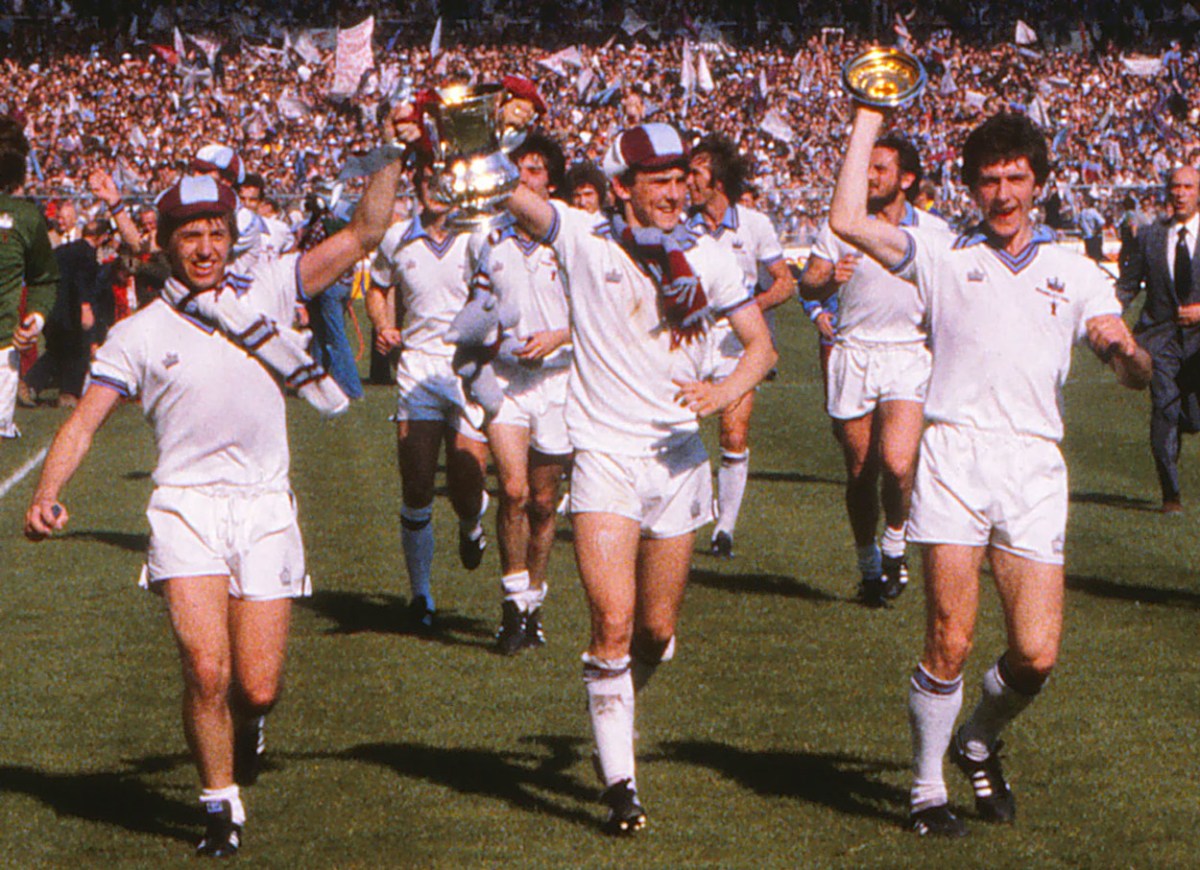
This was the first of my personal FA Cup competition disappointments losing to a team lower placed than us. In the ensuing (approaching 70) years there have been so many more. The following season we went out in Round 3 again in a replay losing 5-1 at home to second division Huddersfield Town. The season after that round 3 again losing to second division Stoke City in a replay, and the following year the third round once again to lowly Plymouth Argyle! The list goes on – name the most embarrassing – Swindon, Mansfield, Blackpool, Hull, Hereford, Newport County all knocked us out in the sixties and seventies. The amazing thing is that we won the competition three times by 1980, 1964 v Preston North End, 1975 v Fulham, and 1980 v Arsenal. Three great final memories that live with me all these years later.

Back in those younger days the FA Cup was a magical competition for me, and I suspect most fans. Apart from the odd England international the final was the only game that we could see live on TV each season. But has it lost it’s magic? I guess this is a question that has been a recurring topic in football discussions for some years now.

Certainly, there has been a decline in prestige. The rise of the Premier League and the UEFA Champions League and other European competitions has overshadowed the FA Cup. Top clubs prioritise these competitions over domestic cup games.

‘Bigger’ clubs often field weakened sides, especially in the early rounds, which sends out a signal that the FA Cup is not a priority, leading to the perception that it’s less important than it used to be. And it’s not just the so called ‘bigger’ clubs. All the Premier League clubs have big squads and want to keep all squad players happy. And with an ever-growing calendar the FA Cup sometimes feels like an afterthought in the crowded schedule, especially for those clubs involved in multiple competitions. Clubs involved in the relegation struggle prioritise league games, and mid-table clubs (like us?) seem to believe that finishing a place or two higher in the league is more important than a good cup run. I don’t believe that fans agree with that.

However, analysis of the eventual winners in the last twenty years shows that in general ‘big’ clubs win the trophy. Two notable exceptions in that time are Portsmouth (2008) and Wigan (2013). Perhaps you could add Leicester in 2021? Otherwise it has been Chelsea (5), Arsenal (5), Manchester City (3), Manchester United (2), Liverpool (2).

Another aspect relates to TV and scheduling issues. These days, kick-off times prioritise national and global television audiences over match-going fans. In theory late-night or weekday games have perhaps alienated some traditional supporters. But fans still attend games in vast numbers so football authorities are not concerned and are happy to spread the games for maximum TV coverage.

In my younger days the FA Cup third round was another magical day in the football calendar. It was the day that the top two divisions joined the other clubs from the top ten levels of the English football league pyramid who had competed through up to six qualifying rounds to reach the First Round proper and then two further rounds when teams from Divisions Three and Four (now equivalent to Leagues One and Two) also joined in. 64 teams playing 32 matches that all kicked off at 3pm on the same Saturday afternoon.

What happens now? Well this season there were 3 games on Thursday 9th, there’ll be 2 games on Friday 10th, including our own trip to Villa Park, 19 games on Saturday, 7 games on Sunday, and one on Monday. All in all 15 different kick-off times spread over five days for the 32 games.

One aspect that has grown over the years is the financial disparity. The prize money and financial impact of the FA Cup pales when compared to league placements or European competitions, reducing the monetary incentive. This season, the FA Cup winners will collect a prize of £2 million, whereas for each incremental position in the Premier League teams benefit by more than £3 million. In financial terms alone it’s a no-brainer. Unfortunately too many decisions regarding football are based on money.

Having painted a picture of a loss in the magic, the competition still retains it to some degree. The FA Cup continues to throw up underdog stories where smaller clubs upset the giants of the Premier League, moments that can capture the essence of why we love football. Unfortunately, this year’s format has removed replays from the First Round Proper onwards making it harder for lower league teams to secure financial windfalls. FA Cup replays were once part of the magic of the competition.

I still recall with fondness the memories of our semi-final replay over Ipswich in the snow at Stamford Bridge in 1975 on our way to lifting the trophy, and the semi-final replay in 1980 at Elland Round where we beat Everton on our way to winning the Cup in 1980 (remember Frank Lampard dancing around the corner flag!). You have to remember we were one of the ‘smaller’ clubs in 1980 (in league division terms we were second tier) – these games can sometimes create lifelong memories for fans, that few league games do.

As the oldest national football competition in the world the FA Cup still carries a unique historical and cultural significance, certainly for those of us who recall moments of pure football romance. The FA Cup may not hold the same stature it did in its heyday due to changes in the football landscape, but it still provides moments of magic, particularly for smaller clubs and traditionalists (like me!). The “magic” may now be more selective rather than universal, but it hasn’t completely disappeared. Whether it has truly “lost its magic” often depends on what we as fans value most in football today.

Our third round tie this season is on 10th January, exactly 66 years ago to the day from when I remember my first, way back in 1959. So many disappointments in those intervening years as well as three great memories on winning the trophy. By the time I was just 26 years old we had been FA Cup winners three times, but now as I approach 71, it hasn’t happened again, the closest we came was in 2006 when we were just a minute away before Steven Gerrard intervened.

We have only faced Villa three times previously in the FA Cup. In 1913, our first ever match against them, they beat us 5-0 in front of 51,000 at Villa Park. In 1977 (I remember this one) in front of 47,000 at Villa Park we were on the end of a 3-0 defeat.

But the one that really sticks in the memory came in the quarter final of the 1980 tournament in front of a full house at Upton Park. Geoff and I watched that game from the front row of B block in the old West Stand. We were just a second division outfit at the time, but ironically it was one of the best times ever to watch West Ham. Incredibly we only managed a seventh place finish in Division Two that season, with a team that boasted Phil Parkes, Alvin Martin, Ray Stewart, Frank Lampard, Trevor Brooking, Alan Devonshire, Stuart Pearson and David Cross. Billy Bonds also, but he was absent for the Villa game. Of course we rectified it the following season when we were runaway champions and gained promotion back to the top flight.

There was only about a minute of the game to go (it was goalless at the time) when Sir Trev swung in a corner from below the West Stand at the South Bank end and a Villa centre back (McNaught) rose and handled the ball as Alvin Martin challenged. The referee gave a penalty with the Villa defender complaining vehemently that Alvin had pushed his arm above his head onto the ball. There was no VAR of course and once the referee had made up his mind that was that. I do remember the incident being discussed at length by Brian Moore on the Big Match on Sunday afternoon. Ray Stewart, one of our master penalty takers in my time of watching West Ham, fired it hard and low to the keepers right and we led 1-0. In typical West Ham fashion there was still time in the minute remaining for Villa to win a free kick on the edge of our area and Phil Parkes was needed to make a save which saw us through to the semi-final. The rest is history. But memories of Cup games (especially of good ones) remain.

Villa are one of the teams against whom we have a positive record with more wins than defeats in history. But in the past couple of seasons they have been on the up. When they beat us 4-1 at Villa Park last season it ended a run of ten games where they had failed to win against us. And of course you will remember the opening game of this season at the London Stadium when we went behind to a header from Onana (who we apparently wanted to buy a couple of years ago) in the opening few minutes. Paqueta converted a penalty to equalise in the first half, and then of course their substitute Duran (who we had seemed to spend the whole summer wanting to buy) inevitably scored the winner. And he has gone on to have an excellent season, sometimes selected ahead of Watkins.

We go into today’s game without the head coach who has been in charge. The season has seemed like a wasted one so far with little prospect of climbing into the top half of the table or challenging for a European place next season. We desperately need a cup run to lift us. Wouldn’t it be great to progress to Round Four? Can the new boss bring a little magic to the club?

It was the worst kept secret that Julen Lopetegui would be leaving West Ham, but why did it take so long?

I was reminded on social media this week of Mark Noble’s comments on finishing his playing career at the club: “West Ham aren’t run like a circus anymore.” Some might suggest that this week’s shenanigans involving the sacking of head coach Lopetegui would differ from that. I guess all clubs should have succession planning, but somehow ‘the West Ham way’ of doing it did seem a little unsavoury being played out in public. Or was that just how I saw it? Anyway, as with all managers / head coaches who lose their job I am sure he and his staff will be well compensated for the remaining terms of their contracts. 

Because just as I began to write this article the news that we knew was coming has finally been confirmed officially and Julen Lopetegui has been sacked. And he can have no complaints. Like so many I was underwhelmed by his appointment in the first place. But unlike many of our fans who are so called experts in who the club should appoint I didn’t know enough about him and was happy to see if he really was a good choice. Unfortunately he wasn’t and he has since proved that he was the wrong person right from the start.

We have not improved from a defensive point of view this season, and just like the last campaign under Moyes we have the poorest record in respect of goals conceded outside of the bottom three. Has it been poor recruitment in the summer or poor coaching / management since as we brought in Kilman, Todibo and Wan-Bissaka at the back to hopefully improve in this area? Wan-Bissaka has been relatively successful, but we don’t know about Kilman and Todibo yet.

But teams defend as a whole and I believe a key reason for our poor defensive record lies with the lack of pace in midfield which does not offer sufficient protection for the back four. Rodriguez just doesn’t seem to fit the Premier League, Alvarez (for whatever reason) seems to be getting slower and he wasn’t that fast to begin with, and Soucek for all his effort just doesn’t have the pace or quality. Paqueta has looked poor and disinterested for much of the time and has Soler got what it takes to be a success here, and why was he so easy to recruit and not wanted by PSG?

From the outset it just didn’t seem right. The players lacked direction or didn’t seem to understand what was required of them. What were the tactics? They weren’t very clear or again not understood. The team selections were baffling as were many of the substitutions. Inexplicably to me a player like Summerville just wasn’t given a chance, never given a full 90 minutes, hauled off when playing well then on the bench for the next game with no opportunity for continuity.

Prior to our game against Newcastle towards the end of November I wrote a poem entitled The Head Coach. I was expecting him to be dismissed very soon. I tried to predict the outcome of the game and was completely wrong as we won the game 2-0. My forecast was a 2-0 defeat. Pleased though I was (and always am) that we had won the game it didn’t really change my thoughts that he was the wrong choice. He was given more time, but even then I was convinced that he wouldn’t be around for too much longer. It has taken a further six weeks for the inevitable to happen. I repeat the poem here. Let us hope that this time we get it right.

The Head Coach

In the quiet of the changing room there’s tension in the air,
The head coach sits alone, lost in silent prayer,
The team, once full of promise, now struggles in the fight,
The season’s hopes are fading, slipping slowly out of sight.

In the cold winds of November under the floodlights glare,
The head coach stands in silence, with a burden hard to bear,
The team’s form has faltered, each defeat a painful blow,
The whispers growing louder, from the boardroom to below.

The night is cold, the winds are strong, the stadium lights are bright,
Two Premier League teams clashing on a freezing Monday night,
The Magpies on the front foot, their wingers standing wide,
The Hammers block is narrow, they fight to halt the tide.

He paces on the sideline, staring at the pitch,
Hoping to find the magic to turn this losing glitch,
He wonders about his lineup, he rethinks every play,
Hoping for a miracle to chase the doubts away.

One down at the interval, fans patience growing thin,
Every formation has been tried to bring the wins back in,
The half time talk determined, he rallies one more time,
A second goal goes in the net, the finish quite sublime.

After the game he faces the press, he knows not where to start,
Questions probing for cracks within, have the players got the heart?
He talks of faith and unity, of turning it around,
But shadows of the sack loom close, a win just can’t be found.

The players lack direction, the tactics quite unclear,
And baffling team selections, departure must be near,
Behind the scenes the murmurs rise, of replacements lined in wait,
Another loss, its Arsenal next, the coach awaits his fate.

West Ham Monday Briefing: No Blue Moon Shine for Lopetegui plus Nostradamus on the January Transfer Window

It was déjà vu all over again as a bright start by West Ham at the Etihad Stadium descended into shipping goals for fun and heavy defeat. Where do the Hammers go from here?

Something is seriously awry when the expected nervous anxiety of pre-match tension can be completely replaced by an overwhelming fear of impending embarrassment. Thus is the lot of a West Ham supporter as we enter 2025. The academy of failure and disappointment!

Julen Lopetegui made four changes to the starting eleven to face Manchester City on Saturday. Jean-Clair Todibo and Vladimir Coufal were the latest revisions to an ever changing defensive line, Tomas Soucek returned from suspension in place of Carlos Soler, and Niclas Fullkrug replaced the injured Jarrod Bowen.

The official West Ham website was coy on the exclusion of Emerson stating only that he was absent from the squad. He may well have picked up an injury, but the dearth of information served only to fuel speculation that he was packing his bags ready for a return to Italy to enjoy his football and pasta like his great-grandmother used to make. Instead of a natural left-sided replacement (Aaron Cresswell or Ollie Scarles) the coach opted to shuffle Aaron Wan-Bissaka to the other side of the pitch. While AWB can operate with some competence as an emergency stand-in left back, it is an unnatural and less effective position for him to be selected for. Still, we are mere fans and not highly paid, experienced coaches.

Having seen several Manchester City games in recent weeks, it was apparent that their greatest attacking threat currently came down the left through Savinho – a huge upgrade for City over Grealish or Doku. It was, therefore, a brave decision to award the job of marking him to the fast-fading Coufal. Bravery here crossing the line into foolishness.

Soucek was the latest unsuitable candidate to be given the honour of wearing the captain’s armband. Tom is another who is too quiet to act as an on-field leader. And with a mere 39 touches and a woeful team-worst pass completion rate of 56% he wasn’t exactly leading by example either. Even in the pre-match huddle he delegated the call to arms to Edson Alvarez. I think many of us had believed Max Kilman had been signed by Lopetegui for his skipper/ leadership qualities but apparently this is not the case – and not the reason for the inflated transfer fee paid.

A common comment from fans is that (even after 20 games) Lopetegui doesn’t know his best team. For me, it goes far deeper than that in that he has been unable to settle upon a setup where formation/ style/ identity matches the players at his disposal to execute it. To the outside observer the idea of playing to your strengths – creating a whole that is greater than the sum of the parts – is the fundamental requirement of any elite level coach. Otherwise, all that remains is a dream. Something that is great in theory but horrible in practice – like making love in a Triumph Herald.

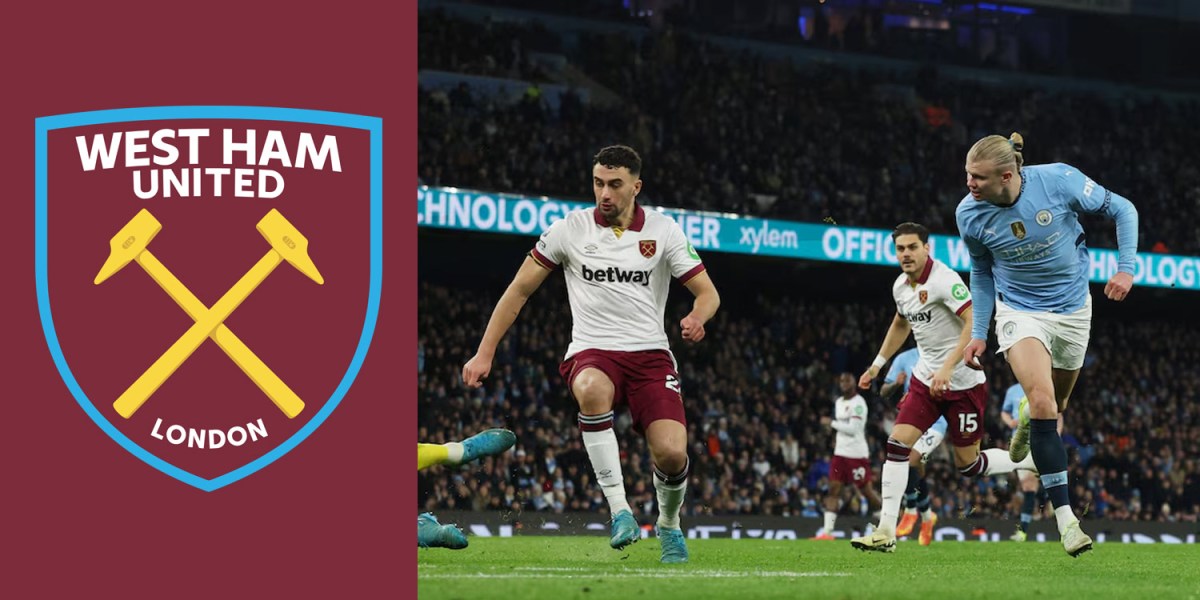
In truth, West Ham had some fine first half moments against the least intimidating City side we have seen for many a year. Several presentable goalscoring opportunities were spurned before eventually falling behind to an unfortunate own goal. And the chance of a breakaway equaliser was denied when Lancashire born referee, Michael Salisbury, erroneously whistled for a foul by Crysencio Summerville in an obvioulsy fair tussle with Akanji. But today’s Hammers are perennially vulnerable, and the inevitable Haaland goals either side of the break settled the game in the host’s favour.

The injury to Bowen is a massive blow to the Hammers. It’s not clear how long it takes to recover from a fractured foot – anywhere between a few hours (Stuart Pearce) and three years (Andy Carrol) based on prior injury experience. If he is missing for the best part of two months, my expected 14th place finishing position must be revised downwards to 15th. Both Manchester United and Crystal Palace are sure to overtake us.  

Judging by the various comments trawled through online, I am in a rapidly reducing minority who believe the club have a decent set of players but are hamstrung by a coach who either has no plan, or is unable to communicate it to the team. If the internet is to be believed, only Bowen is routinely excused from criticism while the rest of the squad goes something like this:

Areola (showy, weak), Coufal (past it), Kilman (slow, overpriced), Todibo (sulky, injury-prone), Mavropanos (accident waiting to happen), Wan-Bissaka (thinks he’s a winger), Alvarez (erratic, blundering), Soucek (cumbersome, slow), Rodriguez (even slower), Soler (Guy Fawkes lookalike), Paqueta (fraud), Kudus (greedy), Fullkrug (donkey/ cart horse), Summerville (light-weight).

If they really are as bad as that, we may as well pack up and go home. It’s not that many of the current crop would make it into any dream team – and significant gaps do exist in the squad – but I see the failure as systemic rather than down to individuals. The woeful defensive record in particular being a function of the huge gaps and space built into the system by design, rather than the fault of whatever group of players make up the back four in any particular week. It’s almost guaranteed to make chumps of anyone unfortunate enough to play in it.

In a game of opinions, we each like to apportion blame in different orders of magnitude – Sullivan, Lopetegui, Steidten, or the players have all been targeted. But Sullivan is going nowhere voluntarily, Steidten’s role should be a longer-term play (if he is allowed to do it), and it will take an age (and is unaffordable) to replace all the players. That is the why it is the coach who must go if a change of fortune is to be enjoyed. His appointment was a mistake and those who made it must be big enough to admit it.

Several media sources have claimed exclusives on the real reason why West Ham might not sack Lopetegui any time soon. And that is the arcane world of modern football finances. Although presented as a huge reveal it is something we have mentioned here on a number of occasions previously. It will cost money to pay up the contracts of Lopetegui and his entourage – and that money must come from the same PSR pot available for potential transfer dealings. Buying a replacement out of his contract would have even more impact. It is a reality that cannot be put down solely to parsimony on the Board’s part. And explains why the owners might be prepared to limp along to the summer when player sales (Paqueta and Kudus) can reset the size of the pot to PSR in.

January Transfer Window Now Open

Rather than rely on the insider transfer gossip spewing daily from the Give Me The West Ham News Zone websites, I decided to consult the ancient musings of French astrologer, Nostradamus, for any breaking news stories. The probability of accuracy is equally reliable .

As we all know, Nostradamus was a celebrated 16th century pundit – a medieval Mark Lawrenson, if you like – who favoured a more traditional IV – IV -II formation and opted to publish his quillbait in the form of quatrains, or poetic verse. Critics claim his writings are cryptic, ambiguous, or incomprehensible. Not so very different from today’s media and this column in that sense – or Lopetegui’s tactics, come to that.

Of 942 assorted predictions made by Nostradamus, we have unearthed three that mention iron or irons:

When in a Fish, Iron and a Letter shall be shut up,
He shall go out, that afterwards shall make War,

Some scholars believe the fish references a potential swoop for Brighton defender Tariq LAMPREY. Others though suggest it may be a reference to famous former Hammers such as Geoff PIKE, RAY Stewart, Frank MACKERELvennie, Harry REDSNAPPER, Gary BREAM, Neil RUDDock (that’s more than enough fish puns – Ed)

“Into an Iron Cage he shall cause the great one to be draw
When the Child of German shall observe nothing.”

The great one is an expected approach to Jose Mourinho for the coming managerial vacancy while the child of a German observing nothing indicates the difficulty Tim Steidten would have working with him.

The mad anger of the furious fight,
Shall cause by Brothers the Iron to glister at the Table,

Fabrizio Romano and I are continuing to work on interpreting this one. Once a signing has been made, we will let you know what it meant.