West Ham Midweek: Claret Ribbons, Going For A Burton, Lucas-Aid and the Saturday El-Sackio

The FA Cup interlude provided a brief and welcome respite from the depressing gloom of Premier League reality. Drawn away to Burton Albion in the 4th Round may keep the Wembley dream alive a little longer. But the stormy waters of relegation remain as threatening as ever

She Wore A Claret Ribbon Round The Ole Oak Tree

Things that just won’t go away usually elicit negative connotations. Think bad pennies, cockroaches, unpleasant smells, nasty rashes and David Sullivan. The FA Cup is the polar opposite to this. Despite the best efforts of the money men to diminish its importance, the magic of the cup continues to resonate and conjure up memories for all true football fans. Banana skins, underdogs, the Leatherhead Lip, the sloping pitch at Yeovil, Ronnie Radford and Bob Stokoe all come to mind. Even better (at least in the early rounds) it is free from the spontaneity destroying abomination of VAR.

This season, the FA Cup is our safe space. An oasis of unburdened calm and hope that frees us from the anxieties of impending relegation. Season 2 of Avram Grant’s Unlikely Cup Runs. While the fat lady might still be preparing to sing, this time it’s an upbeat number about wearing claret ribbons in the merry month of May.

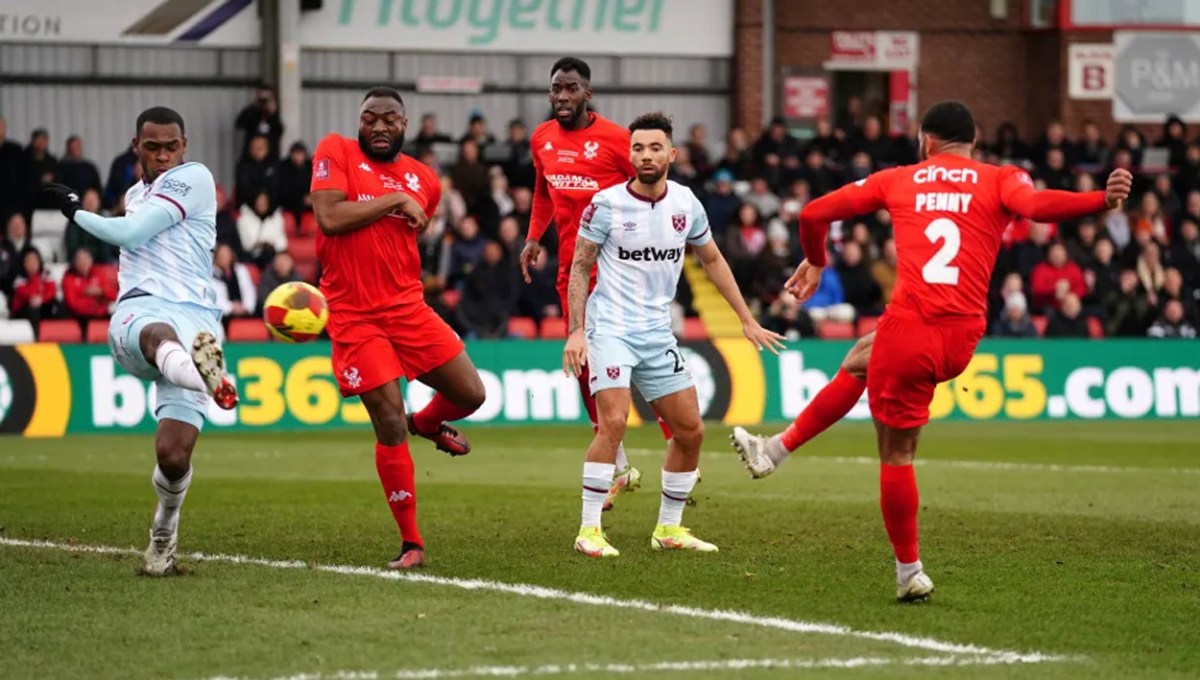
Needing extra time to see off QPR in rather unconvincing manner on Sunday, the ping pong balls bounced kindly for West Ham with a 4th Round away tie at League 1 strugglers, Burton Albion. A first ever meeting with the Staffordshire club. A terrific draw, on the face of it, provided you take the stance that past West Ham cup upsets are not indicative of future results. Sub-editors up and down the country will already have the Gone For A Burton headlines ready and waiting.   

We Beat a Mush from Shepherds Bush

I watched a video on Youtube last week explaining the tactical changes deployed by Daniel Farke to turn around Leeds United’s season. It involved switching to a back five, playing two strikers and freeing up one of his midfielders to be always available as the out-ball. I couldn’t help but wonder if Nuno had seen the same video once the Santo Wheel of Fortune dropped it’s latest team selection prior to kick-off. The returning Aaron Wan-Bissaka came in at right wing-back with Ezra Mayers preferred to Oliver Scarles on the left. The out-ball roll was assigned to Soungoutou Magassa who was either ill-equipped or ill-prepared to deal with the more advanced role, the assist for the opening goal apart. Up-front, it all got quite confusing. Rather than a Farke 3-5-2, it played out as a Nuno 3-4-3 with Jarrod Bowen and Crysencio Summerville preferring to stay wide instead of getting closer to Taty Castellanos up front. Having both wingers and wing-backs on the pitch was a very unusual tactical interpretation.

Unfortunately, fate intervened to prevent Nuno’s master plan from unfolding completely after Dinos Mavropanos was forced off with a neck injury late in the opening half. This saw the introduction of Pablo Felipe and a tactical reshuffle to a traditional back four. It was pioneer territory to see two West Ham strikers on the field at the same time, but their frequently overlapping orbits caused more confusion than it did threat. Hopefully, this is an issue that time spent working together can overcome.  

A Gun Without Bullets is Just a Hammer

With an attack minded quartet of Taty, Pablo, Bowen and Summerville on the pitch, the Hammers should have been peppering the QPR goal from all angles. That it didn’t happen was down to glacial pace of build-up play and the absence of any creative spark behind them – someone to provide the ammunition. Passes back and forth between centre-backs might look good on the possession stats but all it does is allow the opposition to recover their defensive shape.

When Declan Rice left, three things went with him – and have yet to be replaced. Leadership, athletic defensive cover in the centre of midfield, and someone capable of powering past opponents with the ball at his feet. The last point is key to my mind. As much as attacking and defensive reinforcements were sorely needed, a massive creative gap remains in the West Ham midfield. Short passing triangles are ineffective against well organised defences and can easily be countered. More often than not, passes eventually go astray, possession is conceded and an opposition counterattack launched.

Following a positive start to his West Ham career, Freddie Potts is in danger of becoming the latest to follow in the footsteps of late career Mark Noble and JWP in the society of pointless sideways passers. Stay strong and resist, Freddie.

There were, however, a couple of bright spots in the game; notably the committed performance of Summerville and Taty’s powerfully headed goal. Yet, these are caveated by the quality of the opposition – a solid but largely unspectacular mid-table Championship outfit. A glimpse of seasons yet to come perhaps.

Lucas-aid. Not Aiding Recovery

Brazilian footballers continue to have a special aura about them. Animpression that historic success and the roll call of legendary players somehow guarantees success, flair and sublime ball control to all who follow. The reality can be disappointingly different. And nowhere more so than in the West Ham career of Lucas Paqueta whose reputation largely hinges on one through ball in Prague. Sadly, as the occasional flashes of inspiration have diminished, the play-acting, inconsistency, moods, rash challenges and wayward passes have escalated. Even at his best, his contribution has been fleeting rather than as the all-round playmaker we needed and had been hoping for.

There is no sound reason not to let him leave in the January window if another club is willing to stump up the cash. Fighting to retain a Paqueta who does not want to be here and who apparently asked to be left out on Sunday is a desperate and misguided hill to die on.

Let’s just raise some funds and re-invest it on a half-proficient attacking midfielder. Someone able to provide the bullets for the strikers to fire.  

Back to Earth, Back to Reality

It’s a return to league action on Saturday with this season’s version of the El Sackio at the Tottenham Hotspur Stadium. Both managers living under the now routine threat of n games to save their job.

Transfer window gossip moves on apace and there’s always an outside chance that new arrivals will in place for the weekend. But is it all too late? The optimistic view is that there are still 51 points to play for. The pessimistic view is the league table – 21 games played and 14 points.

A character in Ernest Hemingway’s novel The Sun Also Rises is asked how he went bankrupt. “Two ways. Gradually, then suddenly” was the reply. This is the West Ham story, and I doubt there is any way back this time. As supporters, we have seen and predicted the steady decline for many months. But the owners chose not to see it. No strategy, no way forward and nothing being built for the future. The sole objective of survival ruined by the promoted clubs refusing to be useless. The luck has run out. COYI!

Margins, magic and misery; lines, laws and lost causes; offside, out of luck and out of time? West Ham’s fight for survival and the FA Cup’s fading romance

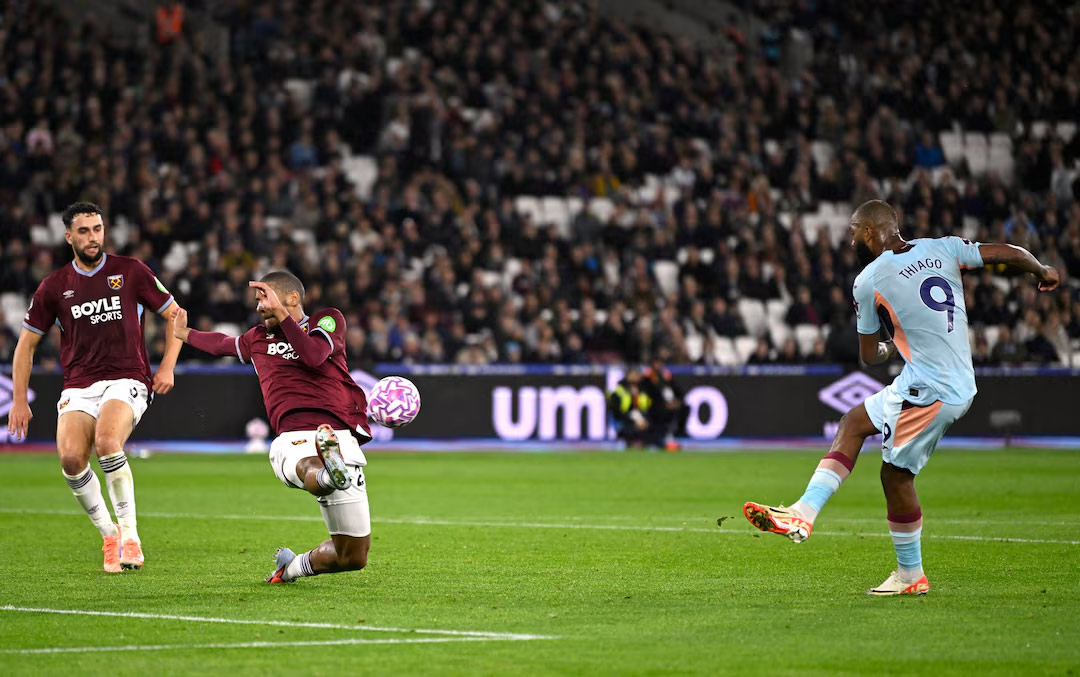
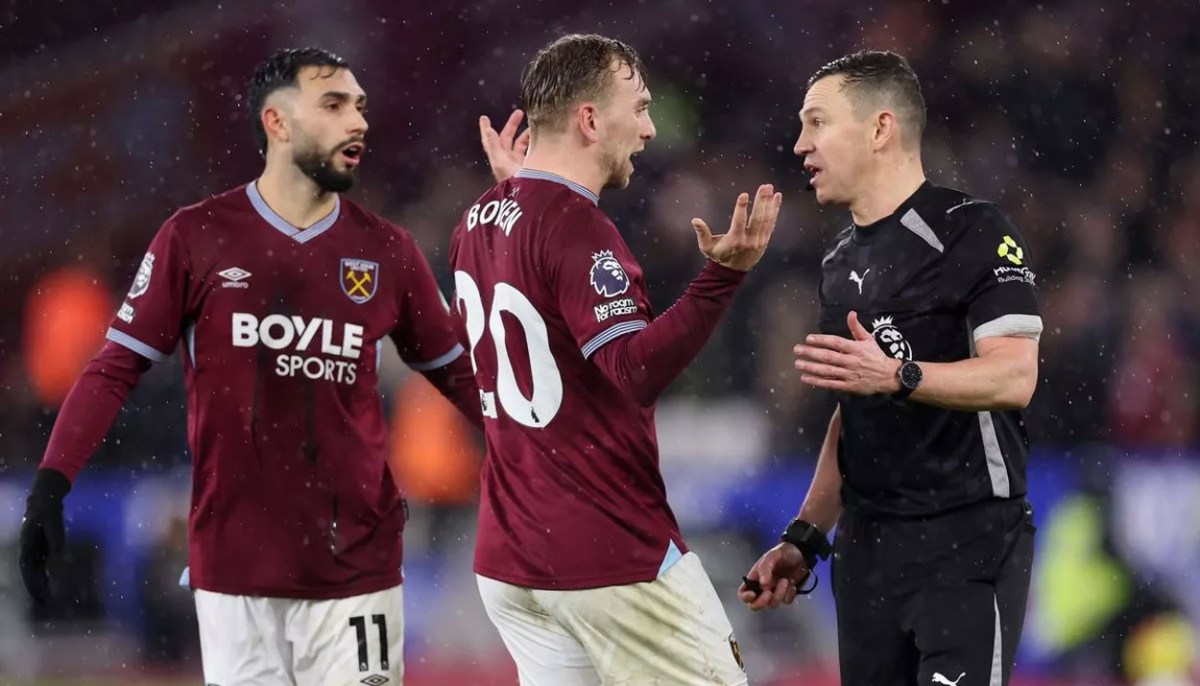
I’ll start by looking back at the Forest game in the week. West Ham thought they had doubled their lead early in the second half when Crysencio Summerville scored, but VAR intervened and ruled the goal out for offside. The controversy centred on Taty Castellanos, who was deemed offside in the build-up. The confusion for fans and pundits was heightened because the ball reached Castellanos after a block tackle by Forest defender Nikola Milenkovic. According to current offside law, a defender’s block or tackle does not reset the offside phase unless it’s a “deliberate play” (i.e., a controlled pass or clearance). In this case, Milenkovic’s intervention was not considered deliberate, so Castellanos remained offside, and the goal was disallowed. I would disagree. I believe that the intervention was deliberate (if it wasn’t deliberate then why was he trying to win the ball?) and that the goal should have stood.

Former referees and experts have criticised this interpretation, arguing that the law is too technical and fails to reflect the spirit of the game. The exact moment the ball is played is also notoriously difficult to judge, especially with frame-by-frame video, and the difference of a split second can mean a player is onside or offside by millimetres. The interpretation of deliberate or uncontrolled intervention is also impossible to judge. Surely it is deliberate if the defender is trying to win the ball?

The offside law was originally introduced in the 19th century to prevent “goal hanging”—players loitering near the opposition’s goal waiting for a pass. Over the years, the law has been revised several times (notably in 1925 and 1990) to encourage attacking play and make the game more exciting. However, the law now hinges on technical definitions of “deliberate play” and “active involvement,” which can be difficult to interpret even with video technology. Many (including me) have argued that it should be amended even further to the attacking team’s advantage. This could easily be done by introducing the clear daylight rule in that there has to be a gap between the attacker and defender before offside decisions are given. Let’s do away with this nonsense about parts of the body that can legitimately play the ball.

Many argue that the law is out of date and does not reflect the modern game, where split-second decisions and marginal offsides are decided by technology rather than the naked eye. The spirit of the law, to prevent unfair advantage, has been lost in a sea of technicalities.

Late in the match, Nottingham Forest were awarded a penalty after Alphonse Areola caught Morgan Gibbs-White in the face while attempting to punch clear a set-piece. VAR advised the referee to review the incident, and the penalty was given. West Ham midfielder Tomas Soucek labelled the decision “a joke,” arguing that such incidents happen frequently and that goalkeepers should be given more leeway when challenging for the ball. Former referee Mark Clattenburg, however, said the decision was correct because Areola failed to make contact with the ball and caught the player instead. I have always argued that penalties should only be awarded when an obvious goal scoring opportunity is denied which is not the case when so many penalties are awarded in football games.

Is VAR ruining football? VAR was introduced to eliminate clear and obvious errors, but its use has become far more pervasive. Instead of correcting blatant mistakes, VAR now scrutinises marginal offsides and subjective fouls, often leading to long delays and confusion. Fans and players complain that the flow of the game is disrupted, celebrations are muted, and the joy of football is diminished.

Should VAR only be used for clear and obvious errors? According to IFAB, the game’s law-makers, VAR should only intervene for “clear and obvious errors” or “serious missed incidents” in four match-changing situations: goals, penalties, direct red cards, and mistaken identity. However, in practice, VAR is often used for marginal decisions that require multiple replays. Many (including me) argue that if a decision needs to be viewed more than once, it cannot be “clear and obvious,” and the original on-field decision should stand. We shouldn’t have to wait so long for a decision to be made. These delays ruin the spontaneity of the game.

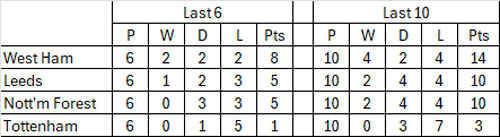
If the decisions had not gone against us the gap to Forest might now be just one point or perhaps four points. But our defeat to Forest leaves us seven points adrift of safety, with relegation odds now as short as 8/11 or even 1/5 with some bookmakers. The team is winless in ten matches, and the pressure on manager Nuno Espirito Santo is mounting. While mathematically possible, survival looks increasingly unlikely unless there is a dramatic turnaround in form, which is hard to see at the moment.

There have probably been games this season when controversial decisions have gone in our favour although I cannot recall any important ones. But these are not the reasons behind why we are very likely to be relegated. So often we put ourselves in situations where marginal calls become decisive, but a whole book could be written to describe why we are in the position we are where Championship football next season is probable. We’ve written about them all through this miserable season and I won’t return to them now!

West Ham host QPR in the FA Cup third round at the London Stadium on Sunday. I can remember when I was young there was magic and romance attached to the FA Cup competition right from the early rounds when local non-league clubs took part in the qualifying rounds, then when West Ham entered in Round 3 and all 32 games kicked off at 3 o’clock on an early January Saturday, and right up to Cup Final day itself in May. But has the magic and romance disappeared from the FA Cup?

The Premier League and UEFA Champions League now overshadow the FA Cup in terms of prestige, financial reward, and global attention. Top clubs often prioritise these competitions, fielding weakened teams in the FA Cup’s early rounds, which can diminish its importance and allure. The crowded football calendar means the FA Cup sometimes feels like an afterthought. Kick-off times are often dictated by TV schedules rather than tradition, making it harder for match-going fans to attend and reducing the sense of occasion.

The financial gap between Premier League and lower-league clubs has widened. The FA Cup’s prize money is modest compared to league placements or European qualification, reducing its incentive for bigger clubs. Having said that the big clubs are almost always the winners in the end.

Changes such as the abolition of replays and the moving of the final from its traditional Saturday 3pm slot have eroded some of the competition’s unique traditions, making it feel less special to some supporters.

Does the magic and romance still endure in any way? The FA Cup remains famous for “giant-killings”, when smaller clubs defeat Premier League giants, it still makes news. Recent years have still produced memorable upsets, such as Stevenage beating Aston Villa, Crawley Town thrashing Leeds, Plymouth Argyle’s shock win over Liverpool, and even yesterday when statistically we had the biggest upset of all time with sixth tier Macclesfield deservedly knocking out the holders Crystal Palace. These moments capture the essence of the competition and keep the romance alive. As West Ham fans we’ve been on the receiving end of so many of these giant killings in my lifetime!

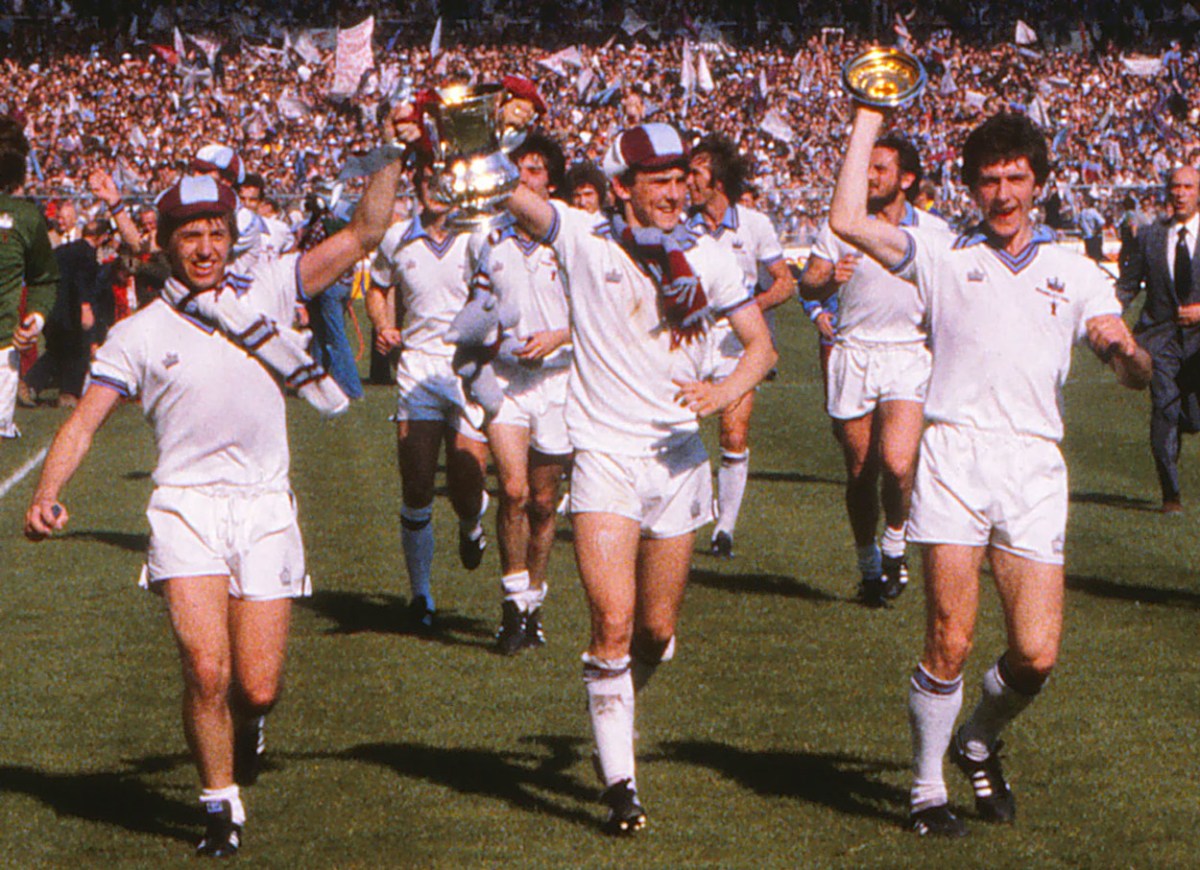
As the world’s oldest national football competition, the FA Cup still carries a unique historical and cultural significance. For most fans and clubs, winning the FA Cup is still a dream and a source of immense pride. How we’d love to repeat 1964, 1975 and 1980!

For lower-league and non-league teams, the FA Cup offers a rare chance to play on a big stage, secure financial windfalls, and create lifelong memories for their fans. These stories, like non-league teams reaching the later rounds, are the heart of the FA Cup’s enduring appeal. The competition still inspires passion, especially in local derbies or when underdog teams are involved. For many, the “magic” is now more selective, shining brightest in these moments rather than universally.

Some fans and commentators argue that the FA Cup’s “magic” is now a cliché, used to paper over the reality that the competition has lost some of its former glory. Others point out that the romance is still there, but it’s harder to find amid the dominance of elite clubs and commercial pressures. There is nostalgia for the days when the FA Cup final was the highlight of the football calendar, but also recognition that the competition still produces drama, upsets, and moments of pure football joy.

The FA Cup may not hold the universal magic and romance it once did, especially for top clubs and younger fans raised on the Premier League and Champions League. However, for smaller clubs, traditionalists, and those who cherish football’s unpredictability, the FA Cup still provides unforgettable moments and upsets that keep its spirit alive. The “magic” hasn’t disappeared, it’s just harder to find, and perhaps more precious when it appears.

There was a time when I was young when I would have been really excited by this third round game against Queens Park Rangers and hoping that we would still be in the draw for the fourth round that I would listen to on the radio on the following Monday lunchtime, another tradition that has disappeared. But this season has been such a miserable one that my interest is much diminished. In times gone by there was always a hope that we could win a few games and reach Wembley. This time around I would love us to do this but I reckon there is less chance of us going to Wembley than escaping relegation. But it is so long since we won a game that it would be good to beat QPR (even a weakened QPR with several players out injured and chasing a play-off position in the Championship) and perhaps give some of our fringe players a run out to show what they can do (or not!). I remain hopeful!  

Remembering 50 years ago when West Ham won the FA Cup

(Prior to facing rock bottom Southampton this weekend we take a trip down memory lane with a nostalgic look back at the 1974-75 season)

After a 4-0 opening day defeat at Manchester City to begin the 1974-75 season West Ham only won one game in the first seven matches and were bottom of the league. This led to a managerial change and long-standing coach and former player John Lyall became the team manager under the guidance of Ron Greenwood.

A big change at Upton Park at a time when Britain was in the midst of a double-dip recession and change was present everywhere. At the time colour TVs had only been here for a few years enabling us to watch the three channels available, BBC1, BBC2, and ITV. A new 22-inch colour TV cost £259 (inflation adjusted to the present this is approaching £2000!), and we could watch a brand new comedy series (Fawlty Towers), but the internet, mobile phones, (even the Premier League!) and many other aspects of modern life as we know it now were still some years away. Petrol costs at the time had risen rapidly and had now reached around 17p per litre, although it was still sold in gallons at the time, and we could buy a brand new Ford Cortina for £1,765. A pint of beer set us back around 28p, a newspaper around 5p, and the average house price was around £12,000.

But, back to football, and we needed changes on the pitch if we were to progress after the dismal start. Billy Jennings and Keith Robson were bought and this had an immediate effect when they were teamed up with Bobby Gould in a front three which was immediately successful when all three scored (Jennings and Robson were on their debuts) when Leicester City were thrashed 6-2, Birmingham 3-0 and Burnley 5-3. Our new recruits had scored nine goals between them in their first three games together.

Five wins in September and October were followed with an unbeaten run of nine games from the beginning of November until Boxing Day as we rose to fifth in the First Division. That was the highest placing we managed in the season as we then began what was traditionally known as West Ham coming down with the Christmas lights as we gradually descended the table to finish thirteenth.

Looking back at the season we can see how things have changed in the last fifty years. The 22 team first division saw Derby County crowned as champions for the second time in four years (ironically they too only recorded one win in their first seven games), and teams such as Ipswich, Stoke, Sheffield United, Middlesbrough, Leeds, Burnley and QPR all finished in the top half. Newcastle, Arsenal and Tottenham (like ourselves) all finished in the bottom half and Chelsea were relegated alongside bottom club Carlisle. Just look at the league tables to see where Carlisle are now! (second from bottom of league 2 and likely to be relegated from the football league). Manchester United were a second division team, as were this weekend’s opponents Southampton who finished 13th.

We did face Southampton that season though in the third round of the FA Cup at the start of a memorable cup run. Gould and Lampard scored our goals in a 2-1 victory at the Dell. In Round 4 we were drawn against third division Swindon Town but we could only draw 1-1 at home (Jennings) before winning the replay away 2-1 (Brooking, Holland). And 2-1 was once again the score when we defeated QPR at Upton Park with goals from Holland and Robson to earn a quarter-final tie at Highbury.

There had been a surprise signing just before Christmas that season when a young Alan Taylor was signed for £45,000 from fourth division Rochdale. He had only four substitute appearances before he was chosen to start at Arsenal and he scored twice as we once again scored two goals to win the game 2-0.

We were now in the semi-final and having seen all the games up to this point I remember travelling with Geoff to Villa Park on April 5th to witness one of the most drab games of football we had ever witnessed as both ourselves and Ipswich played out a 0-0 bore draw. The replay was at Stamford Bridge the following Wednesday when in snowy conditions we were outplayed by high flying Ipswich but somehow once again won the game 2-1 with Alan Taylor scoring twice again. Ipswich were a top team at the time finishing third that season just two points behind champions Derby.

Fifty years ago this Saturday (19th April) I had to miss the home league game against Coventry City as I was getting married on the day. We lost the game 2-1, the eighth game in a run of nine league games where we had failed to win. A honeymoon in Majorca was kept to one week to enable me to be back for the final on May 3rd where for the sixth round of cup football in a row we once again scored two goals in a 2-0 win against second division Fulham who had Bobby Moore and Alan Mullery in their side. Alan Taylor made history scoring two goals that day to follow his two goals in the quarter- final and semi-final.

This Saturday we face already relegated Southampton who are rock bottom with 10 points and looking to pick up more to avoid the unenviable record of being the worst team in Premier League history. Our league position is not much better than theirs – following our late 2-1 defeat to Liverpool last weekend we have slipped to 17th, immediately above, and thankful for, the three teams who are so far below us. (See Geoff’s article reviewing the game). I agree with most of his excellent review but personally I wouldn’t want Alvarez replacing JWP. We are, however, just three points below Everton in thirteenth, so a successful run in our final six games of the season could possibly elevate us into 13th, the exact position we occupied 50 years ago.  

But this time around we don’t have a Cup Final to look forward to, and I suspect most of us as West Ham fans are just looking forward to the end of this poor season, the summer transfer window, a clearout, some new faces, and with renewed hope for a better campaign starting in August.

As West Ham visit Aston Villa in the Third Round of this season’s FA Cup the debate continues – has the competition lost its magic?

My first recollection of the FA Cup goes right back to the 1958-59 season. West Ham were drawn away to our local rivals Tottenham in the third round. This was our first season back in Football League Division One, the top flight of the English game, and we were flying high. When the game was played on Saturday January 10th we were a very respectable tenth in the 22 team division, having been top after six games. By the end of the season we had climbed to sixth. Tottenham were poor that season eventually finishing eighteenth, although they were to finish third a year later and champions (and double winners) the year after that. What is more, we had faced them on Christmas Day, beating them 2-1 at Upton Park (the day I saw my first ever league game), and then thrashing them 4-1 at White Hart Lane on Boxing Day (the following day – and players today complain about the number of games!). A little under two weeks later they got their revenge beating us 2-0 on their home ground to knock us out of the cup.

This was the first of my personal FA Cup competition disappointments losing to a team lower placed than us. In the ensuing (approaching 70) years there have been so many more. The following season we went out in Round 3 again in a replay losing 5-1 at home to second division Huddersfield Town. The season after that round 3 again losing to second division Stoke City in a replay, and the following year the third round once again to lowly Plymouth Argyle! The list goes on – name the most embarrassing – Swindon, Mansfield, Blackpool, Hull, Hereford, Newport County all knocked us out in the sixties and seventies. The amazing thing is that we won the competition three times by 1980, 1964 v Preston North End, 1975 v Fulham, and 1980 v Arsenal. Three great final memories that live with me all these years later.

Back in those younger days the FA Cup was a magical competition for me, and I suspect most fans. Apart from the odd England international the final was the only game that we could see live on TV each season. But has it lost it’s magic? I guess this is a question that has been a recurring topic in football discussions for some years now.

Certainly, there has been a decline in prestige. The rise of the Premier League and the UEFA Champions League and other European competitions has overshadowed the FA Cup. Top clubs prioritise these competitions over domestic cup games.

‘Bigger’ clubs often field weakened sides, especially in the early rounds, which sends out a signal that the FA Cup is not a priority, leading to the perception that it’s less important than it used to be. And it’s not just the so called ‘bigger’ clubs. All the Premier League clubs have big squads and want to keep all squad players happy. And with an ever-growing calendar the FA Cup sometimes feels like an afterthought in the crowded schedule, especially for those clubs involved in multiple competitions. Clubs involved in the relegation struggle prioritise league games, and mid-table clubs (like us?) seem to believe that finishing a place or two higher in the league is more important than a good cup run. I don’t believe that fans agree with that.

However, analysis of the eventual winners in the last twenty years shows that in general ‘big’ clubs win the trophy. Two notable exceptions in that time are Portsmouth (2008) and Wigan (2013). Perhaps you could add Leicester in 2021? Otherwise it has been Chelsea (5), Arsenal (5), Manchester City (3), Manchester United (2), Liverpool (2).

Another aspect relates to TV and scheduling issues. These days, kick-off times prioritise national and global television audiences over match-going fans. In theory late-night or weekday games have perhaps alienated some traditional supporters. But fans still attend games in vast numbers so football authorities are not concerned and are happy to spread the games for maximum TV coverage.

In my younger days the FA Cup third round was another magical day in the football calendar. It was the day that the top two divisions joined the other clubs from the top ten levels of the English football league pyramid who had competed through up to six qualifying rounds to reach the First Round proper and then two further rounds when teams from Divisions Three and Four (now equivalent to Leagues One and Two) also joined in. 64 teams playing 32 matches that all kicked off at 3pm on the same Saturday afternoon.

What happens now? Well this season there were 3 games on Thursday 9th, there’ll be 2 games on Friday 10th, including our own trip to Villa Park, 19 games on Saturday, 7 games on Sunday, and one on Monday. All in all 15 different kick-off times spread over five days for the 32 games.

One aspect that has grown over the years is the financial disparity. The prize money and financial impact of the FA Cup pales when compared to league placements or European competitions, reducing the monetary incentive. This season, the FA Cup winners will collect a prize of £2 million, whereas for each incremental position in the Premier League teams benefit by more than £3 million. In financial terms alone it’s a no-brainer. Unfortunately too many decisions regarding football are based on money.

Having painted a picture of a loss in the magic, the competition still retains it to some degree. The FA Cup continues to throw up underdog stories where smaller clubs upset the giants of the Premier League, moments that can capture the essence of why we love football. Unfortunately, this year’s format has removed replays from the First Round Proper onwards making it harder for lower league teams to secure financial windfalls. FA Cup replays were once part of the magic of the competition.

I still recall with fondness the memories of our semi-final replay over Ipswich in the snow at Stamford Bridge in 1975 on our way to lifting the trophy, and the semi-final replay in 1980 at Elland Round where we beat Everton on our way to winning the Cup in 1980 (remember Frank Lampard dancing around the corner flag!). You have to remember we were one of the ‘smaller’ clubs in 1980 (in league division terms we were second tier) – these games can sometimes create lifelong memories for fans, that few league games do.

As the oldest national football competition in the world the FA Cup still carries a unique historical and cultural significance, certainly for those of us who recall moments of pure football romance. The FA Cup may not hold the same stature it did in its heyday due to changes in the football landscape, but it still provides moments of magic, particularly for smaller clubs and traditionalists (like me!). The “magic” may now be more selective rather than universal, but it hasn’t completely disappeared. Whether it has truly “lost its magic” often depends on what we as fans value most in football today.

Our third round tie this season is on 10th January, exactly 66 years ago to the day from when I remember my first, way back in 1959. So many disappointments in those intervening years as well as three great memories on winning the trophy. By the time I was just 26 years old we had been FA Cup winners three times, but now as I approach 71, it hasn’t happened again, the closest we came was in 2006 when we were just a minute away before Steven Gerrard intervened.

We have only faced Villa three times previously in the FA Cup. In 1913, our first ever match against them, they beat us 5-0 in front of 51,000 at Villa Park. In 1977 (I remember this one) in front of 47,000 at Villa Park we were on the end of a 3-0 defeat.

But the one that really sticks in the memory came in the quarter final of the 1980 tournament in front of a full house at Upton Park. Geoff and I watched that game from the front row of B block in the old West Stand. We were just a second division outfit at the time, but ironically it was one of the best times ever to watch West Ham. Incredibly we only managed a seventh place finish in Division Two that season, with a team that boasted Phil Parkes, Alvin Martin, Ray Stewart, Frank Lampard, Trevor Brooking, Alan Devonshire, Stuart Pearson and David Cross. Billy Bonds also, but he was absent for the Villa game. Of course we rectified it the following season when we were runaway champions and gained promotion back to the top flight.

There was only about a minute of the game to go (it was goalless at the time) when Sir Trev swung in a corner from below the West Stand at the South Bank end and a Villa centre back (McNaught) rose and handled the ball as Alvin Martin challenged. The referee gave a penalty with the Villa defender complaining vehemently that Alvin had pushed his arm above his head onto the ball. There was no VAR of course and once the referee had made up his mind that was that. I do remember the incident being discussed at length by Brian Moore on the Big Match on Sunday afternoon. Ray Stewart, one of our master penalty takers in my time of watching West Ham, fired it hard and low to the keepers right and we led 1-0. In typical West Ham fashion there was still time in the minute remaining for Villa to win a free kick on the edge of our area and Phil Parkes was needed to make a save which saw us through to the semi-final. The rest is history. But memories of Cup games (especially of good ones) remain.

Villa are one of the teams against whom we have a positive record with more wins than defeats in history. But in the past couple of seasons they have been on the up. When they beat us 4-1 at Villa Park last season it ended a run of ten games where they had failed to win against us. And of course you will remember the opening game of this season at the London Stadium when we went behind to a header from Onana (who we apparently wanted to buy a couple of years ago) in the opening few minutes. Paqueta converted a penalty to equalise in the first half, and then of course their substitute Duran (who we had seemed to spend the whole summer wanting to buy) inevitably scored the winner. And he has gone on to have an excellent season, sometimes selected ahead of Watkins.

We go into today’s game without the head coach who has been in charge. The season has seemed like a wasted one so far with little prospect of climbing into the top half of the table or challenging for a European place next season. We desperately need a cup run to lift us. Wouldn’t it be great to progress to Round Four? Can the new boss bring a little magic to the club?

How much of a surprise was West Ham’s defeat to Bristol City in the FA Cup?

Last Tuesday night the BBC took their cameras to the Ashton Gate stadium. I wonder why they went there? No, in fact I know why they went there. They just love it when a lower division team knocks a team from the Premier League out of the FA Cup and this game was one that stood out as a potential win for the Championship side. I’ve read reports since that described the game as a shock result, a surprising result or an upset. Was it really?

We went into the game without our most influential players Kudus, Paqueta, Alvarez, Aguerd and Bowen. Key fringe players like Antonio and Fornals were missing too. We lined up at the start with a front three of Ings, Cornet and Benrahma, none of whom had scored a goal this season, but all of whom have been capped by their respective nations.

Ings, an international footballer (hard to believe if you’ve seen him in a West Ham shirt) has scored just three times in over 40 games for the Hammers, admittedly many as a substitute. He just does not fit into the West Ham style, and his alleged vast salary seems to make him even more of a target to the Hammers faithful. The early promise of Benrahma when he signed from Brentford has now seemingly totally disappeared. His form is very poor and he was quite rightly sent off for kicking out after he had been fouled, although conversely Taylor Gardner-Hickman was very lucky to escape with only a yellow card for his assault on Cresswell.

Cornet is a mystery to me. An Ivory Coast international with 30 caps he seems to have been frequently injured, but not picked when available, and the nearest he has come to scoring in a claret and blue shirt in East London was hitting the post in one of his early appearances for us against Chelsea when it would have been easier to score. Before the game it looked like we would have difficulty scoring with those three up front, and so it proved. Ings did make a turn and shot from outside the area that went wide, but that was his only real contribution that I can remember.

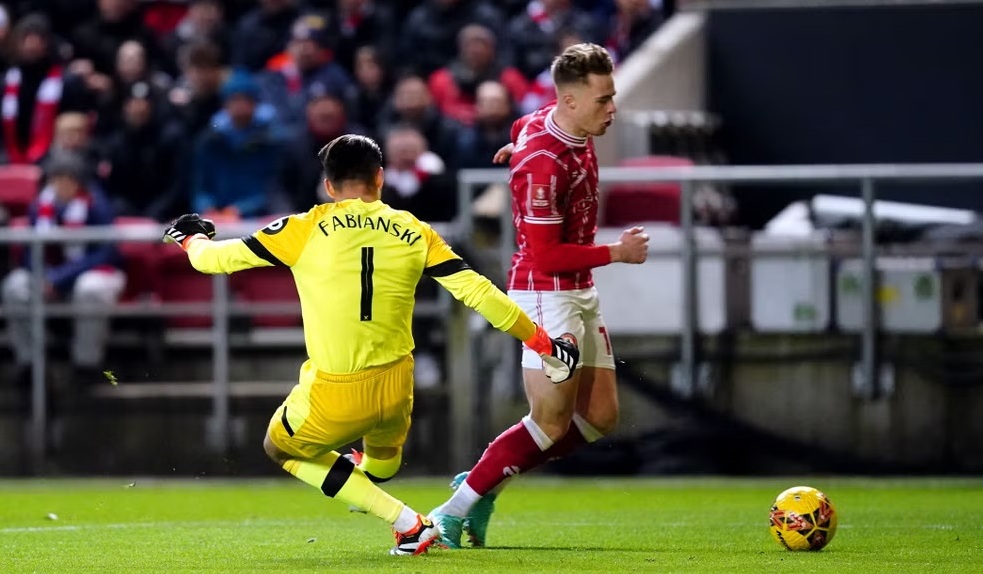
The game was barely underway when Mavropanos (for the second time this season) tried a suicidal back pass which resulted in an early goal for the opposition. Our Greek defender had a sorry night. His defensive duties (apart from being the culprit for the goal) were OKish but his distribution was woeful. Look back at the game and see how many of his forward passes were successful. He frequently gave the ball to our opponents. Zouma and Cresswell, never the fastest players, seemed to be running in sand all night and were frequently outpaced. Fabianski didn’t have a lot to do as Bristol City weren’t much of an attacking threat either, but he did OK with what he had to save. But was he a little slow off his line for the backpass? Would Areola have been there quicker?

Coufal continued with his angry mood of recent games and once again seemed to enjoy fouling opponents and looking innocent when penalised. Soucek had a frustrating time too, failing to control the ball and passing waywardly far too often.

So that just leaves JWP of the starting eleven who had an OK game I thought, at least his passing generally went to a team-mate. And finally Emerson who was the stand-out performer for us in my opinion (not much to beat though!) who had a good game as a wing back with some probing runs forward, but with not a lot of help from others. Johnson looked surprisingly good going forward too when he replaced Coufal, and our other two substitutes, Marshall and Mubama were given little time to impress. I couldn’t believe how long it took for our two forward substitutes to be introduced given our lack of effectiveness in an attacking sense with less than 10 minutes of the 90 remaining. In the few minutes available Mubama’s control and passing didn’t look too great, but Marshall did enough in that short time to suggest to me he should be given further opportunities.

One set of ratings I saw on BBC Sport had Emerson as the standout player for us with 5.77, followed by Fabianski 4.86, Johnson 4.8, Marshall 4.68, JWP 4.62, Soucek 4.53, Zouma 4.14, Coufal 4.08, Cresswell 3.8, Mubama 3.57, Cornet 3.27, Mavropanos 2.88, Ings 2.8, Benrahma 2.39. The ratings are based on fans giving players marks out of 10 and averaged. I couldn’t disagree too much with the overall findings but they do reflect how poorly we played according to those who bothered to add their scores.

The post-match statistics said that we had two goal attempts on target. A Soucek volley straight at the keeper and … you’ll have to remind me of the other one. Rightly or wrongly that was how I saw the game, and once again the anti-Moyes and pro-Moyes keyboard warriors were out in force after the match. In his post-match summary Moyes highlighted looking forward to the European games and our good position in the league. How convincing was he when he said it was disappointing to go out of the Cup?

An eight-man bench comprising two goalkeepers and five academy players highlighted the need (which many of us fans have known for a long time) for greater depth to be added to the squad. Our first eleven when all fit is a decent side, but beyond that this game demonstrated that we are lacking quality to come into the side when injuries and lack of availability are taken into account.

But how much of a surprise was the result? We have ‘form’ in this respect. A ‘non-scientific’ study of West Ham’s performances in domestic cup competitions in the 65 or so years that I have followed the team suggests that we have ‘probably’ been knocked out of the FA Cup or League Cup more times by lower league opposition than any other team in England.

Beginning in 1960, a list of just some of the teams who have eliminated us reads as follows: Huddersfield, Stoke, Darlington, Plymouth, Rotherham, Blackburn, Swindon, Huddersfield (again), Coventry, Mansfield, Middlesbrough, Blackpool, Huddersfield (yet again), Stockport County, Hull City, Hereford, Swindon (again), Newport County, Wrexham, Watford, Birmingham, Barnsley, QPR, Luton, Norwich, Oldham, Torquay, Oxford, Norwich (again), Sunderland, Crewe, Barnsley (again), Luton (again), Bolton, QPR (again), Grimsby Town, Stockport County (again), Wrexham (again), Northampton Town, Swansea, Tranmere, Sheffield Wednesday, Reading, Oldham (again), Bolton (again), Chesterfield, Watford (again), Middlesbrough, Aldershot, Sheffield Wednesday (again), Nottingham Forest, Sheffield United, Wigan, and now Bristol City. Quite a list.

I have probably missed one or two but the teams listed above were I believe either in a lower division to ourselves, or perhaps relegated (or finished very close to bottom) from the same division in the season in question. Of course, cup upsets happen, but I wonder if there are any other top-flight clubs who can match this record in domestic cup competitions?

Dig Out The Claret Ribbons: The Road To Wembley Starts Today As West Ham Entertain Bristol City

It’s the thrill and tradition of the FA Cup despite the third round matches being stretched over five days. Will it be West Ham or Bristol City who grab the number 6 ball in Monday’s 4th round draw.

Did you know that every time West Ham have won the FA Cup they had to beat a team with a bird nickname along the way. It was the Robins of Swindon in 1964 and 1975 and the Swans of Swansea in 1980. And you could also throw in the Throstles if you were inclined to resurrect the West Bromwich Albion’s traditional pre-Baggies monicker. In fact, both abortive final appearances had the same avian connection. The Hammers seeing off the Seagulls in 1923 and the Canaries in 2006. A 3rd round draw against the Robins of Bristol City is therefore conclusive proof that the famous trophy is destined to be festooned with claret and blue ribbons come the end of May.

The road to Wembley is just 16 miles by car from the London Stadium – or just five football matches, excluding replays. But it has been a road less travelled for West Ham since they last lifted the trophy in 1980. In the interim, they have bowed out 12 times in both the 3rd and 4th rounds, 9 times in the 5th round, 8 in the 6th, and lost once in each of the semi-final and final. Going all the way typically involves decent performances, a touch of good fortune, and a favourable draw. Here’s hoping the big six can knock each other out before the big day.

Today will be the third time West Ham and Bristol City have met in the FA Cup. On both prior occasions, it was Hammers who progressed into the draw for the next round. In 1969, goals from Geoff Hurst and Martin Peters (2) helped West Ham to a 3-2 win in a 3rd round tie – a campaign that was later ended by a 3-0 5th round drubbing on a wet Wednesday night in February by 3rd division Mansfield. More recently, Sam Allardyce’s Hammers managed to scrape a fortunate 1-0 win in a 2105 4th round tie courtesy of a goal from substitute Diafra Sakho, who had controversially returned from AFCON due to a back injury.

For two seasons between 1977 and 1978, the two teams competed together in the old First Division (the top tier at the time) where Bristol City won two and lost one from four prior to the Hammers relegation. The Robins were themselves relegated in 1980 and have yet to return to the top flight. This season they are occupying mid-table obscurity in the Championship.

A surprising number of players have turned out for both clubs over the years including George Parris, Ryan Fredericks, Paul Allen, Marlon Harewood, Nicky Maynard, Bobby Gould and Leroy Rosenior. To add to the familiarity, West Ham manager David Moyes was a Bristol City player between 1985 and 1987 while Robin’s boss Liam Manning managed West Ham’s Under 21s from 2015 to 2019.

Manning replaced Nigel Pearson as Bristol City manager as recently as November 2023, having previously worked at MK Dons and Oxford United. According to Wikipedia, his management style is based on a high press and high possession, which might suggest what we are in for today. It’s a little worrying that the weekend has yet to see any of the usual big cup shocks before the masters of the banana skin take the field.

With no game for two weeks, we can expect Moyes to put out a strong side today, subject to the latest injury situation. The performance against Brighton illustrated how poor the team are in possession when the creativity of Lucas Paqueta and Mohammed Kudus is missing. With Kudus away at AFCON it could be a really difficult watch again if Paqman is not available to fight the Robins. Perhaps Moyes will finally give outings to the elusive Maxwell Cornet, Conor Coventry or Ben Johnson – maybe one or two from the Under 21’s – but it is more likely to the same tired old guard of Danny Ings, Pablo Fornals, and Said Benrahma who struggle to step up as usual?

Anyway, let’s be positive. Our name could well be on the cup once the missing stars return and the January cavalry signings arrive. West Ham to win 1-0 with 39% possession. COYI!

Memories Are Made Of This: West Ham Wembley Dreams Face Old Trafford Test

Can West Ham add to their store of thrilling cup memories on a wet Wednesday night in Manchester?

What a difference a win makes! Wasn’t it a pleasant change to be able to enjoy the weekend without having to avoid the highlights shows and seeking out all the match reports you could find with a sense of satisfaction rather than dread?

It was a good West Ham performance throughout the 90 minutes – not the game of two halves that some have suggested. Although, as ever, it was the goals that eventually changed the complexion of the game. Two strikes from Danny Ings in as many minutes simultaneously putting a spring in the Hammer’s steps and causing Nottingham Forest to crumble with a whimper

It is interesting to speculate how and why West Ham at last came to adopt a significantly more positive attitude and approach in last Saturday’s game. Was it the result of tactical genius from the manager and coaches or had the behind the scenes player’s meetings forced them to act? It had been a long time coming but showed their is talent in the squad when given the right opportunity to express it.

It was disingenuous of David Moyes to claim ‘this was the performance I have been waiting for’ – as if the result was entirely down to te players putting in extra effort on the pitch, rather than changes to formation and the removal of virtual shackles from our attacking play. One must wonder why it had taken so long for the management to realise that Lucas Paqueta is so much more effective in a deeper role, as part of a midfield three. Or that playing with a natural finisher is going to going to bring in more goals than a succession of converted wingers. Or that allowing your wide attacking players to spend more time going forward than defending would create more chances.   

Despite the improvements, it was only one game. Talk of a mid-season metamorphosis is massively premature until we see how things shape up against Brighton and Villa in the next two league games. Forest did not provide the sternest of tests – especially once they had inexplicably taken off Shelvey – but they had been on a decent run. The worry now is that the manager’s ingrained and deep-seated caution will find a reason to exorcise whichever carefree sprite had hijacked last Saturday’s team talk. I’ve yet to rule out a return to the well worn mantra of ‘not conceding is the primary objective’ when we take the field at the Amex Stadium.

***

Tonight, sees a break from Premier League relegation concerns with a trip to the home of regular cup tie opponents, Manchester United. The hosts are fresh from Sunday’s Carabao Cup final success and have lost just once in their last 21 outings. Although they have a fierce derby appointment in Liverpool on Sunday, it is unlikely that Erik ten Hag will want to risk losing momentum by resting too many of his first choices for the game. He will have eyes on a cup treble.

West Ham’s record in cup encounters against the Red Devils is a little less dreadful than in the league. Moyes even recorded a shock League Cup win at Old Trafford in September 2021. Indeed, there are several standout memories from cup games against Manchester United dating back to the glorious muddy semi-final win of 1964 that preceded the Hammers first ever trophy win. And who can forget the Di Canoi – Barthez incident of 2001, Geoff Pike’s bullet header in the 1986 5th round replay, Dimitri Payet’s sublime free-kick in 2016, or Jonathan Spector’s brace in the 2010 4-0 League Cup drubbing?

Moyes will be forced to make a handful of selection changes tonight. Danny Ings is cup tied while Lukasz Fabianski and Vladimir Coufal are the latest to check-in at the Rush Green infirmary, where they can hang out with Maxwell Cornet and Kurt Zouma. Moyes may also be reluctant to risk Angelo Ogbonna and Paqueta with important league games on the horizon. But the big decision is whether or not he listens to that little voice in his head urging to return to five at the back. David, be strong!

In the absence of Ings, it could be an opportunity to reintroduce long term injury absentee Gianluca Scamacca to the fray. Ideally he should start but will most probably be a 70th minute replacement for a puffing Michail Antonio.

The FA Cup has the look of a very open competition this season with several big names already fallen by the wayside. Manchester City are firm favourites to end up as winners with their close neighbours just behind. Difficult to argue with that assessment, and a West Ham win tonight would be quite the upset. It’s a one-off game though and anything can happen. But whatever happens, I really hope the boys are given the green light to make a real game of it. COYI!

From White Horse To Donkey Derby: Can West Ham Avoid A Shock At Pride Park

Even in the best of times West Ham are famed for shock cup upsets. Will the same fate await David Moyes beleaguered side when they face Derby County in tonight’s fourth round tie?

This year marks the 100th anniversary of West Ham’s first ever appearance in an FA Cup Final. A match that is etched deeply into English football folklore as the result of iconic images of PC George Scorey and his white horse, Billy, attempting to control the massive crowds who had descended on Wembley Stadium to witness its inaugural footballing occasion.

What is less well known is that the Hammers had reached that 1923 final by beating today’s opponents, Derby County, in a semi-final tie played a month earlier at Stamford Bridge. It is the solitary FA Cup meeting played between the two sides prior to today.

In a thrilling encounter, Sid King’s claret and blue army ran out as 5-2 winners. For those in need of a warm glow of nostalgia as an antidote to the current dismal and declining phase of Hammer’s history, here’s what the Daily Mail had to say about the performance:  

“West Ham have never played finer football. It was intelligent, it was clever, and it was dashing. They were quick, they dribbled and swerved, and passed and ran as if the ball was to them a thing of life and obedient to their wishes. They were the master tacticians, and it was by their tactics that they gained… Every man always seemed to be in his place, and the manner in which the ball was flashed from player to player – often without the man who parted from it taking the trouble to look – but with the assistance that his colleague was where he ought to be – suggested the well-assembled parts of a machine, all of which were in perfect working order.”

The Hammers, who were in the second tier of English football at the time, had made it to Wembley without having to face any teams from the top division.  In these troubled times, an equivalently benign draw would be the only route to an extended cup run this time around. The competition might have already seen several top names bow out early, but plenty remain who routinely have our measure.  As the 5th round ties will be dawn before tonight’s game kicks-off, it might be tempting to throw in the towel if we are paired against either Manchester clubs, Tottenham, or Brighton. And an in-form Derby will not be an easy obstacle to overcome in any case.

Derby seem to have spent most of this century staggering from one financial crisis to another and a points deduction and transfer embargo saw them slip into the third tier of English football at the end of last season. However, a lengthy unbeaten run now has them well placed to secure a speedy return to the Championship if performances are maintained.

The Rams enjoyed some memorable times in the 1970s, winning the old First Division on two occasions at the legendary Baseball Ground mud bath. Although they have only competed seven seasons in the Premier League, they have spent a total of 65 seasons as a topflight club – exactly the same number as West Ham. They have one FA Cup title to their name, beating Charlton Athletic 4-1 (after extra time) in the 1945/46 competition.

West Ham go into the game off the back of a seat of the pants victory over Everton last weekend. The Hammers were marginally the better side without convincing that any corner had been turned or that momentum was now with them. We can only speculate on what might have happened if the result had gone the other way. As things stand, we are likely stuck with the same manager and the same group of players for the foreseeable future. Whether they can cobble together the six or seven wins needed for survival remains to be seen.

It is possible, I suppose, that a surprise or two could be sprung before the transfer window closes tomorrow, but all I’m expecting is the arrival of the underwhelming Michael Keane. Sadly, we must pin our hopes on a slow, ageing, unmotivated, and injury-prone squad.

David Moyes will be without Kurt Zouma, Gianluca Scamacca, and Danny Ings when he makes tonight’s team selection, leaving Michail Antonio once again as the only fit ‘striker’. Will Moyes give Divin Mubama an opportunity? It is always difficult to know how well young players will step up but he looks to have an eye for the goal, good movement and the right physique. Has to be worth giving it a go – and not for just the last five minutes.

West Ham have a long history as FA Cup banana skin specialists. Only 12 months ago, they were lucky to get past non-league Kidderminster Harriers. It would only be an upset on paper if they went out tonight. It wouldn’t be the greatest shock and we’ve lost to far worse teams than Derby in the past. I’m just hoping it doesn’t end in a draw. COYI!     

East London Football Club Seeks Winning Formula: Will Swap For A Claret Ribbon

West Ham’s desperate search for a win continues as they travel to Brentford in the FA Cup. Will we get an inspiring fight to the finish or a typical tame surrender?

I just entered ‘Road To Wembley’ into my new AI powered SAT-Nav software and was directed to “take the 3rd round exit at Brentford.” You can’t argue with the algorithm!

If I interpreted David Moyes press conference wisdom correctly, he stated that, as a manager, success in the Premier League is the most important thing, but that a good cup run is equally important. I’m glad he cleared that up. The pressure of the alleged three match ultimatum must clearly be getting to him.

Whatever happens today, it is unlikely to have much bearing on Moyes’ future. Winning will be meaningless if the crucial games against Wolves and Everton both end in defeat. In the same way, losing today will not harm his prospect of he follows it up with two wins. We can only speculate on what the owners would view as an acceptable return from those two games. Four points at least I would imagine.

We should be encouraged that Moyes is now talking about trying to find a winning formula. After all, its only a year since it was lost. How far away from achieving it is a matter of opinion. There did seem to be a greater sense of spirit and purpose in the performance at Leeds but much more needs to be done. Clearly the return of Kurt Zouma and Nayef Aguerd at the back will help enormously, but it will not solve the full-back conundrum. And if the manager needs Gianluca Scamacca to get into the box more, he needs to set up for better service and support.

Moyes has also recently changed his tune on the likelihood of January signings – having previously said the cupboard was bare. The decision may well have been taken out of his hands in the light of his precarious position and the less than spectacular impact of the summer arrivals. The club has painted itself into a corner. Replacing a manager with just a few days remaining in the window would be far from ideal timing.


Moyes’ FA Cup record in his two spells at West Ham has been as indifferent as those that went before him. A 4th round defeat away at Wigan (League 1), a 4th round loss at home to West Bromwich Albion (Championship) and exits away to Premier League rivals Manchester United and Southampton, both in 5th round ties.

In the years since the 1980 FA Cup final victory against Arsenal, West Ham have been knocked out of the competition at the following stages: 3rd round (12 times), 4th round (12), 5th round (8), 6th round (8), semi-final (1) and final (1). In the last ten seasons they have only made it as far as the 6th round once, in 2016. Will we ever see the claret ribbon fluttering on the famous trophy again?

This season’s third round opponents are Brentford who will be looking for a fourth straight win against the visitors. In the previous three games West Ham were overcome by the aggressive pressing and powerful running employed by the Bees. A different attitude and approach will be needed today if a different outcome is to be secured. The best hope of victory may be to rely on the ancient unwritten rule that a team that has just beaten you in the league will lose in the return cup tie a few weeks later.

West Ham and Brentford have met just once before in the FA Cup – a 4th round tie in 1927. Third Division Brentford held First Division West Ham to a 1-1 draw at Upton Park and the two teams met again four days later at Griffin Park. Despite having four England stars in the line-up – Vic Watson, Jimmy Ruffell, Ted Hufton, and Stan Earle – the Hammers were soundly beaten 2-0 by their lively opponents. Syd King Out!

For the older generation the excitement of the 3rd round cup was as much part of the new year landscape as frozen points at Upminster. It was a time to varnish the rattle, re-align the badges on your bobble hat, and order a brand-new jar of Bovril. Now the competition only comes alive in the later rounds, when the metaphorical twin towers are in close touching distance.

Moyes’ pre-match comments suggest he will be rotating his squad for today’s game. it is understandable that he will not want to risk further injuries with key games coming up. But if he really is trying to rediscover that elusive winning formula, he needs to be doing it with his first-string players. His stock is already close to flatlining with supporters and a half-hearted approach today will not be tolerated.

Maybe just as important to how the match unfolds is the approach Thomas Frank takes to the game. The Bees are currently buzzing. Will he want to give certain players a rest or will he leave things alone to build on the momentum of wins against Manchester City, West Ham, and Liverpool.  

It is always difficult to call these games without knowing how much importance the coaches attach to the FA Cup. What is certain is that another low intensity, passive performance by West Ham will be routinely punished by the hosts. The only way to get a positive result will be to match Brentford physically. Will we be up to it and up for it? COYI!

A remarkable two years as we look back on West Ham’s progress in that time.

Tonight West Ham face Southampton in the fifth round of the FA Cup hoping to take another step towards winning a trophy

It has been quite an amazing couple of years for West Ham. Just two years ago as coronavirus (we didn’t call it COVID 19 then I don’t think) was beginning to attract more attention and we were all washing our hands more regularly (no lockdown or social distancing at that early stage) there we were battling relegation. We had already been dumped out of the FA Cup by Championship side West Brom, as well as on the end of a 4-0 thrashing in the EFL Cup by lowly Oxford United.

Our last home game before the (2019-20) season was suspended on 13th March was on 29th February 2020 was against Southampton, almost two years to the day before we meet them again in the fifth round of the FA Cup this evening. We beat them 3-1 that day, climbing out of the bottom three in the process, and rising to 16th in the league. We only played once more (a 1-0 defeat at Arsenal) before the season resumed on the 19th June (we lost to Wolves on that day too).

On that Leap Year’s Day two years ago, Jarrod Bowen put us in front, scoring his first Premier League goal on his full debut when he lifted the ball over McCarthy in the Saints goal from Pablo Fornals’ fine through ball. Southampton equalised with a goal from Obafemi but we restored our lead before half-time when Sebastien Haller beat McCarthy to Antonio’s cross that hung in the air and scored from close range. Antonio then increased our lead to 3-1 early in the second half, gathering Fornals’ pass and sliding the ball past McCarthy. It was our first win in eight matches. As we sat in the cold February sunshine little did we realise how long it would be before we could return to the London Stadium to see our team again. In front of empty stadiums we picked up 12 points from our final seven games to avoid relegation.

Football continued to be played in front of empty stadiums in 2020-21 and after losing our opening two games, we began to see a new West Ham. By 27 February 2021 (just one year ago) we had only lost a handful of games and sat proudly in 4th place in the Premier League table. I was one of the lucky ones in the ballot to be among the crowd of 10,000 to witness our final home game of the season when we comfortably beat Southampton 3-0, Pablo Fornals once again having a big influence on the game, scoring twice in the first half before Declan Rice wrapped up the scoring late in the game. That meant we finished 6th at the season’s end, narrowly missing out on the top four but qualifying for a place in the Europa League.

Fast forward another year and we sit in fifth place in the Premier League with just eleven games of the league season to go. We are also in the Europa League knockout stages, where we have been paired with La Liga side Sevilla, as well as the Fifth Round of the FA Cup tonight. What a transformation in just two years! None of us can honestly say we saw this coming when we went into lockdown two years ago.

It will not be easy for us tonight. Southampton have been in excellent form lately, and their 11 points from their last 5 league games is bettered by only two teams (Liverpool with 15, and Newcastle with 13). In fact they have only lost once in their last ten league games (3-1 at Wolves), a run (5 wins and 4 draws) which has seen them climb from 16th (just above the relegation places) to 9th, sitting vary comfortably in mid-table.

They needed extra time to knock out both Swansea and Coventry in the last two rounds, but now we’ve reached the stage where the winners of this tie will progress into the last eight, I would expect both teams to field close to first choice sides. They certainly should because at this stage we are only three wins away from a place in the FA Cup final and the chance to lift a trophy. Of course we remember the last round very well, only just surviving to get past Kidderminster thanks in the main to Declan Rice.

Ron Greenwood Taking Home The FA Cup in 1964. Will This Be David Moyes in 2022?

Southampton’s fine recent form sees them installed as favourites to win the tie by the bookmakers at around 13/10. The odds on a West Ham win are around 2/1 with 12/5 on a draw in 90 minutes. Betting on cup games is always a precarious business as you can never be sure how strong the teams will be. You’d like to think that being this close to a Wembley final would mean that teams are at full strength but that is not always the case.

In the next 19 days, starting with tonight’s last 16 game at Southampton we will play 6 matches, including home and away ties against Sevilla in the Europa League last 16, as well as three league games with visits to Anfield and White Hart Lane plus a home game against Aston Villa.

I wonder where we’ll be in three weeks’ time? We could be in the Quarter Finals of the FA Cup and the Europa League and still challenging towards the top of the Premier League. Or perhaps we might only have eight league games left of our season having gone out of both cups? Or perhaps even somewhere in between?

With the relatively thin squad available to choose from it is remarkable that we are where we are considering where we were looking back to just two years ago. But whatever happens in the next two weeks and then in the final weeks of the season it is interesting to hear David Moyes’ thoughts. At the Press Conference prior to tonight’s game these are some of his quotes:

“Every manager wants to win a trophy.” “We’re on a good track but the next couple of years will be an important time. We’re trying to build a team that’s getting stronger.” “I look more at how we’re going to continue to try to build the club and keep getting closer to winning trophies.” “We’ve made a swift move towards the top end of the Premier League. We’re involved in Europe, had a decent run in the Carabao Cup and we’re trying to get a good run in the FA Cup if we can as well”

Well done David Moyes and his coaching team. What a fantastic turnaround in our fortunes in just two years.