Meet The New Boss, Same As The Old Boss: And Why Nuno Faces A Herculean Task at the London Stadium

A West Ham manager’s lot is not a happy one. Can Nuno find an answer to the long running conundrum of producing a sustainable, professional team at a broken and dysfunctional club?

Supporting West Ham has never been a pursuit for the glory hunter or the faint of heart. For most it is an act of faith founded on community, shared identity, loyalty, passion, a sense of belonging, and wherever possible, entertainment. It is not, sadly, a vision shared by the owners.

There can be no argument that English topflight football has changed over the years – some good, some bad – with its global appeal. TV deals, influx of money, overseas players and financial regulations. Where well-run clubs have innovated and adapted to these new realities, the leadership at West Ham has refused to shift, preferring to the celebrate their amateurism and defy progress. Compounding the unpopular handling of the stadium move with an approach to football that rarely looks beyond the next fixture. The added irony being that the cost cutting London Stadium agreement – feted by pundits as the ‘deal of the century’ at the time – now sits like a millstone around the club’s neck to limit the much needed matchday and commercial revenues that are growing rapidly at rival clubs.

There is a concept known (appropriately) as Maslow’s Hammer which states that “if the only tool you have is a hammer, then every problem will look like a nail.” In a West Ham context, this translates to a belief that all performance issues can be addressed by the mirage of a new managerial appointment. Nothing else in the slipshop way the club is run ever needs to change!

The result for supporters is a cycle of chronic anxiety. A Groundhog Day where each new manager enjoys a honeymoon period of variable length, inevitably followed by a steady decline of fluctuating velocity. A decline characterised by a campaign of undermining, leaks and sabotage from the Boardroom. The best-case scenario (for the club) is a manager who makes it through to the end of their contract before being terminated (Allardyce, Moyes). But more usually, they will be fired whenever the spectre of relegation (and financial Armageddon) appears on the horizon.

If you toss a box of assorted West Ham Premier League statistics into the air, what you get when they land is a picture of prolonged mediocrity. Averaged across 29 seasons, the return from 38 matches is 12½ wins, 9½ draws, and 16 defeats: a total of 47 points, negative 8 goal difference, with an expected 11th or 12th place finish. An optimist might interpret this as prudence and stability but really, what is the point of a survival only strategy when it is at the expense of entertainment, ambition and a raucous matchday experience.

In truth, the stats show little difference between the pre and post GSB eras. The only significant distinction being that the current owners have spent a lot more money and made a much bigger song and dance of how incompetent they are.

It would be unfair not to recognise that above average seasons do ocasionally arise: 2015/16 and 2020/21 are notable examples. But where these have occurred, they are the result of temporary good fortune rather than years of good stewardship, squad building and team planning. In 2015/16, Slaven Bilic was able to overlay the mercurial talents of Dimitri Payet onto the organisation inherited from BFS. In 2020/21, David Moyes had the emergence of Declan Rice and the inspiration of Jesse Lingard to turn trademark defensive caution into surprising attacking threat. Both false dawns which failed to survive the loss of key players.

So, what does all this mean for Nuno Espirito Santo as the latest occupant of the West Ham hot seat? Can he break the spell of mediocrity? Implement a style of play that supporters desire and are happy to pay to watch – entertaining, fast paced, front foot, quick transition football? I’d like to think he can but ask me again at the end of November for confirmation. He has been saying many of the right things, has been prepared to take a serious look at the younger players, and is much easier to listen to than his immediate predecessors.

But sorting out West Ham from where they are now is a Herculean task. In fact, Hercules himself would have to think twice before choosing whether to accept the mission or not. How to stabilise a careless defence, inject creativity into midfield, solve the age-old striker conundrum alongside other heroic labours such as pacifying the two-faced bull of Theydon, appeasing the multi-headed serpent of Knightsbridge – and complying with PSR regulations?

Following the hard-fought and well-deserved draw at Everton, a trip to the Emirates to face Arsenal was always going to be a tough ask. Several online commentators saw it as the typical West Ham capitulation against one of the rich six clubs. That Nuno’s approach had been as negative as those who had gone before. This was rather harsh in the context of facing (probably) the best team in the league at the moment, with only a week in post to prepare. But it is difficult to counter claims that West Ham had surrendered the game without putting up much in the way of a fight. Yet for once caution made sense. A gung-ho approach and a five or six goal hammering would have been in no-one’s interest at this stage of proceedings.

Defensively, West Ham managed to maintain good shape and discipline for much of the first half. But it requires an extreme level of luck to keep your goal intact for extended periods without an out-ball to relieve the pressure. Curiously, Max Kilman and Dinos Mavropanos may have put in their most assured performances of the season in helping to counter the host’s legendary set piece threat.

But going forward, West Ham were impotent. The full backs were unable to get out of their own half or support attacks in the way they had at Everton. But it was in midfield where the Hammers were most ineffective in transition. No-one capable of finding space, assuming control and picking the right pass.

It is a stretch on current performances to look at the pairing of Lucas Paqueta and Mateus Fernandes and be satisfied that you are seeing £100 m of creative talent. Paqueta is either too busy looking to buy a foul or making blind, hopeful passes while Fernandes has shown none of the ball carrying skills or creative passing that were advertised on his CV. Maybe it needs time for them to click but both appear to prefer playing in deeper positions than the team requires. It was only Crysencio Summerville who looked capable of the movement and quick control to create his own space and drive forward. Would he be better deployed as a Number 10 than on the wing?      

It is becoming increasingly difficult to pinpoint how Niclas Fullkrug can be integrated into a Premier League side hoping to rely on rapid counter attacking. His inclination is to drop deep during build up play rather than looking to put himself about in the box. More in the style of a Haller or Scamacca than the Michail Antonio/ Chris Wood blunt instrument that is better suited to this style of play.

It was interesting to see Nuno opt for Callum Marshall when Fullkrug was replaced. It would have been a thankless task for anyone, but he showed plenty of energy and it was great that he got his first Premier League minutes under the belt. Marshall doesn’t look lone central striker material to me, so his opportunities may remain limited for now. That he was given the opportunity at all was a positive we can take from Nuno’s involvement.

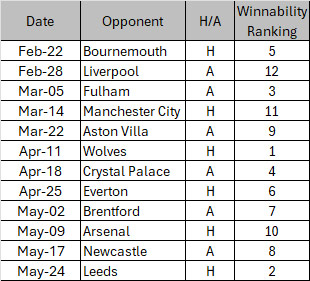
The six matches following the international break will carry great significance for West Ham’s season. Collecting at least nine or ten points must be a realistic target to aim for if respectability is to be achieved and a relegation battle avoided.

With Premier League clubs looking likely to extend the current PSR regulations into the 2026/27 season – mainly because they can’t agree any alternative – next summer is already looking problematic for West Ham. Nuno will clearly want. need reinforcements but flat or falling revenues will likely require profit from player sales to offset operating losses. Unfortunately, there are few high-ticket assets available for sale. COYI!   

What do we know about Nuno Espirito Santo, West Ham’s fourth manager in less than 18 months

When I wrote last week’s article ‘If West Ham were to appoint a new manager who would it be?’ which was published last Friday little did I know that just 24 hours later we would know the answer. It was no secret that Graham Potter’s position was under significant internal scrutiny with managerial alternatives being considered. He was under growing pressure to keep his job following a massively disappointing start to the season.

Nuno Espirito Santo, who had been sacked by Nottingham Forest following their home defeat to West Ham, was the odds-on favourite to replace him and that was what happened. That’s quite ironical isn’t it? Nuno was dismissed in the first international break and it was widely believed that the next break would signal the end of Potter. But the sack arrived sooner than we expected, but not before time. As was written in the statement on Saturday morning ‘results and performances over the course of the second half of last season and the start of the 2025-26 season have not matched expectations.’

You can say that again, 19th in the Premier League table, six wins in 25 games, and an inability to defend corners which has resulted in seven goals conceded, an astonishing statistic that he appeared to have no idea how to reverse. In fact he struggled badly and seemed to be at a total loss in so many areas of managing a top-flight football team.

So who are we getting? What do we know about Nuno, who has become our fourth manager in less than 18 months? He retired as a goalkeeper at Porto in 2010 and began his coaching career as a goalkeeping coach. In 2012, Rio Ave, a Portuguese top division side, announced his appointment as manager and in his second season in charge, his team reached two major domestic finals as he led them to the UEFA Europa League for the first time in their history.

He became manager of  Valencia in La Liga (Spain) in 2014 and led them to a fourth place finish in his first season. He was named La Liga Manager of the Month three times but resigned in the 2015-16 season after a poor start to their domestic and Champions League campaigns.

In 2016, he signed a two-year contract with Porto, however after a season with no silverware but a second-place finish in the league, he was sacked at the end of just one season.

In 2017, he became the new head coach of  Championship club Wolves, signing a three-year contract. He led the club to the Premier League after a six-year absence, achieving promotion with four matches remaining in the season and being confirmed as champions with two games to spare. Wolves finished seventh in the 2018–19 league season; it was the club’s highest Premier League finish, and their highest in the top-flight since the 1979–80 season when they finished sixth. They also qualified for a European competition for the first time since the 1980–81 UEFA Cup, reaching the UEFA Europa League.

The 2019-20 season that was interrupted by Covid saw Nuno’s team achieve a second consecutive seventh-place finish in the Premier League (with a record points total for Wolves in the Premier League of 59), and reach the quarter-finals of the UEFA Europa League, the club’s best such performance since being finalists in the 1971–72 UEFA Cup. At the end of the following season Wolves announced that Nuno would leave the club by mutual consent at the end of the season.

In June 2021, Tottenham Hotspur announced Nuno as their new head coach on a two-year contract with an option to extend for a third year. He achieved the best start to a Premier League season for Tottenham with three wins from their first three matches. He won the Premier League Manager of the Month award for August, but on 1 November, after his team lost 3–0 at home to Manchester United, their fifth loss in seven matches and which left them ninth in the table, he was dismissed after less than four months in charge and was replaced the following day by Antonio Conte.

In July 2022, he was appointed by Al-Ittihad in the Saudi Pro League. He won the 2022 Saudi Super Cup in January 2023 and also won the club’s first league title in 14 years that season. He was sacked in November 2023, two days after a 2–0 loss to an Iraqi club in the Champions League.

In December 2023, he was appointed head coach of Nottingham Forest. He helped to secure the club’s survival from relegation with a 17th-placed finish. In his second season by January 2025, Forest sat third in the Premier League table on the 40 points defying the expectations of most pundits, who had predicted at the start of the season that Forest would struggle and get relegated. He became the first Forest manager to win the Premier League Manager of the Month award three times in a single season. The club eventually finished seventh and qualified for the Europa League, their first participation in European football in 30 years.

In June 2025, Nuno signed a new contract to stay with Nottingham Forest until 2028. However in September he was dismissed after three Premier League games of the season. The sacking seemed to arise due to his relationship with Forest’s owner Marinakis. Surely it was nothing to do with results!

One thing that stands out is the fact that in every case, more games have been won than lost in all seven clubs Nuno has previously managed. The same cannot be said for Graham Potter, Julen Lopetegui or David Moyes. It was a promising start at the Hill Dickinson stadium on Monday night, especially in the second half. I won’t look at the playing style of the teams he has managed at this stage; we’ll see how it transpires at West Ham in the coming weeks.

If West Ham were to appoint a new manager who would it be?

It’s no real secret that Graham Potter’s position is under significant internal scrutiny with managerial alternatives now being considered. He is under growing pressure to keep his job following a massively disappointing start to the season that plunged to new depths following last Saturday’s home defeat by Crystal Palace. Even prior to Saturday’s loss – our fourth from five Premier League games – it was widely reported that we had started the process of identifying potential replacements for Potter. He is the odds on next Premier Manager to leave his post at 3/10. Ruben Amorin is next on the list at 15/2.

Nuno Espirito Santo, recently sacked by Nottingham Forest, is understood to be among the options we have identified and is currently the favourite to be our next permanent manager. All sorts of stories exist about him being interviewed by Karren Brady and being spotted in Theydon Bois, close to the home of David Sullivan, Birch Hall, his palatial mansion nearby. The prospect of Slaven Bilic who has previously played and managed us returning on a short-term basis has apparently also been discussed internally. According to the betting odds these appear to be the two standout candidates.

We have not won a Premier League game in front of our own supporters since 27 February and have lost all three home matches this season to London rivals Chelsea, Tottenham and Crystal Palace. We have now lost our opening three home league games for the second consecutive season. Despite defeat, Potter described the performance against Palace as “spirited”. Asked if he still felt he had the support of the club’s board, Potter said: “Yeah, I’ve no reason to think not.”

Before Saturday’s game, thousands of West Ham fans protested against how the club is run and called for chairman David Sullivan and vice-chair Karren Brady to step down. But it seems very unlikely that it will happen in the foreseeable future.

So what next? With no change at the very top of the club a new manager will surely be appointed sometime soon, perhaps at the beginning of the international break? But what will happen if (in the extremely unlikely event) we manage to win at Everton and (even more unlikely) at Arsenal too? Will the manager be kept on? I seem to remember a similar situation when Lopetegui was manager.

So what are the odds on who will be West Ham’s next permanent manager? These change regularly according to who has been spotted where and other rumours that circulate. But the latest list that I saw read as follows:

Nuno Espirito Santo 4/7, Slaven Bilic 5/4, Gary O’Neil 5/1, Sean Dyche 12/1, Michael Carrick 14/1, Scott Parker 16/1, Liam Rosenior 20/1, Eden Terzic 25/1, Kieran McKenna 25/1, Gareth Southgate 25/1, Michael Beale 25/1, and then a whole host of others at 33/1 including Steven Gerrard, Brendan Rogers, Damien Duff, Frank Lampard, Danny Rohl, Lee Carsley, Chris Hughton, John O’Shea, Marco Rose, Ole Gunnar Solksjaer, Ruud van Nistelrooy, Robbie Keane, Ralph Hasenhutl.

Who do you think it might be? Do you fancy a flutter?

West Ham Monday Briefing: Corner Capers, Graham’s Crackers and Board Duplicity

How much longer can West Ham’s worst ever manager hang on at the London Stadium as he masterminds a twelfth defeat in 23 games. And what to do about the Board?

Welcome to West Ham where the misery never ends. Forget about the football. Enjoy the thrills of boardroom chaos, supporter protests, creeping apathy, clueless management and a spineless squad touted as relegation certainties.

Everybody knows it is only a matter of time before Graham Potter is shown the exit door at the London Stadium. Who’s ever heard of a manager ‘turning things around’ where performances have been awful for 20 plus games over eight months, and with no obvious signs of improvement on the horizon. What tactical masterstrokes could he possibly have up his sleeve to combat threats from a physical Everton side and set-piece specialists Arsenal in the two games remaining before the next international break?

West Ham have now beenbeaten in 12 of the 23 league games under Potter’s leadership (14 from 25 when cup games are included). At 52%, his lose percentage is higher than any other of the club’s Premier League managers, including the much derided Avram Grant. Why prolong the agony any longer than necessary?

Needless to say, replacing the coach is one small part of the multiple problems facing West Ham. Akin to putting anti-itch cream on a rash. It might provide welcome temporary relief, but the underlying chronic disorder lingers below the surface. The turmoil the club finds itself in hasn’t materialised overnight. It is a cumulative decline ten or more years in the making. As the business of football has evolved elsewhere to embrace strategic thinking and professionalism, West Ham have been petrified in an amateurish world of short-term thinking and season to season existence.

The club statement issued to supporters in the hope of heading off the planned Hammers United protests is a prime example of how tone deaf those in control are. Most likely penned by Karen Brady (sorry, Baroness Brady of Knightsbridge) – with a little help from ChatGBS – it was nothing more than a vain attempt to convince what a fantastic job they had all done over the years. No acknowledgement of the many mistakes made, the promises broken or an acceptance that change is needed to restore the identity, pride and passion to this great club.

I wonder what advice would be given to any business hopefuls on The Apprentice who had refused to listen to their customers, made promises they never intended to keep, and failed to hit any targets on product or experience. Just where do I find this world-class team and world-class stadium?

The obvious frustration is that in circumstances where the board are also the principal owners it is almost impossible to sack them. A change of ownership would be a complex and long winded process. The only interim hope for change is if the minority shareholders are sufficiently alarmed to band together, sideline David Sullivan and replace Brady with someone who understands the business of football. Over to you, Mr Czech Sphinx.

As far as Saturday’s game was concerned, it was more of the same from the fragile Hammers. Far too slow in possession and increasingly vulnerable at set pieces. Every opposing manager will have a clear idea now how to overcome Potter’s West Ham. Commit players forward, press high (safe in the knowledge they are too slow on the counter), and aim to win as many corners as possible.

It was amusing to hear one pundit’s view (Tony Gale, I think) that Potter would have had a word with his players at half-time about moving the ball forward more quickly. How ironic given that fannying around in the middle third safety zone is the very essence of Potterball. It’s what he dreams of, and why he is so besotted with the sideways passing skills of James Ward-Prowse. Potter was momentarily Wenger-like in his post-match comments by claiming not to have heard 50,000 boos when withdrawing Crysencio Summerville and Mateus Fernandes and leaving his favourite firmly in place. Now that JWP’s dead ball mojo has completely deserted him, he has nothing left to offer other than being a nice guy. A montage of his free-kick goals will soon be available to view on All Our Yesterdays!

It was a surprise to no-one when the opening Palace goal resulted from one of many corner kicks. As I understand it, West Ham do not employ a dedicated set piece coach. The role was added to the responsibilities of one of the existing coaching staff in much the same way as you give the new kid in the office a high-vis jacket and hard hat and call him the fire marshal. Not that it needed a coaching badge to tell Max Kilman that his job is to win the ball at all costs, even if it means occasionally getting hurt in the process.

Whoever signed off on a £40 million fee and seven-year contract for Kilman needs their head examining. In a crowded field for worst ever value for money West Ham signing he is in with a real shout of a podium finish. I’m all for ball-playing centre-backs but not when it comes at the expense of speed, strength, determination and defensive nous.

There was a brief period in the game immediately after Jarrod Bowen’s equaliser (where would we be without him) where the Hammers asumed the ascendency. The visitors suddenly looked rattled as West Ham belatedly discovered a sense of purpose and that they were allowed to attack with pace. Kyle Walker-Peters and Malick Diouf were looking dangerous along the flanks and Lucas Paqueta had a goal-bound header cleared off the line. But once Palace regained the lead, home heads dropped, and it was game over.  

Once again, there was no evidence to support the assertion that Potter has a strong track record of developing young players. Several academy stars (Freddie Potts and Calum Marshall) who had featured heavily in pre-season were omitted completely from the matchday squad and will be questioning whether a pathway to first team action actually exists. Soungoutou Magassa and Luis Guilherme were given brief late runouts but at that stage of the game it was a thankless task. The earlier shape and discipline having transformed into a park football free-for-all by then.

There is something seriously wrong in any organisation where managers are repeatedly appointed at a time of crisis. Potter’s demise is now purely one of timing. If interested in the job, I expect Nuno Espirito Santo to be next up. Not that he is the ideal man for the task but because he is available and has shown at Wolves and Forest that he can work with what he’s got to produce a functioning team. It certainly wouldn’t be a long-term relationship as he will almost certainly fall out with Sullivan within 18 months or so. Unfortunately, the other desperate names in the frame (O’Neil, Bilic, Dyche, Benitez) all fill me with a sense of foreboding. As ever, the wild card is that Sullivan will screw up yet again by doing something truly stupid.

So there we have it. Stick with Potter and relegation is highly probable. Nuno would provide a fighting chance of mid-table obscurity even if it might not be an exciting ride. It’s about the best we can hope for until change is made at the top. If Nuno doesn’t fancy it before the international break, then find a willing caretaker to navigate the next couple of games. COYI!

West Ham Monday Briefing: Boardroom Blitz, Mads Hands, and the London Stadium Vincibles

Dysfunctional football club seeks coach to work alongside controlling and untrustworthy Chairman. Only unemployed applicants need apply.

Apart from when the actual games are being played, there is never a dull moment at the London Stadium these days. Fan protests, emergency board meetings (where even the elusive Czech sphinx put in an appearance), alleged resignations, share sales and manager speculation have all resurfaced in the wake of the Hammer’s abysmal start to the 2025/26 Premier League season.

On the sidelines, smug commentators have also returned to reprise their refrains of ‘Careful what you wish for.’; ‘The supporters are delusional.’ ‘There never was a West Ham way.’ As if expecting your team to entertain, to play on the front foot, to play with passion, to show determination, to hurt for the badge, to cause occasional upsets, to start each game with belief should be considered delusional.

Dashed expectations have been the norm at the club for most of my supporting life. The highs (and trophies) have been few and far between. Sure, success was great on the rare occasions that it turned up, but following West Ham has always been about pride, belonging, commitment and community – not adding entries to the roll of honours. Ignore those connections and the club loses the last remnants of its soul. A business run by accountants – no longer a sport – where supporters are customers and spreadsheets calculate average revenue per ticket sale.

The game has changed tremendously since the founding of the Premier League. Finances play an increasingly pivotal role on the decisions clubs must make in building squads and planning for the future. Not a problem for the rich clubs whose revenues and sponsorship deals leave room to spare, but a major headache for all the others needing to balance the book. But where we have seen clubs like Brighton, Bournemouth and Brentford successfully adapt to the economic realities through forward looking recruitment practices, the West Ham approach has been to carry on regardless. Paying inflated fees and wages for the supposed razzle dazzle signing of established players while penny pinching on the infrastructure required for scouting, data analytics, training facilities and youth development. Apart from the unexpected gift of Declan Rice from Chelsea, the academy’s output has been shocking over the last decade or so.

There is no short-term answer to this malaise under the current leadership of David Sullivan and Karen Brady. There is little chance that Sullivan will voluntarily step down and any hoped for embarrassment directed towards him from fan groups will merely bounce of his thick skin. These people have no shame. Unless the remaining shareholders group together to vote him out, he will leave only in his own time.

In the meantime, the only plausible change posible at the club is replacing the manager/ coach – the fourth in just over a year – as the short rein of the hapless Graham Potter splutters towards an inevitable conclusion.   It will be farewell to the tetchy press conferences with banal answers to inaudible questions, the head scratching team selections, the misplaced loyalty to underperforming players, the baffling substitutions, and the bewildered touchline demeanour witnessed on Saturday. He will be a disappointing footnote in West Ham’s history alongside Avram Grant.

As a typical West Ham fan, I have experienced West Ham defeats many more times than victories. After all, they have now regained leadership of the most ever Premier League defeats (462 to Everton’s 461) with a goal difference of -243. Ordinarily, I take a philosophical view to such events and they are consigned to history well before the first pint is finished or the second reading of the football results on Sports Report has aired. On Saturday, though, there was a lingering anger which simmered the entire weekend. How could such a tame surrender to an arch-rival ever be allowed to happen?

The trouble with Potter is that he thinks he is far smarter than everyone else in the room. And far smarter than he really is. He would no doubt have pasted media coverage of his brave decision to change formation and his inspired game-changing substitutions at Forest in his matchday journal. Never mind that it had been blindingly obvious to every fan that three at the back was an unmitigated disaster or that Crysencio Summerville had only been brought on to give him some minutes following a lengthy lay-off.

Nevertheless, he would see it as confirmation of his genius which would be followed up – in a home game against Spurs – by playing with no striker, putting two keepers on the bench, and expecting the slow but nice guys (Tomas Soucek and James Ward-Prowse) to dominate the midfield battleground.

Saturday’s game was relatively even in the opening exchanges. Lucas Paqueta should have done better to round off a smart West Ham move while Summerville and Malick Diouf were combining well on the left-hand side. Diouf putting several teasing crosses into the areas where lesser coaches teams might have played a striker.

As the first half progressed though, the visitors started to boss the game. Although unable to create much from open play it became apparent that set pieces were causing alarm in the Hammer’s defence. Thomas Frank had used similar tactics at Brentford on numerous occasions to unsettle previous West Ham sides.

Where Tottenham had clearly rehearsed these routines, the hosts reaction was one of panic. Mads Hermansen is too short and slight to be a dominant presence in the box and chose to stay rooted on his line. Did he know he can use his hands? The remaining defenders adopted a loose zonal marking system incapable of tracking the runs of the visitor’s. Tottenham would have taken the lead on 20 minutes had it not been for the intervention of the officials, but it felt only a matter of time before they managed to force one home.

Having survived to half-time, it was the ideal to make changes to shape and tactics. But none were forthcoming. Within 10 minutes, the game was lost. The threatened goal from a corner materialised minutes after the break, Soucek was sent off for a needless lunge, and that was it. West Ham heads dropped, Tottenham were allowed to score two more straightforward goals and the crowd went home. Thankfully, the visitors eased off after the third goal went in. The one bright spot was the introduction of Soungoutou Magassa which surely marks the end of the Soucek/ JWP axis.

The Premier League is just four games old. Three clubs (Liverpool, Chelsea and Crystal Palace) remain in contention as Invincibles and two (Aston Villa and Wolves) are potential Vincibles. Although West Ham may have escaped that ignominy by winning at Forest, the chances if a win at the London Stadium look some way off.

Potter has managed just two home wins from 11 attempts. A fortunate victory over Fulham in his first game at home and a routine win over a doomed Leicester side. In those 11 games, we have celebrated just 11 goals and endured six defeats. Time for change! Now would be perfect but a ‘three games to save your job‘ ultimatum is my predicted outcome.

Getting rid of Potter is, of course, only part of the problem. Who comes next, who is available and who is prepared to work at such a dysfunctional club are the next issues. Several hats have been thrown into the ring online with Nuno and Mourinho, as two recently unemployed managers, mentioned most often. Imagining Sullivan and Jose working together is mind-boggling and so can probably be ruled out.

The unfortunate trend, however – as with Prime Ministers – is to find someone who is even worse than what came before. Meet the new boss, worse than the old boss. In that spirit, please step forward Mr Dyche. COYI!

West Ham United – in crisis after just three games?

(Part of the Reasons Not To Be Cheerful series)

The range of subjects that can be studied these days is extensive. This week I came across an examination paper set for a group who are on a Football Satirical Studies course. They have to sit a topical examination throughout the duration of the course and this week’s paper related to West Ham. I thought you may be interested to read it and perhaps consider your thoughts and answers to the questions that were set. The paper was set before the recent flurry of transfer activity where priority finally looks to have been given to the midfield.  

Football Studies: West Ham United – Crisis & Identity Examination Paper

Module: Premier League Disillusionment 2025/26

Duration: 90 minutes – After 45 minutes you are allowed a 15 minute break (time may be added on at the end of each half of the exam at the discretion of the invigilator – just ask if you need more time – you probably will!)

Instructions: Answer all questions. Use examples from West Ham’s opening fixtures and broader footballing context. Emotional outbursts are permitted in moderation, although marks will be deducted (whether justified or not) for expletives.

Section A: Tactical Analysis (30 marks)

1.         Dissect the defensive structure employed by Graham Potter in the 3-0 defeat and second half capitulation to Sunderland and the 5-1 collapse against Chelsea. How did tactical choices contribute to conceding eight goals in the first two league games, not forgetting three further goals in the 3-2 defeat at Wolves which meant an early exit from the Carabao Cup? Does it make sense to employ three centre halves?

2.         Evaluate the role of Mads Hermansen in West Ham’s early-season form. Consider his save percentage, distribution, and errors leading to goals. Should Potter persist with him or should Areola get another chance? Should the club have considered others e.g. Ramsdale, Victor, Onana and others?

3.         Assess the impact of Mohammed Kudus’ departure and the failure to adequately replace him. How has this affected West Ham’s attacking cohesion and Jarrod Bowen’s effectiveness? Did Tottenham get a bargain or were West Ham pleased to get £55 million for him given his form in the 2024-25 season?

Section B: Club Culture & Management (30 marks)

4.         Discuss the psychological effect of starting the season at the bottom of the table after two games and the poorest start ever to a top flight campaign. How might this influence squad morale, fan sentiment, and managerial decision-making?

5.         Critique the board’s transfer strategy. Was the recruitment of Diouf, Hermansen, Walker-Peters and Wilson sufficient? Should greater priority have been given to the midfield, especially the acquisition of players with pace and power and box to box attributes? What does the pursuit of John Victor and their scattergun approach to targets suggest about panic buying and planning?

6.         Karen Brady insists the club “won’t panic.” Debate the merits and risks of board and managerial patience in the Premier League.

Section C: Creative Reflection (40 marks)

7.         Write a fictional post-match interview with Graham Potter after the Chelsea defeat. Include tactical justifications, emotional tone, and coded boardroom pleas.

8.         Compose a fan’s open letter to the club, or to an individual such as the Chairman perhaps, expressing frustration, hope, and a plea for authenticity. Draw on themes of tradition, community, and the erosion of identity.

9.         Design a grassroots-inspired reform plan for West Ham. Imagine a club reset: youth investment, supporter involvement, and a return to unpredictability and the West Ham Way.

10.      “West Ham’s start is not just poor – it’s poetic.” Discuss this statement using metaphor, irony, and historical parallels.

Reasons to Be Cheerful (Part 1) – West Ham in 2025-26  

After inheriting a fractured squad mid-season in 2024-25, Graham Potter has now had the chance to begin to shape the team in his image. There have been lots of positives about the spirit, attitude, morale and togetherness of the squad in pre-season. But can the manager’s tactical acumen and calm leadership finally bring cohesion to the club? 

Promising pre-season form doesn’t mean a lot really but in the games I’ve seen then perhaps attacking fluidity is returning, although still there’s plenty of work to be done. These pre-season matches have helped reintegrate key players and build morale which are a crucial foundation for a strong start. 

It’s still early days in the transfer window by West Ham standards as we wait for the end of window bargains! Kyle Walker-Peters arrival on a free offers versatility and Premier League experience. El Hadji Malick Diouf from Slavia Prague adds youthful energy to midfield and could perhaps turn out to be one of our better buys in recent years. He could provide a new level to our attacking on the left in a similar way to Wan Bissaka does on the right. If the manager wants to play with wing backs (as seems likely) then we might just have an excellent pair. 

Potter’s reputation for nurturing young players could perhaps see a few breakthrough stars this season? Potts has looked the outstanding one in pre-season. Are there more on the horizon? There have definitely been some very encouraging performances from academy products during the pre-season games. Potts, Marshall, Orford, Scales, Fearon, Earthy – they are all prospects. And Guilherme always looks like he could become quite an asset but we haven’t seen enough of him yet. Perhaps Cummings from Celtic or Kante, who has spent a season on loan in France, will be good enough for integration into the first team squad? 

Another positive is that Paqueta’s potential lifetime ban has finally disappeared. (But why did it take so long?). Perhaps we can now see some performances from him that we were all hoping for when he arrived. 

It’s a Mads World but we seem to have acquired a good young goalkeeper who is highly thought of. I don’t know how many we were seriously chasing (so many names were put forward) but we seem to have the one that the goalkeeper coach wanted. Let’s hope he is a successful acquisition. 

It’s not about finishing in the top six — it’s about rediscovering identity and playing with purpose, entertaining the fans and giving it a real go in every game and in every competition. If Potter can mould the squad into a coherent unit we might just surprise a few doubters. But then again we might not! 

Reasons to Worry about West Ham in 2025–26 (Part 2) 

Graham Potter made an unconvincing start; his first season ended in 14th place, with just 43 points, a tally flattered by the poor quality of relegated sides. His tactical tinkering and lack of a settled XI left fans frustrated. If he doesn’t find consistency early, pressure will mount fast. 

Mohammed Kudus, arguably West Ham’s most dynamic attacker (although he was poor last season wasn’t he?), was sold to Spurs. No direct replacement has arrived. Crysencio Summerville is returning from long-term injury, but will he be the one who can fill Kudus’ boots? The obvious midfield gaps that we can all see in lack of pace, mobility and power and a much needed box to box player, preferably two, have not been addressed. At the very least one central midfielder to match the criteria is an absolute must surely! We appear to be after Fernandes from Southampton. If true he would be the best of all the ones I’ve seen mentioned, but will it happen? 

Only four senior additions so far in the transfer window: Diouf, Walker-Peters, Hermansen and Wilson. Only two needed a transfer fee payment and on the face of it they are likely to be good value for the money. Also, Walker-Peters is a decent versatile acquisition, and I know why Wilson has arrived although he is not really one for the future!  

The squad still lacks a reliable striker, with last season’s goal output among the lowest in the league. Fullkrug and Wilson may have proven goalscoring records but they have proven injury records too. A younger, more prolific striker to assist the ageing duo is another must! Perhaps Marshall can step up, it would be great if he can (I do hope so) but it is a big ask. 

Wing-backs (which Potter seems to favour) are pushed forward aggressively. Wan Bissaka and Diouf will be key in creating width and overloads. But this leaves space behind though which is a tactical risk if transitions aren’t managed well. Early days but there was evidence in the pre-season games in America that this could be an issue that needs to be addressed. Everton and Bournemouth could both have made more of this. Better teams might!  

Opta’s supercomputer predicts West Ham to finish 16th, with a 22% chance of relegation, reflecting the squad’s stagnation in recent times compared to improving rivals. In short, we feel like a club in transition, a work in progress but perhaps without the urgency or clarity to make the transition successful. I hope we can step forward but if Potter can’t galvanise the squad quickly, we could find ourselves in the type of scrap that we thought we’d left behind a few years ago. A poor start could set the tone for another season of struggle. 

What Can West Ham Expect This Season From The Four Ps Of Potterball

The promised squad overhaul has yet to materialise as the new season gets ever closer. Potter’s preference for patience, possession, passing and probing has looked more cohesive in pre-season but has yet to be put to the test.

Pre-season preparations have changed significantly over the years. What were once low-key trips down the road to Oxford or Southend have been repurposed into fully fledged televised tournament extravaganzas. Hosted in any far-flung corner of the planet prepared to stump up enough cash for Premier League clubs to play exhibition games.

The idea of a Premier League Summer Series seemed to have all the appeal of the low budget seaside specials – starring Vince Hill, Mike and Bernie Winters and the dancers of the Young Generation – that dominated holiday TV schedules many years ago. In the event it wasn’t so bad. Fans were able to watch a handful of nearly competitive games blissfully free from VAR interference. The clubs banked a bounty of PSR boosting pre-season revenue. And the organisers happily settled for the desired outcome of a Manchester United victory.

It was obvious from the outset that the Red Devils were the big draw here. An opportunity to celebrate the latest in an ongoing series of corners turned since the retirement of Sir Alex in 2013. The remaining three clubs duly obliged by playing the role of the Washington Generals to Manchester United’s Harlem Globetrotters.

The wider context here, however, is the increasing interest and involvement in the business of Premier League football by US investors, with more than half of this season’s top flight clubs having American owners. Just short of the majority needed to enforce rule changes should their financial interests align. How long before regular Premier League games are actually staged in North America?

With the advent of live TV coverage comes the pressure on pundits to analyse what we have seen. So, what can be read into performances and what does it mean for the upcoming season? In truth, nothing we didn’t already know as far as the style and approach of Potterball are concerned. The major conundrum is whether the squad will have more and better options to accomplish it by the time the transfer window closes (slams shut, surely) on 1 September. The promised squad overhaul has seen plenty of departures but just the one significant addition at time of writing. It is a situation that would suggest another year of lower table struggle is on the cards.

Graham Potter is now fully committed to a preferred 3-5-2 formation. That one significant signing of the summer (El Hadji Malick Diouf) underlines the desire for attacking width to be provided by the wing backs. The club is now well placed in this area with Kyle Walker-Peters and Ollie Scarles as backup.

The middle three of the midfield five is less clear cut. There are plenty of names to throw in here from the current payroll: Edson Alvarez, Tomas Soucek, Guido Rodriguez, JWP, Lucas Paqueta, Andy Irving and Freddie Potts for a start. Plus, a coiple of youth players waiting in the wings. But how to get the right attacking and defensive balance from that group of (at best) tidy rather than explosive players. Potter’s caution is likely to favour a double pivot and one attacking midfielder rather than a more adventurous one defensive and two box-to-box midfielders. The obvious gaps in pace, power and someone with the ability to carry the ball forward from the middle of the park have yet to be addressed.

Another puzzle is whether there is a role in the system for wide attacking players such as Crysencio Summerville and Luis Guilherme? Both are quick, direct players which may be at odds with Potter’s pass, probe, possession, patience preference which contributed to the poor goal attempts statistics in the second half of last season. The limited game time for Guilherme in pre-season is probably telling – a shame for a player who reminds me of a Brazilian Alan Devonshire.

The primary innovation from pre-season has been the way the front two have operated. Niclas Fulkrug regularly dropping deep to receive the ball from central defenders with Jarrod Bowen deployed in a much narrower role than we are used to seeing him. Fulkrug has looked sharp and keeping him fit may be essential to West Ham’s attacking intent. The wisdom of bringing Bowen in from wide left remains to be seen given how effective he has proven from that position in the past.

Pre-season indications are that Potter’s preferred combination in central defence will be Nayef Aguerd, Max Kilman and Jean-Clair Todibo. It is a surprise rehabilitation for Aguerd who appeared to have had one foot out the exit door at the start of the summer. His pace and passing may serve him well on the left-hand side of a three but doubts remain over the physical aspects of his game. He also offers more of a threat in the opposition box at set pieces than his defensive colleagues. Kilman and Todibo are both good passers of the ball but each have their own defensive frailties. Kilman a tendency to spectate when he should be putting his body on the line. Todibo never looking to have the stamina to last beyond the hour mark.

Recruitment of a goalkeeper is the current hot topic on the transfer grapevine. The release of Lukasz Fabianski and a handful of recent errors by Alphone Areola have made this a priority position. Areola’s clear discomfort with using his feet and playing out from the back look to have shattered his fragile confidence. I need a lot of convincing that this tactic is anything other than suicidal. Perhaps teams with ball players in every position and possessed with fluid movement can carry it off but the Hammers are a long way off that level. It is a play that is fine to use when appropriate to do so but it is a liability once the opposition have cottoned on.

As ever with West Ham recruitment, there is the usual conflict between the players identified by the coach/ recruitment team and the deals that the Chairman is prepared to get done. The suspicion that only players with the right agent ever get signed never goes away. It is debateable whether any of the summer signings to date have come from the Potter/ Macaulay wish list. With all the misinformation circulating on transfer sites and the smoke and mirrors that PSR compliance generates, we really have little clue as to what is going on.

A new season should always be a time of excitement. For me, it has become a little less so with each passing year as professional football incrementally moves away from its community roots towards corporate ownership. The game has taken itself into an endless doom spiral. Each year, maximising revenues is pursued at the expense of loyal support to keep pace with the rising squad costs required for success or survival. It is a problem for everyone but even more apparent at West Ham, a club which has never made any attempt to plan beyond the here and now.

To end on a more upbeat note. There have been a few positives during the summer. The squad have looked to be in good spirits, the weight of a lifetime ban has finally been lifted from Paqueta’s shoulders and there were encouraging performances from academy products during the pre-season games. Potter would do his standing with the club’s support a great deal of good by putting more trust in youth and giving them the opportunity to develop as the season progresses. We can but hope. COYI!

As a West Ham fan I know we will never win the Premier League

Premier League football is no fun anymore with the vast differential in money available leading to predictability.

The Premier League has become a financial juggernaut, but the gap between the top clubs and the rest has stretched to a point where competitiveness feels like an illusion. When a handful of teams can outspend entire leagues it’s no surprise that some of the magic gets lost. Underdog stories become rarer, and the league becomes predictable.

It’s interesting how the same financial might that brings in the world’s best talent and global attention can also erode the soul of the sport for long-time supporters. Loyalty, local identity, and the joy of unexpected triumphs can get drowned out by branding and billion-pound transfer sagas.

As a West Ham fan I know at the beginning of every season that cup competitions are our only opportunity to win trophies. Sometimes I have despaired when we haven’t even seemed to make the effort to try to succeed in those. I have been fortunate to witness successful FA Cup wins in 1964, 1975 and 1980 as well as a couple of European trophies in 1965 and 2023. Not a lot to show for almost 70 years of following the team. A near miss in the 2006 FA Cup Final too, as well as in the 1981 League Cup final when we were possibly one of the best second tier sides that there has ever been. And I’ll never forget our amazing run in the 1975-76 European Cup Winners Cup competition where we lost in the final, but the quarter final and semi final second legs at Upton Park were two of the greatest games I’ve witnessed.

Our best ever league season was of course 1985-86 when we finished third in the old First Division just four points adrift of winners Liverpool after being in contention right up until the final week. We might have even been champions with a better start to that campaign – we only won one of our first seven games and languished in 17th place at that point. But there is no chance of a repeat of that season 40 years ago. The best we can possibly hope for in the league is to qualify for European competition. So many clubs can qualify now – we have 9 teams from England playing in one or other of the three available competitions next season. I cannot see any way that we can compete for the Premier League title.

So I racked my brains to try to consider what potential reforms could restore competitiveness in top flight football? There are a few that I have often heard floated that could inject some much-needed balance back into football, especially in the Premier League. Several sports have implemented reforms that significantly improved competitiveness, fairness, or sustainability. Here are a few examples:

  1. Salary Caps / Redistribution of Broadcast Revenue: One of the most debated ideas. A ceiling on player wages, like in American sports leagues, could help level the playing field. The National Football League (NFL) in the USA introduced a hard salary cap in 1994, ensuring teams couldn’t spend beyond a set limit on player wages. Combined with equal sharing of TV revenue, this has helped maintain parity—any team can realistically compete for the Super Bowl. The Premier League currently splits TV revenue more evenly than some leagues, but there’s still a disproportionate benefit to finishing higher. A more socialist approach could help smaller clubs grow sustainably. But with global competition and the Premier League’s appeal, enforcing this without causing talent drain would be tricky, and probably impossible.
  2. Competitive Balance Tax: American Basketball (NBA) and also Major League Baseball impose a luxury tax that penalises teams that exceed a spending threshold, redistributing funds to lower-spending teams. It wouldn’t stop spending but might redistribute its impact.
  3. Draft System The NBA and the NFL use a draft system that gives weaker teams first pick of new talent, helping to balance the league.
  4. Tighter Financial Fair Play (FFP) Rules: FFP exists, but surely it lacks teeth. Stronger regulations with real consequences for overspending might rein in runaway budgets. At the moment some clubs spend vast sums on new recruits that the majority of Premier League teams cannot compete with. Not surprisingly this makes the strong teams stronger.
  5. Squad Size & Loan Limits: Big clubs stockpiling talent and loaning out dozens of players distorts competition. Capping squad sizes and loans could force more even distribution of quality players.
  6. Fan Ownership or Influence Models: Inspired by Germany’s 50+1 rule. This rule ensures that club members (usually fans) hold a majority of voting rights, preventing external investors from taking full control. It’s credited with preserving club identity and financial responsibility, even if it limits spending compared to the Premier League.
  7. Formula 1 – Budget Cap (2021): To reduce the dominance of wealthier teams, F1 introduced a cost cap on team operations. It’s already led to closer racing and more unpredictable outcomes, with mid-tier teams occasionally challenging the front-runners.

These reforms weren’t always popular at first, but many have stood the test of time. If football took a page from these examples, it might just rediscover some of its lost unpredictability. Of course, the real challenge is that the very clubs most resistant to reform hold the most sway. Still, the soul of the game relies on the thrill of the unexpected. Unfortunately, Leicester 2016 was a one-off, it won’t happen again.

Adapting successful reforms from other sports to the Premier League probably isn’t possible – but it could be transformative if only it could be achieved. Here’s how some of the systems might be tailored (watered down!) to fit football’s culture and structure:

1. Salary Cap with Flexibility: A hard cap like in the NFL might clash with the global football transfer market, but a soft cap with luxury tax—like the NBA—could work. Wealthier clubs could still spend big, but they’d pay a hefty penalty for doing so. That tax revenue could then be shared with lower-tier clubs or reinvested in grassroots development.

2. Draft-Style Youth Allocation: While a full American-style draft might feel out of place, the Premier League could introduce a mechanism for sharing standout academy talent. For example, smaller clubs might get priority access to players released by top-tier academies or receive compensation tied to playing opportunities they provide young players.

3. 50+1-Style Governance: Replicating Germany’s 50+1 rule might be a tough sell politically and commercially but encouraging greater fan ownership or mandating supporter representation on club boards would help bring accountability and reconnect clubs with local communities.

4. Enhanced Revenue Sharing: The Premier League already shares a portion of broadcast revenue, but tweaking the formula to provide more meaningful support to lower-revenue clubs could make a big difference. For instance, increase the base share for all teams and reduce performance-based bonuses slightly to even things out without removing incentives.

5. Cost Control Through Squad Caps: Clubs could be limited not just by spending but by total squad value or squad size. This would prevent talent hoarding by the biggest clubs and ensure more players get competitive minutes across the league.

6. Centralised Contracting for Young Talent: Adapting the Irish rugby model, the FA or Premier League could centrally contract a pool of national youth or U21 players. These players could be distributed based on developmental needs, ensuring both top-level experience and competitive balance.

Of course, any of these changes would require buy-in from stakeholders—owners, players, fans, and governing bodies. But if the goal is to make football more open, more exciting, and more equitable, there are definitely paths forward. But as I wrote before we are too far down the road and there are too many reasons why it won’t happen.

Clutching at straws I wondered if a handicapping system as in horse racing could be implemented? It’s a fascinating idea, and not as far-fetched as it might sound at first. In horse racing, handicapping works by assigning different weights to horses based on their ability, aiming to equalise their chances of winning. Theoretically, a similar system in football could involve performance-based disadvantages for stronger teams to level the playing field.

Here’s how a football version might look:

  • Points Handicaps: Start dominant teams with a points deficit at the beginning of the season. It’s radical, but it would certainly shake things up.
  • Transfer Restrictions: Limit the number or value of incoming transfers for top-performing clubs, effectively “weighing them down” in the market.
  • Fixture Difficulty Weighting: Adjust scheduling so stronger teams face tougher fixtures earlier or more frequently away from home.
  • In-Game Constraints: This would be controversial but imagine limiting substitutions or squad depth for top clubs in certain matches.

Of course, the challenge is that football isn’t a closed system like horse racing or American sports leagues. It’s global, with interconnected competitions and massive commercial interests. Any artificial constraint would be seen as undermining meritocracy and would spark legal challenges.

Still, the spirit of handicapping – engineering unpredictability and fairness – is something football desperately needs. Maybe a hybrid model, like enhanced revenue redistribution or dynamic squad caps based on recent success, could capture that essence without breaking the game.

A handicapping-style system in football would be a radical shift from tradition, but if implemented thoughtfully, it could offer several compelling benefits—particularly for restoring competitive balance and reinvigorating fan engagement. Here’s how:

1. Increased Unpredictability: By design, handicapping would reduce the advantage of dominant clubs, making outcomes less predictable. That unpredictability is what keeps fans glued to their seats—think of the buzz around surprise title runs like Leicester’s in 2016.

2. Renewed Relevance for Mid-Table Clubs: Clubs outside the elite would feel they have a genuine shot at silverware or European qualification. That alone could re-energise fanbases, attract better players to smaller clubs, and create a more dynamic league overall.

3. Rewarding Long-Term Planning Over Just Spending Power: If the system penalises consistent overperformance or overspending, clubs would need to be smarter focusing on scouting, youth development, coaching, and chemistry rather than just flexing financial muscle.

4. Boosted Viewer Interest: Global audiences tune in for drama and storylines. A more level playing field would mean more meaningful matches and tighter title races, which boosts engagement, TV ratings, and revenue for everyone.

5. Revived Romanticism of the Game: Football has always been about hope – the belief that any club can dream big. A handicapping system could help restore that spirit, making football less like a billionaire’s playground and more like a battleground of passion and grit.

Of course, implementing it fairly would be a tall order—defining the metrics, avoiding legal challenges, and maintaining meritocracy. But philosophically? It taps into something a lot of fans yearn for: the feeling that anything is possible again.

If only some of these ideas were adopted in a small way it might help, but has it gone too far now? There’s a sense among many fans, including me, that football’s drift into a money-dominated spectacle has passed the point of no return. The financial stakes are so enormous, and the power so concentrated at the top, that even small reforms feel like drops in an ocean of imbalance.

But I wouldn’t say it’s too far gone – almost but not totally, not yet. Could small changes still be possible? Football still has its grassroots, its local heroes, and a global fan base that genuinely cares about the integrity of the sport. If enough pressure comes from fans, regulators, and smaller clubs, meaningful changes could still happen. It might not be a revolution, but even incremental changes like stronger FFP enforcement or better revenue sharing can start nudging things in the right direction.

If it has really gone too far now (and if I’m honest with myself it probably has) then it speaks volumes about how disconnected the upper echelons of football have become from the people who helped build it: the fans. When billion-pound ownerships and corporate interests dictate the rhythm of the game, it’s easy to feel like voices from the stands are just background noise.

But even small ripples can make waves. The fan protests that helped derail the European Super League weren’t backed by billions—they were powered by sheer passion and public pressure. The 50+1 conversations in the UK? Sparked by fans. Even safe standing and more equitable ticket pricing have gained traction in some clubs thanks to persistent grassroots lobbying. Maybe it won’t flip the pyramid overnight, but change doesn’t always need to be seismic.

As well as supporting West Ham in the Premier League I like to watch lower league and youth football, The Premier League has the best players of course but the excitement is missing because of the predictability. There’s something raw and beautifully human about lower league and youth football—where matches aren’t drowned in glitz, but crackle with real tension, local pride, and moments of unexpected brilliance. It’s football in its purest form, unfiltered by billionaire ownership or endless VAR delays. Unpredictability is the heartbeat of sport. The feeling that anything can happen. When it’s missing, even the most technically flawless performance can feel sterile.

There’s magic in seeing a teenager curl one top corner for the Under 15s or watching a non-league side grind out a win in front of 500 fans who know every chant by heart. No fireworks show required—just graft, heart, and the echo of hope in every tackle. – it’s football with soul. You’re watching young players develop before your eyes, where every pass and goal actually means something deeply personal to the community. It’s not about megastars or multi-million-pound sponsors—it’s about belonging. That feeling when a small crowd roars like it’s 60,000 strong, or when a player claps every hand on the touchline because those faces actually mean something. That’s football at its most human.

The Premier League may have the flash, but lower league and youth football feels more authentic, more grounded. There’s no corporate gloss just muddy boots, raw talent, and a crowd that claps for effort as much as for goals. I have been rediscovering the joy of football not in superstars, but in the passion of a local lad sprinting down the wing in the rain, or a promotion campaign that means everything.

And yet even now as I reflect on this article I still get a buzz in anticipation of the new football season that is approaching. I still want to see West Ham really performing well at the top level. I still read the ridiculous articles every day that suggest we are going to buy x/y/z and laugh to myself. I enjoy the summer sport, the cricket, especially the test matches, the Open, Wimbledon, horse racing on the flat, and this year the Women’s Euros. But nothing beats watching football at all levels. And despite the predictability of the Premier League I’ll still be hoping for a successful season for West Ham just as I have every year since 1958. But one thing is for sure. We won’t be challenging to win the Premier League. I’m afraid we won’t even come close.

West Ham Monday Briefing: Too Quiet On The Transfer Front

With less than seven weeks to go before the big kick-off what is happening to the much needed rebuild at the London Stadium. How skint are we, who will be sold, who will be banned and are we ever going to sign any new players?

It was Kick-Off Day minus 47. The wind howled around the empty, soulless Rush Green portacabins, as dust swirled across the cracked, abandoned car park. A single corner flag flapped rhythmically in the breeze, forgotten when the last training session ended just a few short weeks earlier. Nothing stirred except for an old man and the squeaking wheels of a white line marker in the far distance – otherwise, no life, no sound; only silence and despair.

In one corner, a rusty padlock hung above a door marked ‘Head of Recruitment’. A handwritten paper sign sellotaped to the splintered window read: ‘First Class Players Wanted – All Positions. Please state age, experience and preferred agent.’ Welcome to West Ham in the Transfer Window!

***

 If You Can’t Convince Them, Confuse Them

A few weeks ago, I published an article on the realities of the financial situation at West Ham. Although, it is now accepted that West Ham had never faced an immediate threat of a PSR breach, the rules continue to be waved around as a portent for troubled times ahead – possibly the 2026/27 season but more probably the one after that. Yet in all likeihood, the existing PSR rules won’t survive that long now that Chelsea have destroyed their credibility.

Not surprisingly, it was in the Board’s interest to point the finger at ‘externally’ imposed rules rather than admit their own mismanagement for the club’s current woes. I had often wondered why the remaining Premier League clubs had voted for PSR in the first place given its major impact was to preserve the rich club status quo. But then you realise that for most, the priority is not to compete with the rich but to maintain their own advantage over those who are newly promoted.

The dilemma in understanding what is going on at West Ham in this age of misinformation is whether what we read has genuinely been leaked by the club, has been misunderstood/ misreported by the messengers or simply been made-up in the interest of internet clicks.  

The major talking points in recent weeks have been the suggestion that only 75% of player sales will be made available for purchases, and the hint that a £90 million injection of capital is about to be made by the Board. The former is almost certainly a confusion arising from PSR accounting principles where only the excess of sale price over book value can be shown as player sale profit. I’m guessing that someone has made a back of an envelope calculation that this might equate approximately to 75%.  As for the latter, the Board now find themselves in a position where they are obliged to invest further or face the prospect of PSR losses over the next three years being limited to £15 million, rather than £105 million. What form the investment takes, who puts their hands in their pockets, and how the money is used will provide interesting insights into the mindset and intentions of each of the owners.

Such is the dislike and distrust of David Sullivan by many supporters that is has spawned all manner of wacky conspiracy theories. Allegedly the Chairman has a secret plan to get the club relegated as a deliberate act of revenge, making a moonlight flit out of Stratford and baling out of an airplane over the nearest tax haven hugging his parachute payment. Personally, I believe the woeful management of the club is better expalined by Hanlon’s razor which suggests: “never attribute to malice that which is adequately explained by stupidity.” For stupidity, read collective incompetence driven by a gaggle of overblown egos.

 What A Waste of Money

It should come as no surprise to many that the effectiveness of West Ham’s transfer spending over the years has been atrocious. Take Declan Rice out the equation and the player trading profits are at the bottom of the league. If there was any lingering doubt, then take a look at the estimates of squad value calculated by the Transfermkt website (below). Not just that West Ham is ranked in 14th place – despite their relatively high spending – but how far they are behind clubs such as Brighton, Bournemouth and Forest.

1) Man City – €1.35 BN, 2) Chelsea – €1.21BN, 3) Liverpool – €1.09 BN, 4) Arsenal – €1.01BN, 5) Man United – €818 M, 6) Tottenham – €805 M, 7) Brighton – €732 M, 8) Newcastle – €597 M, 9) Aston Villa – €574 M, 10) Bournemouth – €466 M, 11) Nottingham Forest – €444 M, 12) Brentford – €432 M, 13) Crystal Palace – €426 M, 14) West Ham – €370 M, 15) Fulham – €318 M, 16) Wolves – €276 M, 17) Everton – €257 M, 18) Leeds – €211 M, 19) Burnley – €187 M, 20) Sunderland – €137 M

This is no accident or from run of bad luck but a direct consequence of failing to move with the times. Refusing to adopt a professional approach to scouting, recruiting and longer-term planning. Taking the easy option of relying on agents to identify targets rather than trusting the club’s own resources. Paying lip service to the trends of data analytics and appointing experienced football directors in the belief that a bunch of amateurs can do it better.

Profits on player sales is a significant component of football finances – and will continue to be important if/ when squad cost ratios replace PSR. A smarter club in West Ham’s position would have recognised this long ago and planned for the recruitment and development of younger players who can sustain and raise the club out of its current stagnation. It is a strategy that also calls for the setting aside of sentiment. There is an optimum time to sell any player, no matter who they are.   

All Quiet On The Transfer Front

As usual the early days of a West Ham transfer window has been all noise and no action. Last summer I made of point of making a note of every player linked to the club but gave up after the list broke through the one hundred barrier.

The backdrop to this summer’s business have been the baffling public announcements of “we’re skint and must sell before we buy.” Quite why anyone would show all their cards before entering into any negotiations is beyond bizarre. Was the intention solely to manage supporter expectations, an attempt to hide behind PSR regulations or something more sinister. Now we know the club’s problem is cash flow (and not PSR), we also know that it is something the Board can quite easily fix – after all they broke it in the first place. The promised £90 million injection – in whatever form it takes – should serve to partially ease the impasse.  

We know very little about the direction Graham Potter and Kyle Macaulay’s thoughts. The assumed principles of pursuing younger emerging talent sounds eminently sensible. Hopefully they are locked away in a quiet corner somewhere, methodically poring over the rows and columns of a recruitment spreadsheet. Keeping tabs on the players that the data has identified and preparing the bids to be put forward. But will they be allowed to excel themselves in the transfer window or will their preferred targets end up as more names in the list of the ones who got away? Sacrificed to the rubbish bin of low-ball bids, take-it-or-leave-it offers and DFS style payment terms.

Potter and Macaulay have a massive job on their hands to rebuild the Hammer’s sqaud. If they also to lose Kudus and Paqueta as predicted to fund recruitment the challenge becomes even greater – both in finding the players and subsequenting moulding a team from a bunch of strangers. My preference is that they are shopping in the under £25 to £30 million aisle, prioritising pace and excluding anyone aged 27 or over, except in exceptional circumstances. Otherwise, it will be a case of rinse and repeat when we reach the same time next year, requiring a third consecutive summer reconstruction.  

Today, is when the majority of Premier League clubs get to close their accounts (West Ham’s closed at the end of May), so we can expect activity to pick up this week. There may also be last minutes manoeuvrings by any club (e.g. Aston Villa) who find themselves on the cusp of a PSR breach.

In truth, transfer business has been relatively slow across the board, but we have been here before at West Ham. Looking patiently at the clock as the minutes, hours and days tick by. When others start to spend while West Ham sit on their hands, making enquiries, considering targets and preparing talks.

As things stand the Hammers are deep in the ‘conversation’ for relegation. We cannot rely on there being three worse promoted teams again. We have to make ours better. It really is time to act. COYI!