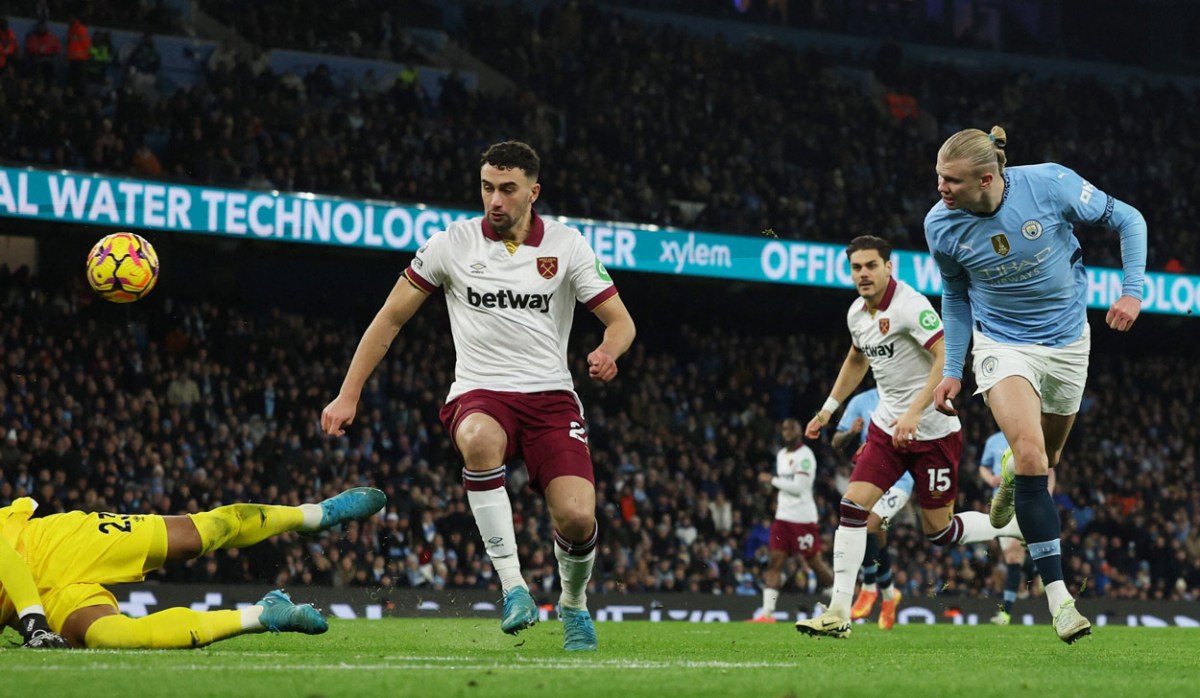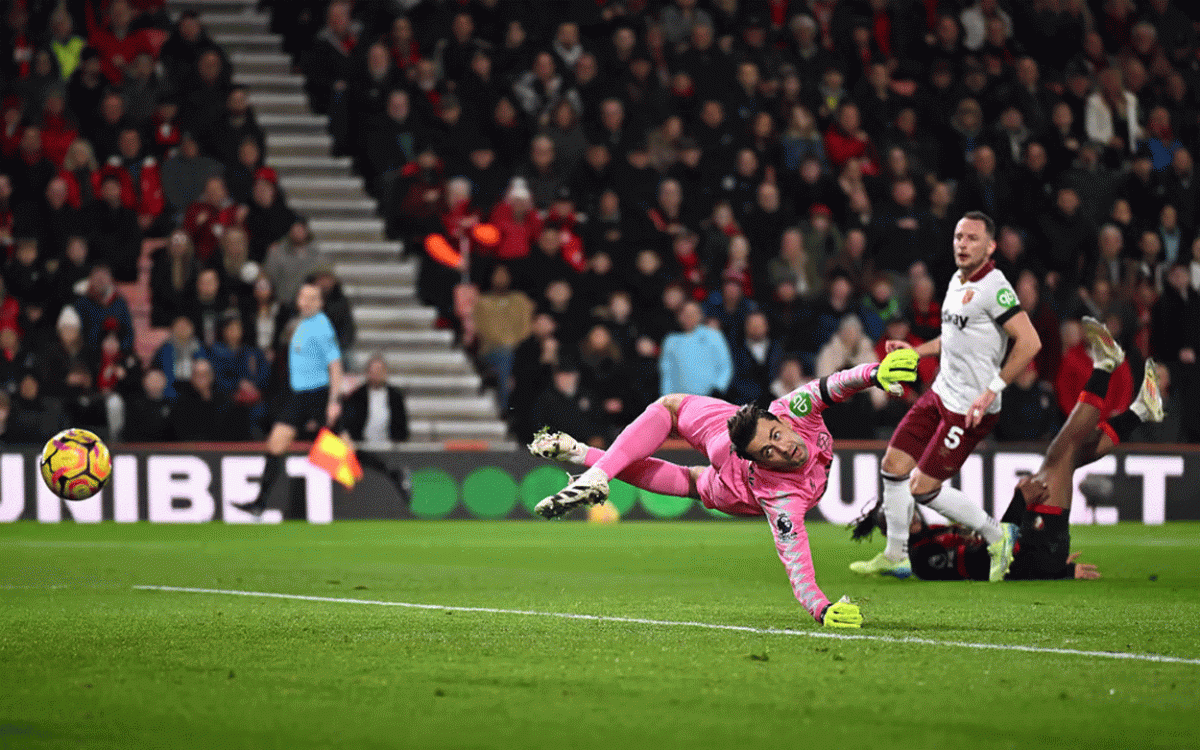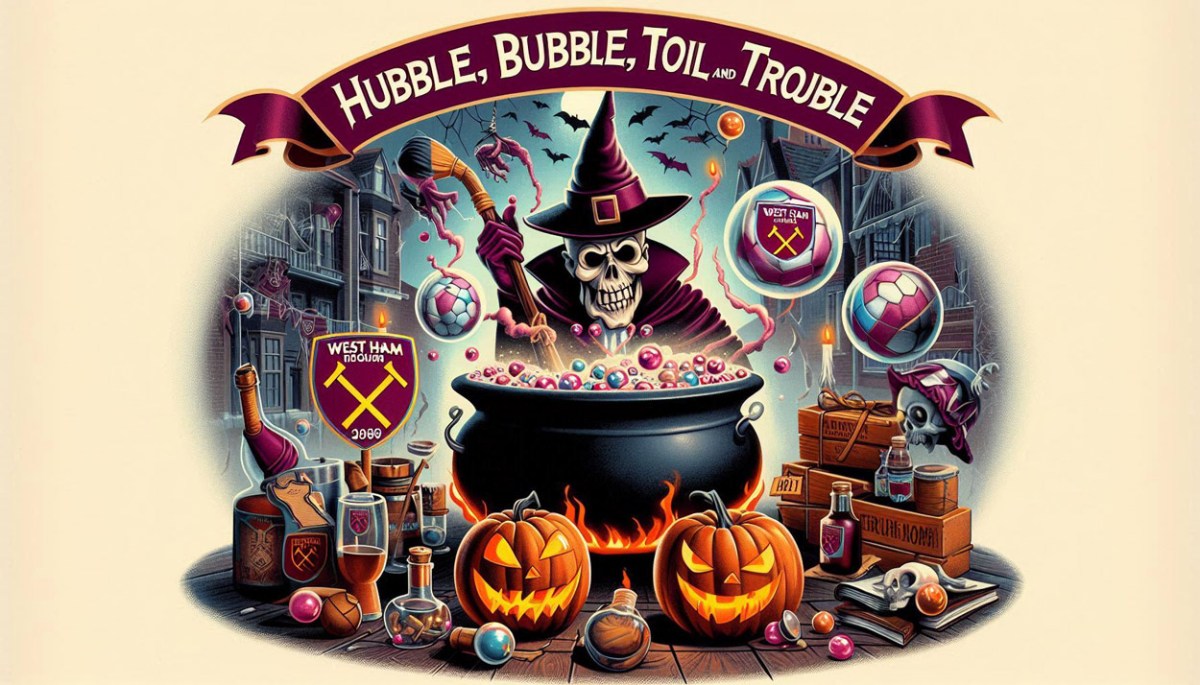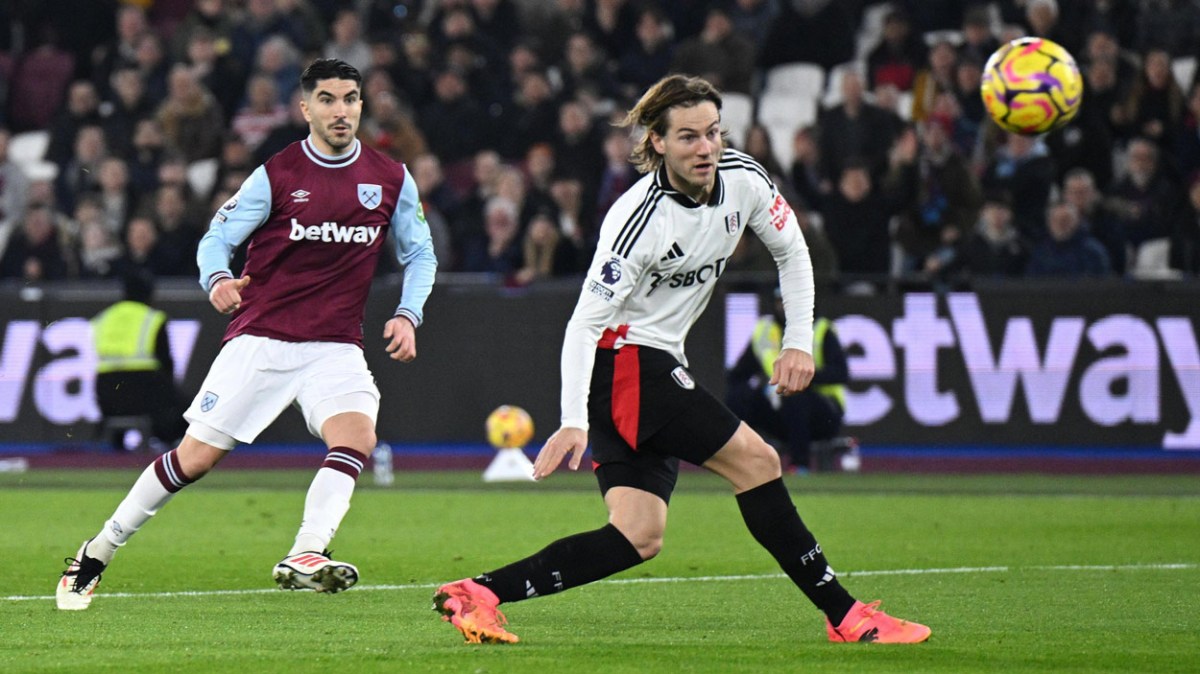
What do we know about Nuno Espirito Santo, West Ham’s fourth manager in less than 18 months

When I wrote last week’s article ‘If West Ham were to appoint a new manager who would it be?’ which was published last Friday little did I know that just 24 hours later we would know the answer. It was no secret that Graham Potter’s position was under significant internal scrutiny with managerial alternatives being considered. He was under growing pressure to keep his job following a massively disappointing start to the season.

Nuno Espirito Santo, who had been sacked by Nottingham Forest following their home defeat to West Ham, was the odds-on favourite to replace him and that was what happened. That’s quite ironical isn’t it? Nuno was dismissed in the first international break and it was widely believed that the next break would signal the end of Potter. But the sack arrived sooner than we expected, but not before time. As was written in the statement on Saturday morning ‘results and performances over the course of the second half of last season and the start of the 2025-26 season have not matched expectations.’

You can say that again, 19th in the Premier League table, six wins in 25 games, and an inability to defend corners which has resulted in seven goals conceded, an astonishing statistic that he appeared to have no idea how to reverse. In fact he struggled badly and seemed to be at a total loss in so many areas of managing a top-flight football team.

So who are we getting? What do we know about Nuno, who has become our fourth manager in less than 18 months? He retired as a goalkeeper at Porto in 2010 and began his coaching career as a goalkeeping coach. In 2012, Rio Ave, a Portuguese top division side, announced his appointment as manager and in his second season in charge, his team reached two major domestic finals as he led them to the UEFA Europa League for the first time in their history.

He became manager of  Valencia in La Liga (Spain) in 2014 and led them to a fourth place finish in his first season. He was named La Liga Manager of the Month three times but resigned in the 2015-16 season after a poor start to their domestic and Champions League campaigns.

In 2016, he signed a two-year contract with Porto, however after a season with no silverware but a second-place finish in the league, he was sacked at the end of just one season.

In 2017, he became the new head coach of  Championship club Wolves, signing a three-year contract. He led the club to the Premier League after a six-year absence, achieving promotion with four matches remaining in the season and being confirmed as champions with two games to spare. Wolves finished seventh in the 2018–19 league season; it was the club’s highest Premier League finish, and their highest in the top-flight since the 1979–80 season when they finished sixth. They also qualified for a European competition for the first time since the 1980–81 UEFA Cup, reaching the UEFA Europa League.

The 2019-20 season that was interrupted by Covid saw Nuno’s team achieve a second consecutive seventh-place finish in the Premier League (with a record points total for Wolves in the Premier League of 59), and reach the quarter-finals of the UEFA Europa League, the club’s best such performance since being finalists in the 1971–72 UEFA Cup. At the end of the following season Wolves announced that Nuno would leave the club by mutual consent at the end of the season.

In June 2021, Tottenham Hotspur announced Nuno as their new head coach on a two-year contract with an option to extend for a third year. He achieved the best start to a Premier League season for Tottenham with three wins from their first three matches. He won the Premier League Manager of the Month award for August, but on 1 November, after his team lost 3–0 at home to Manchester United, their fifth loss in seven matches and which left them ninth in the table, he was dismissed after less than four months in charge and was replaced the following day by Antonio Conte.

In July 2022, he was appointed by Al-Ittihad in the Saudi Pro League. He won the 2022 Saudi Super Cup in January 2023 and also won the club’s first league title in 14 years that season. He was sacked in November 2023, two days after a 2–0 loss to an Iraqi club in the Champions League.

In December 2023, he was appointed head coach of Nottingham Forest. He helped to secure the club’s survival from relegation with a 17th-placed finish. In his second season by January 2025, Forest sat third in the Premier League table on the 40 points defying the expectations of most pundits, who had predicted at the start of the season that Forest would struggle and get relegated. He became the first Forest manager to win the Premier League Manager of the Month award three times in a single season. The club eventually finished seventh and qualified for the Europa League, their first participation in European football in 30 years.

In June 2025, Nuno signed a new contract to stay with Nottingham Forest until 2028. However in September he was dismissed after three Premier League games of the season. The sacking seemed to arise due to his relationship with Forest’s owner Marinakis. Surely it was nothing to do with results!

One thing that stands out is the fact that in every case, more games have been won than lost in all seven clubs Nuno has previously managed. The same cannot be said for Graham Potter, Julen Lopetegui or David Moyes. It was a promising start at the Hill Dickinson stadium on Monday night, especially in the second half. I won’t look at the playing style of the teams he has managed at this stage; we’ll see how it transpires at West Ham in the coming weeks.

If West Ham were to appoint a new manager who would it be?

It’s no real secret that Graham Potter’s position is under significant internal scrutiny with managerial alternatives now being considered. He is under growing pressure to keep his job following a massively disappointing start to the season that plunged to new depths following last Saturday’s home defeat by Crystal Palace. Even prior to Saturday’s loss – our fourth from five Premier League games – it was widely reported that we had started the process of identifying potential replacements for Potter. He is the odds on next Premier Manager to leave his post at 3/10. Ruben Amorin is next on the list at 15/2.

Nuno Espirito Santo, recently sacked by Nottingham Forest, is understood to be among the options we have identified and is currently the favourite to be our next permanent manager. All sorts of stories exist about him being interviewed by Karren Brady and being spotted in Theydon Bois, close to the home of David Sullivan, Birch Hall, his palatial mansion nearby. The prospect of Slaven Bilic who has previously played and managed us returning on a short-term basis has apparently also been discussed internally. According to the betting odds these appear to be the two standout candidates.

We have not won a Premier League game in front of our own supporters since 27 February and have lost all three home matches this season to London rivals Chelsea, Tottenham and Crystal Palace. We have now lost our opening three home league games for the second consecutive season. Despite defeat, Potter described the performance against Palace as “spirited”. Asked if he still felt he had the support of the club’s board, Potter said: “Yeah, I’ve no reason to think not.”

Before Saturday’s game, thousands of West Ham fans protested against how the club is run and called for chairman David Sullivan and vice-chair Karren Brady to step down. But it seems very unlikely that it will happen in the foreseeable future.

So what next? With no change at the very top of the club a new manager will surely be appointed sometime soon, perhaps at the beginning of the international break? But what will happen if (in the extremely unlikely event) we manage to win at Everton and (even more unlikely) at Arsenal too? Will the manager be kept on? I seem to remember a similar situation when Lopetegui was manager.

So what are the odds on who will be West Ham’s next permanent manager? These change regularly according to who has been spotted where and other rumours that circulate. But the latest list that I saw read as follows:

Nuno Espirito Santo 4/7, Slaven Bilic 5/4, Gary O’Neil 5/1, Sean Dyche 12/1, Michael Carrick 14/1, Scott Parker 16/1, Liam Rosenior 20/1, Eden Terzic 25/1, Kieran McKenna 25/1, Gareth Southgate 25/1, Michael Beale 25/1, and then a whole host of others at 33/1 including Steven Gerrard, Brendan Rogers, Damien Duff, Frank Lampard, Danny Rohl, Lee Carsley, Chris Hughton, John O’Shea, Marco Rose, Ole Gunnar Solksjaer, Ruud van Nistelrooy, Robbie Keane, Ralph Hasenhutl.

Who do you think it might be? Do you fancy a flutter?

Just four games into the Premier League season, but West Ham’s match against Crystal Palace on Saturday could be crucial for Graham Potter.

I’ll begin this article by referring you to Geoff’s excellent Monday briefing this week. It says it all really. Perhaps I can try to cheer you up?

Is the game against Crystal Palace a ‘must-win’ for Graham Potter? The pressure is surely building. West Ham have suffered league defeats to Chelsea, Tottenham and Sunderland to start the 2025/26 season; We have conceded the most goals (11), the most goals from set pieces (6) with all six arriving from corners. We have the worst goal difference (-7) equal with pointless Wolves, the biggest differential of goals conceded versus expected goals conceded (xGA) and sit eighteenth in the table. It’s not yet a relegation struggle but early indicators suggest that it may soon become one. Having said that one win could propel us into the top half of the table! But can we win this Saturday?

Derby defeats to Chelsea and Tottenham never go down well especially at home. But somehow they might have been bearable if we had been in the game and not capitulated once falling behind. Once Chelsea went 2-1 up, and after the second-half whistle went against Tottenham, we crumbled under the pressure. It didn’t take a lot for us to collapse. The 3-0 loss to newly-promoted Sunderland was the same after the first goal was conceded. A similar defeat to Crystal Palaceat the London Stadium on Saturday will be hard for us to take.

The manager’s record since arrival makes poor reading. It is in the Avram Grant area when it comes to winning matches. It’s eleven home games in the league, two wins, eleven away games in the league, four wins. As a manager Potter has faced Palace ten times and beaten them twice (4 defeats 4 draws). He says that everyone at the club is singing from the same hymn sheet. It’s just a shame that instead of singing ‘The Mighty Fortress Is Our God’ our keeper and defenders are singing ‘When I Survey The Wondrous Cross’.

One piece of nonsense I’ve read in the past week is saying that our keeper Mads is too small at 6ft 1.3ins. The tallest Premier League keeper is Nick Pope at around 6ft 5ins and most of the keepers are within an inch or two of Hermansen. In fact two Premier League keepers are shorter than Mads, they are Jordan Pickford and David Raya, and they do rather a good job and can command their areas well. I’m sure Mads is probably a decent shot stopper. He needs to be coached properly and convinced that he is allowed to leave his line and not leave it to our zonal marking defenders to try to win crosses that are landing within a couple of yards of the goal line.

Earlier I wrote about our abysmal record of conceding goals from corners (6 in just 4 games). We also have a big lead in conceding corners this season (32 in the four games). Every club (other than us!) seems to have analysts who have worked out our achilles heel. Ironically Palace have won fewer corners than all the other teams and are currently bottom of the league for winning them. If they have done their homework I reckon they’ll be moving swiftly up that particular table by Saturday evening.

Do you fancy some more positive statistics? Overall in history we have beaten Palace more times than they have beaten us. But if we take a look at the last three seasons in isolation then in the six games played we have lost four of them, winning just once, the 2-0 victory at Selhurst Park last season when Palace began the season very poorly.

Let’s broaden it a little and take the last six seasons into consideration. We have beaten Palace three times in those 12 games, all victories in South London. But we haven’t beaten them in the last six home games against them. That’s right you have to go back to December 2018 for the last time we collected three points against them at the London Stadium. Snodgrass, Hernandez and Anderson were our scorers in a 3-2 win that day. Of all the players on duty that day either in the starting eleven or on the bench only two could possibly be playing this Saturday. Fabianski was in goal for West Ham – could he make a return after he left the club in the summer? The other one was Wan-Bissaka who was playing for Palace that day but is supposedly not available for the game.

Let’s try a different tack and look at our recent form against all teams at the London Stadium. We haven’t won any of our last seven home Premier League games. The last three have been awful; we have lost them all scoring just twice and conceding ten. The last time we lost four home league games in a row Manuel Pellegrini was the manager. He never managed another game for us at the London Stadium. There’s a warning for you Mr. Potter.

Let’s look at Palace’s form away from home now. They have lost just two of their last seventeen away Premier League matches keeping nine clean sheets in their previous 15 on the road. Their previous nine away clean sheets beforehand came over a spell of 51 games. They have been very formidable on their travels.

All these statistics don’t make for good reading do they? Some questions in my mind as I write this. How did Kilman cost £40 million? How did Todibo cost £35 million? Will Brighton’s sixth choice Brazilian centre back on loan with us turn out to be an improvement on our other much costlier centre backs? Who will play in goal, Hermansen, Areola or Fabianski? I reckon Hermansen will keep his place. What has happened to Wan-Bissaka this season? How many corners will Palace get? Have we worked out how to deal with them? How many of my predicted ten outfield players will start the game? They are: Walker-Peters, Julio, Kilman, Diouf, Paqueta, Magassa, Fernandes, Bowen, Summerville, Wilson. There are some others I’d like to see given more minutes – Guilherme, Potts and Irving are three of them.

Do you think we can turn things around?

West Ham entertain Tottenham this weekend, things are looking up, and we look back on great memories of some previous encounters

We line up against our old foes from North London on Saturday evening in a much better frame of mind than existed just two games into the season. Before the games which preceded the international break we sat at the bottom of the Premier League table with zero points and two terrible displays against Sunderland and Chelsea as well as being dumped out of the Carabao Cup at Wolves. Spurs on the other hand had comfortably beaten Burnley and won away at Manchester City and were at the top.

But in the games in Matchweek 3 we comprehensively beat Nottingham Forest 3-0 with late goals, Fernandes had an excellent debut, the cameo return and pace of Summerville changed the game, and Wilson showed that he can be a short-term asset if he can stay fit. Diouf showed he could be the buy of the window, strong defensively and a superb crosser of the ball, and Walker-Peters had an equally impressive game on the other flank. Mavropanos and Kilman were much happier as two (rather than three) central defenders, Paqueta looked happier and looked like he might be returning to his best, and Bowen was his usual impressive, energetic self. He might have even scored the goal of the season had Wilson not unfortunately intervened, but it was 3-0 by then so it didn’t really matter from the team perspective, although it was still a little sad.

Hermansen looks to have settled and although he wasn’t tested too much he did all that was asked of him comfortably which hopefully will settle the hysteria that surrounded his first couple of games. And we still have high hopes for Magassa and Igor Julio, Wan-Bissaka, the under-rated Irving, the under-used Guilherme and the other youngsters (Earthy, Potts, Marshall, Scarles) as well as the other stalwarts in the squad. If only Potter can integrate our pacey players into his system it can only get better.

Tottenham were brought down to earth with a 1-0 defeat at home to a very under-rated Bournemouth team, so a win and we can be level with them on points!    

With matches going back to the end of the nineteenth century West Ham have faced Tottenham so many times, with our North London neighbours having the upper hand more often than we have. My memories only go back to 1958 but as I was only four at the time I can barely remember my second ever visit to Upton Park on 25th December 1958. That’s right – the date is correct – we faced Tottenham at Upton Park on Christmas Day. Regular buses ran along the Barking Road from Canning Town when I went to the game with my dad and uncle. It had a morning kick off at 11 o’clock. All I do remember is that John Dick (my first ever West Ham hero) and Vic Keeble scored the goals in a 2-1 win. I was also aware that the return fixture took place at White Hart Lane the following day and we won that 4-1 with Dick and Keeble once again amongst the goalscorers.

The next game against Tottenham that I remember being at came very early in the season that followed their double winning season. On a hot August Monday evening in 1961 we beat them 2-1 again. Once again I remember little of the game but there was also great jubilation amongst the adults I was with. All of my early games were viewed from the old West Stand.

In the 1963-64 season we won our first ever FA Cup. We had two terrific cup runs in that campaign as we also reached the semi-final of the League Cup. On my 10th birthday the first leg of the League Cup semi final was played away at Leicester and although we lost I was happy with the result, a 4-3 defeat with the second leg to come at Upton Park later. (Unfortunately we lost 2-0 at home in the return!). But on the Saturday which followed the first leg one of my birthday treats was a visit to Upton Park with Tottenham the visitors. We gave them quite a thrashing, 4-0 to be precise. Geoff Hurst and Johnny Byrne were among the goalscorers on that freezing cold afternoon.  

The game that really stands out in my memory came a few months later, early in our European Cup Winners Cup winning season of 1964-65. On a warm sunny early September afternoon, just five days after we had put five goals past Wolves on a Monday night, Spurs came to Upton Park. In what turned out to be a game where one player of either side stood out I remember an entertaining game which in the end had the result I hoped for. Nine of our cup winning team lined up that day with two changes, a surprise at centre half where the versatile Martin Peters wore the number 5 shirt and Alan Sealey replacing Peter Brabrook on the right wing.

In an entertaining first half Geoff Hurst ran from the halfway line deep into the Tottenham half and released a superb pass to Johnny Byrne who calmly slotted home past (I think) Jennings in the opposition goal. We went into the interval holding a 1-0 lead. Spurs were on top early in the second half and a mazy run and cross down the right wing by (I think) Jimmy Robertson landed at the feet of Jimmy Greaves who calmly sidefooted the equaliser. Both teams were looking for a winner when West Ham had pushed up too far and Spurs broke away leaving (I think) Robertson again one on one with Jim Standen in our goal. He went round him and Standen brought him down. A blatant penalty which Greaves calmly sent Standen the wrong way and once again calmly slotted into the opposite corner.

West Ham were pressing forward trying for an equaliser when Boyce who was having an influential game was pushed in the penalty area and it was our turn for a penalty. Unfortunately Jennings went the right way and saved the (weak?) spot kick that Byrne took so we were still trailing 2-1. That was one of only two penalties that he missed for West Ham. But we continued to attack and a wonderful cross from Boyce was met by an outstanding header from Byrne (not noted for his heading ability) to level the scores at 2-2. We continued to attack the South Bank and from a corner close to the end Geoff Hurst rose high to head the ball towards goal and it was scrambled home by Byrne to complete his hat-trick. A great afternoon.

Apparently the game was the first ever time we appeared on Match of the Day which began broadcasting three weeks earlier at the beginning of the season. In those days they only showed highlights from one game. The game that they selected was not announced in advance and information was not released on TV until 4pm on the day when the game was in its second half. They were worried that fans would stay away from games to watch the game on TV. How times change! It made no difference to me as Match of the Day was shown on BBC2 then in the early evening and our TV couldn’t get BBC2. But I do remember watching parts of some games through the window of a TV rentals shop in Canning Town as I waited at the bus stop with my parents for the Green Line bus to take us home to Rainham.  

Other things I remember from those 1950s and 1960s games were the lack of argument following the awarding of penalty kicks with virtually no time between the offence and the kick being taken. And do you remember that when goals were scored whole toilet rolls were thrown onto the pitch from behind the goals. What was that all about?

The four games I’ve highlighted all happened by the time I was just ten years old. There have been other excellent wins since, a 5-3 in 1976 when we had five different goalscorers, Bonds, Brooking, Curbishley, Jennings and Pop Robson, a 4-1 on New Years Eve 1983 (Brooking, Cottee, Martin and Stewart) and a 4-3 in 1997 (Dicks 2 with one net breaking penalty, Hartson and Kitson). And a couple of very satisfying 1-0 victories too. Lanzini’s second half winner in 2017 and Antonio’s in 2021 come to mind. I’ve concentrated on the home games but some notable matches in North London too, perhaps one of the best was recovering a 3-0 deficit from the first 15 minutes of the game with three goals in the last ten minutes to draw 3-3. There have been lots of defeats too (too many really) but I prefer to forget them.

Bottom of the table West Ham visit the City Ground on Sunday

(Part of the Reasons Not To Be Cheerful series)

The range of subjects that can be studied these days is extensive. This week I came across an examination paper set for a group who are on a Football Satirical Studies course. They have to sit a topical examination throughout the duration of the course and this week’s paper related to West Ham. I included a copy of the paper in my article yesterday. There is a follow up paper for keen students where the Nottingham Forest v West Ham game this Sunday is previewed – I thought you might like to take a look. 

Football Studies: West Ham vs Nottingham Forest – Hope, Hype & Humiliation Examination Paper

Module: Premier League Prognostics

Date of Fixture: Sunday 31st August 2025

Duration: 90 minutes – After 45 minutes you are allowed a 15 minute break (time may be added on at the end of each half of the exam at the discretion of the invigilator – just ask if you need more time – you probably will!)

Instructions: Answer all questions. Use tactical insight, historical trauma, and gallows humour. Cite Chris Wood sparingly. Emotional outbursts are permitted in moderation, although marks will be deducted (whether justified or not) for expletives. No marks will be deducted for incorrect spelling of Nuno Espirito Santo or Evangelos Marinakis although you are expected to refer to them throughout the answers to the questions. Additional marks will be given for appropriate use of Brian Clough quotes.

Section A: Tactical Forecasting (30 marks)

1.         Using Forest’s 3-1 win over Brentford and West Ham’s 1-5 loss to Chelsea, model the expected possession split, shot count, touches in opponent’s penalty area and defensive errors. Include projected minutes until West Ham concede their first goal.

2.         Evaluate the threat posed by Chris Wood, who has scored 13 league goals at the City Ground since last season—second only to Mo Salah. How should West Ham’s backline prepare, assuming they remember how to mark?

3.         Discuss the impact of West Ham’s belated transfer dealings this week.

Section B: Psychological Warfare (30 marks)

4.         Discuss the mental state of West Ham fans heading into the City Ground, where Forest have won their last four home games against the Hammers without conceding. Include coping mechanisms and chants of defiance.

5.         Critique Graham Potter’s motivational strategy after two league defeats, eight goals conceded, and one goal scored. Should he quote Churchill, channel Allardyce, or simply apologise?

6.         Nottingham Forest are fresh off Europa League qualification. Debate whether this fixture is a mismatch in ambition, form, or just basic competence.

Section C: Creative Prognosis (40 marks)

7.         Write a fictional match report for a Forest win. Include tactical breakdown, fan reactions, and a post-match quote from Potter that subtly blames the pitch, the weather or any other laughable excuse.

8.         Compose a pre-match team talk for West Ham, delivered by a disillusioned club legend. The tone of the talk should mix part Shakespearean tragedy with part East End pub rant.

9.         Design a fan protest banner that captures the existential dread of travelling to Nottingham with zero points and a minus-seven goal difference. Bonus marks for rhyming.

10.      “West Ham’s chances this weekend have been described as being like their midfield – thin, confused, and negligible.” Discuss this statement using metaphor, irony, and historical parallels. How will the club’s late flurry in the transfer market this week change the outcome?

West Ham United – in crisis after just three games?

(Part of the Reasons Not To Be Cheerful series)

The range of subjects that can be studied these days is extensive. This week I came across an examination paper set for a group who are on a Football Satirical Studies course. They have to sit a topical examination throughout the duration of the course and this week’s paper related to West Ham. I thought you may be interested to read it and perhaps consider your thoughts and answers to the questions that were set. The paper was set before the recent flurry of transfer activity where priority finally looks to have been given to the midfield.  

Football Studies: West Ham United – Crisis & Identity Examination Paper

Module: Premier League Disillusionment 2025/26

Duration: 90 minutes – After 45 minutes you are allowed a 15 minute break (time may be added on at the end of each half of the exam at the discretion of the invigilator – just ask if you need more time – you probably will!)

Instructions: Answer all questions. Use examples from West Ham’s opening fixtures and broader footballing context. Emotional outbursts are permitted in moderation, although marks will be deducted (whether justified or not) for expletives.

Section A: Tactical Analysis (30 marks)

1.         Dissect the defensive structure employed by Graham Potter in the 3-0 defeat and second half capitulation to Sunderland and the 5-1 collapse against Chelsea. How did tactical choices contribute to conceding eight goals in the first two league games, not forgetting three further goals in the 3-2 defeat at Wolves which meant an early exit from the Carabao Cup? Does it make sense to employ three centre halves?

2.         Evaluate the role of Mads Hermansen in West Ham’s early-season form. Consider his save percentage, distribution, and errors leading to goals. Should Potter persist with him or should Areola get another chance? Should the club have considered others e.g. Ramsdale, Victor, Onana and others?

3.         Assess the impact of Mohammed Kudus’ departure and the failure to adequately replace him. How has this affected West Ham’s attacking cohesion and Jarrod Bowen’s effectiveness? Did Tottenham get a bargain or were West Ham pleased to get £55 million for him given his form in the 2024-25 season?

Section B: Club Culture & Management (30 marks)

4.         Discuss the psychological effect of starting the season at the bottom of the table after two games and the poorest start ever to a top flight campaign. How might this influence squad morale, fan sentiment, and managerial decision-making?

5.         Critique the board’s transfer strategy. Was the recruitment of Diouf, Hermansen, Walker-Peters and Wilson sufficient? Should greater priority have been given to the midfield, especially the acquisition of players with pace and power and box to box attributes? What does the pursuit of John Victor and their scattergun approach to targets suggest about panic buying and planning?

6.         Karen Brady insists the club “won’t panic.” Debate the merits and risks of board and managerial patience in the Premier League.

Section C: Creative Reflection (40 marks)

7.         Write a fictional post-match interview with Graham Potter after the Chelsea defeat. Include tactical justifications, emotional tone, and coded boardroom pleas.

8.         Compose a fan’s open letter to the club, or to an individual such as the Chairman perhaps, expressing frustration, hope, and a plea for authenticity. Draw on themes of tradition, community, and the erosion of identity.

9.         Design a grassroots-inspired reform plan for West Ham. Imagine a club reset: youth investment, supporter involvement, and a return to unpredictability and the West Ham Way.

10.      “West Ham’s start is not just poor – it’s poetic.” Discuss this statement using metaphor, irony, and historical parallels.

Reasons NOT to Be Cheerful (Part 3) – West Ham’s woeful start to the 2025-26 season – will it continue when facing the Club World Champions?

October 19th 1968. Does that date mean anything to you? It does to me. And to Geoff Hurst probably. It was a Saturday that didn’t start particularly well. I was playing football for the school 3rd year team (I think that’s Year 9 in new money). We were a relatively small school with not a lot of boys to pick from. We (Barking Abbey) were at home and lost the game 8-0 to Dagenham County High. How can you remember such detail I hear you ask? The reason is what happened that afternoon.

With my school mates we headed off to Upton Park to watch the Hammers. We were 14 and could go to games without parents, not that we’d have wanted them with us. I’m not sure that you can go without them these days at that age. I remember lining up in the queue to get in. I think it was 2 shillings (10p) to get in but it may have been a little more. The programme cost 1 shilling. We had eaten our hot dogs from one of the stands in Green Street and were always keen to get in early to take our place on the ‘big step’ in the North Bank slightly to the left of the goal about halfway back. We always bought peanuts (tanner a bag) from the vendor who walked round the pitch before the game and at half time. We threw the sixpence down to the pitch and the bag of nuts was duly passed back.

But I digress. The game that day was against Sunderland. What were our hopes? Well we had started the season with six wins in our first eight games. Martin Peters had scored eight goals in those eight games. Geoff Hurst had scored six in the eight games. Those six wins had included a 5-0, 4-0 and a 7-2. We were third in Division One and at one time had topped the league.

We then went nine games without winning prior to the Sunderland game (although to be fair it included six draws). Geoff thought it was about time he overtook his good mate Martin and duly smashed home six goals against the Mackems (I think only the second double hat-trick scored by a West Ham player). Martin didn’t score that day but Trevor (Brooking) and Bobby (Moore) chipped in as we thrashed Sunderland 8-0. Ironically the first goal in the game took half an hour to arrive but once the goals started to flow it became a rout. Our next three home games that season saw us beat QPR 4-3, Leicester 4-0, and Man City 2-1. I remember them all with fondness for different reasons. We finished the season in a very respectable eighth place. Again, in true West Ham fashion we lost the return game to Sunderland at Roker Park 2-1 just nine weeks later. Geoff Hurst inevitably scored our goal. In fact he scored quite a few goals against them in other games too.

When I was young in the sixties I was always bemused by the older generation fondly telling me about how great football used to be in the days of heavy leather footballs held together by laces. They reckoned the game was better when shorts were longer and hair was shorter and players had a maximum wage. I suppose I’ve probably turned into one of them myself – the ‘it ain’t as good as it were in my day’ brigade!

So let me return to last Saturday’s opening day debacle in the North East. Remember we were playing against a side promoted via the play offs with eight newcomers in the starting eleven. An even first half was followed by an absolute shambles in the second period especially when the first goal went in. The 3-0 loss wasn’t just a bad result it was a performance that screamed fragility, collapse, and so many other words that you could insert. There was no bite in midfield, no pace, no power, no plan, no strategy, three central defenders who couldn’t seem to head a football. The third goal was exactly what I warned about in last week’s article – the 3-5-2 system leading to potential problems when the opponents broke forward at speed leaving gaps in the traditional full back areas. I wrote that better teams would exploit a weakness in the system. If Sunderland did then others will follow. There were defensive gaps that you could drive a bus through and attackers who barely threatened (Bowen excepted).

And now we face a home game against the top club side in the world. Well of course they’re not really but they have just won the Club World Cup defeating teams who we couldn’t even get close to at the moment. Our relegation odds collapsed from 7/1 to 3/1 after just the first game and Potter’s odds have shortened to 2/1 to be the next Premier League manager out. Unless he can manage to galvanise the squad and rectify the ‘oh so many’ issues then we are in a season-long survival scrap.

I hate to write this but surely we don’t have a prayer against Chelsea on Friday night. They have the tactical structure, Palmer’s creativity, Pedro’s flair and Caicedo’s midfield bite that gives them a spine that we cannot match as well as a choice of so many players that we can only envy. They have defensive solidity (6 clean sheets in last 10). Our confidence is surely fragile so is there any hope? In the past I would have fancied us under the lights at home but surely the result is just a foregone conclusion in our current state.

Chelsea have won four of the last five meetings between the sides. Their recent form includes victories over AC Milan, PSG and Bayer Leverkusen. Despite a 0-0 draw against an easily underestimated Palace team, who performed so admirably winning the Community Shield a couple of weeks ago, Chelsea did dominate possession (71%) and chances (19-11 shot advantage). Failure to win at home will have stirred them into upping their game this week. Finishing is a potential weakness and despite creating chances they perhaps lack a clinical edge (am I just clutching at straws?). Maresca will be pushing them for sharper execution in front of goal.

I desperately hope that I am wrong. The Opta supercomputer apparently gives us a 22% chance of winning the game. I find it hard to believe that the figure is that high! Come on you irons! Prove me wrong!

Reasons to Be Cheerful (Part 1) – West Ham in 2025-26  

After inheriting a fractured squad mid-season in 2024-25, Graham Potter has now had the chance to begin to shape the team in his image. There have been lots of positives about the spirit, attitude, morale and togetherness of the squad in pre-season. But can the manager’s tactical acumen and calm leadership finally bring cohesion to the club? 

Promising pre-season form doesn’t mean a lot really but in the games I’ve seen then perhaps attacking fluidity is returning, although still there’s plenty of work to be done. These pre-season matches have helped reintegrate key players and build morale which are a crucial foundation for a strong start. 

It’s still early days in the transfer window by West Ham standards as we wait for the end of window bargains! Kyle Walker-Peters arrival on a free offers versatility and Premier League experience. El Hadji Malick Diouf from Slavia Prague adds youthful energy to midfield and could perhaps turn out to be one of our better buys in recent years. He could provide a new level to our attacking on the left in a similar way to Wan Bissaka does on the right. If the manager wants to play with wing backs (as seems likely) then we might just have an excellent pair. 

Potter’s reputation for nurturing young players could perhaps see a few breakthrough stars this season? Potts has looked the outstanding one in pre-season. Are there more on the horizon? There have definitely been some very encouraging performances from academy products during the pre-season games. Potts, Marshall, Orford, Scales, Fearon, Earthy – they are all prospects. And Guilherme always looks like he could become quite an asset but we haven’t seen enough of him yet. Perhaps Cummings from Celtic or Kante, who has spent a season on loan in France, will be good enough for integration into the first team squad? 

Another positive is that Paqueta’s potential lifetime ban has finally disappeared. (But why did it take so long?). Perhaps we can now see some performances from him that we were all hoping for when he arrived. 

It’s a Mads World but we seem to have acquired a good young goalkeeper who is highly thought of. I don’t know how many we were seriously chasing (so many names were put forward) but we seem to have the one that the goalkeeper coach wanted. Let’s hope he is a successful acquisition. 

It’s not about finishing in the top six — it’s about rediscovering identity and playing with purpose, entertaining the fans and giving it a real go in every game and in every competition. If Potter can mould the squad into a coherent unit we might just surprise a few doubters. But then again we might not! 

Reasons to Worry about West Ham in 2025–26 (Part 2) 

Graham Potter made an unconvincing start; his first season ended in 14th place, with just 43 points, a tally flattered by the poor quality of relegated sides. His tactical tinkering and lack of a settled XI left fans frustrated. If he doesn’t find consistency early, pressure will mount fast. 

Mohammed Kudus, arguably West Ham’s most dynamic attacker (although he was poor last season wasn’t he?), was sold to Spurs. No direct replacement has arrived. Crysencio Summerville is returning from long-term injury, but will he be the one who can fill Kudus’ boots? The obvious midfield gaps that we can all see in lack of pace, mobility and power and a much needed box to box player, preferably two, have not been addressed. At the very least one central midfielder to match the criteria is an absolute must surely! We appear to be after Fernandes from Southampton. If true he would be the best of all the ones I’ve seen mentioned, but will it happen? 

Only four senior additions so far in the transfer window: Diouf, Walker-Peters, Hermansen and Wilson. Only two needed a transfer fee payment and on the face of it they are likely to be good value for the money. Also, Walker-Peters is a decent versatile acquisition, and I know why Wilson has arrived although he is not really one for the future!  

The squad still lacks a reliable striker, with last season’s goal output among the lowest in the league. Fullkrug and Wilson may have proven goalscoring records but they have proven injury records too. A younger, more prolific striker to assist the ageing duo is another must! Perhaps Marshall can step up, it would be great if he can (I do hope so) but it is a big ask. 

Wing-backs (which Potter seems to favour) are pushed forward aggressively. Wan Bissaka and Diouf will be key in creating width and overloads. But this leaves space behind though which is a tactical risk if transitions aren’t managed well. Early days but there was evidence in the pre-season games in America that this could be an issue that needs to be addressed. Everton and Bournemouth could both have made more of this. Better teams might!  

Opta’s supercomputer predicts West Ham to finish 16th, with a 22% chance of relegation, reflecting the squad’s stagnation in recent times compared to improving rivals. In short, we feel like a club in transition, a work in progress but perhaps without the urgency or clarity to make the transition successful. I hope we can step forward but if Potter can’t galvanise the squad quickly, we could find ourselves in the type of scrap that we thought we’d left behind a few years ago. A poor start could set the tone for another season of struggle. 

As a West Ham fan I know we will never win the Premier League

Premier League football is no fun anymore with the vast differential in money available leading to predictability.

The Premier League has become a financial juggernaut, but the gap between the top clubs and the rest has stretched to a point where competitiveness feels like an illusion. When a handful of teams can outspend entire leagues it’s no surprise that some of the magic gets lost. Underdog stories become rarer, and the league becomes predictable.

It’s interesting how the same financial might that brings in the world’s best talent and global attention can also erode the soul of the sport for long-time supporters. Loyalty, local identity, and the joy of unexpected triumphs can get drowned out by branding and billion-pound transfer sagas.

As a West Ham fan I know at the beginning of every season that cup competitions are our only opportunity to win trophies. Sometimes I have despaired when we haven’t even seemed to make the effort to try to succeed in those. I have been fortunate to witness successful FA Cup wins in 1964, 1975 and 1980 as well as a couple of European trophies in 1965 and 2023. Not a lot to show for almost 70 years of following the team. A near miss in the 2006 FA Cup Final too, as well as in the 1981 League Cup final when we were possibly one of the best second tier sides that there has ever been. And I’ll never forget our amazing run in the 1975-76 European Cup Winners Cup competition where we lost in the final, but the quarter final and semi final second legs at Upton Park were two of the greatest games I’ve witnessed.

Our best ever league season was of course 1985-86 when we finished third in the old First Division just four points adrift of winners Liverpool after being in contention right up until the final week. We might have even been champions with a better start to that campaign – we only won one of our first seven games and languished in 17th place at that point. But there is no chance of a repeat of that season 40 years ago. The best we can possibly hope for in the league is to qualify for European competition. So many clubs can qualify now – we have 9 teams from England playing in one or other of the three available competitions next season. I cannot see any way that we can compete for the Premier League title.

So I racked my brains to try to consider what potential reforms could restore competitiveness in top flight football? There are a few that I have often heard floated that could inject some much-needed balance back into football, especially in the Premier League. Several sports have implemented reforms that significantly improved competitiveness, fairness, or sustainability. Here are a few examples:

  1. Salary Caps / Redistribution of Broadcast Revenue: One of the most debated ideas. A ceiling on player wages, like in American sports leagues, could help level the playing field. The National Football League (NFL) in the USA introduced a hard salary cap in 1994, ensuring teams couldn’t spend beyond a set limit on player wages. Combined with equal sharing of TV revenue, this has helped maintain parity—any team can realistically compete for the Super Bowl. The Premier League currently splits TV revenue more evenly than some leagues, but there’s still a disproportionate benefit to finishing higher. A more socialist approach could help smaller clubs grow sustainably. But with global competition and the Premier League’s appeal, enforcing this without causing talent drain would be tricky, and probably impossible.
  2. Competitive Balance Tax: American Basketball (NBA) and also Major League Baseball impose a luxury tax that penalises teams that exceed a spending threshold, redistributing funds to lower-spending teams. It wouldn’t stop spending but might redistribute its impact.
  3. Draft System The NBA and the NFL use a draft system that gives weaker teams first pick of new talent, helping to balance the league.
  4. Tighter Financial Fair Play (FFP) Rules: FFP exists, but surely it lacks teeth. Stronger regulations with real consequences for overspending might rein in runaway budgets. At the moment some clubs spend vast sums on new recruits that the majority of Premier League teams cannot compete with. Not surprisingly this makes the strong teams stronger.
  5. Squad Size & Loan Limits: Big clubs stockpiling talent and loaning out dozens of players distorts competition. Capping squad sizes and loans could force more even distribution of quality players.
  6. Fan Ownership or Influence Models: Inspired by Germany’s 50+1 rule. This rule ensures that club members (usually fans) hold a majority of voting rights, preventing external investors from taking full control. It’s credited with preserving club identity and financial responsibility, even if it limits spending compared to the Premier League.
  7. Formula 1 – Budget Cap (2021): To reduce the dominance of wealthier teams, F1 introduced a cost cap on team operations. It’s already led to closer racing and more unpredictable outcomes, with mid-tier teams occasionally challenging the front-runners.

These reforms weren’t always popular at first, but many have stood the test of time. If football took a page from these examples, it might just rediscover some of its lost unpredictability. Of course, the real challenge is that the very clubs most resistant to reform hold the most sway. Still, the soul of the game relies on the thrill of the unexpected. Unfortunately, Leicester 2016 was a one-off, it won’t happen again.

Adapting successful reforms from other sports to the Premier League probably isn’t possible – but it could be transformative if only it could be achieved. Here’s how some of the systems might be tailored (watered down!) to fit football’s culture and structure:

1. Salary Cap with Flexibility: A hard cap like in the NFL might clash with the global football transfer market, but a soft cap with luxury tax—like the NBA—could work. Wealthier clubs could still spend big, but they’d pay a hefty penalty for doing so. That tax revenue could then be shared with lower-tier clubs or reinvested in grassroots development.

2. Draft-Style Youth Allocation: While a full American-style draft might feel out of place, the Premier League could introduce a mechanism for sharing standout academy talent. For example, smaller clubs might get priority access to players released by top-tier academies or receive compensation tied to playing opportunities they provide young players.

3. 50+1-Style Governance: Replicating Germany’s 50+1 rule might be a tough sell politically and commercially but encouraging greater fan ownership or mandating supporter representation on club boards would help bring accountability and reconnect clubs with local communities.

4. Enhanced Revenue Sharing: The Premier League already shares a portion of broadcast revenue, but tweaking the formula to provide more meaningful support to lower-revenue clubs could make a big difference. For instance, increase the base share for all teams and reduce performance-based bonuses slightly to even things out without removing incentives.

5. Cost Control Through Squad Caps: Clubs could be limited not just by spending but by total squad value or squad size. This would prevent talent hoarding by the biggest clubs and ensure more players get competitive minutes across the league.

6. Centralised Contracting for Young Talent: Adapting the Irish rugby model, the FA or Premier League could centrally contract a pool of national youth or U21 players. These players could be distributed based on developmental needs, ensuring both top-level experience and competitive balance.

Of course, any of these changes would require buy-in from stakeholders—owners, players, fans, and governing bodies. But if the goal is to make football more open, more exciting, and more equitable, there are definitely paths forward. But as I wrote before we are too far down the road and there are too many reasons why it won’t happen.

Clutching at straws I wondered if a handicapping system as in horse racing could be implemented? It’s a fascinating idea, and not as far-fetched as it might sound at first. In horse racing, handicapping works by assigning different weights to horses based on their ability, aiming to equalise their chances of winning. Theoretically, a similar system in football could involve performance-based disadvantages for stronger teams to level the playing field.

Here’s how a football version might look:

  • Points Handicaps: Start dominant teams with a points deficit at the beginning of the season. It’s radical, but it would certainly shake things up.
  • Transfer Restrictions: Limit the number or value of incoming transfers for top-performing clubs, effectively “weighing them down” in the market.
  • Fixture Difficulty Weighting: Adjust scheduling so stronger teams face tougher fixtures earlier or more frequently away from home.
  • In-Game Constraints: This would be controversial but imagine limiting substitutions or squad depth for top clubs in certain matches.

Of course, the challenge is that football isn’t a closed system like horse racing or American sports leagues. It’s global, with interconnected competitions and massive commercial interests. Any artificial constraint would be seen as undermining meritocracy and would spark legal challenges.

Still, the spirit of handicapping – engineering unpredictability and fairness – is something football desperately needs. Maybe a hybrid model, like enhanced revenue redistribution or dynamic squad caps based on recent success, could capture that essence without breaking the game.

A handicapping-style system in football would be a radical shift from tradition, but if implemented thoughtfully, it could offer several compelling benefits—particularly for restoring competitive balance and reinvigorating fan engagement. Here’s how:

1. Increased Unpredictability: By design, handicapping would reduce the advantage of dominant clubs, making outcomes less predictable. That unpredictability is what keeps fans glued to their seats—think of the buzz around surprise title runs like Leicester’s in 2016.

2. Renewed Relevance for Mid-Table Clubs: Clubs outside the elite would feel they have a genuine shot at silverware or European qualification. That alone could re-energise fanbases, attract better players to smaller clubs, and create a more dynamic league overall.

3. Rewarding Long-Term Planning Over Just Spending Power: If the system penalises consistent overperformance or overspending, clubs would need to be smarter focusing on scouting, youth development, coaching, and chemistry rather than just flexing financial muscle.

4. Boosted Viewer Interest: Global audiences tune in for drama and storylines. A more level playing field would mean more meaningful matches and tighter title races, which boosts engagement, TV ratings, and revenue for everyone.

5. Revived Romanticism of the Game: Football has always been about hope – the belief that any club can dream big. A handicapping system could help restore that spirit, making football less like a billionaire’s playground and more like a battleground of passion and grit.

Of course, implementing it fairly would be a tall order—defining the metrics, avoiding legal challenges, and maintaining meritocracy. But philosophically? It taps into something a lot of fans yearn for: the feeling that anything is possible again.

If only some of these ideas were adopted in a small way it might help, but has it gone too far now? There’s a sense among many fans, including me, that football’s drift into a money-dominated spectacle has passed the point of no return. The financial stakes are so enormous, and the power so concentrated at the top, that even small reforms feel like drops in an ocean of imbalance.

But I wouldn’t say it’s too far gone – almost but not totally, not yet. Could small changes still be possible? Football still has its grassroots, its local heroes, and a global fan base that genuinely cares about the integrity of the sport. If enough pressure comes from fans, regulators, and smaller clubs, meaningful changes could still happen. It might not be a revolution, but even incremental changes like stronger FFP enforcement or better revenue sharing can start nudging things in the right direction.

If it has really gone too far now (and if I’m honest with myself it probably has) then it speaks volumes about how disconnected the upper echelons of football have become from the people who helped build it: the fans. When billion-pound ownerships and corporate interests dictate the rhythm of the game, it’s easy to feel like voices from the stands are just background noise.

But even small ripples can make waves. The fan protests that helped derail the European Super League weren’t backed by billions—they were powered by sheer passion and public pressure. The 50+1 conversations in the UK? Sparked by fans. Even safe standing and more equitable ticket pricing have gained traction in some clubs thanks to persistent grassroots lobbying. Maybe it won’t flip the pyramid overnight, but change doesn’t always need to be seismic.

As well as supporting West Ham in the Premier League I like to watch lower league and youth football, The Premier League has the best players of course but the excitement is missing because of the predictability. There’s something raw and beautifully human about lower league and youth football—where matches aren’t drowned in glitz, but crackle with real tension, local pride, and moments of unexpected brilliance. It’s football in its purest form, unfiltered by billionaire ownership or endless VAR delays. Unpredictability is the heartbeat of sport. The feeling that anything can happen. When it’s missing, even the most technically flawless performance can feel sterile.

There’s magic in seeing a teenager curl one top corner for the Under 15s or watching a non-league side grind out a win in front of 500 fans who know every chant by heart. No fireworks show required—just graft, heart, and the echo of hope in every tackle. – it’s football with soul. You’re watching young players develop before your eyes, where every pass and goal actually means something deeply personal to the community. It’s not about megastars or multi-million-pound sponsors—it’s about belonging. That feeling when a small crowd roars like it’s 60,000 strong, or when a player claps every hand on the touchline because those faces actually mean something. That’s football at its most human.

The Premier League may have the flash, but lower league and youth football feels more authentic, more grounded. There’s no corporate gloss just muddy boots, raw talent, and a crowd that claps for effort as much as for goals. I have been rediscovering the joy of football not in superstars, but in the passion of a local lad sprinting down the wing in the rain, or a promotion campaign that means everything.

And yet even now as I reflect on this article I still get a buzz in anticipation of the new football season that is approaching. I still want to see West Ham really performing well at the top level. I still read the ridiculous articles every day that suggest we are going to buy x/y/z and laugh to myself. I enjoy the summer sport, the cricket, especially the test matches, the Open, Wimbledon, horse racing on the flat, and this year the Women’s Euros. But nothing beats watching football at all levels. And despite the predictability of the Premier League I’ll still be hoping for a successful season for West Ham just as I have every year since 1958. But one thing is for sure. We won’t be challenging to win the Premier League. I’m afraid we won’t even come close.

So why was 2024/25 a horror season for West Ham? 

All season Geoff and I have been writing articles with our thoughts on why West Ham’s season has been so poor and so uninspiring, putting forward our theories. But my friend Stefan King, a massive fan of both West Ham and the band Queen, who also writes horror stories, insists that we have got it all wrong. He sent me his most recent short story to read. He certainly has a very vivid imagination. I thanked him for his work of fiction and he sent me a one word reply. “Fiction?” I’ll leave you to make up your own mind.  

“Boleynian Rhapsody – Hammer to Fall” 

A tale of profound dread, psychological turmoil, and an ancient force with an insatiable thirst for pain, all cloaked in claret and blue. 

The 2024/25 season was not just bad; it was horrific; it was apocalyptic. West Ham didn’t merely lose games; they deteriorated; they decayed from the inside out. The rot wasn’t confined to the results; it permeated the walls, the players’ bodies, and the air. 

No one dared to voice it, but something or someone had followed them from the Boleyn Ground. When they demolished the old Boleyn stadium to make way for nearly a thousand dwellings, they believed they were moving forward; progress, the next level, corporate boxes; they would become the best team in the country, in Europe, in the world. But some things, some very ancient things, resent being forgotten. How dare they move! 

Legend has it that the Boleyn witch, Anne Boleyna, had a son. A creature that was born wrong, all teeth and shadow. They imprisoned him in the tunnels beneath the Upton Park pitch, feeding him rats. He was born under a blood moon, a night when the veil between worlds was thinnest. He was a creature of darkness, with eyes that glowed like embers and a voice that could freeze the soul. Anne hid him away, knowing that the world would never accept him. She taught him her secrets, and together, they wove a web of power beneath the Boleyn Ground. Every time the Hammers won, they said it was him—howling beneath the turf, sated by the sacrifice. It was dismissed as East End folklore. 

Anne Boleyna was no ordinary witch. She was born in the 16th century, a time when fear and superstition ruled the East End. Her mother, a healer, was accused of witchcraft and burned at the stake. Anne, then a child, watched in horror and vowed revenge. She grew up learning the dark arts, mastering spells that could bend reality and summon spirits. Her reputation spread, and soon, she was feared and revered in equal measure. She passed it all to her son. 

For a time after the stadium move all was well. Nothing outstanding but it was always going to take time. Then David Moyes had some spectacular results and led them into Europe. Unbelievably a European trophy was secured. But then everything unravelled. The victories ceased, and the nightmares came to the fore. Moyes couldn’t stop the decline, and by the end of 2023-24, he was gone. 

A new head coach arrived—Julen Lopetegui from Spain. By November, every player was plagued by night terrors. One gouged his own thigh with a fork muttering, “I must bleed for the badge.” Others vanished during an away trip to the Tottenham Hotspur Stadium. One lost his mind. Security footage showed his ghost wandering onto the pitch alone in the dead of night. He was rarely seen in good form again. 

December arrived with a visit to Leicester. A goal down in under two minutes. Another defeat. Some of the travelling West Ham supporters turned on manager Julen Lopetegui, jeering at him towards the end of the game. Home or away it made no difference. The season was turning into a nightmare. 

The year ended with a 5-0 home defeat to Champions-Elect Liverpool. Fans began disappearing before the end of the game. At first, it was those seated in the Trevor Brooking Stand. Then entire rows throughout the stadium. Empty seats, still warm, coats and phones left behind. The official explanation? “Evacuations due to a fire alarm.” But nobody heard an alarm. The footage revealed something else, figures crawling up from the touchline. Pale and long-limbed, wearing kits from the ’60s. Former players. Faces familiar from grainy black-and-white films, but distorted. Skin stretched too tight. Eyes set too deep. Moving with that horrible jerky grace, like puppets at the end of rusty wires. 

Then came the fog. It rolled in one day during training, low and dense, smelling like you wouldn’t believe. It was thick and oppressive, wrapping around the players like a shroud. Once it touched someone, they were never the same. They spoke strangely, moved differently. One player bit a goalpost and laughed and laughed until his jaw unhinged. Another began scratching marks into the dressing room tiles. The fog carried whispers, voices from the past, echoing through the corridors of the London Stadium. It was as if the fog was alive, a force that fed on fear and despair. 

The players’ experiences grew increasingly harrowing. Night after night, they were tormented by visions of the witch and her son. Some players reported seeing shadowy figures lurking in the corners of their rooms, whispering secrets in a language they couldn’t understand. Others woke up with unexplained bruises and scratches, as if they had been in a struggle. The team doctor was baffled, unable to find any medical explanation for their symptoms. 

During training sessions, the players moved like automatons, their eyes vacant and their movements stiff. They spoke in hushed tones, afraid to voice their fears. One player, in a fit of desperation, tried to flee the stadium, only to be found hours later, wandering the streets of Stratford, muttering incoherently about the witch’s curse. Another player, who was once the star striker, refused to step onto the pitch, claiming he could hear the witch’s laughter every time he touched the ball. What chance of him ever scoring any goals again? 

The head coach was found in his office one morning, kneeling within a circle of matchday programmes, that he refused to leave. He had written one phrase over and over on the whiteboard: “She demands the chant. I can’t leave the circle until she hears the chant.” But what chant? He didn’t know the chant.  

It surfaced once, on a social media recording by a fan before the servers mysteriously crashed: “Come on you Irons, bleed for her name, forge us in fire and burn in her flame.” The clip was deleted within minutes. The fan who uploaded it went missing. His flat, newly built above the old Upton Park pitch, was found empty except for a claret and blue scarf tied into a noose and a puddle of water on the floor—still rippling, forever rippling. 

A new head coach arrived. But did things improve? By April, the club was dead in the water. But not relegated. They would fight another day. But what would 2025-26 bring? Fortunately, Ipswich, Leicester, and Southampton were also having nightmares. 

It was as if, for one whole season, West Ham United had never existed. But the London Stadium still stands. You can hear it at night. That chant. Warped and slow, echoing out into the empty Stratford streets and the surrounding Olympic Park. 

Some say if you get too close, you’ll see lights on in the stands at night when the stadium is empty. You’ll hear boots on the turf. A final match being played in the shadows, for no one and everyone. They say the witch watches from the boxes now. Forever smiling and waiting for kick-off. 

The great Queen song “Hammer to Fall” can be heard repeatedly through the PA system. 

But the Hammer never truly falls. 

It just waits to rise again.