Meet The New Boss, Not The Same As The Old Boss

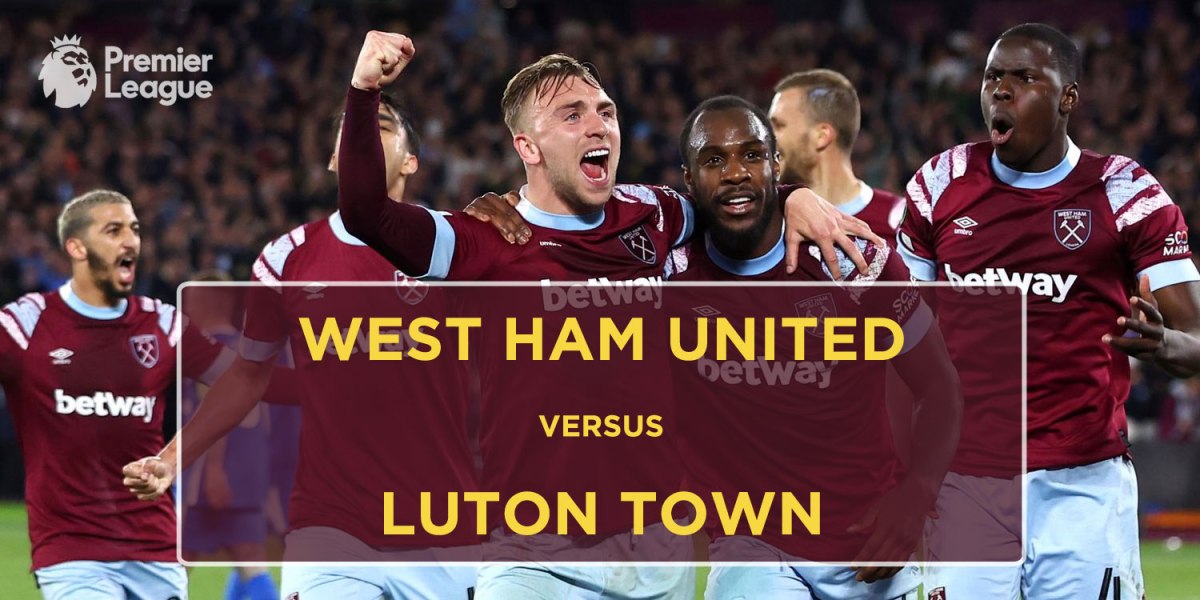
It’s all change at West Ham in what promises to be a busy summer of rebuilding at the London Stadium. The fun starts with David Moyes farewell in a Hammers versus Hatters showdown.

At last, the moment that many have been waiting for as Moyesball faces the final curtain at the London Stadium. We’ve loved, we’ve laughed and cried. We’ve had our fill (and in the last two seasons) our share of losing. And through it all, we lost the ball, while he stubbornly did it – Moyes way.

When the news of David Moyes departure broke in the week, it was met with the inevitable social media storm of outrage from the usual quarters. Reported as if everyone had found out at the same time, it prompted a volley of charges that the club had treated the manager disgustingly after all that he had achieved during his four and a half years in charge. These claims are predicated on the assumption that those involved were unaware that a search for a new manager was underway. Oblivious to the fact that it had been under discussion months beforehand. If the club were insistent on heading down a ‘head coach’ rather than ‘manager’ route, there was no way Moyes would agree to those terms. A scenario where Tim Steidten was sneaking around in the shadows and doodling “I ♡ J Lo” on the dressing room tactics board is the type of juvenile nonsense that only someone as gullible as Richard Keys could fall for

As I have written on several occasions previously, the history books will show David Moyes time at West Ham in a positive light. That is all the majority of causal observers who take only a passing interest in the club look at when they warn us with great monotony that little old West Ham should be careful what they wish for. Rather than being derided, Hammer’s fans deserve great credit for their insistence that style and eentertainment is more important than grinding out results on a weekly basis.

The whole David Moyes tenure at West Ham has been a time of ambiguity. He didn’t really save us from relegation, did he? He only managed one more point in 19 games than Pellegrini had achieved in the first half of the season. But then the 2020/21 season was arguably the Hammers best ever in the Premier League with a record number of wins and points – and a return to European football. Perhaps nostalgia is getting the better of me but I remember the second half of that campaign as a period of exciting, fast-paced counterattacking football at its best. The following season then started in the same vein but fell away sharply in the new year – after failing to strengthen the squad in the January transfer window – despite a couple of excellent performances in the Europa League against Lyon and Sevilla.

It was January 2022 when the rot had started to set in. Moyesball had been rumbled by other Premier League managers, there was no plan B, and the manager double down on his retreat to caution. The league record since then has shown the return of a lower to mid table side – a lowly average of 1.2 points per game. Despite this gradual decline in league form, the event that will forever represent Moyes time at West Ham is the Europa Conference win. It was a fantastic moment for supporters who had been starved of success for so long. The slow motion memory of Jarrod Bowen runningon to Lucas Paqueta’s pass can never be taken away. It may not have been the most prestigious competition, but it is still silverware. The celebrations in Prague and in east London the following day showed what it meant. For many fans, it was the first ever experience of success.

Progress is a complicated concept at a football club. There have been the highs of two top seven finishes and a trophy in the past four years, but can we honestly see a club that is progressing rather than one that had a few good seasons? Would progress have left us with such a small and ageing squad? Have we seen players arrive at the club and be changed beyond all recognition by progressive coaching methods? Have we witnessed any youngsters from a successful youth setup make it further than bench warming duties?  I think we know the answers.   

Although he will not be officially unveiled until after the end of the current season, the strong assumption is that Julen Lopetegui will start work as West Ham head coach on 1 June. Whether or not he was anybody’s first choice – other than the Boards – he is now the man we need to get behind. He has a huge rebuilding job on his hands if he intends to bring his preferred playing style to the London Stadium. A fair few of the current squad are ill-equipped, either through age, pace or technical ability, to play in a possession based, high press, high backline formation. The close season will be even more interesting to watch than usual as the rebuilding begins and the rumour mills go wild.

Before that, there is a small matter of a Premier League game against relegation threatened Luton. There is much more at stake for the visitors than the few million gained or lost from each league position. I rarely have strong views on who goes down and who stays up but would love to see Luton hang on for a second season. Against all the odds it has been a valiant effort by Rob Edwards’ side. It will be a tough ask tfor them hough. Perhaps they can bring one of their Luton vans with them to help move all the low blocks out of the stadium.

It is difficult to know what level of opposition the Hammes will offer today. The season is effectively over but will they want to put on a show for the departing manager? Will Moyes spring any selection surprises or stick with the tried and tested under-achievers? My one wish is that Jarrod Bowen grabs the goal that finally beats Paolo Di Canio’s record of most West Ham goals in a Premier League season. Good luck, Jarrod!

As for David Moyes? He deserves a respectful farewell but there’s too much negativity for him to be ever considered a West Ham legend. COYI!

Congratulations David Moyes – 1000 up! A brief history of West Ham managers.

How can we judge whether or not a manager is successful? There are a number of indicators that spring to mind; win percentage must be one factor, the number of trophies won, the number of finals and perhaps even semi-finals reached, league positions attained, qualification for Europe or success in gaining promotion. Is a manager successful if when he leaves a club it is in a stronger position financially, or attracting bigger crowds, if he has developed a playing style that entertains the fans, or if the team are holding a higher league position than when he came? Longevity in the role, the era they managed in, and the resources available to the manager, and influence of the owners / directors are important factors too. I’m sure there are others.

West Ham have only had 17 permanent managers in the whole of our 119 years existence since 1902, plus another three or so caretakers (Keen, Boyce and Brooking). As I have knowledge of all but two of them it either says something about my age or more likely about the longevity in post of the early managers in particular. I’ve listed them below to bring back memories of those who have managed our club with highlights of their stay. I’ve listed David Moyes twice of course. Win percentages are in brackets.

  1. Syd King (39%)
  2. Charlie Paynter (41%)
  3. Ted Fenton – promotion to Division 1 (41%)
  4. Ron Greenwood – see text (35%)
  5. John Lyall – see text (39%)
  6. Lou Macari – 7 months then resigned (37%)
  7. Billy Bonds – promotion / relegation / promotion (44%)
  8. Harry Redknapp – 7 seasons – top half 4 times, 5th in 1998-99 (37%)
  9. Glenn Roeder – 7th then relegation (31%)
  10. Alan Pardew – promotion / FA Cup final / the sack (41%)
  11. Alan Curbishley – 10th / resigned (39%)
  12. Gianfranco Zola – 9th / the sack (29%)
  13. Avram Grant – relegation (32%)
  14. Sam Allardyce – 4 seasons / promotion / then consolidation (38%)
  15. Slaven Bilić – initial success in final season at Upton Park (38%)
  16. David Moyes – short term – kept us up (29%)
  17. Manuel Pellegrini – big reputation (38%)
  18. David Moyes – kept us up twice from difficult positions / 6th in 2020-21. (48%) (overall 2 periods 43%)

The outstanding caretaker record belongs to Trevor Brooking who, in 14 games in charge, won 9 and only lost 1, managing a team that were relegated!

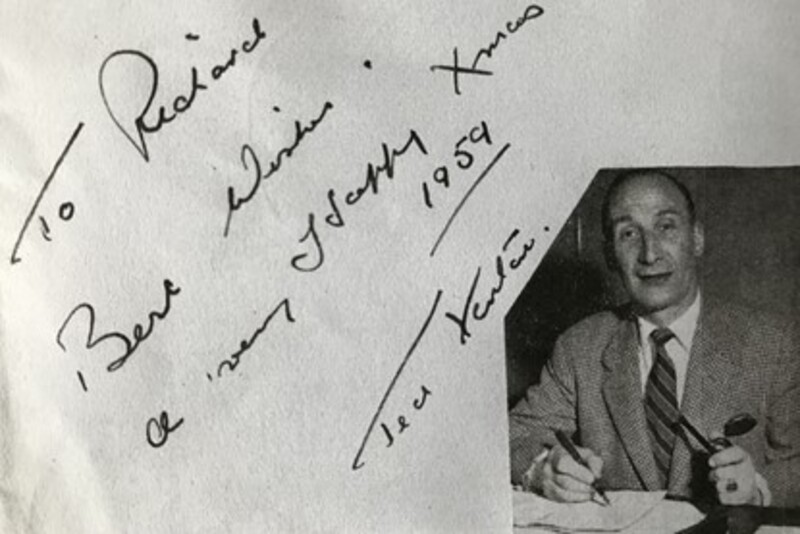
The only two I know nothing much about are the first two on the list who were in charge from 1902 until 1950 when Ted Fenton became our third manager. I have a soft spot for Ted Fenton as he was responsible for filling the very first page of my first autograph book, aged 5, but also getting the players at the time to fill page two. And not just that – he achieved promotion in the 1957-58 season so that when I first became interested in the game and began to support West Ham aged 4, we were a first division team.

Ted Fenton
Harry Obeney, John Dick, Noel Dwyer, Andy Malcolm, Malcolm Musgrove, Phil Woosnam, Ken Brown, Vic Keeble, Mike Grice, John Bond and Noel Cantwell

Ron Greenwood took over in 1961 and was a talented coach. He was one of the first to recognise that football was played beyond these shores. He was in charge for our first FA Cup trophy in 1964 and the successful European Cup Winners Cup campaign the following year. John Lyall took over from his mentor Greenwood in 1974 and had a topsy-turvy 15 years in charge with a lot of success (in West Ham terms) with FA Cup wins in 1975 and 1980, European Cup Winners Cup losing finalists in 1976, League Cup losing finalists in 1981, an outstanding and record breaking promotion season in 1980-81, and guiding us to third place in 1985-86 when we came so close to winning the league title. In addition there were two relegations. He managed us in 708 games, the most of any Hammers manager.

David Moyes has not yet been here for two years yet in his second spell in charge. In that short space of time he has turned around the fortunes of our club, and once again revised his reputation as a first class manager that he initially earned over 11 seasons at Everton with a string of top eight finishes before he left the club for Manchester United where many feel he wasn’t given sufficient time at the helm.

It was a surprise to me when our owners let him go after he saved us from relegation in his first spell in charge, but perhaps they just looked at bare statistics such as win percentages rather than taking all aspects of successful management into account.

To save us from relegation a second time, then to achieve sixth place in his first full season in charge, and then follow it up with the superb start to this season is a terrific achievement in itself. Fourth in the Premier League (victory against Liverpool on Sunday would take us even higher), in the Quarter Final of the League Cup (having defeated both Manchester clubs on the way) and top of the Europa League Group with 10 points from 4 games. I think we would have taken that (wouldn’t we?) at this stage of the season!

But even more than that he has recognised that the team needed some young, hungry, talented players, and instilled in the squad a way of playing that makes us proud to support the team. He has also recognised the best way to use the players at his disposal in a positional sense, and has got everyone playing near the peak of their ability consistently. The team spirit is something we can all see clearly, the work ethic is beyond anything I have ever seen in a West Ham team in 60 years, and we are finding ways to win games when we are not at our best. We play long, we play short, and we counter-attack at pace with skill.

Against Genk on Thursday evening he achieved the milestone of 1000 games as a manager (112 for West Ham, overtaking Slaven Bilic to move into the top 10 in terms of games). He fully deserves all the plaudits that are coming his way, and long may they continue. I loved his comments prior to the game. “If it had taken West Ham six years to get to this point (instead of two), West Ham supporters would probably have accepted it. Now we have to keep it going, keep chipping away at it. We’re on the fast train to the top and I don’t want to get off.”

Unfortunately we weren’t at our best on the night, partly because of the changes made to the team, and a lethargic first half performance. Diop was slow to react which led to the first Belgian goal, and we could even have been further behind at the break. The substitutions on the hour changed the game and thanks to Benrahma’s two goals we looked on course for another European victory before Soucek’s unfortunate own goal close to the end. Once again we found a way not to lose a game when we hadn’t played particularly well.

I’ll go back to my opening paragraph. How do we judge success? Billy Bonds stands out with the highest percentage of wins (although this is now coming under threat by David Moyes) and the lowest percentage of defeats, but a high proportion of his games were in the second tier. Trophy success and narrow misses have Lyall and Greenwood at the top of the tree. Our sole European success was under Greenwood, although Lyall came close as a runner up. Greenwood was also a losing European semi-finalist and led us to FA Cup success, as did Lyall twice. King and Pardew were runners-up. Greenwood and Lyall were also losing finalists in the League Cup, and Redknapp won the Inter-Toto Cup. King, Fenton, Lyall, Bonds (twice), Pardew and Allardyce all achieved promotion. Most goals per game were scored under Fenton, the least under Zola. Most goals conceded per game were also under Fenton, the least under Bonds.

You cannot really compare different eras but if I had to pick my top four based on statistics, trophies and overall impression, then (in no particular order) Greenwood, Lyall, Bonds and Moyes would have to be my favourites. I’ll let you choose the order, or indeed make your own choice of best managers. It’s just an opinion, and perhaps a good debate. My hope is that when David Moyes eventually leaves us he stands out as the best West Ham manager ever. I hope that day is a long way off.

An in-form Liverpool team are visiting the London Stadium on Sunday. Will it be a game too far for West Ham? I hope not but I am concerned when we play on Thursday evenings prior to a Sunday game. Our only two league defeats this season have followed Thursday Europa League fixtures. Can we find a way to win this one? For the first time in a while we are not favourites in a Premier League game – the odds on a West Ham victory are around 18/5. Can we defy the odds? What are the chances?