The Premier League has become a financial juggernaut, but the gap between the top clubs and the rest has stretched to a point where competitiveness feels like an illusion. When a handful of teams can outspend entire leagues it’s no surprise that some of the magic gets lost. Underdog stories become rarer, and the league becomes predictable.
It’s interesting how the same financial might that brings in the world’s best talent and global attention can also erode the soul of the sport for long-time supporters. Loyalty, local identity, and the joy of unexpected triumphs can get drowned out by branding and billion-pound transfer sagas.
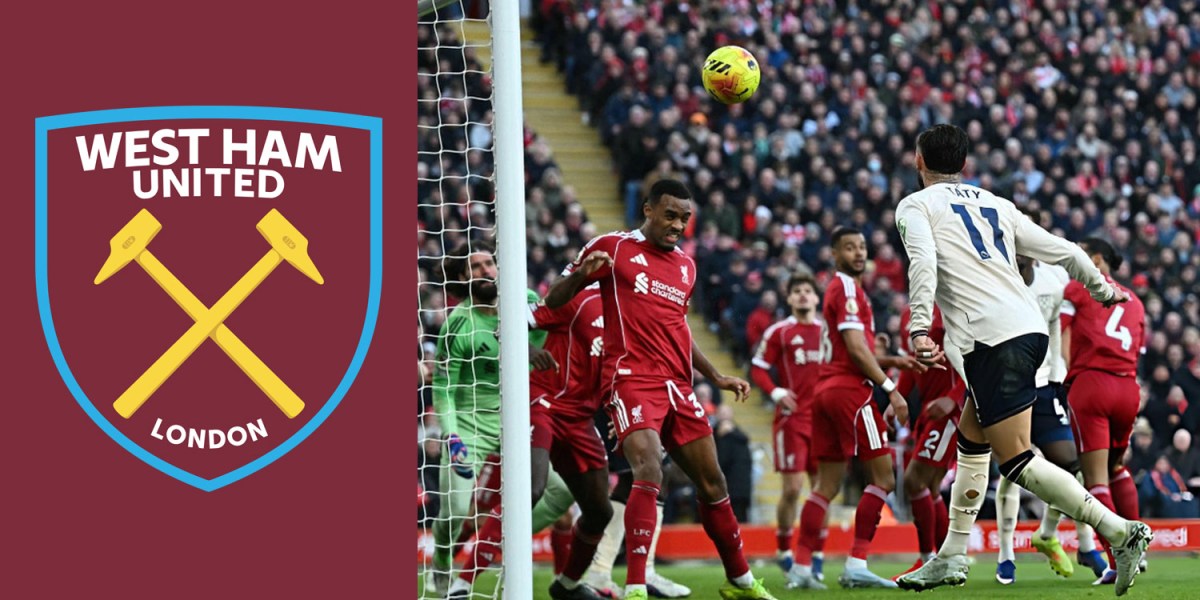
As a West Ham fan I know at the beginning of every season that cup competitions are our only opportunity to win trophies. Sometimes I have despaired when we haven’t even seemed to make the effort to try to succeed in those. I have been fortunate to witness successful FA Cup wins in 1964, 1975 and 1980 as well as a couple of European trophies in 1965 and 2023. Not a lot to show for almost 70 years of following the team. A near miss in the 2006 FA Cup Final too, as well as in the 1981 League Cup final when we were possibly one of the best second tier sides that there has ever been. And I’ll never forget our amazing run in the 1975-76 European Cup Winners Cup competition where we lost in the final, but the quarter final and semi final second legs at Upton Park were two of the greatest games I’ve witnessed.
Our best ever league season was of course 1985-86 when we finished third in the old First Division just four points adrift of winners Liverpool after being in contention right up until the final week. We might have even been champions with a better start to that campaign – we only won one of our first seven games and languished in 17th place at that point. But there is no chance of a repeat of that season 40 years ago. The best we can possibly hope for in the league is to qualify for European competition. So many clubs can qualify now – we have 9 teams from England playing in one or other of the three available competitions next season. I cannot see any way that we can compete for the Premier League title.
So I racked my brains to try to consider what potential reforms could restore competitiveness in top flight football? There are a few that I have often heard floated that could inject some much-needed balance back into football, especially in the Premier League. Several sports have implemented reforms that significantly improved competitiveness, fairness, or sustainability. Here are a few examples:
- Salary Caps / Redistribution of Broadcast Revenue: One of the most debated ideas. A ceiling on player wages, like in American sports leagues, could help level the playing field. The National Football League (NFL) in the USA introduced a hard salary cap in 1994, ensuring teams couldn’t spend beyond a set limit on player wages. Combined with equal sharing of TV revenue, this has helped maintain parity—any team can realistically compete for the Super Bowl. The Premier League currently splits TV revenue more evenly than some leagues, but there’s still a disproportionate benefit to finishing higher. A more socialist approach could help smaller clubs grow sustainably. But with global competition and the Premier League’s appeal, enforcing this without causing talent drain would be tricky, and probably impossible.
- Competitive Balance Tax: American Basketball (NBA) and also Major League Baseball impose a luxury tax that penalises teams that exceed a spending threshold, redistributing funds to lower-spending teams. It wouldn’t stop spending but might redistribute its impact.
- Draft System The NBA and the NFL use a draft system that gives weaker teams first pick of new talent, helping to balance the league.
- Tighter Financial Fair Play (FFP) Rules: FFP exists, but surely it lacks teeth. Stronger regulations with real consequences for overspending might rein in runaway budgets. At the moment some clubs spend vast sums on new recruits that the majority of Premier League teams cannot compete with. Not surprisingly this makes the strong teams stronger.
- Squad Size & Loan Limits: Big clubs stockpiling talent and loaning out dozens of players distorts competition. Capping squad sizes and loans could force more even distribution of quality players.
- Fan Ownership or Influence Models: Inspired by Germany’s 50+1 rule. This rule ensures that club members (usually fans) hold a majority of voting rights, preventing external investors from taking full control. It’s credited with preserving club identity and financial responsibility, even if it limits spending compared to the Premier League.
- Formula 1 – Budget Cap (2021): To reduce the dominance of wealthier teams, F1 introduced a cost cap on team operations. It’s already led to closer racing and more unpredictable outcomes, with mid-tier teams occasionally challenging the front-runners.
These reforms weren’t always popular at first, but many have stood the test of time. If football took a page from these examples, it might just rediscover some of its lost unpredictability. Of course, the real challenge is that the very clubs most resistant to reform hold the most sway. Still, the soul of the game relies on the thrill of the unexpected. Unfortunately, Leicester 2016 was a one-off, it won’t happen again.
Adapting successful reforms from other sports to the Premier League probably isn’t possible – but it could be transformative if only it could be achieved. Here’s how some of the systems might be tailored (watered down!) to fit football’s culture and structure:
1. Salary Cap with Flexibility: A hard cap like in the NFL might clash with the global football transfer market, but a soft cap with luxury tax—like the NBA—could work. Wealthier clubs could still spend big, but they’d pay a hefty penalty for doing so. That tax revenue could then be shared with lower-tier clubs or reinvested in grassroots development.
2. Draft-Style Youth Allocation: While a full American-style draft might feel out of place, the Premier League could introduce a mechanism for sharing standout academy talent. For example, smaller clubs might get priority access to players released by top-tier academies or receive compensation tied to playing opportunities they provide young players.
3. 50+1-Style Governance: Replicating Germany’s 50+1 rule might be a tough sell politically and commercially but encouraging greater fan ownership or mandating supporter representation on club boards would help bring accountability and reconnect clubs with local communities.
4. Enhanced Revenue Sharing: The Premier League already shares a portion of broadcast revenue, but tweaking the formula to provide more meaningful support to lower-revenue clubs could make a big difference. For instance, increase the base share for all teams and reduce performance-based bonuses slightly to even things out without removing incentives.
5. Cost Control Through Squad Caps: Clubs could be limited not just by spending but by total squad value or squad size. This would prevent talent hoarding by the biggest clubs and ensure more players get competitive minutes across the league.
6. Centralised Contracting for Young Talent: Adapting the Irish rugby model, the FA or Premier League could centrally contract a pool of national youth or U21 players. These players could be distributed based on developmental needs, ensuring both top-level experience and competitive balance.
Of course, any of these changes would require buy-in from stakeholders—owners, players, fans, and governing bodies. But if the goal is to make football more open, more exciting, and more equitable, there are definitely paths forward. But as I wrote before we are too far down the road and there are too many reasons why it won’t happen.
Clutching at straws I wondered if a handicapping system as in horse racing could be implemented? It’s a fascinating idea, and not as far-fetched as it might sound at first. In horse racing, handicapping works by assigning different weights to horses based on their ability, aiming to equalise their chances of winning. Theoretically, a similar system in football could involve performance-based disadvantages for stronger teams to level the playing field.
Here’s how a football version might look:
- Points Handicaps: Start dominant teams with a points deficit at the beginning of the season. It’s radical, but it would certainly shake things up.
- Transfer Restrictions: Limit the number or value of incoming transfers for top-performing clubs, effectively “weighing them down” in the market.
- Fixture Difficulty Weighting: Adjust scheduling so stronger teams face tougher fixtures earlier or more frequently away from home.
- In-Game Constraints: This would be controversial but imagine limiting substitutions or squad depth for top clubs in certain matches.
Of course, the challenge is that football isn’t a closed system like horse racing or American sports leagues. It’s global, with interconnected competitions and massive commercial interests. Any artificial constraint would be seen as undermining meritocracy and would spark legal challenges.
Still, the spirit of handicapping – engineering unpredictability and fairness – is something football desperately needs. Maybe a hybrid model, like enhanced revenue redistribution or dynamic squad caps based on recent success, could capture that essence without breaking the game.
A handicapping-style system in football would be a radical shift from tradition, but if implemented thoughtfully, it could offer several compelling benefits—particularly for restoring competitive balance and reinvigorating fan engagement. Here’s how:
1. Increased Unpredictability: By design, handicapping would reduce the advantage of dominant clubs, making outcomes less predictable. That unpredictability is what keeps fans glued to their seats—think of the buzz around surprise title runs like Leicester’s in 2016.
2. Renewed Relevance for Mid-Table Clubs: Clubs outside the elite would feel they have a genuine shot at silverware or European qualification. That alone could re-energise fanbases, attract better players to smaller clubs, and create a more dynamic league overall.
3. Rewarding Long-Term Planning Over Just Spending Power: If the system penalises consistent overperformance or overspending, clubs would need to be smarter focusing on scouting, youth development, coaching, and chemistry rather than just flexing financial muscle.
4. Boosted Viewer Interest: Global audiences tune in for drama and storylines. A more level playing field would mean more meaningful matches and tighter title races, which boosts engagement, TV ratings, and revenue for everyone.
5. Revived Romanticism of the Game: Football has always been about hope – the belief that any club can dream big. A handicapping system could help restore that spirit, making football less like a billionaire’s playground and more like a battleground of passion and grit.
Of course, implementing it fairly would be a tall order—defining the metrics, avoiding legal challenges, and maintaining meritocracy. But philosophically? It taps into something a lot of fans yearn for: the feeling that anything is possible again.
If only some of these ideas were adopted in a small way it might help, but has it gone too far now? There’s a sense among many fans, including me, that football’s drift into a money-dominated spectacle has passed the point of no return. The financial stakes are so enormous, and the power so concentrated at the top, that even small reforms feel like drops in an ocean of imbalance.
But I wouldn’t say it’s too far gone – almost but not totally, not yet. Could small changes still be possible? Football still has its grassroots, its local heroes, and a global fan base that genuinely cares about the integrity of the sport. If enough pressure comes from fans, regulators, and smaller clubs, meaningful changes could still happen. It might not be a revolution, but even incremental changes like stronger FFP enforcement or better revenue sharing can start nudging things in the right direction.
If it has really gone too far now (and if I’m honest with myself it probably has) then it speaks volumes about how disconnected the upper echelons of football have become from the people who helped build it: the fans. When billion-pound ownerships and corporate interests dictate the rhythm of the game, it’s easy to feel like voices from the stands are just background noise.
But even small ripples can make waves. The fan protests that helped derail the European Super League weren’t backed by billions—they were powered by sheer passion and public pressure. The 50+1 conversations in the UK? Sparked by fans. Even safe standing and more equitable ticket pricing have gained traction in some clubs thanks to persistent grassroots lobbying. Maybe it won’t flip the pyramid overnight, but change doesn’t always need to be seismic.
As well as supporting West Ham in the Premier League I like to watch lower league and youth football, The Premier League has the best players of course but the excitement is missing because of the predictability. There’s something raw and beautifully human about lower league and youth football—where matches aren’t drowned in glitz, but crackle with real tension, local pride, and moments of unexpected brilliance. It’s football in its purest form, unfiltered by billionaire ownership or endless VAR delays. Unpredictability is the heartbeat of sport. The feeling that anything can happen. When it’s missing, even the most technically flawless performance can feel sterile.
There’s magic in seeing a teenager curl one top corner for the Under 15s or watching a non-league side grind out a win in front of 500 fans who know every chant by heart. No fireworks show required—just graft, heart, and the echo of hope in every tackle. – it’s football with soul. You’re watching young players develop before your eyes, where every pass and goal actually means something deeply personal to the community. It’s not about megastars or multi-million-pound sponsors—it’s about belonging. That feeling when a small crowd roars like it’s 60,000 strong, or when a player claps every hand on the touchline because those faces actually mean something. That’s football at its most human.
The Premier League may have the flash, but lower league and youth football feels more authentic, more grounded. There’s no corporate gloss just muddy boots, raw talent, and a crowd that claps for effort as much as for goals. I have been rediscovering the joy of football not in superstars, but in the passion of a local lad sprinting down the wing in the rain, or a promotion campaign that means everything.
And yet even now as I reflect on this article I still get a buzz in anticipation of the new football season that is approaching. I still want to see West Ham really performing well at the top level. I still read the ridiculous articles every day that suggest we are going to buy x/y/z and laugh to myself. I enjoy the summer sport, the cricket, especially the test matches, the Open, Wimbledon, horse racing on the flat, and this year the Women’s Euros. But nothing beats watching football at all levels. And despite the predictability of the Premier League I’ll still be hoping for a successful season for West Ham just as I have every year since 1958. But one thing is for sure. We won’t be challenging to win the Premier League. I’m afraid we won’t even come close.




 Under The Hammers