Meet The New Boss, Same As The Old Boss: And Why Nuno Faces A Herculean Task at the London Stadium

A West Ham manager’s lot is not a happy one. Can Nuno find an answer to the long running conundrum of producing a sustainable, professional team at a broken and dysfunctional club?

Supporting West Ham has never been a pursuit for the glory hunter or the faint of heart. For most it is an act of faith founded on community, shared identity, loyalty, passion, a sense of belonging, and wherever possible, entertainment. It is not, sadly, a vision shared by the owners.

There can be no argument that English topflight football has changed over the years – some good, some bad – with its global appeal. TV deals, influx of money, overseas players and financial regulations. Where well-run clubs have innovated and adapted to these new realities, the leadership at West Ham has refused to shift, preferring to the celebrate their amateurism and defy progress. Compounding the unpopular handling of the stadium move with an approach to football that rarely looks beyond the next fixture. The added irony being that the cost cutting London Stadium agreement – feted by pundits as the ‘deal of the century’ at the time – now sits like a millstone around the club’s neck to limit the much needed matchday and commercial revenues that are growing rapidly at rival clubs.

There is a concept known (appropriately) as Maslow’s Hammer which states that “if the only tool you have is a hammer, then every problem will look like a nail.” In a West Ham context, this translates to a belief that all performance issues can be addressed by the mirage of a new managerial appointment. Nothing else in the slipshop way the club is run ever needs to change!

The result for supporters is a cycle of chronic anxiety. A Groundhog Day where each new manager enjoys a honeymoon period of variable length, inevitably followed by a steady decline of fluctuating velocity. A decline characterised by a campaign of undermining, leaks and sabotage from the Boardroom. The best-case scenario (for the club) is a manager who makes it through to the end of their contract before being terminated (Allardyce, Moyes). But more usually, they will be fired whenever the spectre of relegation (and financial Armageddon) appears on the horizon.

If you toss a box of assorted West Ham Premier League statistics into the air, what you get when they land is a picture of prolonged mediocrity. Averaged across 29 seasons, the return from 38 matches is 12½ wins, 9½ draws, and 16 defeats: a total of 47 points, negative 8 goal difference, with an expected 11th or 12th place finish. An optimist might interpret this as prudence and stability but really, what is the point of a survival only strategy when it is at the expense of entertainment, ambition and a raucous matchday experience.

In truth, the stats show little difference between the pre and post GSB eras. The only significant distinction being that the current owners have spent a lot more money and made a much bigger song and dance of how incompetent they are.

It would be unfair not to recognise that above average seasons do ocasionally arise: 2015/16 and 2020/21 are notable examples. But where these have occurred, they are the result of temporary good fortune rather than years of good stewardship, squad building and team planning. In 2015/16, Slaven Bilic was able to overlay the mercurial talents of Dimitri Payet onto the organisation inherited from BFS. In 2020/21, David Moyes had the emergence of Declan Rice and the inspiration of Jesse Lingard to turn trademark defensive caution into surprising attacking threat. Both false dawns which failed to survive the loss of key players.

So, what does all this mean for Nuno Espirito Santo as the latest occupant of the West Ham hot seat? Can he break the spell of mediocrity? Implement a style of play that supporters desire and are happy to pay to watch – entertaining, fast paced, front foot, quick transition football? I’d like to think he can but ask me again at the end of November for confirmation. He has been saying many of the right things, has been prepared to take a serious look at the younger players, and is much easier to listen to than his immediate predecessors.

But sorting out West Ham from where they are now is a Herculean task. In fact, Hercules himself would have to think twice before choosing whether to accept the mission or not. How to stabilise a careless defence, inject creativity into midfield, solve the age-old striker conundrum alongside other heroic labours such as pacifying the two-faced bull of Theydon, appeasing the multi-headed serpent of Knightsbridge – and complying with PSR regulations?

Following the hard-fought and well-deserved draw at Everton, a trip to the Emirates to face Arsenal was always going to be a tough ask. Several online commentators saw it as the typical West Ham capitulation against one of the rich six clubs. That Nuno’s approach had been as negative as those who had gone before. This was rather harsh in the context of facing (probably) the best team in the league at the moment, with only a week in post to prepare. But it is difficult to counter claims that West Ham had surrendered the game without putting up much in the way of a fight. Yet for once caution made sense. A gung-ho approach and a five or six goal hammering would have been in no-one’s interest at this stage of proceedings.

Defensively, West Ham managed to maintain good shape and discipline for much of the first half. But it requires an extreme level of luck to keep your goal intact for extended periods without an out-ball to relieve the pressure. Curiously, Max Kilman and Dinos Mavropanos may have put in their most assured performances of the season in helping to counter the host’s legendary set piece threat.

But going forward, West Ham were impotent. The full backs were unable to get out of their own half or support attacks in the way they had at Everton. But it was in midfield where the Hammers were most ineffective in transition. No-one capable of finding space, assuming control and picking the right pass.

It is a stretch on current performances to look at the pairing of Lucas Paqueta and Mateus Fernandes and be satisfied that you are seeing £100 m of creative talent. Paqueta is either too busy looking to buy a foul or making blind, hopeful passes while Fernandes has shown none of the ball carrying skills or creative passing that were advertised on his CV. Maybe it needs time for them to click but both appear to prefer playing in deeper positions than the team requires. It was only Crysencio Summerville who looked capable of the movement and quick control to create his own space and drive forward. Would he be better deployed as a Number 10 than on the wing?      

It is becoming increasingly difficult to pinpoint how Niclas Fullkrug can be integrated into a Premier League side hoping to rely on rapid counter attacking. His inclination is to drop deep during build up play rather than looking to put himself about in the box. More in the style of a Haller or Scamacca than the Michail Antonio/ Chris Wood blunt instrument that is better suited to this style of play.

It was interesting to see Nuno opt for Callum Marshall when Fullkrug was replaced. It would have been a thankless task for anyone, but he showed plenty of energy and it was great that he got his first Premier League minutes under the belt. Marshall doesn’t look lone central striker material to me, so his opportunities may remain limited for now. That he was given the opportunity at all was a positive we can take from Nuno’s involvement.

The six matches following the international break will carry great significance for West Ham’s season. Collecting at least nine or ten points must be a realistic target to aim for if respectability is to be achieved and a relegation battle avoided.

With Premier League clubs looking likely to extend the current PSR regulations into the 2026/27 season – mainly because they can’t agree any alternative – next summer is already looking problematic for West Ham. Nuno will clearly want. need reinforcements but flat or falling revenues will likely require profit from player sales to offset operating losses. Unfortunately, there are few high-ticket assets available for sale. COYI!   

Congratulations David Moyes – 1000 up! A brief history of West Ham managers.

How can we judge whether or not a manager is successful? There are a number of indicators that spring to mind; win percentage must be one factor, the number of trophies won, the number of finals and perhaps even semi-finals reached, league positions attained, qualification for Europe or success in gaining promotion. Is a manager successful if when he leaves a club it is in a stronger position financially, or attracting bigger crowds, if he has developed a playing style that entertains the fans, or if the team are holding a higher league position than when he came? Longevity in the role, the era they managed in, and the resources available to the manager, and influence of the owners / directors are important factors too. I’m sure there are others.

West Ham have only had 17 permanent managers in the whole of our 119 years existence since 1902, plus another three or so caretakers (Keen, Boyce and Brooking). As I have knowledge of all but two of them it either says something about my age or more likely about the longevity in post of the early managers in particular. I’ve listed them below to bring back memories of those who have managed our club with highlights of their stay. I’ve listed David Moyes twice of course. Win percentages are in brackets.

  1. Syd King (39%)
  2. Charlie Paynter (41%)
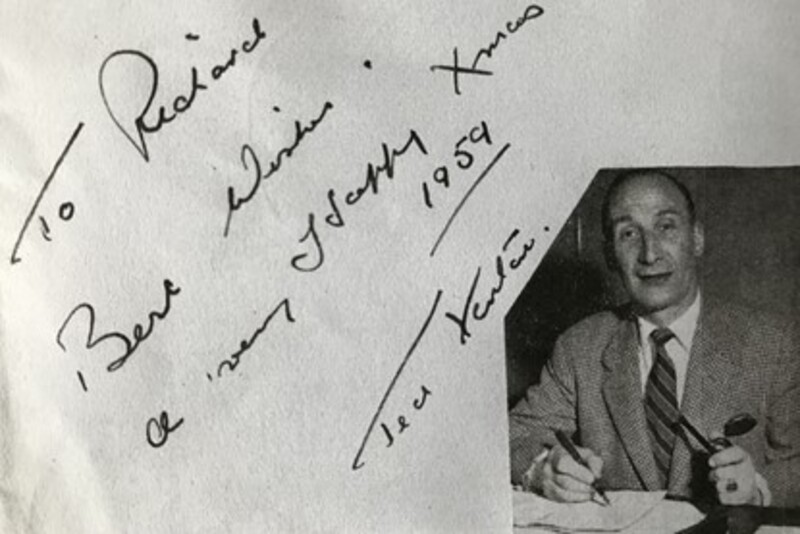
  3. Ted Fenton – promotion to Division 1 (41%)
  4. Ron Greenwood – see text (35%)
  5. John Lyall – see text (39%)
  6. Lou Macari – 7 months then resigned (37%)
  7. Billy Bonds – promotion / relegation / promotion (44%)
  8. Harry Redknapp – 7 seasons – top half 4 times, 5th in 1998-99 (37%)
  9. Glenn Roeder – 7th then relegation (31%)
  10. Alan Pardew – promotion / FA Cup final / the sack (41%)
  11. Alan Curbishley – 10th / resigned (39%)
  12. Gianfranco Zola – 9th / the sack (29%)
  13. Avram Grant – relegation (32%)
  14. Sam Allardyce – 4 seasons / promotion / then consolidation (38%)
  15. Slaven Bilić – initial success in final season at Upton Park (38%)
  16. David Moyes – short term – kept us up (29%)
  17. Manuel Pellegrini – big reputation (38%)
  18. David Moyes – kept us up twice from difficult positions / 6th in 2020-21. (48%) (overall 2 periods 43%)

The outstanding caretaker record belongs to Trevor Brooking who, in 14 games in charge, won 9 and only lost 1, managing a team that were relegated!

The only two I know nothing much about are the first two on the list who were in charge from 1902 until 1950 when Ted Fenton became our third manager. I have a soft spot for Ted Fenton as he was responsible for filling the very first page of my first autograph book, aged 5, but also getting the players at the time to fill page two. And not just that – he achieved promotion in the 1957-58 season so that when I first became interested in the game and began to support West Ham aged 4, we were a first division team.

Ted Fenton
Harry Obeney, John Dick, Noel Dwyer, Andy Malcolm, Malcolm Musgrove, Phil Woosnam, Ken Brown, Vic Keeble, Mike Grice, John Bond and Noel Cantwell

Ron Greenwood took over in 1961 and was a talented coach. He was one of the first to recognise that football was played beyond these shores. He was in charge for our first FA Cup trophy in 1964 and the successful European Cup Winners Cup campaign the following year. John Lyall took over from his mentor Greenwood in 1974 and had a topsy-turvy 15 years in charge with a lot of success (in West Ham terms) with FA Cup wins in 1975 and 1980, European Cup Winners Cup losing finalists in 1976, League Cup losing finalists in 1981, an outstanding and record breaking promotion season in 1980-81, and guiding us to third place in 1985-86 when we came so close to winning the league title. In addition there were two relegations. He managed us in 708 games, the most of any Hammers manager.

David Moyes has not yet been here for two years yet in his second spell in charge. In that short space of time he has turned around the fortunes of our club, and once again revised his reputation as a first class manager that he initially earned over 11 seasons at Everton with a string of top eight finishes before he left the club for Manchester United where many feel he wasn’t given sufficient time at the helm.

It was a surprise to me when our owners let him go after he saved us from relegation in his first spell in charge, but perhaps they just looked at bare statistics such as win percentages rather than taking all aspects of successful management into account.

To save us from relegation a second time, then to achieve sixth place in his first full season in charge, and then follow it up with the superb start to this season is a terrific achievement in itself. Fourth in the Premier League (victory against Liverpool on Sunday would take us even higher), in the Quarter Final of the League Cup (having defeated both Manchester clubs on the way) and top of the Europa League Group with 10 points from 4 games. I think we would have taken that (wouldn’t we?) at this stage of the season!

But even more than that he has recognised that the team needed some young, hungry, talented players, and instilled in the squad a way of playing that makes us proud to support the team. He has also recognised the best way to use the players at his disposal in a positional sense, and has got everyone playing near the peak of their ability consistently. The team spirit is something we can all see clearly, the work ethic is beyond anything I have ever seen in a West Ham team in 60 years, and we are finding ways to win games when we are not at our best. We play long, we play short, and we counter-attack at pace with skill.

Against Genk on Thursday evening he achieved the milestone of 1000 games as a manager (112 for West Ham, overtaking Slaven Bilic to move into the top 10 in terms of games). He fully deserves all the plaudits that are coming his way, and long may they continue. I loved his comments prior to the game. “If it had taken West Ham six years to get to this point (instead of two), West Ham supporters would probably have accepted it. Now we have to keep it going, keep chipping away at it. We’re on the fast train to the top and I don’t want to get off.”

Unfortunately we weren’t at our best on the night, partly because of the changes made to the team, and a lethargic first half performance. Diop was slow to react which led to the first Belgian goal, and we could even have been further behind at the break. The substitutions on the hour changed the game and thanks to Benrahma’s two goals we looked on course for another European victory before Soucek’s unfortunate own goal close to the end. Once again we found a way not to lose a game when we hadn’t played particularly well.

I’ll go back to my opening paragraph. How do we judge success? Billy Bonds stands out with the highest percentage of wins (although this is now coming under threat by David Moyes) and the lowest percentage of defeats, but a high proportion of his games were in the second tier. Trophy success and narrow misses have Lyall and Greenwood at the top of the tree. Our sole European success was under Greenwood, although Lyall came close as a runner up. Greenwood was also a losing European semi-finalist and led us to FA Cup success, as did Lyall twice. King and Pardew were runners-up. Greenwood and Lyall were also losing finalists in the League Cup, and Redknapp won the Inter-Toto Cup. King, Fenton, Lyall, Bonds (twice), Pardew and Allardyce all achieved promotion. Most goals per game were scored under Fenton, the least under Zola. Most goals conceded per game were also under Fenton, the least under Bonds.

You cannot really compare different eras but if I had to pick my top four based on statistics, trophies and overall impression, then (in no particular order) Greenwood, Lyall, Bonds and Moyes would have to be my favourites. I’ll let you choose the order, or indeed make your own choice of best managers. It’s just an opinion, and perhaps a good debate. My hope is that when David Moyes eventually leaves us he stands out as the best West Ham manager ever. I hope that day is a long way off.

An in-form Liverpool team are visiting the London Stadium on Sunday. Will it be a game too far for West Ham? I hope not but I am concerned when we play on Thursday evenings prior to a Sunday game. Our only two league defeats this season have followed Thursday Europa League fixtures. Can we find a way to win this one? For the first time in a while we are not favourites in a Premier League game – the odds on a West Ham victory are around 18/5. Can we defy the odds? What are the chances?